

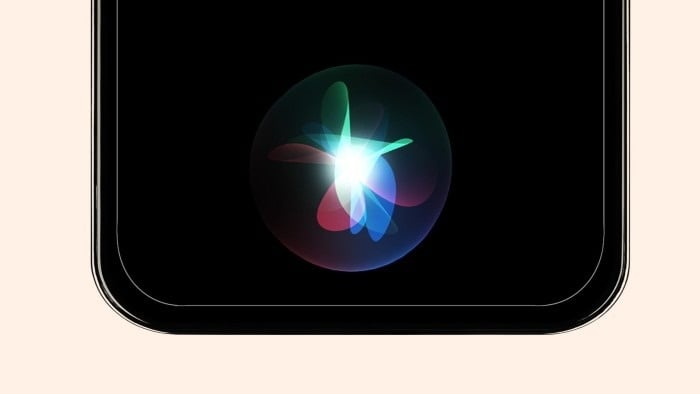
Apple is struggling to upgrade its AI assistant for the iPhone. This has left investors disappointed about the iPhone maker's ability to make a significant impact on AI at the upcoming WWDC 2025 developer conference.
Specifically, the Financial Times , citing former Apple employees who recently left the company, revealed that the Silicon Valley giant faced significant challenges in updating Siri through the use of advanced large language models (LLMs) that can provide more complex responses to voice commands.
The bottleneck in Apple's AI strategy.
Compared to iOS, AI generation on Android has been continuously developing since 2022. Currently, Android's AI is considered superior to Apple's platform, both in terms of quantity and quality.
"Apple Intelligence got off to a slow start compared to major Android manufacturers, supported by platforms like Google's Gemini."
"Most AI features on Android are more powerful and comprehensive than Apple's… However, Apple prioritizes tasks processed directly on the device, ensuring privacy across its entire ecosystem. These factors present some challenges for the company in deploying AI widely," analysts said.
While Siri is outdated, Apple Intelligence continues to be delayed. Photo: Bloomberg. |
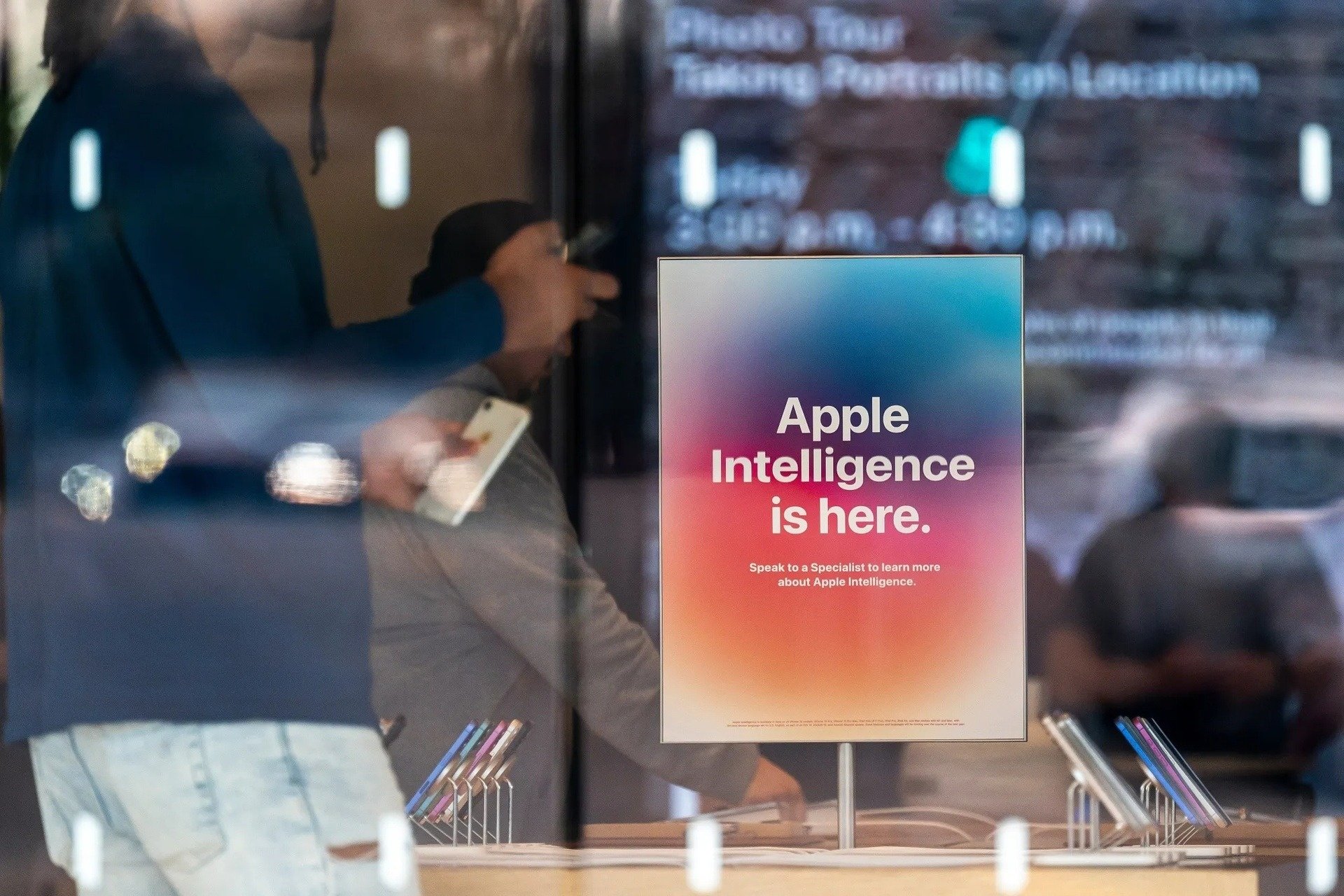
This shows that the focus of Apple's AI efforts is Siri, the voice assistant considered the most important "core" element revolving around AI agents. This is an emerging field that could transform smartphones into truly automated devices, capable of learning context and proactively performing tasks.
However, the reality is that, to date, upgrades to Siri remain a major obstacle for Apple. "The way companies conduct conversational interactions is changing rapidly, and it's clear that Siri has significant shortcomings," another former senior Apple employee stated.
Last year, Apple first introduced its AI toolkit to the public. Many expected Apple to replicate its past success, entering the market late but offering the best possible solution.
When Apple Intelligence released its first beta in August 2024, developers were disillusioned. Apple's system performed less efficiently than OpenAI, Google, or Microsoft. Even when the iPhone 16 went on sale in September 2024, things were still not perfect, causing the company to delay the release of this feature on the new iPhone line by 1.5 months.
In the next phase, new features emerged such as Writing Tools, Genmoji, and Priority Notifications. While useful, they couldn't match the models from competitors. Meanwhile, the new version of Siri couldn't be released on schedule due to technical issues.
More pessimistically, Bank of America analysts believe the current delay for Siri means Apple could take at least three years or more to deliver "a truly modern AI assistant, long after Google and others have integrated that technology."
Challenges and Change
These failures led to major changes at Apple. John Giannandrea, head of AI, was repeatedly "punished" for significant delays in key Siri features and a lackluster response to the Apple Intelligence platform.
After failing to fully integrate AI features into iOS 19 this year, hundreds of engineers in Giannandrea's team were transferred to the team of Ternus, Rockwell, and software director Craig Federighi. Bloomberg analyst Mark Gurman suggests this demonstrates Tim Cook's loss of confidence in the AI director's ability to implement and develop new products.
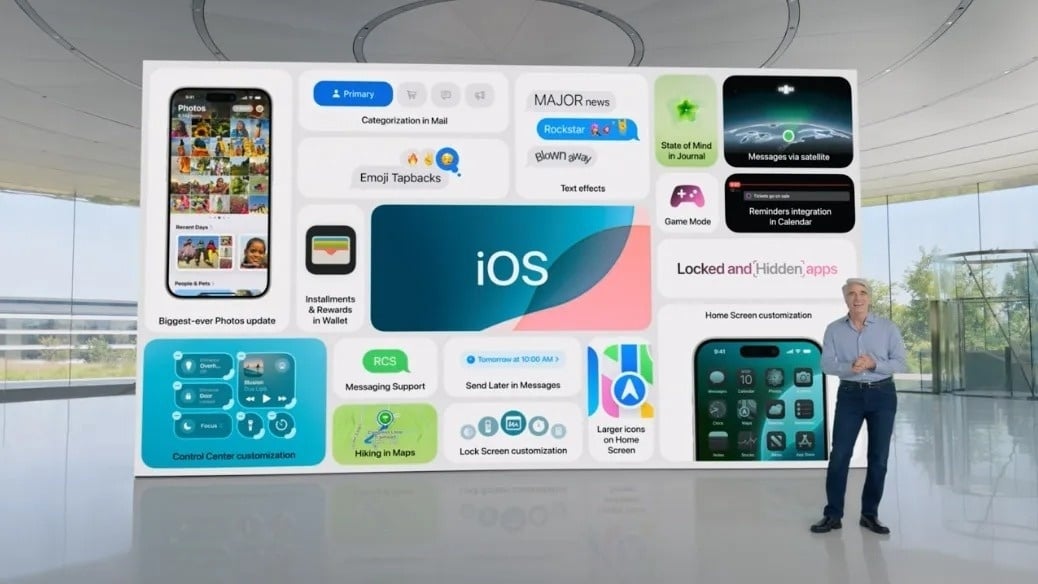
An Apple representative introduces iOS 18 at WWDC 2024. Photo: Apple. |
According to a Bloomberg report , Robby Walker, senior director of the Siri development team, acknowledged the delay was a bad situation.
Notably, he indicated that AI-powered features integrated into iOS 19 are unlikely to appear this year. “Apple has commitments to many projects. We want to maintain our credibility with those projects and need to prioritize developing the most urgent features,” Robby Walker said.
However, Giannandrea wasn't the main reason. Speaking to the Financial Times , a former Apple executive stated that the fragmentation of leadership teams had led to the company's lack of a unified AI strategy.
This was made worse by the fact that senior executives were initially reluctant to allocate a sufficiently large budget for technology development.
Another challenge is Apple's focus on user privacy and security. The iPhone maker prioritizes running AI features through smaller models to help keep user data on the device. However, former Apple employees argue that this adds another layer of complexity to the larger challenge.
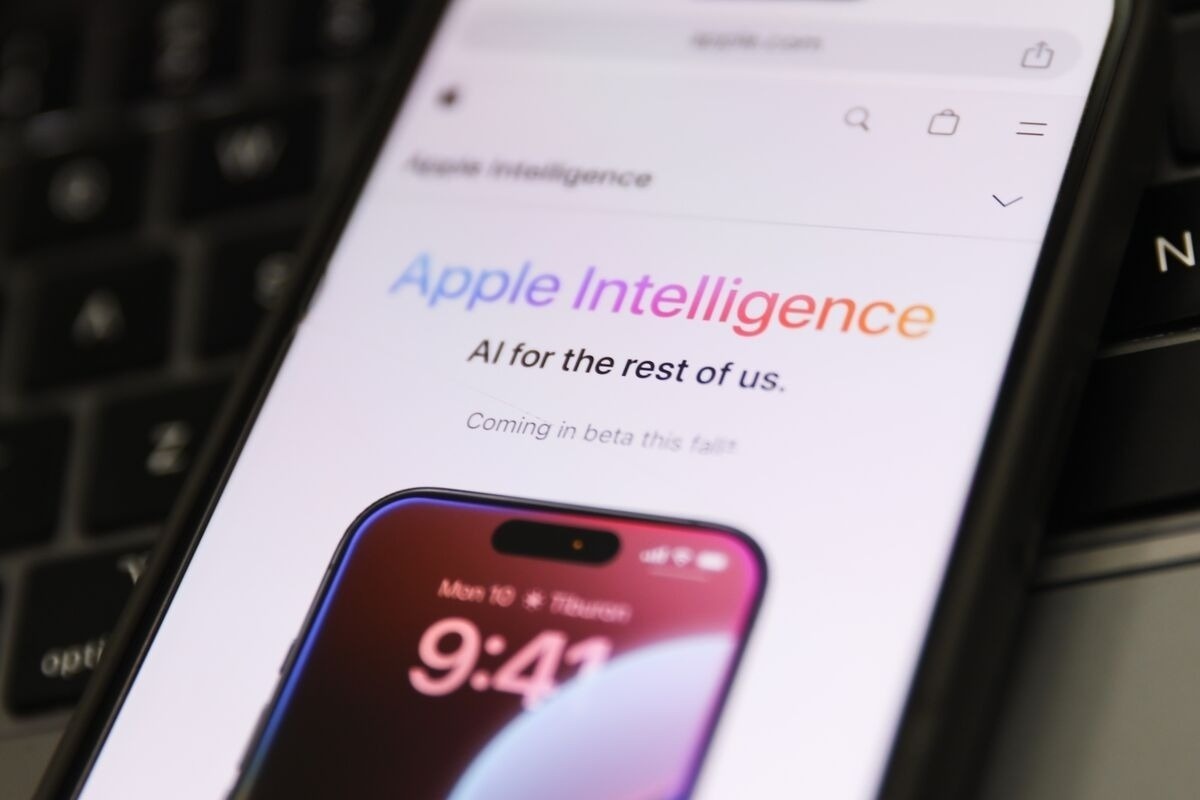
This page introduces Apple Intelligence. Photo: Bloomberg. |
This also contrasts with larger LLMs such as the platform models for OpenAI's ChatGPT, which run on cloud systems on powerful servers. Meanwhile, Apple only implemented OpenAI by releasing ChatGPT integration with Siri.
Apple's services revenue has been consistently growing over the past few years. According to Counterpoint Research , 46% of iPhone users in the US pay a monthly fee for iCloud storage. The figures are 52% and 54% in China and the UK, respectively.
Analysts believe that the willingness of users to spend is a major advantage for Apple. Currently, about a quarter of the company's revenue comes from services. According to research with 60% of global iPhone users, 84% are willing to pay for Apple Intelligence.
"If Siri becomes a true AI companion, how many Apple users will pay for it? In the long run, the numbers are very attractive," analysts from Counterpoint Research emphasized.
Source: https://znews.vn/con-ac-mong-ai-cua-apple-post1559421.html
![[Image] Leaked images ahead of the 2025 Community Action Awards gala.](/_next/image?url=https%3A%2F%2Fvphoto.vietnam.vn%2Fthumb%2F1200x675%2Fvietnam%2Fresource%2FIMAGE%2F2025%2F12%2F16%2F1765882828720_ndo_br_thiet-ke-chua-co-ten-45-png.webp&w=3840&q=75)
![[Live] 2025 Community Action Awards Gala](/_next/image?url=https%3A%2F%2Fvphoto.vietnam.vn%2Fthumb%2F1200x675%2Fvietnam%2Fresource%2FIMAGE%2F2025%2F12%2F16%2F1765899631650_ndo_tr_z7334013144784-9f9fe10a6d63584c85aff40f2957c250-jpg.webp&w=3840&q=75)

![[Photo] Prime Minister Pham Minh Chinh receives Lao Minister of Education and Sports Thongsalith Mangnormek](/_next/image?url=https%3A%2F%2Fvphoto.vietnam.vn%2Fthumb%2F1200x675%2Fvietnam%2Fresource%2FIMAGE%2F2025%2F12%2F16%2F1765876834721_dsc-7519-jpg.webp&w=3840&q=75)
![[Photo] Prime Minister Pham Minh Chinh receives the Governor of Tochigi Province (Japan)](/_next/image?url=https%3A%2F%2Fvphoto.vietnam.vn%2Fthumb%2F1200x675%2Fvietnam%2Fresource%2FIMAGE%2F2025%2F12%2F16%2F1765892133176_dsc-8082-6425-jpg.webp&w=3840&q=75)











































































Comment (0)