

Shrimp and crab farmers in An Minh and An Bien districts ( Kien Giang province ) are now proactively preventing saltwater intrusion by reinforcing dikes and regularly measuring salinity levels in inland canals and rivers before pumping water into their fields.
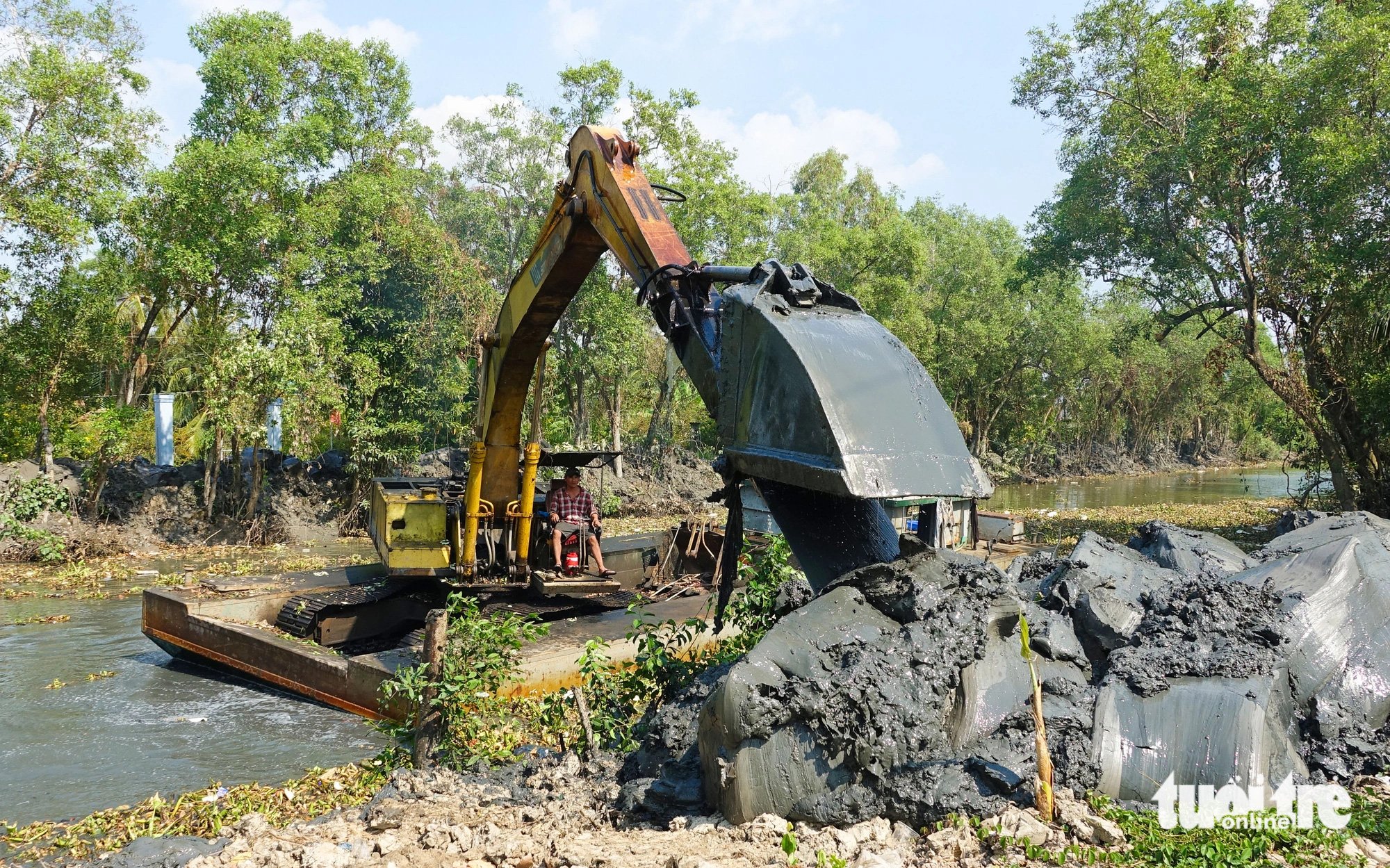
In recent times, Kien Giang province has proactively dredged inland canals to ensure water flow and prevent drought and saltwater intrusion - Photo: CHI CONG
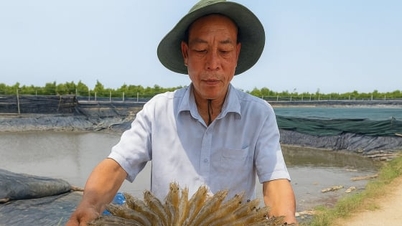
On the afternoon of February 3rd, speaking with Tuoi Tre Online , Mr. Ton Van Tuong, a shrimp farmer in Thuan Hoa commune (An Minh district), said that his family currently has two shrimp and crab ponds covering an area of about 10 hectares. His family's shrimp are developing well.
However, over the past two days, he measured the salinity in the canal and it fluctuated between 28-30‰. This salinity level has decreased compared to the Tet holiday but is still high.
"The Xeo Nhau sluice gate is not yet closed, so saltwater is still penetrating deep into the irrigation canals. To prevent saltwater intrusion, I proactively reinforced the embankments. The water level in my shrimp ponds is currently about 40cm; the canals have about 1m of water."
"From my experience, I've noticed that when the northeast monsoon blows, the salinity increases. Therefore, since there will be no northeast monsoon in February 2025, I'm not worried about the salinity affecting the area," Mr. Tuong added.
According to the Kien Giang Provincial Meteorological and Hydrological Station, the salinity forecast for Kien Giang (February 1-10) indicates that at Xeo Ro station (Cai Lon River), the salinity level is approximately 15‰, a decrease of 3.9‰ compared to the previous week; at Go Quao station (Cai Lon River), the salinity level is approximately 5‰, a decrease of 0.3‰ compared to the previous week; and at An Ninh station (Cai Be River), the salinity level is approximately 10‰, a decrease of 5.3‰ compared to the previous week.
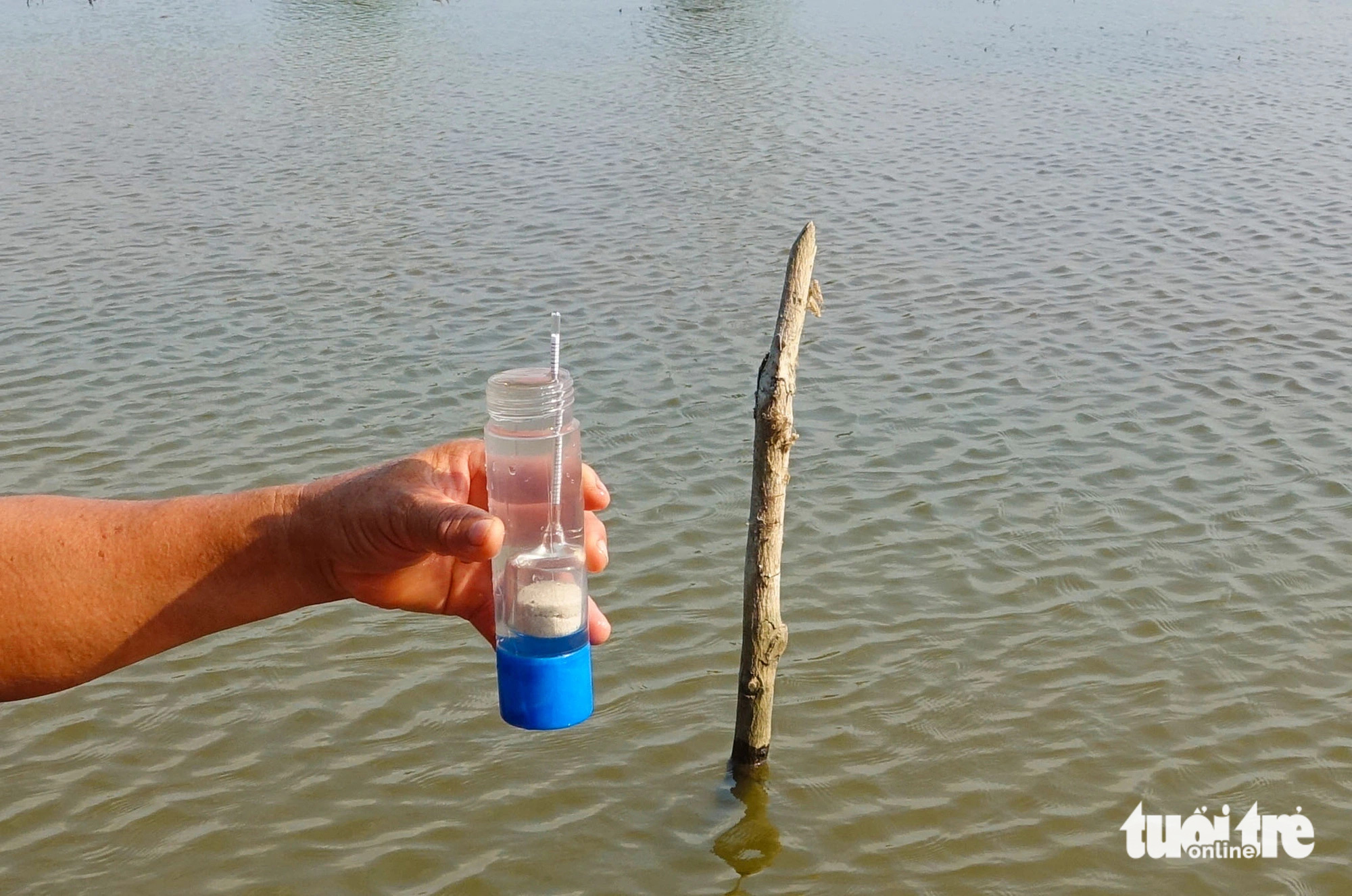
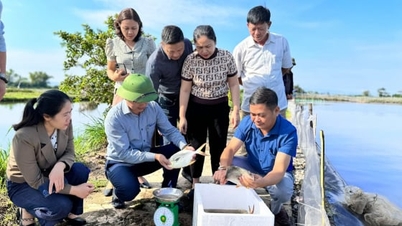
People in Kien Giang measure salinity levels before releasing shrimp into rice paddies - Photo: CHI CONG
The Cai Lon River, with a salinity of 4‰, penetrates approximately 13km inland to the end of Binh An commune (Chau Thanh district); the Cai Be River, with a salinity of 4‰, penetrates approximately 35-38km inland to the Go Quao town area.
Salinity then tended to increase during two high tide periods on February 8-10 and February 24-27. A level I natural disaster risk warning for saltwater intrusion was issued. Simultaneously, a salinity level of 4‰ could affect crops; local residents should proactively measure salinity before using water for irrigation.
Previously, the People's Committee of Kien Giang province had developed a plan to prevent drought, water shortage, and saltwater intrusion, ensuring water resources for agricultural production and daily life during the 2024-2025 dry season in the province.
The province requested the Provincial Department of Agriculture and Rural Development and relevant units to coordinate with the Southern Irrigation Exploitation Company Limited to flexibly operate the Cai Lon - Cai Be sluice gate system, the sluice gate system in Rach Gia City, and the Vam Ba Lich sluice gate (Chau Thanh district) to control salinity.
In addition, the People's Committees of districts and cities are implementing dredging of canals and rivers and building earthen dams to limit saltwater intrusion and ensure agricultural production for the people.
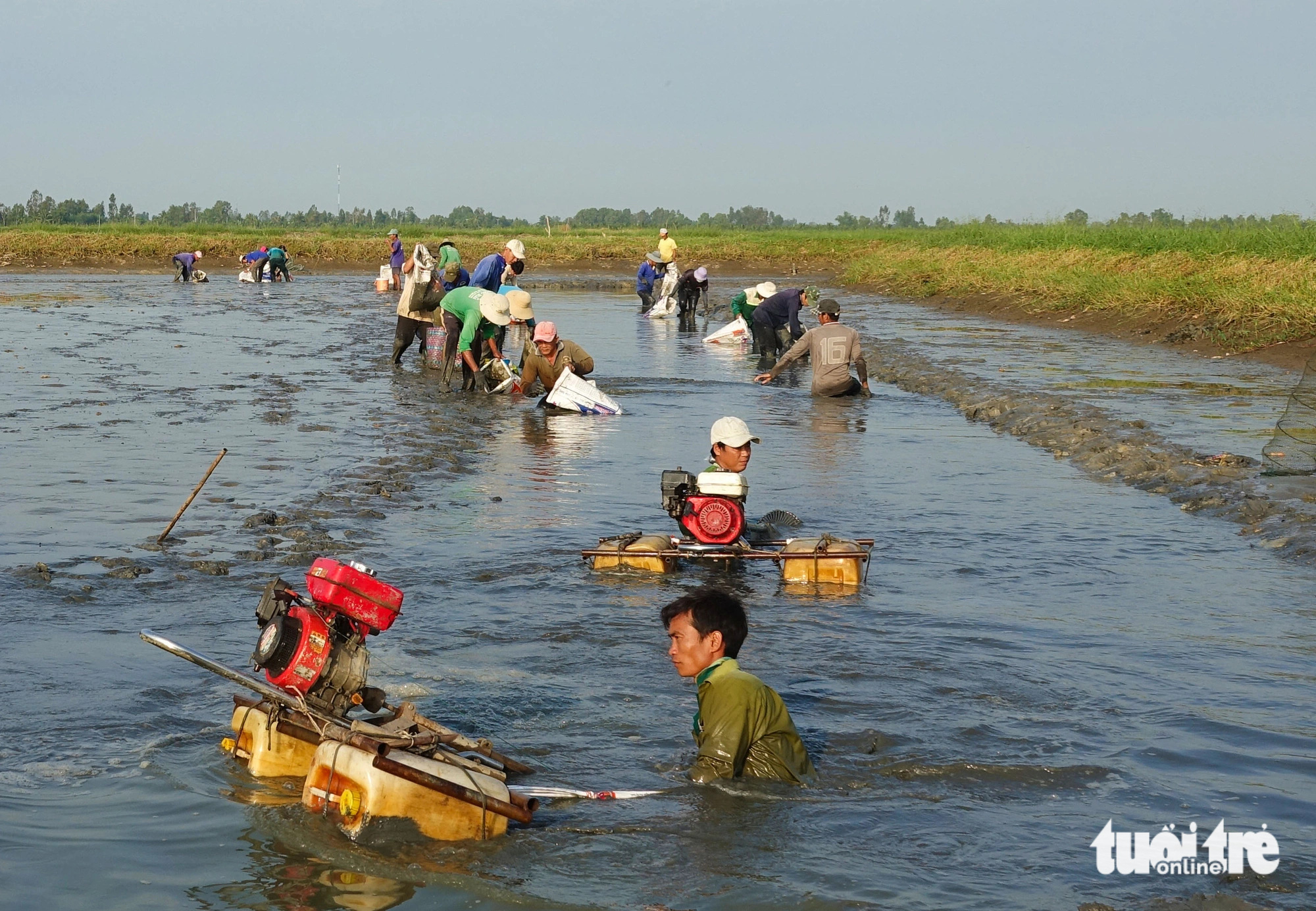
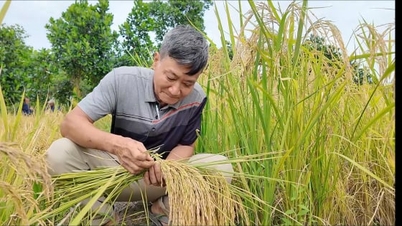
People who raise freshwater prawns in rice paddies are very afraid of sudden saltwater intrusion, which could affect their yield - Photo: CHI CONG
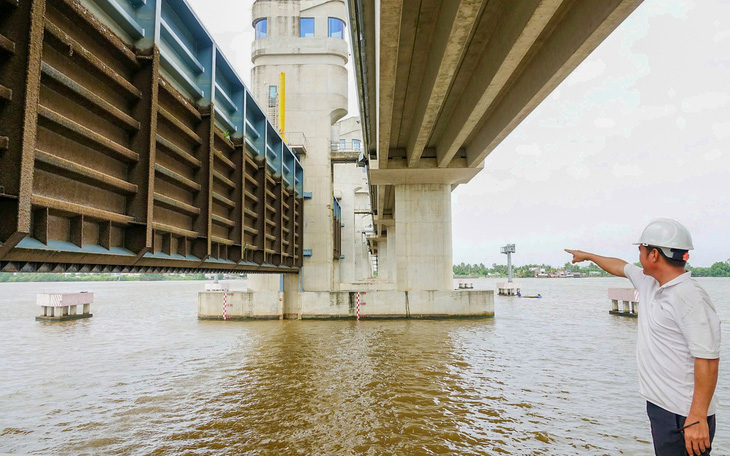 Operating the Cai Lon - Cai Be sluice gates to cope with high tides.
Source: https://tuoitre.vn/dan-nuoi-tom-tren-ruong-lua-kien-giang-lam-nhieu-cach-de-phong-tranh-xam-nhap-man-20250203164814501.htm



























































































Comment (0)