

The floods in October 2020 caused landslides, burying nearly 100 hectares of agricultural land in the upper communes of Ky Anh district ( Ha Tinh province). To date, reclamation efforts remain challenging.
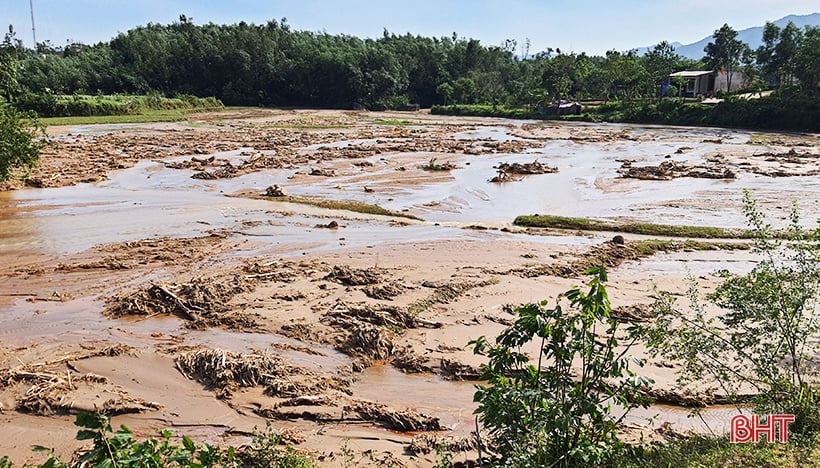
The agricultural fields of Bac Tien village, Ky Thuong commune, were buried under rocks and soil due to a major landslide caused by a flood in October 2020.
After more than three years, returning to the fields of Bac Tien village, Ky Thuong commune, one of the areas most severely affected by the landslide caused by the major flood in October 2020, we were led by village head Nguyen Dinh Thuan to visit the rice paddies that are being abandoned day by day, covered with thick layers of soil and rocks.
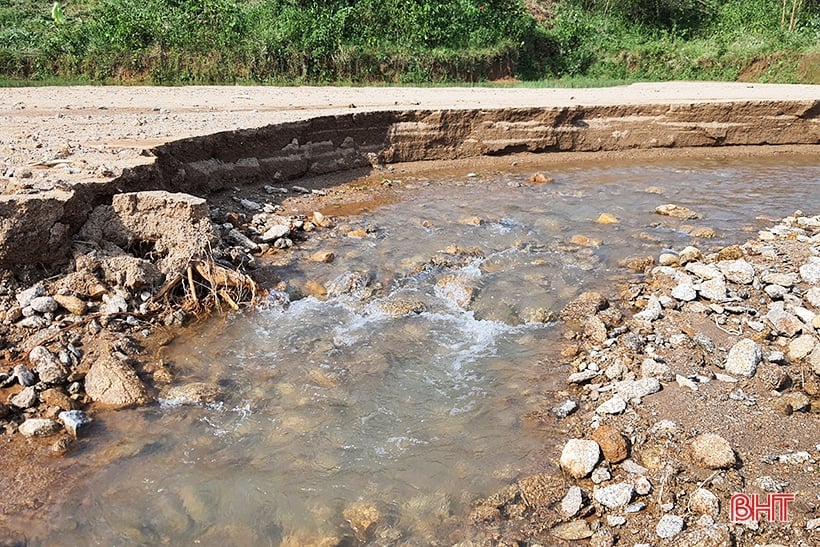
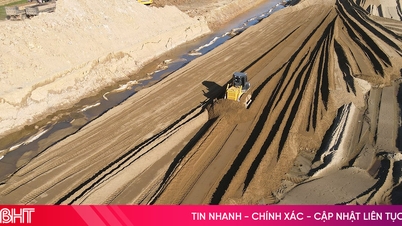
Layers of sand and rocks have buried the surface of the rice fields, in many places several meters thick.
Mr. Thuan said: "After more than 15 hectares of agricultural land in the village were buried by landslides, the people and local authorities focused on removing the soil and reclaiming the land to restore the area. However, due to the enormous amount of soil buried, the rugged terrain, and the difficult economic conditions of the people, only about a few dozen percent of the lightly affected area could be temporarily reclaimed, while the rest had to be left fallow."
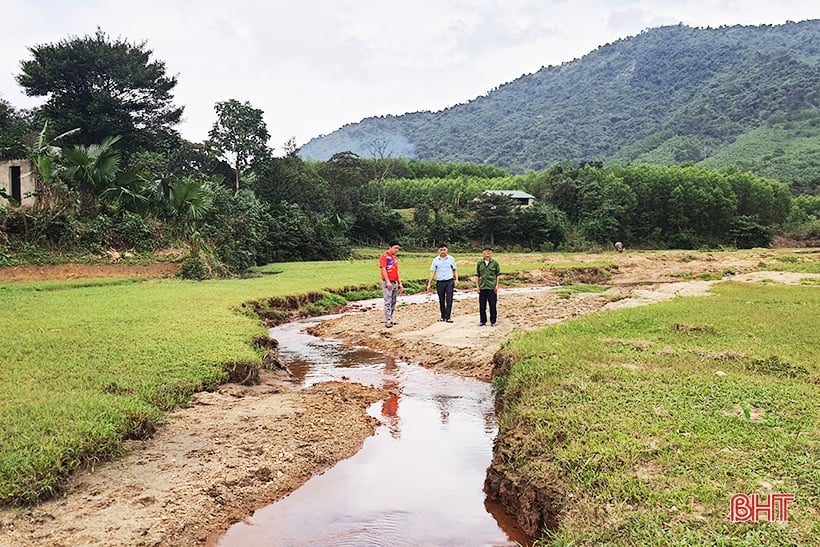
The current state of the fields in Bac Tien village after being buried by landslides three years ago.
For many years, over one sao (approximately 1000 square meters) of rice paddy has been the source of food security for Mrs. Nguyen Thi Thich's family in Tan Ha village, Lam Hop commune. However, since 2020, when the paddy was buried under mud, Mrs. Thich's family has faced numerous difficulties. To have land for production, for the spring crop of 2024, she had to spend over 2 million VND to hire an excavator to reclaim the land.
Ms. Thich said: "Although we've been able to resume production, the removal of the silt has only been partial, not thorough, so the soil quality is much worse than before. Not to mention that every time there's heavy rain, more sand and soil wash down from upstream and continue to accumulate."
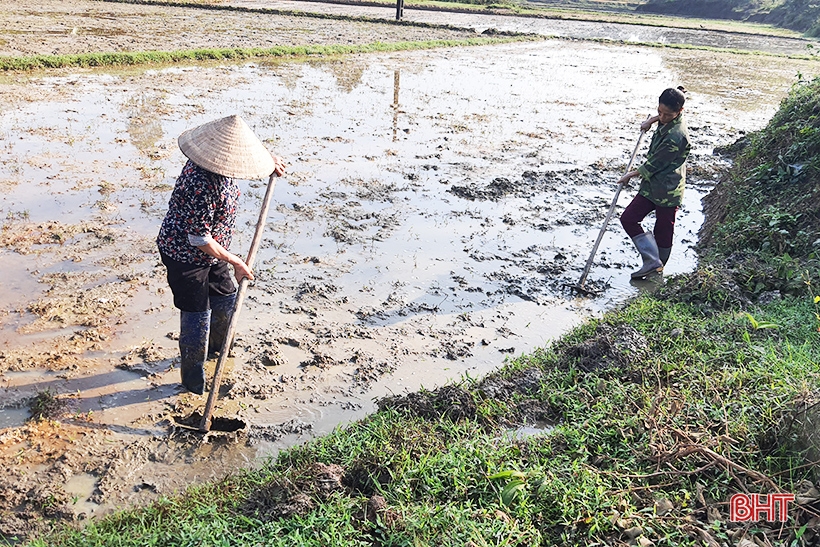
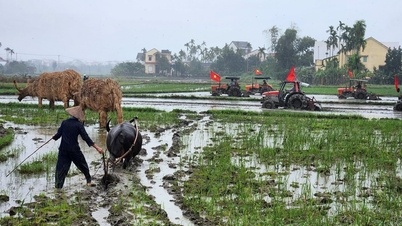
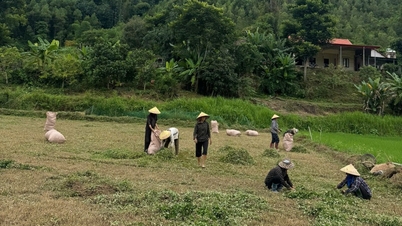
Following their own efforts to improve the land, the people of Tan Ha village, Lam Hop commune, are preparing their rice fields for planting the spring crop.
To date, out of nearly 100 hectares of agricultural land in the communes of Lam Hop, Ky Thuong, Ky Lac, and Ky Son that were buried by landslides during the 2020 floods, the local authorities and residents have only managed to restore less than 50%. Significantly, even the restored land cannot be fully recovered to its original quality; not to mention the risk of re-burying if another major flood or landslide occurs.
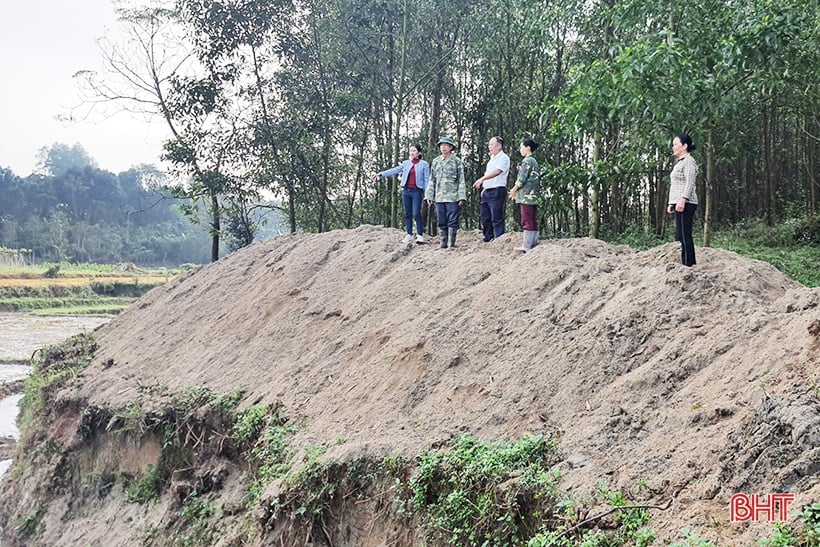
Thousands of cubic meters of sand were dug up by locals from the buried rice fields and moved to the shore.
According to Mr. Pham Thai Hoa, Chairman of the People's Committee of Lam Hop commune, the locality in particular, as well as the communes in the upper Ky Anh region in general, have limited agricultural land, which is further reduced by landslides, significantly impacting the livelihoods of the people.
Therefore, to alleviate the difficulties for the people while awaiting other viable solutions, the commune is currently focusing on raising awareness and encouraging people to make annual efforts to restore areas that can be restored; at the same time, it is allocating a portion of its budget to support land improvement for the people.
“The volume of silt and sand covering agricultural land is enormous, exceeding the capacity of the local government. Currently, remediation efforts to restore production are only being carried out on a small scale by individual households. Therefore, in the long term, the locality hopes that all levels and sectors will conduct thorough surveys and research to soon have specific policies to support the restoration of the entire buried area, helping people feel secure in their production and stabilize their livelihoods,” Mr. Hoa added.
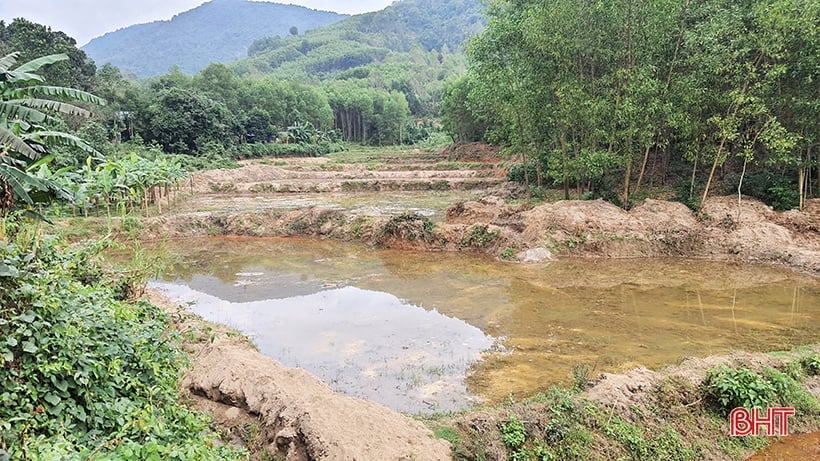
Despite being renovated and repaired, most of these rice paddies cannot be restored to their original state.
The 2024 spring planting season is underway. Farmers in the upper communes of Ky Anh district are also making efforts to improve and restore the land to plant crops in time for the season. However, without strong support from all levels of government to thoroughly restore the land, the people's production will still face significant difficulties.
Vu Huyen
Source
![[Photo] Prime Minister Pham Minh Chinh receives the Governor of Tochigi Province (Japan)](/_next/image?url=https%3A%2F%2Fvphoto.vietnam.vn%2Fthumb%2F1200x675%2Fvietnam%2Fresource%2FIMAGE%2F2025%2F12%2F16%2F1765892133176_dsc-8082-6425-jpg.webp&w=3840&q=75)


![[Photo] Prime Minister Pham Minh Chinh receives Lao Minister of Education and Sports Thongsalith Mangnormek](/_next/image?url=https%3A%2F%2Fvphoto.vietnam.vn%2Fthumb%2F1200x675%2Fvietnam%2Fresource%2FIMAGE%2F2025%2F12%2F16%2F1765876834721_dsc-7519-jpg.webp&w=3840&q=75)
![[Image] Leaked images ahead of the 2025 Community Action Awards gala.](/_next/image?url=https%3A%2F%2Fvphoto.vietnam.vn%2Fthumb%2F1200x675%2Fvietnam%2Fresource%2FIMAGE%2F2025%2F12%2F16%2F1765882828720_ndo_br_thiet-ke-chua-co-ten-45-png.webp&w=3840&q=75)
![[Live] 2025 Community Action Awards Gala](/_next/image?url=https%3A%2F%2Fvphoto.vietnam.vn%2Fthumb%2F1200x675%2Fvietnam%2Fresource%2FIMAGE%2F2025%2F12%2F16%2F1765899631650_ndo_tr_z7334013144784-9f9fe10a6d63584c85aff40f2957c250-jpg.webp&w=3840&q=75)


























































Comment (0)