

 |
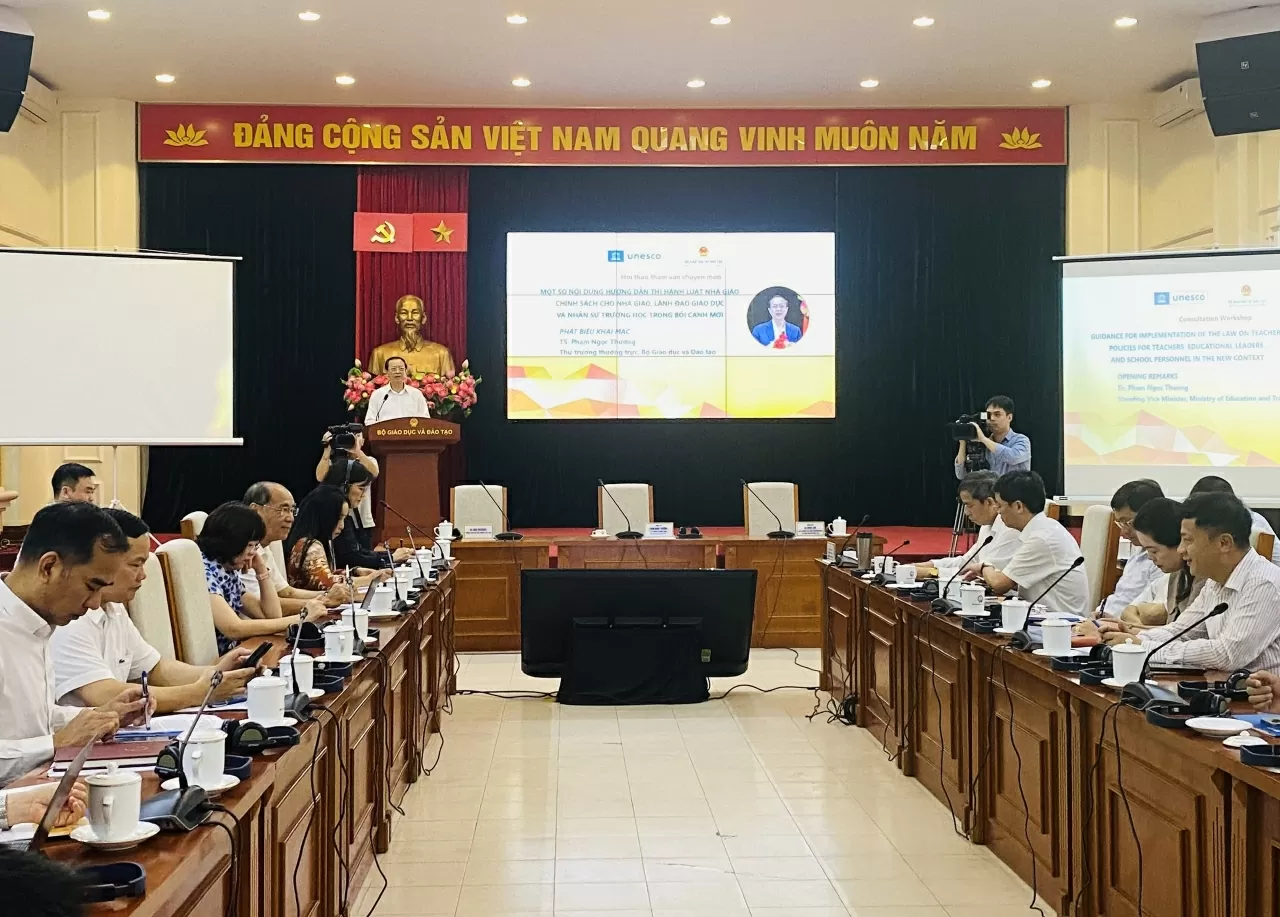
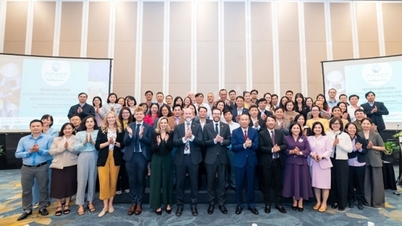
| Overview of the professional consultation workshop on some guidelines for implementing the Law on Teachers, policies for teachers, education leaders, and school personnel in the new context. (Photo: Nguyet Anh) |
This morning (July 17th), the Ministry of Education and Training, in collaboration with UNESCO, organized a workshop to consult on several aspects of the guidelines for implementing the Law on Teachers, policies for teachers, educational leaders, and school personnel in the new context.
Fulfilling the aspirations of over 1 million teachers.
Speaking at the conference, Deputy Minister of Education and Training Pham Ngoc Thuong said that the National Assembly passed the Law on Teachers on June 16, 2025. On July 8, the President promulgated the decree on this Law.
The Deputy Minister emphasized that the Law on Teachers, passed by the National Assembly, fulfills the aspirations of over 1 million teachers and education administrators nationwide. During its implementation, the law will be further amended and supplemented as needed to better meet the goal of developing the teaching staff – a crucial force that determines the quality of education and training.
According to the Deputy Minister, the promulgation of the Law on Teachers demonstrates that the lead agency, the Ministry of Education and Training, along with relevant ministries, sectors, and experts, had meticulously prepared through surveys, research, evaluation, consultation, drafting, and refinement of the law. Therefore, when presented to the National Assembly, the Law received 451 out of 460 votes in favor (over 94% of the total number of delegates).
More importantly, the Law on Teachers fulfills the viewpoint and objectives that the drafting committee and the lead agency had identified from the beginning: developing the teaching staff to meet new requirements and tasks.
The Deputy Minister emphasized: "The promulgation of the Law on Teachers is an important condition and the highest legal basis for implementation. These are also necessary conditions; the sufficient condition is the promulgation and guidance of sub-laws. This process requires effort, intellect, and scientific, practical, and systematic surveys, research, and evaluation."
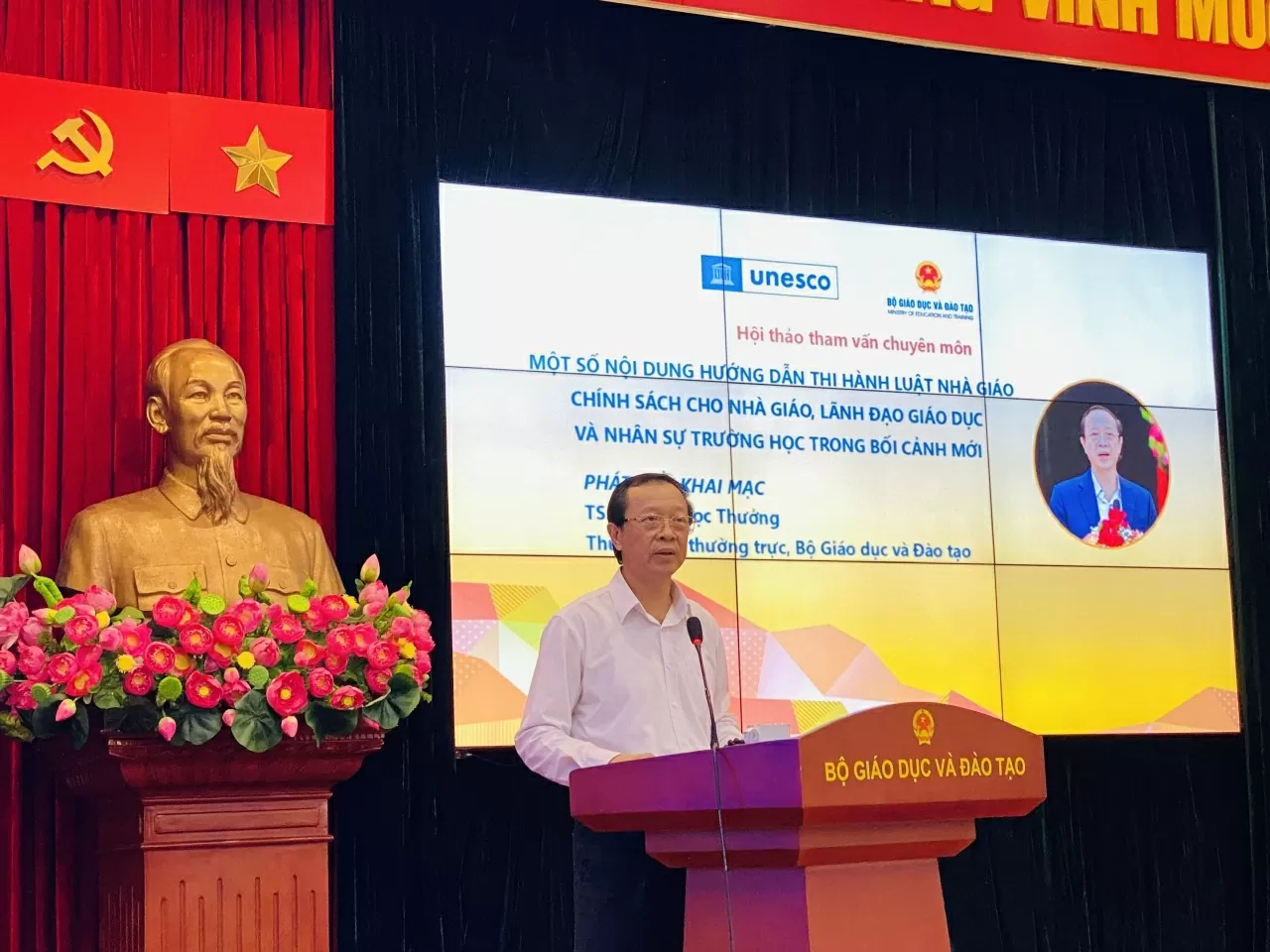 |
| Deputy Minister of Education and Training Pham Ngoc Thuong delivers the opening speech. (Photo: Nguyet Anh) |
For the first time, there is a separate law specifically for teachers.
In his introductory report, Mr. Vu Minh Duc, Director of the Department of Teachers and Educational Management Staff (Ministry of Education and Training), stated that on June 16th, at the 9th session of the 15th National Assembly, the Law on Teachers was passed with 9 chapters and 42 articles. This is an important milestone, with great significance not only for the entire teaching staff and the education sector but also for the entire Vietnamese nation.
For the first time in history, the National Assembly enacted a separate law fully stipulating the position, role, rights, obligations, and policies for the teaching staff; concretizing the major policy of the Party and the State in honoring, caring for, protecting, and developing the teaching staff – the key force of the education cause.
Mr. Vu Minh Duc highlighted five notable points in the regulations of the Law on Teachers. Specifically: Firstly, affirming the status, protecting the honor and prestige of the teaching profession. Secondly, teachers' salaries are ranked highest in the administrative and public service salary scale system. Thirdly, several policies to better reward, support, and attract teachers. Fourthly, standardizing and developing the workforce, improving the quality of education. Fifthly, increasing autonomy for educational institutions and granting proactive authority to the education sector.
The implementation of the policy to establish a two-tiered local government system, along with changes in the current legal system related to the organization of local government and the management of civil servants, has had a significant impact on regulations concerning the recruitment, employment, and management of teachers. This requires the development process to be continuously updated to ensure consistency with changes in the relevant legal system.
Mr. Vu Minh Duc affirmed: "Faced with new demands for breakthrough policies in science, technology, innovation, and digital transformation; and the orientation for breakthroughs in education and training in the coming time... the content of regulations in guiding documents for the implementation of the Law on Teachers must be revolutionary, outstanding, and anticipate the development trends of the era in the new age."
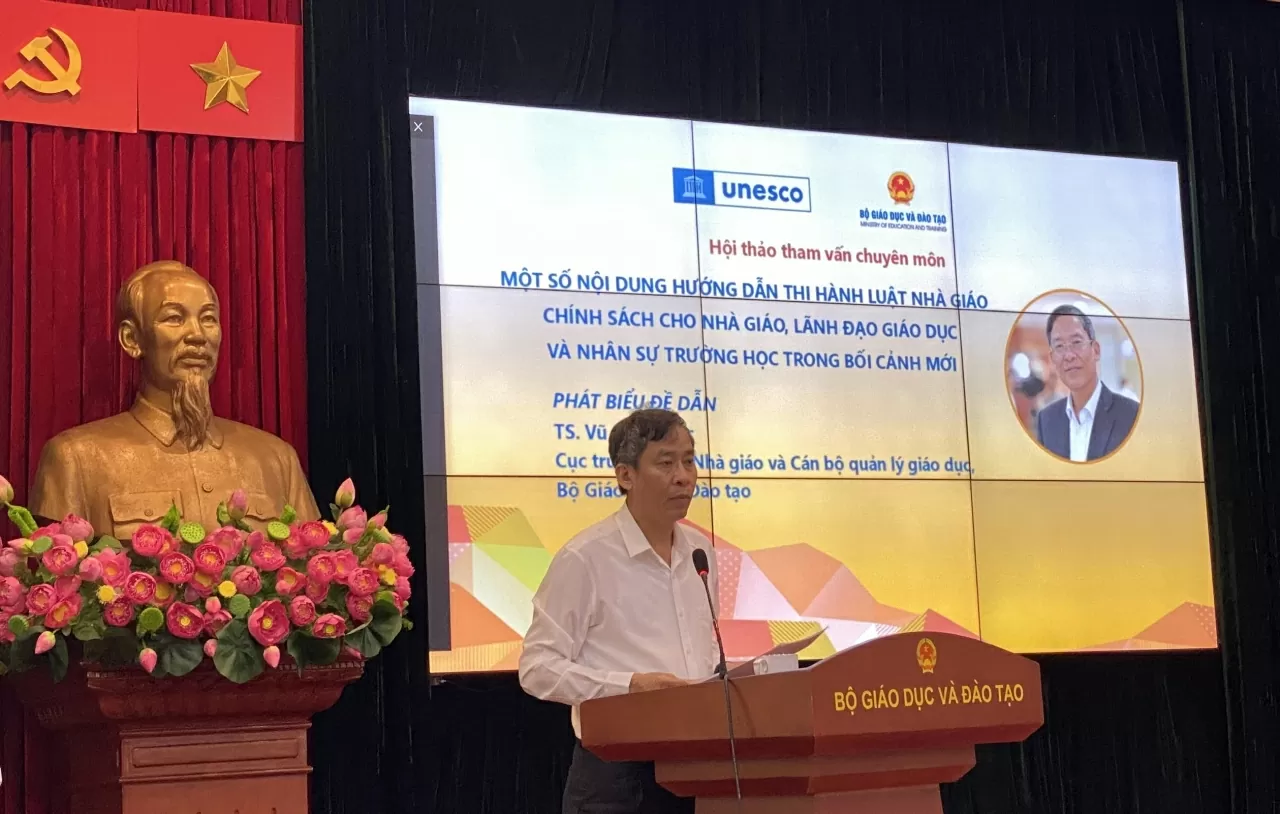 |
| Dr. Vu Minh Duc delivers the opening remarks. (Photo: Nguyet Anh) |
Create a constructive work environment.
Professor Pham Do Nhat Tien, an education expert at UNESCO, stated that the Law on Teachers, built in the spirit of "developmental innovation" of Resolution No. 66-NQ/TW dated April 30, 2025, of the Politburo, is a powerful legal tool for transforming Vietnam's education system. It not only addresses current shortcomings but also ushers in a new era for the teaching profession, where teachers are considered the most valuable asset and the main driving force for educational development.
However, the Law on Teachers, once implemented, will face unforeseen difficulties and challenges from many sides under the influence of political, social, cultural, and economic factors, many of which lie outside of education.
"One of the major challenges today is that, both in our country and around the world, the teaching profession is undergoing profound changes along with education under the impact of global trends related to technological progress, trade instability, geopolitical conflicts, demographic shifts, and sustainable development," said Dr. Pham Do Nhat Tien.
Offering solutions, Mr. Pham Do Nhat Tien suggested that it is necessary to develop teacher training and professional development programs that are transformative, adaptable, and responsive to the evolution of the teaching profession, proactively preparing for the transformation of teaching and learning in educational institutions. He also recommended the early issuance of professional standards for teachers, as open standards that are readily supplemented and updated, serving as a basis for building and forming a lifelong learning ecosystem and ensuring continuous professional development for teachers.
At the same time, we should promote the autonomy, self-determination, and leadership and management skills of teachers to creatively carry out professional activities related to their work, from curriculum and pedagogical activities to classroom management and school administration. We should empower teachers to experiment with new pedagogical methods based on learners' needs, fostering curious and open-minded thinking, and supporting teachers in developing learners' ability to self-regulate and progress.
Furthermore, promoting cooperation and teamwork in the professional activities of educators is crucial: Cooperation is increasingly seen as a core leadership competency and skill for educators. This is because ensuring student success now requires a collective effort where professional development and problem-solving are shared responsibilities.
We need to build a work regime and work environment that promotes cooperation, from awareness to action. This includes training and developing teachers; organizing classes and designing specialized physical spaces for reflection and group work; encouraging learning between schools to build a collective professional identity and share experiences…
Furthermore, it is necessary to promote the development of school culture, with the central core being the standard values of Vietnamese people in the era of industrialization, modernization, and international cooperation, based on the Fourth Industrial Revolution. Within this, the core value is happiness, as both a means and an end of quality education.
"Using school culture as a foundation to perfect, develop, and expand friendly school and happy school models throughout the entire system, creating a constructive working environment for teachers," emphasized Dr. Pham Do Nhat Tien.
Source: https://baoquocte.vn/de-luat-nha-giao-som-di-vao-cuoc-song-321264.html
![[Image] Vietnam's colorful journey of innovation](/_next/image?url=https%3A%2F%2Fvphoto.vietnam.vn%2Fthumb%2F1200x675%2Fvietnam%2Fresource%2FIMAGE%2F2025%2F12%2F14%2F1765703036409_image-1.jpeg&w=3840&q=75)



























































![[Image] Vietnam's colorful journey of innovation](https://vphoto.vietnam.vn/thumb/402x226/vietnam/resource/IMAGE/2025/12/14/1765703036409_image-1.jpeg)






























Comment (0)