

 |
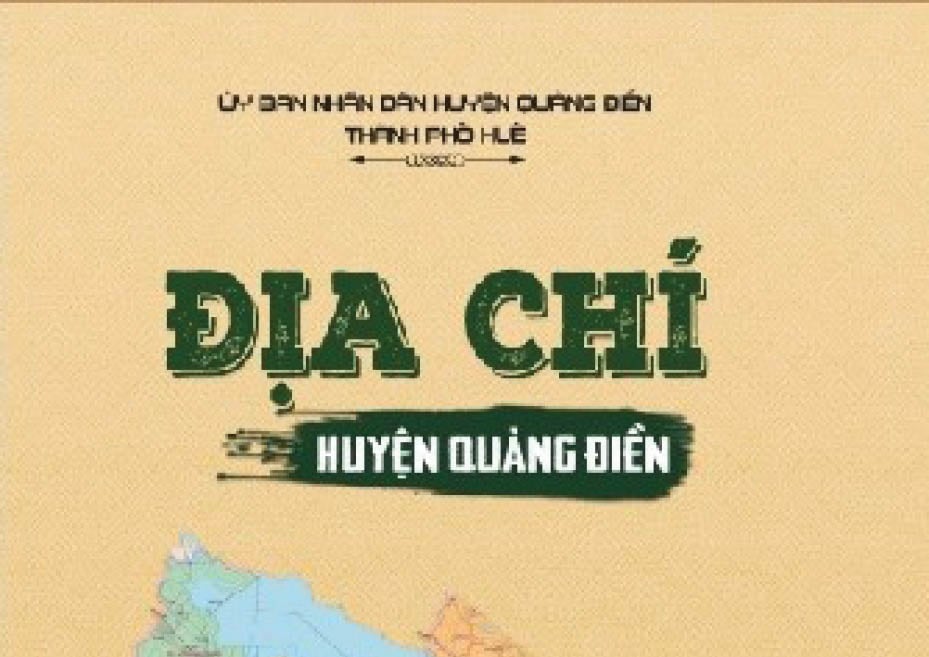
| Cover of the book "Geography of Quang Dien District" |
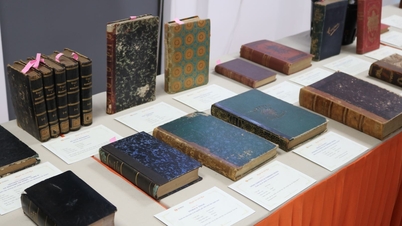
The Quang Dien District Gazetteer features contributions from a team of reputable authors, including: Dr. Phan Tien Dung (Editor-in-Chief), Dr. Nguyen Van Hoa, researcher Nguyen Xuan Hoa, Dr. Le Nam, researcher Tran Dai Vinh, MSc. Nguyen Quang Trung Tien, and MSc. Nguyen Anh Tuan. The book, over 1,000 pages thick, is divided into five parts (Natural; Population and Administration; History; Culture - Society; Economy ), comprising 27 chapters along with introductions, conclusions, and appendices. In addition to the above content, the appendix includes: a list of villages and communes in Quang Dien throughout different periods; a list of Quang Dien scholars; a list of Heroes of the Armed Forces; Vietnamese Heroic Mothers; a list of members of the District Party Committee Standing Committee throughout different periods; maps of Quang Dien through several historical periods; and documentary photographs…
Quang Dien is a district of Thua Thien Hue province, now Hue city, directly under the central government. The name Quang Dien originated during the time of Lord Nguyen Hoang (1558-1613), and by 1570, the name Quang Dien began to be widely used in documents and historical records. This name contributed to the formation of the long history of the ancient Thuan Hoa region and later Phu Xuan - Thua Thien Hue, and the present-day Hue city.
It can be said that on this land of outstanding people and rich history, many communities have joined forces and left their mark on various cultural layers. As a region that has been the pinnacle of many historical periods, it is also a place where many famous figures have gathered. Many prominent Confucian scholars and mandarins have emerged here, such as: during the monarchical era, Phan Đình Bình, Đặng Huy Cát, Cao Đăng Đệ, Đặng Văn Hòa, Đặng Hữu Phổ, Trần Thúc Nhẫn, Nguyễn Văn Thành, Hoàng Thông, Đặng Huy Trứ... In modern times, there are Nguyễn Chí Thanh, Tố Hữu, Nguyễn Húng, Trần Quang Nợ, Thích Thanh Trí, Hoàng Xuân Tùy... Continuing this tradition, the people of Quảng Điền are upholding this spirit of learning, with hundreds of intellectuals contributing to their homeland and country in various fields.
Quang Dien is also a region with many historical and cultural relics such as: Hoa Chau Citadel, the system of Champa steles, Phuoc Yen Palace relics, Bac Vong Palace relics, the tomb and temple of Dang Huu Pho, the tomb of Tran Dinh Ba, the site of the Nam Duong Resistance Conference, the General Nguyen Chi Thanh Memorial Area, the poet To Huu Memorial Area...
Due to the historical nature of the region, many intangible cultural values still deeply exist in social life, such as: beliefs in worshipping gods, ancestors, and spirits; customs and traditions, culinary culture, clothing culture, life cycle rituals, painting, sculpture, architecture, etc.
The Quang Dien District Gazetteer will meet the essential needs of scientists while also being accessible to the general public for reading and understanding. This is a valuable scientific resource for traditional education, fostering pride in one's homeland and providing local authorities with additional materials for research, consultation, and planning of appropriate development programs for the region.
Source: https://huengaynay.vn/van-hoa-nghe-thuat/dia-chi-huyen-quang-dien-154806.html


















































































Comment (0)