

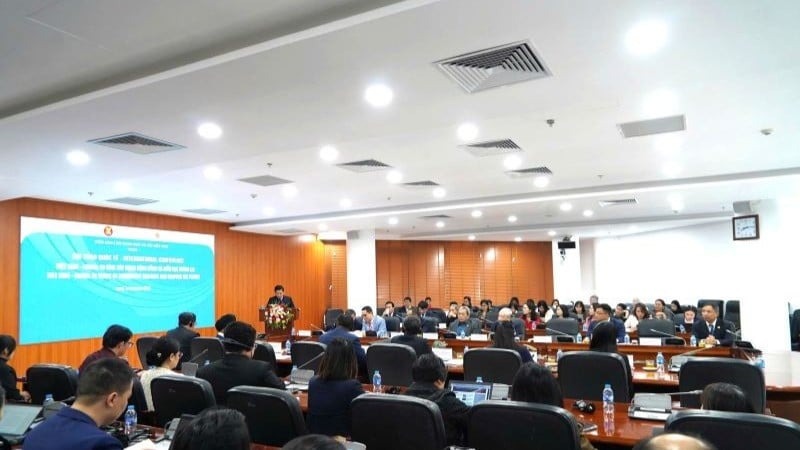
30 years of community building and shaping the future.
On December 16th, in Hanoi, the Vietnam Academy of Social Sciences (VASS) organized an international scientific conference on the theme “Vietnam-ASEAN: 30 Years of Community Building and Shaping the Future”. The conference was held to commemorate the 30th anniversary of Vietnam's accession to the Association of Southeast Asian Nations (ASEAN), with the participation of experts, scientists, representatives from state advisory and management agencies, diplomatic agencies, and domestic and international research organizations.
The workshop serves as a scientific forum for exchanging, discussing, and evaluating Vietnam's three-decade journey in ASEAN; clarifying the achievements and contributions of Vietnam in the process of building the ASEAN Community; and identifying challenges and directions for cooperation in the context of a rapidly changing regional and international environment.
In his opening remarks at the seminar, Professor Dr. Le Van Loi, President of the Vietnam Academy of Social Sciences, stated that the most overarching benefit of Vietnam's accession to ASEAN is the formation of a peaceful and stable regional environment, which is an essential foundation for ensuring security and socio-economic development. Becoming an ASEAN member helps Vietnam contribute to reshaping relations among Southeast Asian nations towards friendship, stability, and sustainability, based on comprehensive cooperation at the bilateral, regional, and multilateral levels.
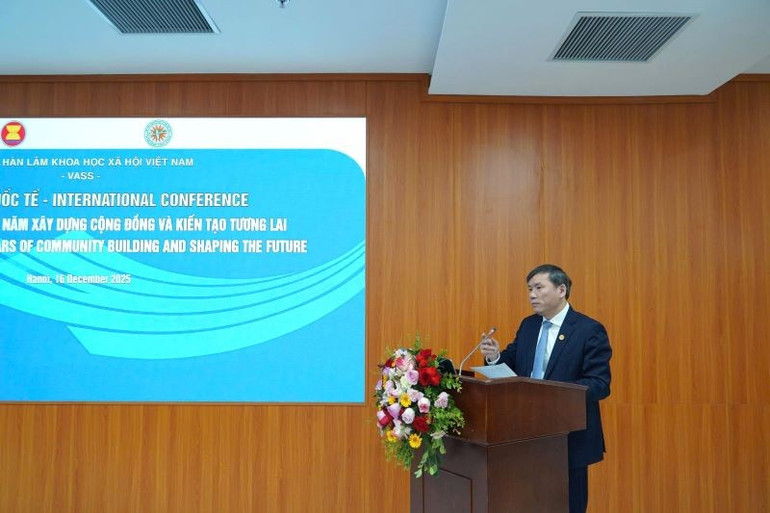
Economically, joining ASEAN opens up a vast market to boost exports, expand investment, and promote economic integration. Participation in the ASEAN Economic Community (AEC) helps Vietnam attract FDI and modern technology from multinational corporations, boosting economic growth and creating jobs. The AEC also provides a foundation for Vietnam to expand international integration through the signing of Free Trade Agreements (FTAs) with major partners. Furthermore, ASEAN integration contributes to reforming domestic economic institutions, improving policies and laws, and helping businesses enhance their competitiveness to participate more deeply in regional and global value chains.
In the socio-cultural field, ASEAN provides opportunities for Vietnam to enhance cultural exchange and promote its national culture abroad. Cooperation within the framework of the ASEAN Socio-Cultural Community (ASCC) helps Vietnam address environmental and social welfare issues. In particular, Vietnamese people benefit from a peaceful, secure, and stable environment, access to a wider variety of goods and services, and more job opportunities in other ASEAN member countries.
Over the past 30 years, Vietnam's journey within ASEAN has left remarkable marks. From a nation gradually integrating, Vietnam has risen strongly, becoming an active, proactive, and responsible member, contributing to the overall development of the ASEAN Community. Vietnam's role in ASEAN is increasingly appreciated thanks to its positive and effective contributions in many fields, as well as its continuously improving political and economic stability and international standing.
Vietnam's outstanding contributions
Over the past 30 years, Vietnam has made many positive contributions to the ASEAN community, such as:
Promoting ASEAN unity and central role: Vietnam remains steadfast in its commitment to the principle of consensus and ASEAN's central role in the evolving regional structure. We have actively participated in and chaired numerous initiatives aimed at strengthening internal solidarity and enhancing ASEAN's capacity to respond to regional and global challenges.
Contributing to the building of a strong ASEAN Community: Vietnam has proactively and actively participated in the process of building the three pillars of the ASEAN Community: political-security, economic, and socio-cultural. We have contributed to the formation of the ASEAN Community Vision 2025 and are actively implementing comprehensive plans to realize that vision.
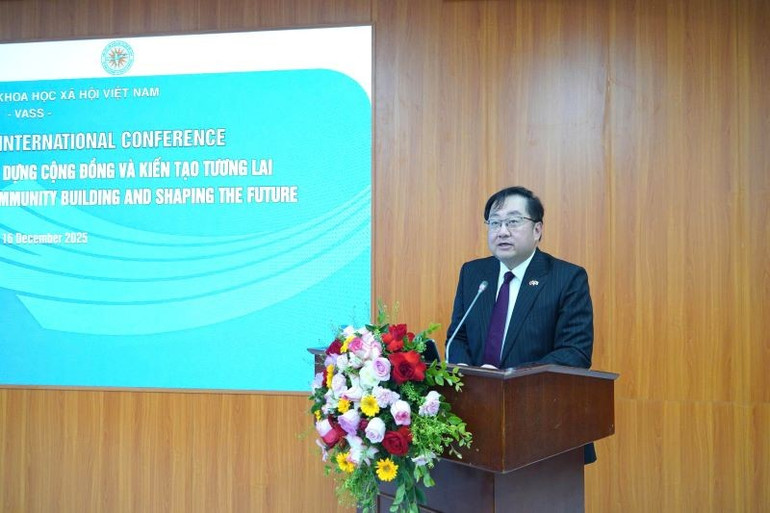
Successfully chairing numerous important conferences and events: Vietnam has held the ASEAN chairmanship three times, in 1998, 2010, and 2020, as well as chairing many other important events. We have excellently fulfilled our role, proposing many initiatives and successfully promoting ASEAN's cooperation agendas. Particularly in the context of the Covid-19 pandemic, Vietnam demonstrated a high sense of responsibility, contributing to maintaining solidarity and responding to the crisis alongside ASEAN countries.
Actively participating in regional and international cooperation mechanisms: Vietnam has contributed to expanding and deepening ASEAN's external relations with external partners, actively participating in mechanisms such as ASEAN+3, EAS (East Asia Summit), ARF (ASEAN Regional Forum), ADMM+… promoting dialogue and cooperation in many fields.
Boosting connectivity and sustainable development: Vietnam continues to promote enhanced regional connectivity in infrastructure, economy, and people-to-people exchanges, contributing to building a prosperous and sustainably developed ASEAN. Vietnam also actively shares experiences and expands cooperation in responding to climate change and promoting green and inclusive development.
Difficulties and challenges
Professor, Doctor Le Van Loi noted that the difficulties and challenges the ASEAN region is currently facing include:
Firstly , the complex developments in the regional and international situation, especially the strategic competition between major powers, threaten peace and stability, as well as the principle of consensus and the central role of the Association.
Secondly , internal challenges are hindering the progress of cooperation and integration within ASEAN, even undermining the bloc's central role in an increasingly volatile world.
Thirdly , non-traditional security challenges such as climate change, cybersecurity, natural disasters, epidemics, and the rise of protectionism require member states to strengthen their resilience and adaptability.
Fourth, there is a necessary requirement to innovate the development model and enhance competitiveness in the context of the rapidly unfolding Fourth Industrial Revolution.
In the new context, trends such as digital transformation, green economic development, circular economy, and innovation are gradually becoming important drivers of growth. ASEAN has adopted the ASEAN Vision 2045 towards a resilient, dynamic, innovative, united, people-centered, and inclusive region, reflected in key objectives such as green economy, innovation, digital transformation, sustainable development, and enhanced regional connectivity.
Facing new opportunities and challenges, Vietnam has actively implemented Resolution 57-NQ/TW on breakthroughs in national science, technology, innovation, and digital transformation; and Resolution 59-NQ/TW on international integration in the new situation, emphasizing comprehensive and deep integration based on strong internal strength, not merely opening up but proactively contributing to the development of the region and the world, with a focus on economic development coupled with science and technology, national defense and security, and preserving cultural identity, with people and businesses at the center, aiming to build an independent, self-reliant, rapidly developing, and sustainable economy in the new era. Vietnam's foreign policy priority in the coming period is to continue working with ASEAN to build a strong, united community, contributing to peace, stability, and prosperity in the region.
Supplementing scientific arguments to advise on policies for developing Vietnam-ASEAN relations.
In his opening remarks at the seminar, Dr. Nguyen Xuan Cuong, Director of the Asia-Pacific Research Institute, emphasized that over the past 30 years, Vietnam has developed alongside ASEAN. From a newly joined member, Vietnam has quickly affirmed its role as an active, responsible, and proactive member in all ASEAN activities.
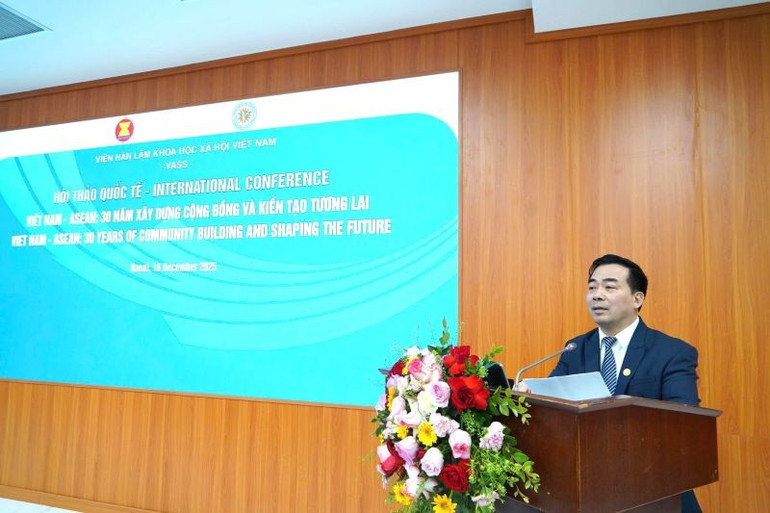
Vietnam has held the ASEAN chairmanship three times, in 1998, 2010, and 2020, completing negotiations on many key economic agreements such as the ASEAN Trade in Goods Agreement (ATIGA) and the Regional Comprehensive Economic Partnership (RCEP). It has also participated in building and implementing the ASEAN Community based on three main pillars, contributing to expanding and deepening ASEAN's external relations with partners outside the region. These are vivid examples of Vietnam's remarkable growth and its constructive role in the regional integration process.
Through ASEAN, Vietnam has gradually enhanced its international standing. From a country undergoing reform, Vietnam has become a reliable partner, a pillar of cooperation and stability, and an active member shaping the future of the region. Vietnam has always proactively integrated, possesses a long-term strategic mindset, and makes substantial contributions to regional processes ranging from economics and security to science, technology, and innovation.
The workshop focused on two main themes. Session one, themed "30 Years of Vietnam-ASEAN: Achievements, Challenges, and Lessons Learned," reviewed the past journey, assessed Vietnam's significant contributions to the pillars of the ASEAN Community, while also identifying remaining challenges and drawing valuable lessons for the future. In particular, the perspectives of foreign experts helped Vietnam better understand its prestige, its mediating role, and its ability to promote dialogue in maintaining regional peace and security. This is an important basis for drawing valuable lessons for the next stage of development.
Session two, themed “ASEAN 2045: Towards a Resilient, Connected, and Adaptable Community,” saw scholars discuss the prospects and development direction of the ASEAN Community in the new global context. The presentations clarified the dynamics shaping a resilient and connected ASEAN Community, a regional cooperation structure amidst strategic competition, economic volatility, and non-traditional security challenges.
Furthermore, the discussions also delved into analyzing the role of science, technology, and innovation in regional development, particularly in relation to the ASEAN Action Plan on Science, Technology, and Innovation 2026-2035 (APASTI 2026-2035), demonstrating that science and technology are becoming the most important driving force for ASEAN to enhance its competitiveness and adaptability to the rapid changes of the digital age.
The subsequent discussions delved into specific issues, including positioning Vietnam's role in ASEAN by 2030 and the vision for 2045, and the Vietnam-ASEAN Cooperation Vision to 2045, aiming towards a strong, inclusive, and innovative Community.
The presentations and opinions at the workshop will supplement the scientific and practical arguments serving research and policy advice, while clarifying Vietnam's role and direction of participation in ASEAN cooperation, thereby contributing to the process of strengthening a united, resilient, and sustainably developing ASEAN Community.
Source: https://nhandan.vn/dien-dan-khoa-hoc-danh-gia-toan-dien-quan-he-viet-nam-asean-post930640.html
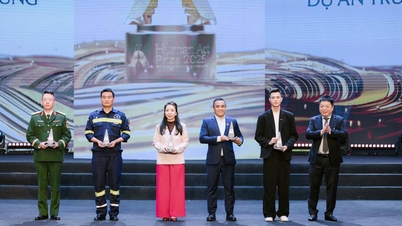
![[Image] Leaked images ahead of the 2025 Community Action Awards gala.](/_next/image?url=https%3A%2F%2Fvphoto.vietnam.vn%2Fthumb%2F1200x675%2Fvietnam%2Fresource%2FIMAGE%2F2025%2F12%2F16%2F1765882828720_ndo_br_thiet-ke-chua-co-ten-45-png.webp&w=3840&q=75)
![[Photo] Prime Minister Pham Minh Chinh receives the Governor of Tochigi Province (Japan)](/_next/image?url=https%3A%2F%2Fvphoto.vietnam.vn%2Fthumb%2F1200x675%2Fvietnam%2Fresource%2FIMAGE%2F2025%2F12%2F16%2F1765892133176_dsc-8082-6425-jpg.webp&w=3840&q=75)
![[Photo] Prime Minister Pham Minh Chinh receives Lao Minister of Education and Sports Thongsalith Mangnormek](/_next/image?url=https%3A%2F%2Fvphoto.vietnam.vn%2Fthumb%2F1200x675%2Fvietnam%2Fresource%2FIMAGE%2F2025%2F12%2F16%2F1765876834721_dsc-7519-jpg.webp&w=3840&q=75)
![[Live] 2025 Community Action Awards Gala](/_next/image?url=https%3A%2F%2Fvphoto.vietnam.vn%2Fthumb%2F1200x675%2Fvietnam%2Fresource%2FIMAGE%2F2025%2F12%2F16%2F1765899631650_ndo_tr_z7334013144784-9f9fe10a6d63584c85aff40f2957c250-jpg.webp&w=3840&q=75)












![[Video] Bach Mai Hospital puts into operation a group of the world's most modern equipment.](https://vphoto.vietnam.vn/thumb/402x226/vietnam/resource/IMAGE/2025/12/17/1765931442107_dung00-58-18-13still010-jpg.webp)








































Comment (0)