

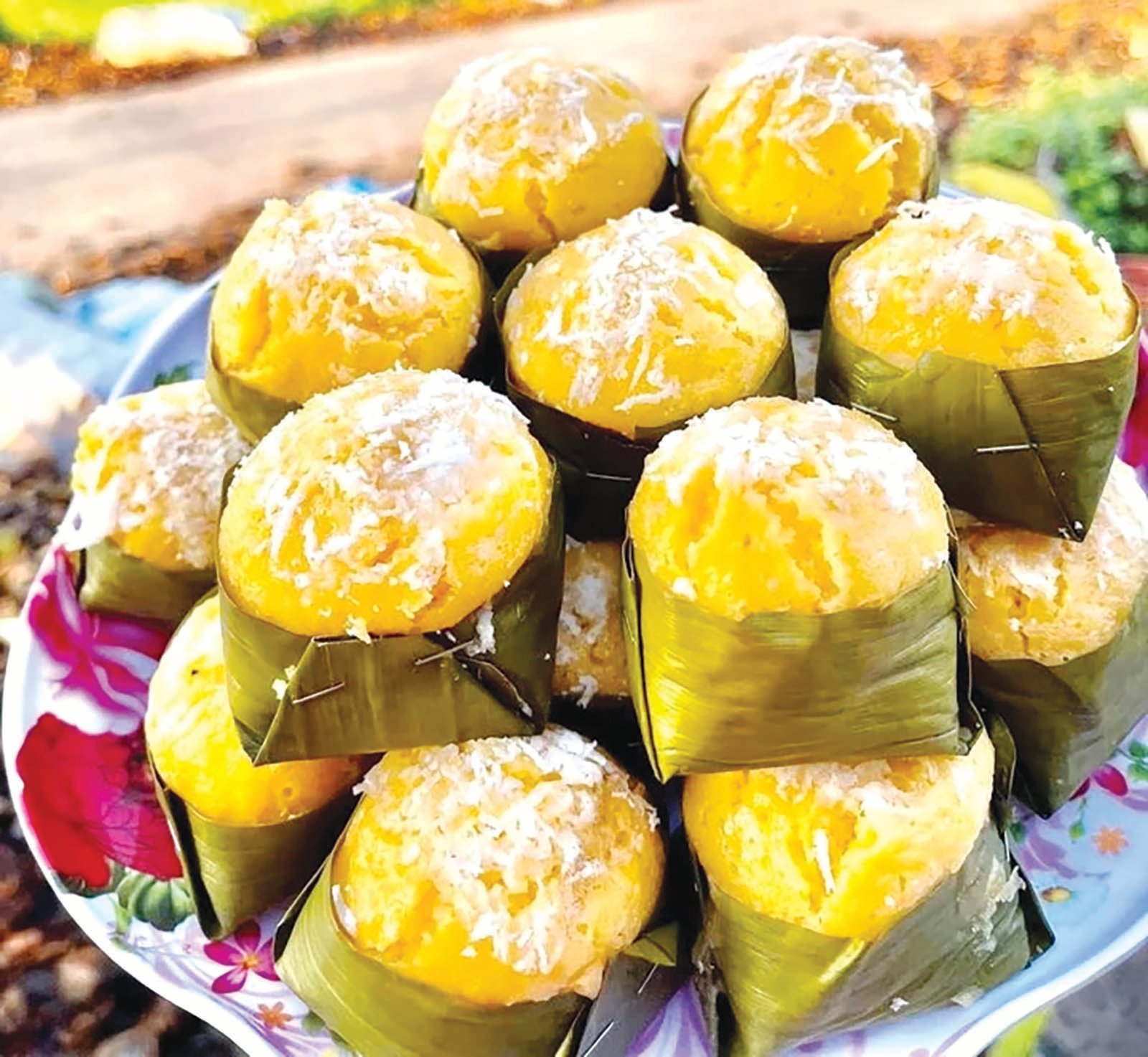
Palm sugar rice cake - a famous delicacy in the Bay Nui region.
Among the traditional Khmer cakes, ka tum is considered the most famous due to its charming appearance. As one of the few people who have preserved the recipe for ka tum, artisan Neang Phuong, residing in O Lam commune, said: “The ingredients for ka tum include: soaked glutinous rice, white beans, grated coconut, Siamese bananas, and a little sugar and salt. The special feature of the cake is that the outer layer is woven from palm leaves into a shape resembling a pomegranate, with a distinctive four-petaled flower at the top. Making just one outer layer takes about 15 minutes.” When cooked, the cake has a light yellow color from the leaves, and the filling is soft and fragrant with the aroma of coconut combined with the richness of the beans and a light sweetness, making it very popular. Typically, ka tum is made by the Khmer people during Tet (Vietnamese New Year) and festivals such as Chol Chnam Thmay and Sene Dolta.
Another type of Khmer cake worth mentioning is Num Khnhay. It's made from washed glutinous rice, pounded into a fine paste, dried, and mixed with beaten egg whites to form ginger-shaped pieces. These are then deep-fried until puffed up and golden brown. The final step is coating the cakes in sugar syrup. The secret to success lies in the precise ratio of flour and eggs and the frying technique to ensure the cakes are crispy, beautifully puffed up, and evenly coated with sugar. On wedding days, the Khmer people often arrange these ginger cakes into a beautiful "cake tower," placed in a prominent position, symbolizing fertility and community unity. However, this type of cake is not common in daily life; the Khmer people only make it during festivals due to the elaborate preparation process.
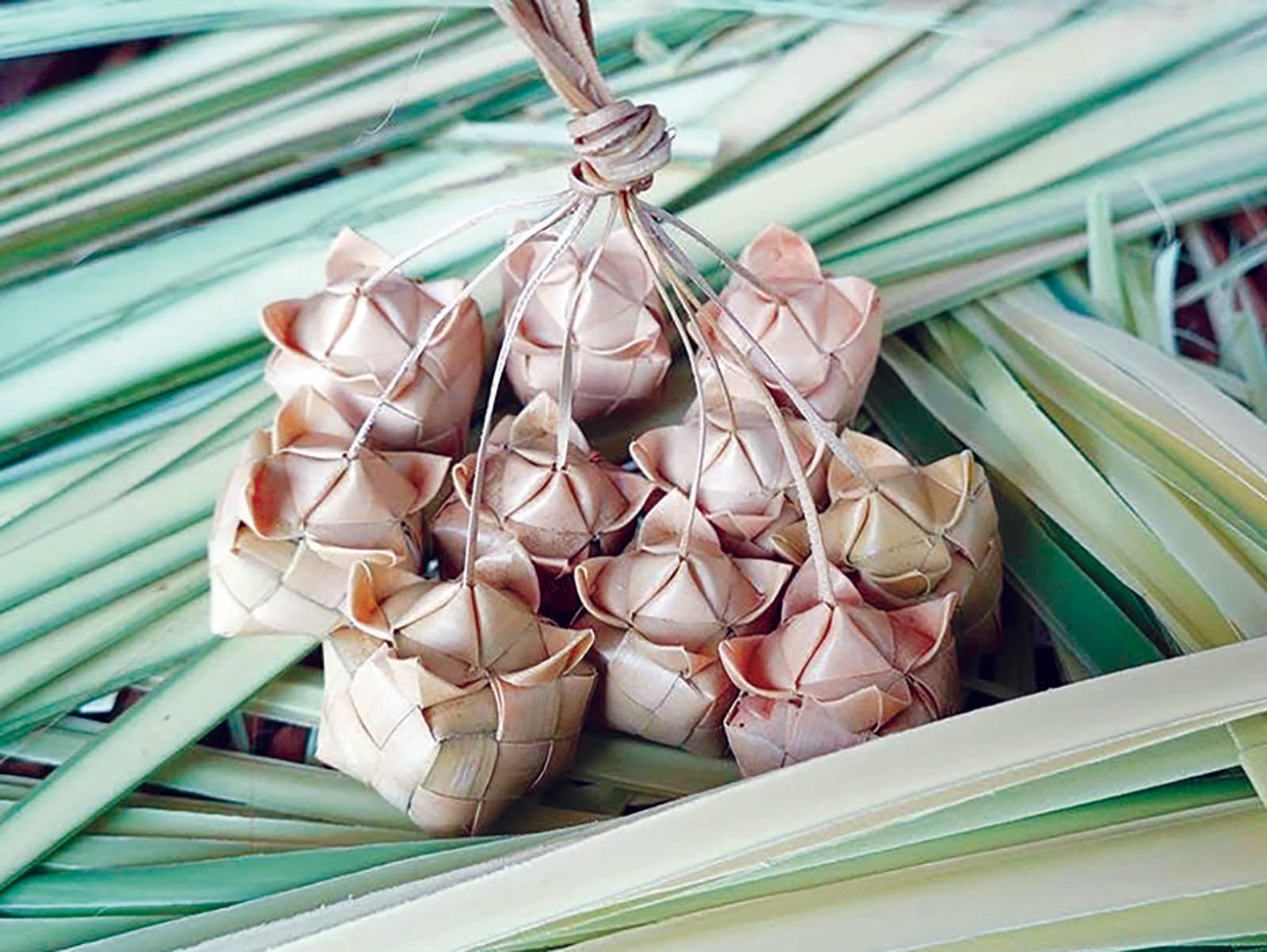
Ka tum cake attracts diners with its charming appearance.
In the religious life of the Khmer people, bánh tét (sticky rice cake) is an important offering. To make bánh tét, the baker must carefully prepare the ingredients. Grated coconut is squeezed to extract the coconut milk, which is then boiled to make coconut cream; sticky rice is soaked overnight, mixed with coconut cream, salt, and sugar to enhance the flavor; ripe bananas are used as the filling. Typically, the cake is wrapped in banana leaves, and when cooked, it has the fragrant aroma of sticky rice, the richness of coconut cream, and the delicate sweetness of the filling. In traditional Khmer weddings, bánh tét is displayed in the most prominent place, symbolizing the wish for a happy and prosperous marriage. When bánh tét is used in festivals, it signifies respect and gratitude to ancestors who have contributed to the birth and upbringing of the family, and a connection to one's roots.
Palm sugar steamed rice cake is also a popular dish among the Khmer people, favored by diners from many places. This type of cake uses palm sugar, rice flour, and fermented rice to create a fluffy texture. When steamed, it has a bright yellow color and the aroma of palm sugar blends with the characteristic fermented scent of fermented rice. While other Khmer cakes must be ordered in advance or sold during festivals, palm sugar steamed rice cake is easier to buy. Along the roads in the Bay Nui area, there are many stalls selling specialties, including palm sugar steamed rice cake with its intoxicating aroma.
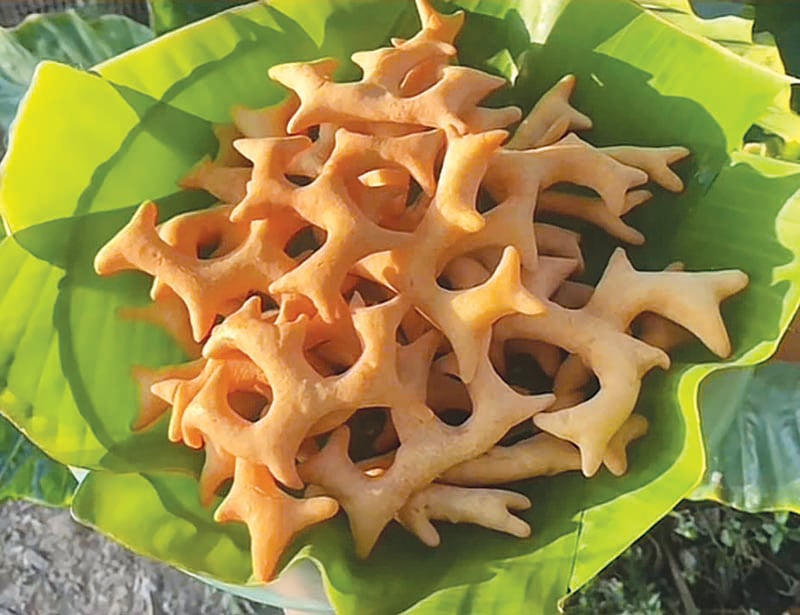
Num Khnhay cakes are meticulously prepared.
Ms. Neang Chanh, a resident of Tinh Bien ward, said: "Every day I open a small stall selling palm sugar rice cakes along with palm fruit and palm juice to travelers. The cakes sell very quickly; as soon as a group of tourists arrives, they all buy them up." In the past, palm sugar rice cakes were made by the Khmer people for offerings or as a family meal. Later, seeing that many diners liked them, the cakes were made for sale and became a famous delicacy far and wide.
A common distinguishing feature among the traditional Khmer cakes is the readily available ingredients in their local environment, closely linked to the indigenous ecosystem, and the handcrafted processing techniques passed down through generations. From pounding the flour in a stone mortar, weaving the dough by hand, to skillfully frying or steaming the cakes to achieve the perfect crispness or softness… all reflect the meticulousness and unique culinary culture that has been preserved to this day.
Over time, some stages of the cake-making process, such as pounding flour and grating coconut, have been assisted by machines. However, traditional values are still cherished and preserved in each cake. Each cake represents a unique cultural aspect of the Khmer people's distinctive cuisine, spreading throughout their local lives.
Source: https://baoangiang.com.vn/doc-dao-banh-dan-gian-cua-dong-bao-khmer-a425694.html


![[Photo] General Secretary and President To Lam meets with National Assembly delegates from ethnic minorities.](https://vphoto.vietnam.vn/thumb/1200x675/vietnam/resource/IMAGE/2026/04/20/1776696701056_a1-bnd-8331-3342-jpg.webp)
![[Image] National Assembly discusses the implementation of the socio-economic development plan.](https://vphoto.vietnam.vn/thumb/1200x675/vietnam/resource/IMAGE/2026/04/20/1776696707422_ndo_br_img-20260420-185419-jpg.webp)






















































Comment (0)