

Among them, Thien Dang Stage attracted attention with "Hac Vy Lan," a folk play directed by Hoang Thai Quoc. The work has the detective elements of old Saigon but is an allegory for the yearning to find justice after countless tragedies of a family caught in the whirlwind of money and fame.
The "emotional drama" style
The sophisticated staging, with its subtle coordination of lighting, music , and dramatic language, opened up a new theatrical aesthetic, prompting viewers to both admire and reflect. The play "Another War" by the Hong Van Theatre (directed by Meritorious Artist Le Nguyen Dat) confronts the dark side of the technological age – where the "battlefield" is social media and the "weapon" is language. The play sparks critical thinking and demonstrates the maturity of a socialized theatre group in Ho Chi Minh City in portraying the image of a people's police officer.
In the realm of realistic-humanistic drama, "Emotional Reunion" (directed by Le Quoc Nam, Truong Hung Minh Art Theatre) becomes a poignant moment. The play tells the story of two twin brothers separated after many events, who then rediscover the value of love through rediscovering memories. Also at Truong Hung Minh Theatre, "Then 30 Years Later" (directed by Ngoc Duyen) continues to explore the theme of memory, a famous script by Ha Trieu - Hoa Phuong. The story becomes haunting due to the way the space and music are handled, like echoes of time - a testament to the "emotional theatre" style that audiences are currently fond of.
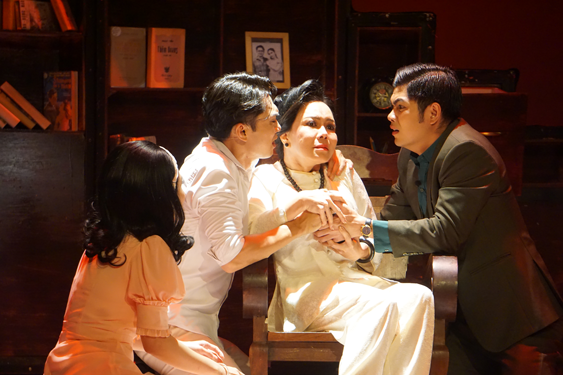
Truong Hung Minh's Art Theatre and the work "Then 30 Years Later"
In particular, "Blood Pen" by the Ganh Trang Theatre (directed by Minh Nguyet) is a step forward in terms of thought and art. Based on a short story by the late writer Vu Hanh, the play powerfully warns about the ethics of writers in an era of chaotic media.
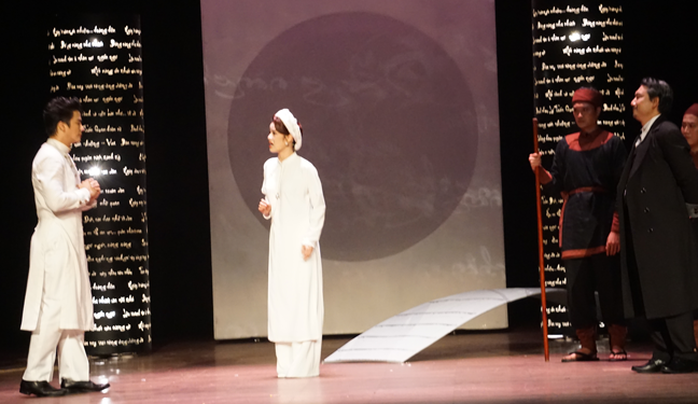
A scene from the play "Blood Pen" by the Ganh Trang Theatre.
The performance uses light and sound as a third character, creating a tense energy field between good and evil, between the "pen" and the "blood" of conscience.
The play "Comrade," produced by the Ho Chi Minh City Theatre Association and directed by Tran Ngoc Giau and Quoc Thinh, is a prime example of political drama. Focusing on the theme of a People's Police officer, the work goes beyond mere propaganda, portraying the psychological depth, ideals, and inner struggles of a police officer in peacetime. Highly praised for its simplicity, authenticity, and profound humanistic values, the play is a strong contender in this category.
A stage for "multiregions and diverse identities"
The play "Each Soul Keeps Its Own" (IDECAF Theatre, directed by Hung Lam) further affirms the brand of high-quality entertainment theatre. The play, with its folk elements, presents a hypothetical situation where members of a family unexpectedly swap bodies, allowing them to better understand the feelings of their loved ones.
Based on a philosophical foundation, the play reflects the hidden aspects of the human heart. The clever staging, lively rhythm, and interwoven tragicomic structure captivate the audience with each scene.
This year, the Cai Luong (Vietnamese traditional opera) stage has seen a flourishing of highly creative projects. Three plays directed by Hoa Ha – "The Great Viet Proclamation," "The Song of the Hau River," and "The Grass Carrier of the Han River" – demonstrate a traditional theatrical approach geared towards a younger audience.
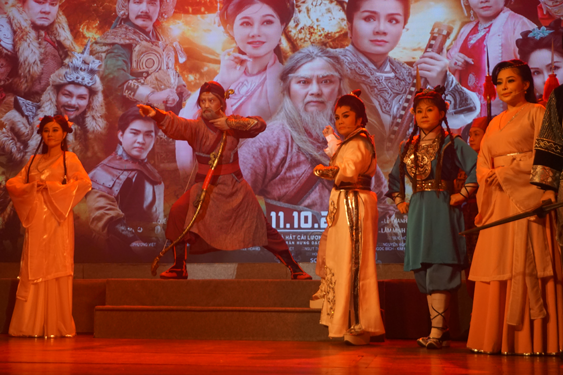
Scene from the Cai Luong play "The Great Viet Proclamation" by the Dai Viet New Cai Luong Theatre.
From historical depictions of the nation to the resistance of the people and army of Southern Vietnam against colonialism and imperialism, director Hoa Ha has combined multi-layered projection techniques, contemporary dance, and folk music. These performances are not only highly artistic but also suggest a direction for a "multi-regional, multi-identity" theater.
On the Quoc Thao Stage, the two plays "Deep Night" and the musical "Thunderstorm - Melody of Sin" (directed by Quoc Thao) made an impression with their innovative interpretations of classic scripts. While "Deep Night" depicts a fierce confrontation between father and son on opposing sides: anti-crime officers and transnational organized crime, "Thunderstorm" is a musical combining spoken drama, songs, and sound. As a result, the work resembles a "tragic symphony."

The musical "Thunderstorm - Melody of Sin" by Quoc Thao Theatre
The play "Phèo" (Xóm Kịch Theatre, directed by Xuân Trang) is a prime example of recreating the character Chí Phèo in a contemporary context – both satirical and sympathetic. Meanwhile, "Náo loạn tiếu lâm đường" (Youth Theatre, directed by Hồng Ngọc) offers a vibrant comedy feast, criticizing a pragmatic lifestyle with charming humor.
"Running Towards Yesterday" (Hoang Thai Thanh Theatre, directed by Cong Hien) is also a play that evokes many emotions. The story stirs the audience's hearts and easily evokes empathy.
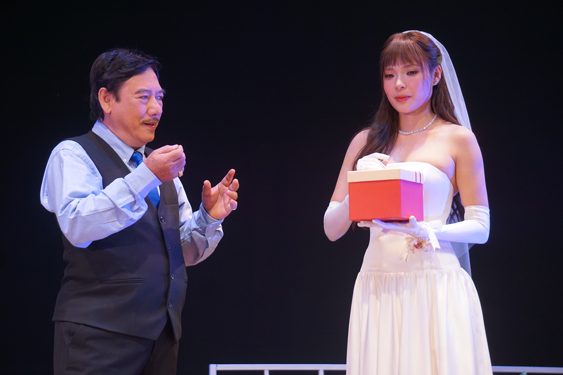
The play "Running Towards Yesterday" at Hoang Thai Thanh Stage
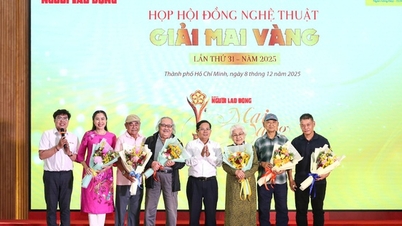
The plays nominated for the 31st Mai Vàng Awards - 2025 not only affirm the enduring vitality of Ho Chi Minh City's theater scene but also demonstrate the creative capacity of directors, writers, and artists in addressing contemporary issues and the hidden corners of the human soul.
People's Artist Tran Ngoc Giau, Chairman of the Ho Chi Minh City Theater Association, commented: "What is valuable is that the theaters of Ho Chi Minh City not only survive on revenue but also have a desire for creativity and contribution. Today's young directors are continuing the legacy of previous generations with new artistic language and thinking."
Source: https://nld.com.vn/giai-mai-vang-de-cu-hang-muc-vo-dien-san-khau-dan-dung-thong-minh-tiet-tau-sinh-dong-196251024204321774.htm













![[Photo] Prime Minister Pham Minh Chinh holds a phone call with the CEO of Russia's Rosatom Corporation.](/_next/image?url=https%3A%2F%2Fvphoto.vietnam.vn%2Fthumb%2F1200x675%2Fvietnam%2Fresource%2FIMAGE%2F2025%2F12%2F11%2F1765464552365_dsc-5295-jpg.webp&w=3840&q=75)









































Comment (0)