

 |
An athlete trains at the Milano Cortina 2026 Olympic Games. Photo: Reuters. |
Northern Italy is becoming the focus of attention as the Milano-Cortina Winter Olympics bring the Olympics back to the country after two decades since Turin 2006.
Unlike the familiar centralized model, the event is organized across Milan, Cortina d'Ampezzo, Verona, Valtellina, and Val di Fiemme, connecting fashion , urban culture, and Alpine tourism into a multi-destination ecosystem. This approach not only expands the scope of benefits but also creates opportunities for a more even distribution of tourist flows between the regions.
According to a report by Ifis Bank, the total economic impact of the Winter Olympics could reach 5.3 billion euros. Of this, approximately 1.1 billion euros will come from direct spending by spectators and operational staff during the event, while 1.2 billion euros are expected from continued visitor numbers in the 12 to 18 months that follow.
In addition to tourism, nearly 3 billion euros will be invested in infrastructure and heritage projects, including upgrading sports facilities, transport systems, and civil projects, creating a foundation for long-term development in northern Italy.
Organizers predict around 2.5 million spectators will attend the Olympics, with an average stay of three nights, Euro News reports.
Real-time booking data shows a surge in demand not only in Cortina or other familiar ski resorts but also spreading to Verona and Venice.
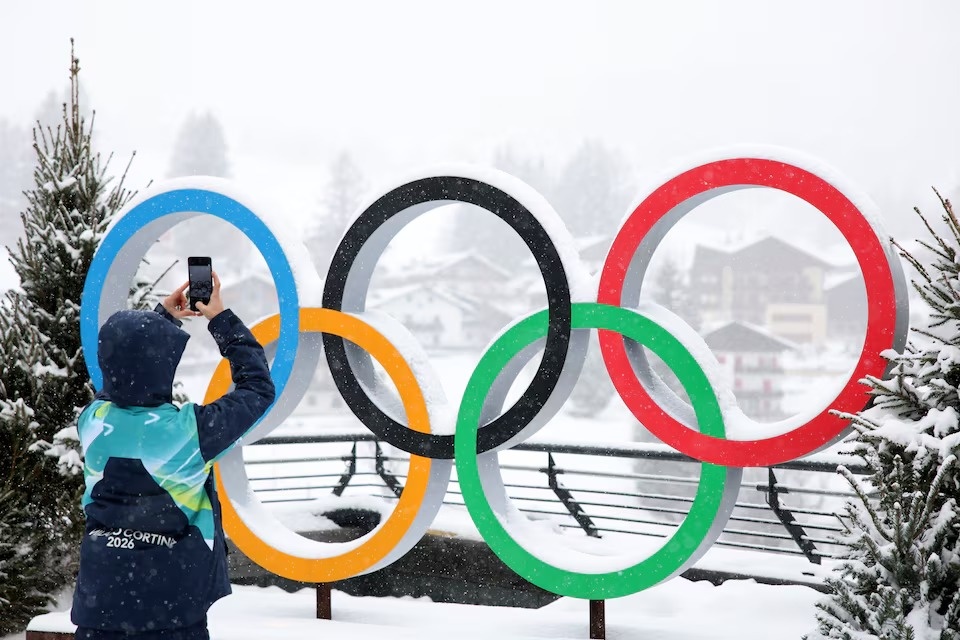 |
A panoramic view of the Olympic rings ahead of the Milano Cortina 2026 Winter Olympics. Photo: Reuters. |
Hotels, transport companies, and service providers are reporting a surge in visitors, raising hopes for a vibrant travel season during and after the Olympic Games.
According to Chloe Parkins, chief economist at Oxford Economics, Italy could welcome up to 66 million international tourists in 2026, a significant increase from 60 million in 2023, with tourism spending expected to rise by an additional €2.9 billion.
However, experts also believe that the impact of the Winter Olympics will not be as great as that of the Summer Olympics.
Parkins noted that the number of tickets for Milano-Cortina is only about one-fifth of that for Paris 2024, indicating a limited impact. However, the decentralized organizational model is considered a solution to reduce congestion and limit the overcrowding often seen at large events, while allowing destinations to maintain stable tourism even when they are no longer competition venues.
From a public finance perspective, Milano-Cortina 2026 is seen as a project with better budget control potential compared to many previous Olympic Games.
According to S&P Global Ratings analyst Mariamena Ruggiero, the total estimated cost is around 5.7-5.9 billion euros, equivalent to 0.3% of Italy's GDP in 2025, with 63% coming from the state budget, primarily for infrastructure. This spending is considered significantly lower than that of Sochi or Beijing, and avoids the debt burden that Turin faced after the 2006 Olympics.
Along with the surge in visitors, Italy is also implementing financial measures to offset costs, including an additional €200 million budget for tourism promotion, logistics, and security. Cities within a 30-kilometer radius of the competition venues are allowed to increase tourism taxes in 2026, with half of the revenue going to the central government.
Data from Visa shows that the number of international visitors to northern Italy increased by 160% during the Olympics, while nearly 80% of residents in the affected areas expressed a desire to attend at least one event.
While S&P Global Ratings cautions that long-term economic benefits may not be dramatic given Italy's already status as a top European destination, its infrastructure and social legacy is expected to endure after the Olympic flame is extinguished. Upgraded transport routes, improved public spaces, and better connectivity between regions will continue to serve both residents and tourists.
With Milano-Cortina 2026, Italy is not only seeking short-term profits but also betting on a more sustainable and balanced tourism development strategy for the future.
Source: https://znews.vn/italy-duoc-gi-tu-olympic-2026-post1628044.html





















































































Comment (0)