

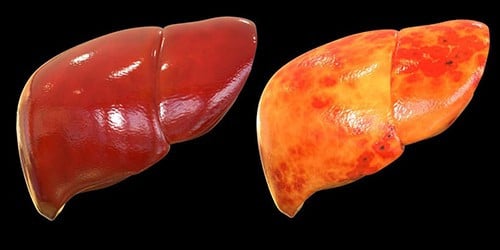
According to Dr. Lam Nguyen Thuy An, a specialist at the University Medical Center of Ho Chi Minh City, fatty liver disease, also known as non-alcoholic fatty liver disease (NAFLD), is a condition where fat accumulates in the liver unrelated to alcohol consumption. It is commonly associated with obesity, type 2 diabetes, and metabolic syndrome.
Even thin people are at risk of developing fatty liver disease.
In clinical practice, Dr. Thuy An encounters many patients with completely normal weight, even with a BMI of only around 18-19, but with elevated liver enzymes or fatty liver detected by ultrasound.
Common characteristics among them include: a family history of liver disease, diabetes, or metabolic disorders; and, despite being thin, a sedentary lifestyle and lack of regular exercise.
These individuals have unbalanced diets: high in sugar and carbohydrates but low in protein (for example, milk tea, sweets, white starches); some have undiagnosed dyslipidemia or insulin resistance. Contributing factors to fatty liver disease may include prolonged stress, lack of sleep, and irregular eating habits.
Doctors warn that fatty liver disease isn't limited to overweight individuals. In fact, "fatty liver disease in thin people" is common. Many studies have shown that thin people are also at risk of developing this condition; 10-20% of people with fatty liver disease are thin with a perfectly normal BMI.
Particularly in Asia, including Vietnam, the disease is more likely to occur due to a predisposition to visceral fat accumulation; a smaller bone structure which can mask the true risk with a smaller BMI; and specific genetic factors. Therefore, many people are complacent, leading to serious complications.
Why do people with normal weight still develop fatty liver disease?
Visceral fat and abnormal metabolic mechanisms
Visceral fat is fat that accumulates around the liver, blood vessels, and intestines. Unlike subcutaneous fat, visceral fat is more likely to cause metabolic diseases, even in people who are thin.
Normally, the liver metabolizes sugar into energy. If the body lacks sugar (due to inadequate diet or excessive weight loss), the liver is forced to use fat instead. Over time, this accumulation of fat in the liver can lead to disease.
Genetics and metabolic disorders
Some people have genes that make them more susceptible to lipid metabolism disorders, increasing their risk of fatty liver disease.
Diabetes and insulin resistance: High blood sugar makes the liver more prone to fat accumulation, even in people who are not overweight.
An unbalanced diet
Consuming large amounts of saturated fat, sugar, and processed foods can increase fat accumulation in the liver, although it may not cause significant weight gain.
Unscientific vegetarian diets or excessive restrictions can lead to a deficiency of essential nutrients, causing an imbalance in fat metabolism.
Lack of exercise
Thin people who are inactive are also at risk of developing lipid metabolism disorders, leading to fatty liver disease.
Side effects of medication and other factors
Certain medications, such as corticosteroids, tamoxifen, and amiodarone derivatives, can increase fat accumulation in the liver. Smoking and excessive alcohol consumption, even if not obese, can damage the liver and lead to fat accumulation.
Differentiate between fatty liver disease caused by obesity and fatty liver disease caused by metabolic disorders or genetics.
Fatty liver disease often has no obvious symptoms in its early stages. Some cases may experience: persistent fatigue, a feeling of heaviness or discomfort in the upper right abdomen. Blood tests may show elevated liver enzymes. Ultrasound, CT scan, or liver biopsy can detect fat accumulation.
In practice, "obese fatty liver disease" refers to MASLD caused by overweight/obesity and metabolic syndrome (Metabolic dysfunction - associated SLD), while "fatty liver disease due to metabolic/genetic disorders" mainly includes: other acquired metabolic disorders (hypothyroidism, Cushing's syndrome, medications, prolonged parenteral nutrition, etc.), or genetic diseases (Inborn errors of metabolism - IEM) that manifest as fatty liver disease (Wilson's syndrome, α1-antitrypsin deficiency, LAL deficiency, glycogen storage disorders, lipodystrophy, mitochondrial disorders, etc.).
Obese fatty liver disease/classic MASLD: BMI, body condition: Overweight, obese, increased waist circumference. Age of onset, usually over 30-40 years old, or childhood obesity. These cases are associated with conditions such as type 2 diabetes, hypertension, metabolic dyslipidemia, etc.; mild to moderate elevation of liver enzymes; liver may be slightly enlarged, spleen is normal. Extrahepatic manifestations are often related to metabolic syndrome (cardiovascular, renal, etc.).
Fatty liver disease due to metabolic/hereditary disorders (IEM, rare): BMI, body type: Usually thin/normal BMI; Age of onset is most common in young children, adolescents, thin young adults, or any age but with severe manifestations.
These cases have a family history of early-onset liver disease, systemic disease, and "unusual" dyslipidemia (LDL may be very high or very low); liver enzymes may be very high or accompanied by cholestasis and early liver dysfunction; hepatomegaly, splenomegaly, and possibly ascites. Extrahepatic manifestations may include neurological, muscular, digestive, pulmonary, and ocular effects, depending on the specific type of inherited IEM.
How can I find out if I have fatty liver disease?
Thin people often think they are "not at risk," so they don't get checked or screened. By the time the disease is detected, it has often progressed to non-alcoholic fatty liver disease (NASH), causing cirrhosis, liver failure, and even liver cancer. Some studies show that the rate of severe complications in thin people is comparable to, or even higher than, that in obese people.
Therefore, Dr. Thuy An advises that, regardless of your build, to protect your liver, you need to maintain a healthy diet: Eat plenty of green vegetables, legumes, fish, whole grains, and protein; limit sugar, soft drinks, bubble tea, processed foods, fried foods, animal fats, and alcoholic beverages.
Exercise for at least 30 minutes a day and don't go more than two days without exercising. Adults should aim for about 150 minutes per week doing simple exercises, maintaining a regular exercise routine to support more efficient fat metabolism.
If you have diabetes, dyslipidemia, or high blood pressure, manage them closely as directed by your doctor. Regular monitoring, such as checking liver enzymes, blood lipids, and having an abdominal ultrasound, should be performed at least once a year.
Avoid smoking and limit alcohol consumption. Be cautious when using medications that may harm the liver; always consult your doctor.
Fatty liver disease isn't just for overweight people. Even thin individuals with unhealthy lifestyles or metabolic disorders are at a higher risk. Understanding the causes and making appropriate lifestyle adjustments will help you prevent and protect your liver health effectively.
Source: https://nhandan.vn/khoang-10-20-nguoi-gay-mac-gan-nhiem-mo-post930172.html

![[Photo] Prime Minister Pham Minh Chinh receives Lao Minister of Education and Sports Thongsalith Mangnormek](/_next/image?url=https%3A%2F%2Fvphoto.vietnam.vn%2Fthumb%2F1200x675%2Fvietnam%2Fresource%2FIMAGE%2F2025%2F12%2F16%2F1765876834721_dsc-7519-jpg.webp&w=3840&q=75)
![[Image] Leaked images ahead of the 2025 Community Action Awards gala.](/_next/image?url=https%3A%2F%2Fvphoto.vietnam.vn%2Fthumb%2F1200x675%2Fvietnam%2Fresource%2FIMAGE%2F2025%2F12%2F16%2F1765882828720_ndo_br_thiet-ke-chua-co-ten-45-png.webp&w=3840&q=75)
![[Live] 2025 Community Action Awards Gala](/_next/image?url=https%3A%2F%2Fvphoto.vietnam.vn%2Fthumb%2F1200x675%2Fvietnam%2Fresource%2FIMAGE%2F2025%2F12%2F16%2F1765899631650_ndo_tr_z7334013144784-9f9fe10a6d63584c85aff40f2957c250-jpg.webp&w=3840&q=75)
![[Photo] Prime Minister Pham Minh Chinh receives the Governor of Tochigi Province (Japan)](/_next/image?url=https%3A%2F%2Fvphoto.vietnam.vn%2Fthumb%2F1200x675%2Fvietnam%2Fresource%2FIMAGE%2F2025%2F12%2F16%2F1765892133176_dsc-8082-6425-jpg.webp&w=3840&q=75)




























































































Comment (0)