

Medical news update January 14th: Record-breaking organ transplants at Viet Duc Friendship Hospital.
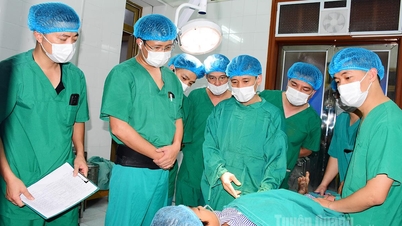
Within six days (from January 6th to 11th, 2025), Viet Duc Friendship Hospital successfully performed 21 organ transplants, saving the lives of 15 patients thanks to organs donated from 4 brain-dead individuals.
Four brain-dead donors saved the lives of 15 patients at Viet Duc Friendship Hospital.
Successful organ transplants include: 4 heart transplants, 1 simultaneous liver-kidney transplant, 3 liver transplants, and 7 kidney transplants. Among them, a 63-year-old patient from Nam Dinh , with a history of liver cancer and stage V kidney failure, underwent a simultaneous liver-kidney transplant – an advanced medical technique performed for the first time in Vietnam in December 2019.
In addition, the hospital performed six kidney transplants from living donors, bringing the total number of transplants this week to 21. These surgeries were all performed under emergency conditions, with the medical team working tirelessly to ensure the patients' survival.
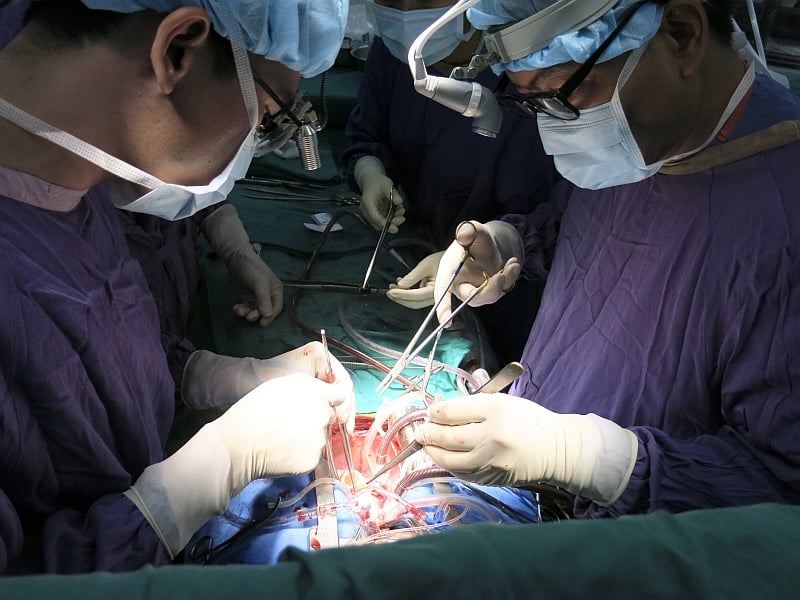 |
Doctors are performing an organ transplant at Viet Duc Friendship Hospital. Source: Viet Duc Hospital. |
This success not only affirms the position of Viet Duc Friendship Hospital in the field of organ transplantation, but also opens up new hope for thousands of patients awaiting organ transplants nationwide. This is an important milestone, marking the hospital's continuous efforts in promoting organ donation and contributing to the community, and also serves as proof of the compassion of the organ-donating families.
Entering 2025, Viet Duc Friendship Hospital continues to affirm its pioneering role in organ transplantation in Vietnam, bringing hope and life to many critically ill patients.
Signs of adjustment disorder
Adjustment disorder is a mental disorder that occurs when a person has difficulty coping with major changes or stressful life events, leading to emotional or behavioral problems that they cannot resolve on their own.
This is a fairly common situation in modern society, especially when people face constant stress from work, family, health, or unexpected events.
This disorder not only negatively impacts the patient's quality of life but can also lead to serious consequences if not detected and treated promptly.
Adjustment disorders often occur when an individual experiences a stressful event or major life change that they find difficult to cope with.
Common causes include: Changes in living conditions such as moving house, changing jobs, or changes in health status; major stressful events such as the death of a loved one, divorce, relationship changes, or facing crisis situations such as accidents, illness, or job loss. Prolonged stress from work pressure, finances, family, or strained relationships can make it difficult to regulate emotions and behavior.
Symptoms of adjustment disorder typically appear within three months of a stressful event and can last up to six months if left untreated. Importantly, these symptoms will subside once the stressful event is removed or mitigated.
Several risk factors can increase the likelihood of developing adjustment disorder, including: a history of stress in childhood; previous mental health problems; difficult living circumstances; and a vulnerable personality.
Statistics show that women have a higher rate of adjustment disorder than men, and teenagers are also the most susceptible to diagnosis.
Without timely intervention, adjustment disorders can lead to serious consequences such as impaired work and learning abilities. Family and social relationships are strained, potentially leading to divorce or family conflict. Addiction disorders such as alcohol or drug addiction may occur. More severe mental disorders, including depression, anxiety, and even suicidal thoughts and behaviors, may develop.
Adjustment disorders are usually treated in short periods, but if the stressor is persistent, therapy may need to be extended. Treatment options include: psychotherapy; medication; and social support.
In addition, doctors encourage patients to maintain a healthy lifestyle, including participating in physical activities, maintaining positive social relationships, and practicing positive thinking skills to cope with stress.
Solutions for preventing and treating chronic kidney disease.
Chronic kidney disease is a disease that is increasingly prevalent in the community, especially among young people. According to doctors, unhealthy eating and lifestyle habits, along with the impact of modern living environments, are the main causes of this increase in the disease.
At the Nephrology and Dialysis Center of Bach Mai Hospital, there are currently about 160-180 kidney patients receiving inpatient treatment, with a growing proportion of young patients under 30 years old. On average, the center receives 30-40 new patients each day, and it is noteworthy that many of them are facing end-stage renal failure, despite their young age.
According to Dr. Nghiem Trung Dung, Director of the Center for Nephrology and Dialysis, one of the main factors contributing to the increase in chronic kidney disease among young people is unhealthy eating habits. Many young people today tend to consume too much unregulated beverage, processed foods, and fast food such as instant noodles, which are high in salt, leading to an increased burden on the kidneys. In addition, irregular lifestyle habits, such as late nights, lack of exercise, and obesity, are also major risk factors for kidney disease.
These bad habits not only harm the kidneys but also affect overall health, creating potential risks for other diseases. However, many people are unaware of the seriousness of this condition until the disease progresses significantly.
One of the serious problems with chronic kidney disease is that it often progresses silently, and the early stages usually have no obvious symptoms. Therefore, early detection of chronic kidney disease is extremely important. However, many people still do not have the habit of having regular health checkups, which leads to late detection and makes treatment more difficult.
When kidney disease is detected at a late stage, conservative treatments are no longer effective. At this point, patients are left with only a few alternative treatment options such as hemodialysis, peritoneal dialysis, or kidney transplantation. Regardless of the method chosen, patients will face a prolonged burden of the disease and high treatment costs.
Many young patients, upon being diagnosed with kidney failure, feel surprised and confused because they had not experienced any obvious symptoms beforehand. For example, patient M (30 years old, Bac Giang) shared that he discovered he had end-stage kidney failure while at work, experiencing abdominal pain and nausea. Before that, he had been living a normal life and didn't think he would have kidney problems. "When I received the diagnosis, I was very surprised. Now my life has been turned upside down. I want to work, but my health doesn't allow it," M said.
Another case is patient H (30 years old, Hanoi). H discovered kidney failure during a routine health check-up and was warned by the doctor about proteinuria in her urine. Initially, H was diagnosed with mild nephritis and treated conservatively. However, after some time, symptoms such as nausea, insomnia, and changes in taste appeared, prompting H to go to Bach Mai Hospital for further examination. H was diagnosed with end-stage renal failure and is currently awaiting hemodialysis.
According to Dr. Pham Tien Dung, MD, MSc, from the Center for Nephrology and Dialysis, chronic kidney disease is trending towards affecting younger people, with many cases of patients as young as 15-16 years old already suffering from end-stage renal failure. Unfortunately, most patients come to the center when the disease has progressed too late, when kidney function has severely deteriorated and conservative treatment methods are no longer effective.
Early detection of chronic kidney disease is crucial. According to doctors, if kidney disease is detected and treated promptly, patients can prolong their treatment with conservative therapy at a lower cost and with higher effectiveness. However, late detection leads to higher treatment costs, shorter treatment durations, and significantly impacted quality of life for patients.
Dr. Nghiem Trung Dung, Director of the Center for Nephrology and Dialysis, emphasized that regular health checkups are the only way to detect kidney diseases early. Without early detection, kidney disease can progress very quickly, making treatments such as dialysis or kidney transplantation unfeasible. In addition, maintaining a healthy lifestyle, eating a balanced diet, and exercising regularly are also crucial factors in preventing chronic kidney disease.
Chronic kidney disease is not just a problem for the elderly; it is becoming an increasingly common disease among young people. Unhealthy eating and lifestyle habits, along with a lack of regular health checkups, are creating a favorable environment for the disease to develop. To effectively prevent and treat the disease, everyone needs to raise awareness about kidney disease and adopt a healthy lifestyle. Regular health checkups are also essential for early detection of health problems, thereby protecting kidney health and improving long-term quality of life.
If there are any signs of adjustment disorder, patients should seek timely advice and treatment at specialized medical facilities. Early treatment will help prevent the disorder from becoming chronic and minimize the risk of developing other serious mental disorders.
In particular, for those with family or friends who have weak personalities or are prone to anxiety, creating a supportive and caring environment is crucial. A healthy living environment, good social connections, and the ability to cope with stress will help reduce the risk of developing adjustment disorders and related psychological problems.
![[Live] 2025 Community Action Awards Gala](/_next/image?url=https%3A%2F%2Fvphoto.vietnam.vn%2Fthumb%2F1200x675%2Fvietnam%2Fresource%2FIMAGE%2F2025%2F12%2F16%2F1765899631650_ndo_tr_z7334013144784-9f9fe10a6d63584c85aff40f2957c250-jpg.webp&w=3840&q=75)
![[Image] Leaked images ahead of the 2025 Community Action Awards gala.](/_next/image?url=https%3A%2F%2Fvphoto.vietnam.vn%2Fthumb%2F1200x675%2Fvietnam%2Fresource%2FIMAGE%2F2025%2F12%2F16%2F1765882828720_ndo_br_thiet-ke-chua-co-ten-45-png.webp&w=3840&q=75)
![[Photo] Prime Minister Pham Minh Chinh receives Lao Minister of Education and Sports Thongsalith Mangnormek](/_next/image?url=https%3A%2F%2Fvphoto.vietnam.vn%2Fthumb%2F1200x675%2Fvietnam%2Fresource%2FIMAGE%2F2025%2F12%2F16%2F1765876834721_dsc-7519-jpg.webp&w=3840&q=75)


![[Photo] Prime Minister Pham Minh Chinh receives the Governor of Tochigi Province (Japan)](/_next/image?url=https%3A%2F%2Fvphoto.vietnam.vn%2Fthumb%2F1200x675%2Fvietnam%2Fresource%2FIMAGE%2F2025%2F12%2F16%2F1765892133176_dsc-8082-6425-jpg.webp&w=3840&q=75)






























































![[Live] Closing Ceremony and Award Presentation for the "Impressive Vietnam Tourism" Video/Clip Creation Contest 2025](https://vphoto.vietnam.vn/thumb/402x226/vietnam/resource/IMAGE/2025/12/17/1765974650260_z7273498850699-00d2fd6b0972cb39494cfa2559bf85ac-1765959338756946072104-627-0-1338-1138-crop-1765959347256801551121.jpeg)





























Comment (0)