

1. Lai Chau is not only known to tourists for its majestic natural landscapes, year-round pleasant climate, and rich ecosystem, but it also harbors a diverse culture with strong ethnic identities. Many traditional cultural values of these ethnic groups have become unique tourism products, generating income for the local people.
Currently, Lai Chau province has 2 cultural heritage sites inscribed by UNESCO as Intangible Cultural Heritage of Humanity and 11 heritage sites recognized by the Ministry of Culture, Sports and Tourism as National Intangible Cultural Heritage.
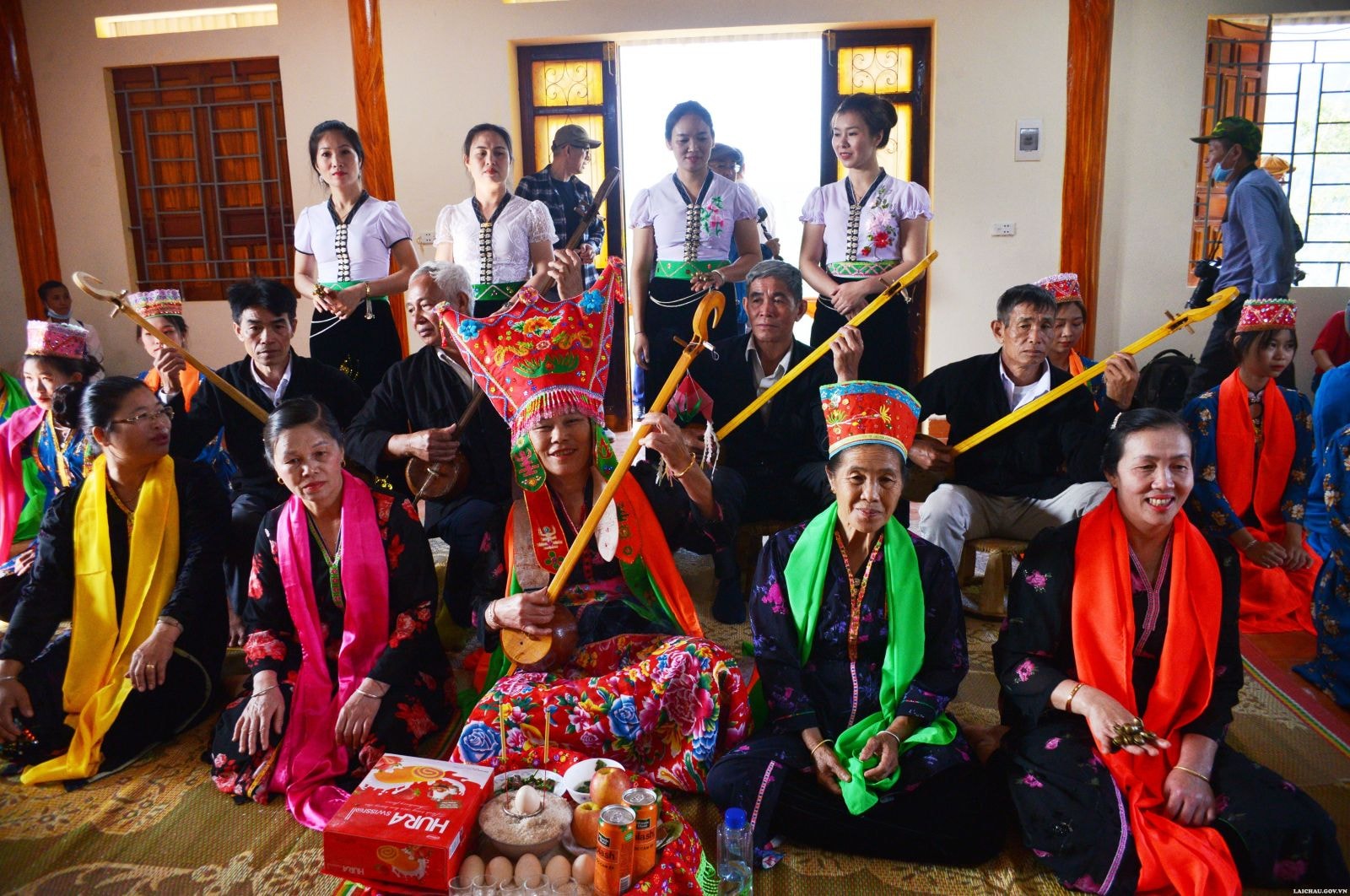
In particular, in recent years, Lai Chau province has made significant progress in the preservation and exploitation of traditional cultural values. This includes the Then Kin Pang Festival of the Thai people – a heritage that was recently added to the National Intangible Cultural Heritage list in 2025.
According to artisan Nong Van Nao (Phong Tho commune), in the Thai language, Then means lord of the heavens, and Kin Pang means celebration. Then Kin Pang is a festival of thanksgiving to the lord of the heavens, an occasion for people to offer thanks to Then.
According to Thai legend, in the spiritual world of Muong, there are divine beings who govern. These beings, through their representatives, the Then, descend to earth to meet the villagers. When people are sick, the Then provides medicine and healing. Those who face misfortune will receive blessings from the Then, so that they may overcome their troubles. The Then also represents the people in sending prayers to the gods in heaven for favorable weather, abundant harvests, and a united, peaceful, and prosperous village.
To commemorate and express gratitude to Then, every year on the 10th day of the 3rd lunar month, the Thai people hold a festival to celebrate Then, inviting Then to descend to earth to celebrate with the villagers, a festival known as Then Kin Pang.
Therefore, Then Kin Pang holds an important place in the spiritual life of the Thai ethnic group, representing a unique cultural feature that has been preserved for generations and is increasingly spreading throughout the community.
According to artisan Nong Van Nao, the person performing the Then ritual (also known as the Then performer) must be from a family with a tradition of performing Then. They must be proficient in the musical accompaniment of the zither and the lute; know thousands of songs by heart, and be able to sing various Then melodies, including the "hat mang" and "hat xao xen" songs.
The Then Kin Pang festival includes rituals such as the Then opening ceremony; offering incense to purify and ward off bad luck; offering incense to make wishes and invoke Then; giving blessings and praying for good fortune; and offering Then to pray for blessings and give thanks.
Before the festival, the Then altar must be prepared, including flowers and animals cut from paper such as swallows, chickens, pigs, etc. Each animal carries its own meaning: Swallows symbolize spring, fertility, and growth; pigs and chickens are animals closely associated with the lives of the Thai people.
The Thai ethnic group has a saying: "Bó pục púng Then cả - Bó mạ púng Then sương," which means "The pomelo blossom blooms, bringing joy to Then - The boma blossom blooms, bringing happiness to Then." The Thai people believe that the Then festival cannot take place without boma flowers; therefore, boma flowers are an essential part of decorating the Then altar.
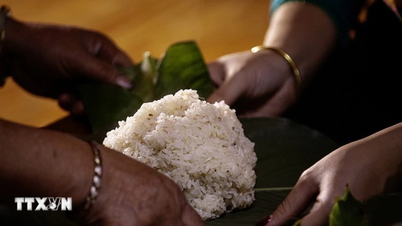
In the Then ritual, four trays of offerings must be prepared: Two trays of offerings containing sticky rice and chicken are offered to the Earth God and to thank those who contributed to the establishment of the village and the heroes who fought to protect the village; the tray for inviting Then includes rice, wine, raw eggs, betel leaves, a bunch of bells, plates, cups, a roll of white cloth, and other items placed in front of the Then altar; and one tray for Then includes a boiled pig, a boiled chicken, colored sticky rice, wine, and water. All the offerings symbolize the abundance of all things, signifying a prosperous and fortunate new year.
Three days before the Then Kin Pang Festival, the Then worshippers must abstain from eating the meat of animals. During the ceremony, the Then worshippers must wear Then attire, play the zither, and sing, appearing majestic like a general. The lyrics are ancient Then melodies, passed down orally through generations, containing beautiful aspects of life like an epic poem.
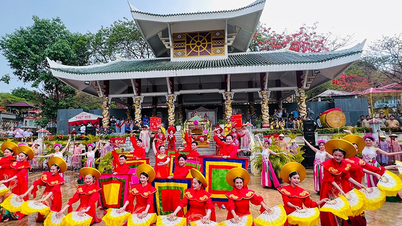
2. In 2025, the Then Kin Pang Festival will be held for the first time in Khong Lao commune, Lai Chau province, on a provincial scale. According to Mr. Tran Manh Hung, Director of the Department of Culture, Sports and Tourism of Lai Chau province, at the 2025 festival, the Department of Culture, Sports and Tourism, in coordination with the local government, will advise on selecting content that reflects the unique identity of the Thai ethnic group, including some new features such as traditional costume performances, Then singing performances, Tinh lute playing, and performances of six ancient Xoe dances with the participation of over 300 artisans and performers. Along with that will be folk games of the Thai ethnic group associated with the festival's content.
On the part of the local government, over the years, they have consistently maintained festivals recognized as heritage, including the Then Kin Pang Festival. Going forward, Khong Lao commune will continue to expand exchanges with neighboring districts of China to introduce and elevate the status of this heritage.
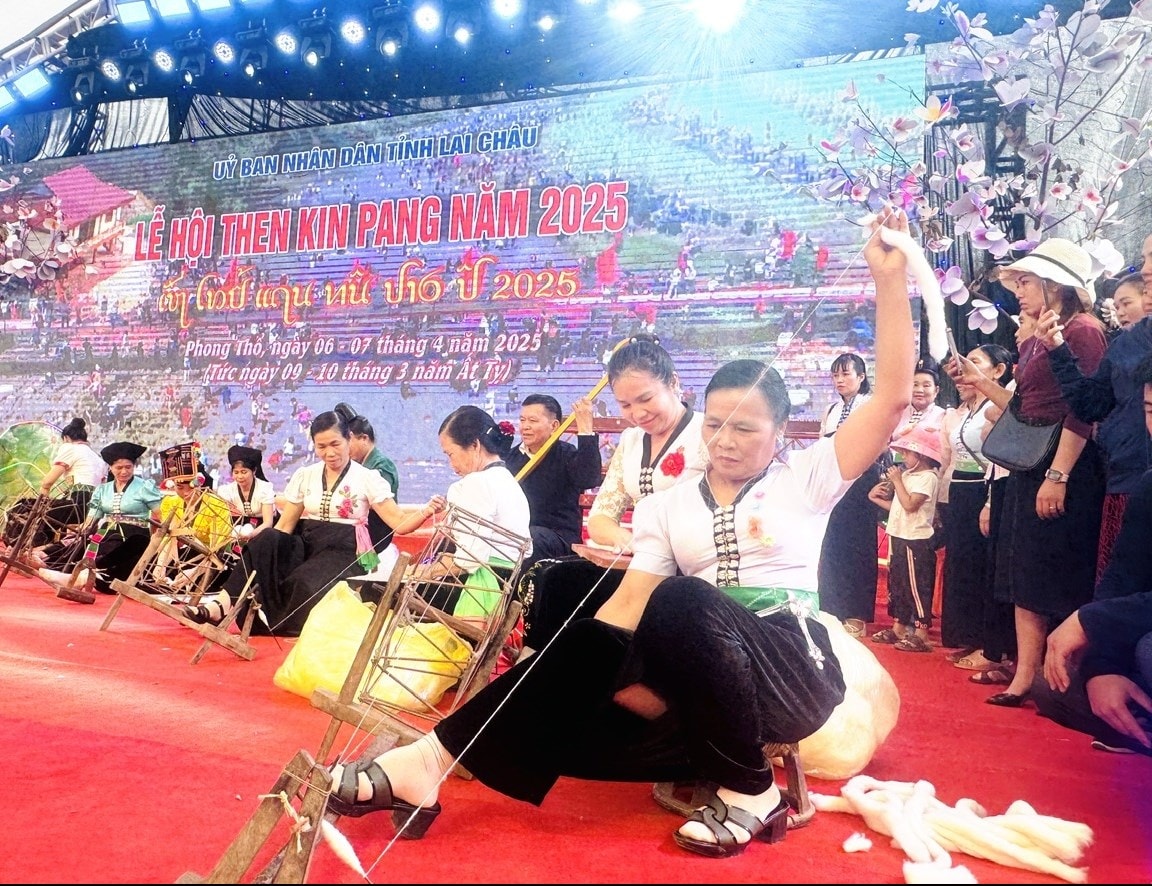
Regarding the preservation and promotion of the Then Kin Pang Festival heritage, Mr. Nong Quoc Thanh, Deputy Director of the Department of Cultural Heritage (Ministry of Culture, Sports and Tourism), stated that the recognition and introduction of Lai Chau's cultural values is the result of a long process involving researchers, artisans, and ethnic communities. Specialized agencies of the Lai Chau Department of Culture, Sports and Tourism have collaborated in collecting documents, documenting practices, building scientific dossiers, distribution maps, heritage practice procedures, and gathering opinions from the community itself – the creators and guardians of the heritage.
According to Tran Manh Hung, Director of the Department of Culture, Sports and Tourism of Lai Chau province, implementing the Project "Preserving and promoting the beautiful cultural identity of ethnic groups associated with tourism development in Lai Chau province, giai đoạn 2021-2025, with orientation to 2030", the Department of Culture, Sports and Tourism has closely coordinated with localities and functional agencies to build dossiers, organize restoration, dissemination, and teaching of heritage within the community. Many heritages are regularly practiced in major festivals such as Then Kin Pang, Nang Han, Gau Tao..., thereby both preserving traditions, contributing to improving the spiritual life, and creating livelihoods for people through tourism development.
Source: https://congluan.vn/lai-chau-bao-ton-le-hoi-then-kin-pang-gan-voi-phat-trien-du-lich-10322728.html
![[Photo] Prime Minister Pham Minh Chinh receives the Governor of Tochigi Province (Japan)](/_next/image?url=https%3A%2F%2Fvphoto.vietnam.vn%2Fthumb%2F1200x675%2Fvietnam%2Fresource%2FIMAGE%2F2025%2F12%2F16%2F1765892133176_dsc-8082-6425-jpg.webp&w=3840&q=75)

![[Photo] Prime Minister Pham Minh Chinh receives Lao Minister of Education and Sports Thongsalith Mangnormek](/_next/image?url=https%3A%2F%2Fvphoto.vietnam.vn%2Fthumb%2F1200x675%2Fvietnam%2Fresource%2FIMAGE%2F2025%2F12%2F16%2F1765876834721_dsc-7519-jpg.webp&w=3840&q=75)
![[Live] 2025 Community Action Awards Gala](/_next/image?url=https%3A%2F%2Fvphoto.vietnam.vn%2Fthumb%2F1200x675%2Fvietnam%2Fresource%2FIMAGE%2F2025%2F12%2F16%2F1765899631650_ndo_tr_z7334013144784-9f9fe10a6d63584c85aff40f2957c250-jpg.webp&w=3840&q=75)
![[Image] Leaked images ahead of the 2025 Community Action Awards gala.](/_next/image?url=https%3A%2F%2Fvphoto.vietnam.vn%2Fthumb%2F1200x675%2Fvietnam%2Fresource%2FIMAGE%2F2025%2F12%2F16%2F1765882828720_ndo_br_thiet-ke-chua-co-ten-45-png.webp&w=3840&q=75)































![[Photo] Prime Minister Pham Minh Chinh attends the Vietnam Economic Forum 2025](https://vphoto.vietnam.vn/thumb/402x226/vietnam/resource/IMAGE/2025/12/16/1765893035503_ndo_br_dsc-8043-jpg.webp)















Comment (0)