

Located about 15km north of Ngoc Hoi district center in Kon Tum province, Dak Rang village in Dak Duc commune has nearly 120 households with 348 inhabitants, 99% of whom are Gie Trieng people. On weekends, the lively sounds of gongs and traditional singing attract many visitors. “From 2023 to the present, there have been no cases of child marriage or consanguineous marriage in the entire district,” the excitement was evident in the words and expression of Bui Van Hien, Vice Chairman of the People's Committee of Que Phong district (Nghe An province), when he shared this with us. Because we understand that this result not only reflects a significant change in the awareness and actions of the people, but also shows the tireless involvement of the entire political system with the determination to push back against child marriage and consanguineous marriage, which have persisted for generations in this land. On the afternoon of December 12th, in Hanoi, President Luong Cuong visited and worked with the Ministry of Foreign Affairs. In the chilly weather, under the towering roof of the Kon Klor communal house, young men played majestic gong melodies, barefoot girls performed graceful xoong dances, men wove baskets and carved statues, women wove cloth... The cultural space of ethnic minorities in Kon Tum was fully and vividly recreated, captivating many tourists from near and far who attended the 2nd Kon Tum Province Ethnic Minority Gong and Xoang Festival in 2024. On the morning of December 12th, the Party Committee and People's Committee of Khau Vai commune (Meo Vac district, Ha Giang) coordinated Together with the "San Dinh Charity Community" group, they organized the groundbreaking ceremony for the construction of a classroom building for the Ha Ca village's combined kindergarten and primary school in Khau Vai commune. Implementing the nationwide emulation movement to eliminate temporary and dilapidated houses launched by the Prime Minister, on the morning of December 12th, officers and soldiers of the Xin Cai Border Guard Post (Ha Giang Provincial Border Guard) actively participated in supporting poor households in the area to eliminate temporary and dilapidated houses. As the Party Secretary, Village Head, and respected person of Phai Lau village, Dong Van commune, Binh Lieu district, Quang Ninh province, Mr. Tang Dau Tinh has become a reliable "pillar of support" for the Dao people in this border region over the years. He not only excels in promoting the idea of people staying in their villages, protecting their land, forests, and national borders, but also excels in economic activities. To promote gender equality and address urgent issues for children in ethnic minority and mountainous areas, Chu Puh district, Gia Lai province, has established three "Leaders of Change" clubs in junior high schools in particularly disadvantaged villages. Club members will be pioneers in changing perceptions and eliminating gender stereotypes while still in school and within the community, working together to achieve development. This is a summary of news from the Ethnic Minorities and Development Newspaper. The morning news on December 12th includes the following noteworthy information: Preserving the beauty of traditional ethnic costumes in Lang Son; Unleashing the potential of medicinal herbs in Dak Nong; and the story of land donation in Bang Coc. Along with other current news in the ethnic minority and mountainous regions: Implementing Project 6, National Target Program for socio-economic development in ethnic minority and mountainous regions (National Target Program 1719), recently, the People's Committee of Tuong Duong district (Nghe An) presented gongs, drums, loudspeakers, and performance costumes to traditional art troupes. Located at an altitude of 1,086m above sea level, the Indochina Tripoint, in Bo Y commune, Ngoc Hoi district, Kon Tum province, is the border point between three countries: Vietnam, Laos, and Cambodia. Known as the place where "a rooster's crow can be heard in three countries," the Indochina Tripoint has become an attractive destination for many tourists who are passionate about travel, exploration, and experiencing new things at the tri-border marker. Throughout its development, Quang Ninh province has always paid special attention to the comprehensive development of ethnic minority and mountainous regions. In particular, the province has issued Resolution No. 06-NQ/TU on “Sustainable socio-economic development associated with ensuring strong national defense and security in communes, villages, and hamlets in ethnic minority, mountainous, border, and island areas in the period 2021-2025, with orientation to 2030” (Resolution 06). Thanks to the Party's orientation and policies, the State's support resources, and the efforts of all sectors of the people, the ethnic minority and mountainous areas of Quang Ninh have undergone significant changes. In the journey of development in the villages, many shining examples have emerged in various fields, becoming typical role models spreading the spirit of self-reliance, self-improvement, and innovative thinking among the ethnic minority communities. Leveraging the strengths of agriculture and forestry, combined with culture, to develop tourism, building the locality into a tourist destination, contributing to poverty reduction, and creating sustainable livelihoods for the people is a new direction for Ham Yen district (Tuyen Quang province) in recent years. Linking the development of commercial agriculture, providing capital, seeds, scientific and technical support, and guaranteeing product sales are strengths of the collective economy. In Ham Yen district, participating in the linkage chain with cooperatives has enabled many farmers to break through, become wealthy, and contribute to building brands for local agricultural products.
In the border village
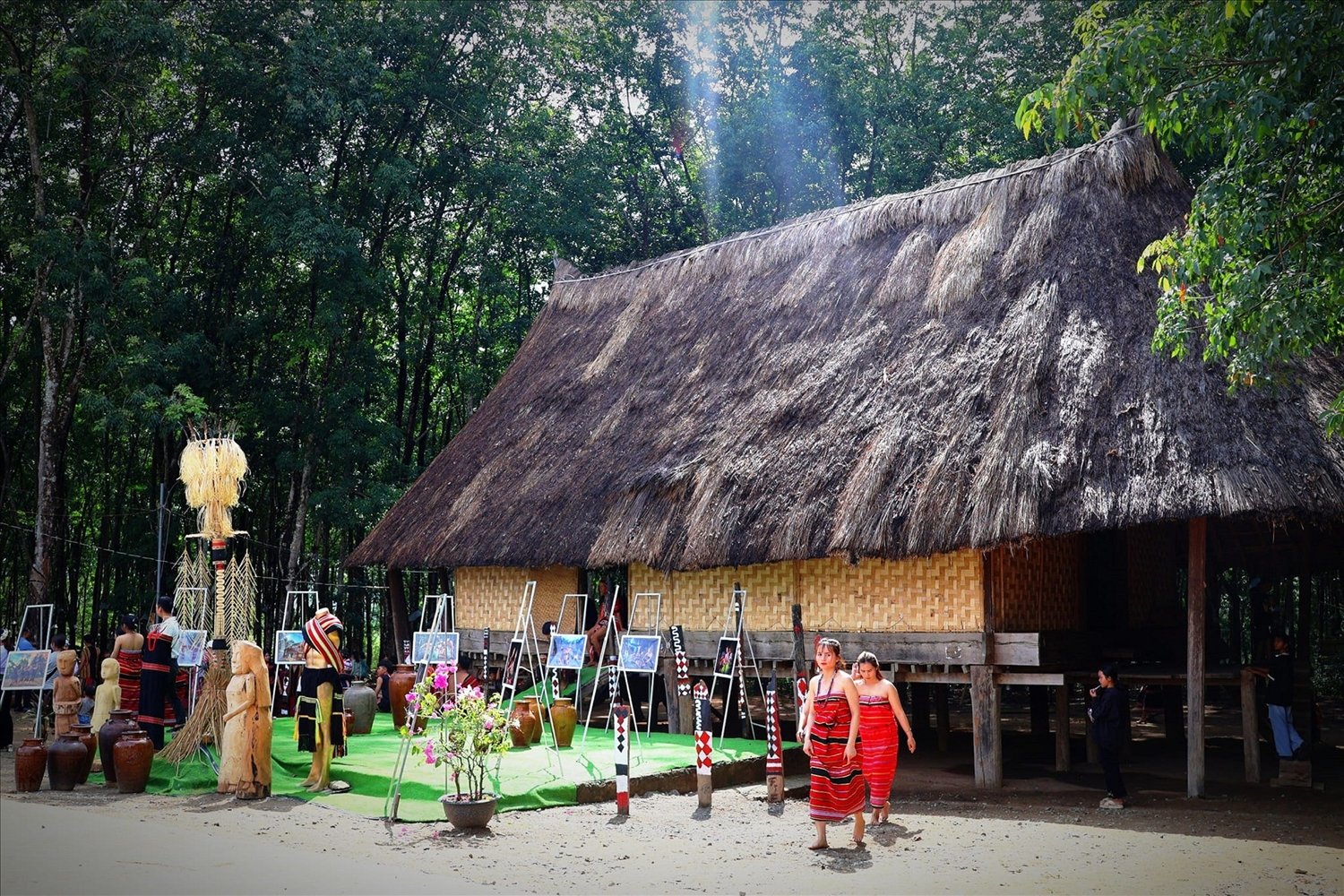
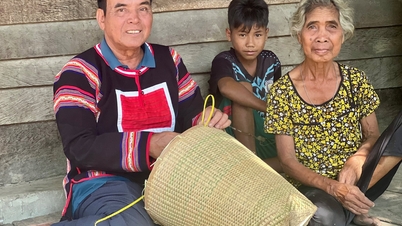
Elder A Brôl Vẻ joyfully welcomed the strangers to his village as if they were his own children returning home after a long absence. There were warm handshakes, heartfelt smiles, loving glances, and sincere, simple greetings. The people of the highlands have always been like this: hospitable and genuine like the forest trees, free-spirited like the mountain wind, honest like the flowing stream, and unpretentious like the earth and the forest itself.
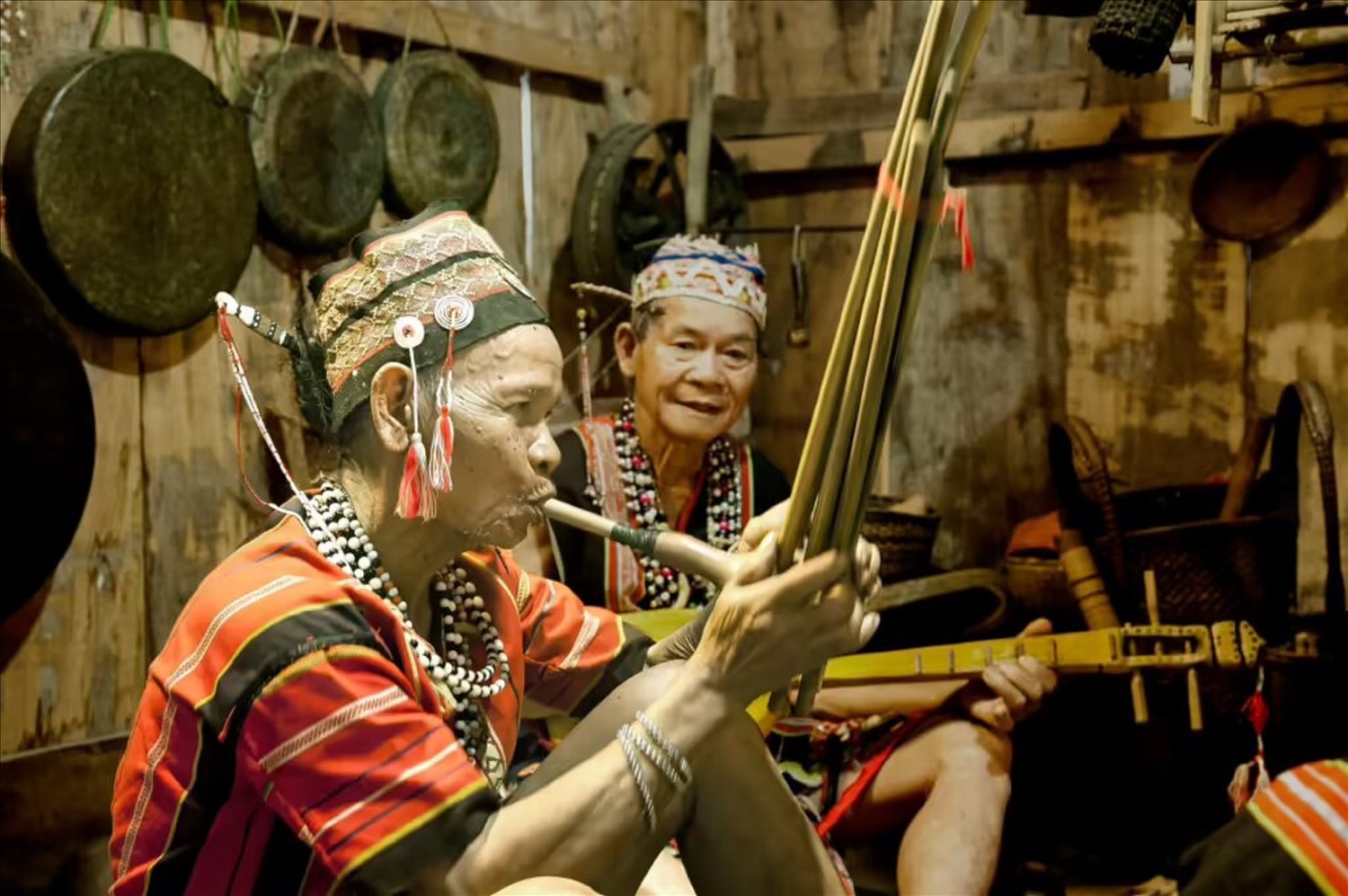
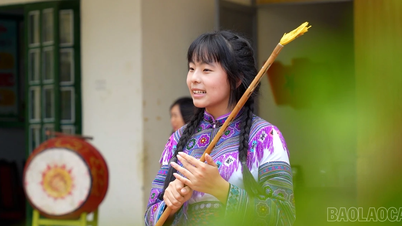
For generations, the people of this land have been steadfast like the Trường Sơn mountain range, warm like a blazing fire. The young men and women of the village diligently make rice wine, weave brocade, and craft unique musical instruments. They preserve the cultural activities of gong music, xoang dance, and several traditional festivals such as the Cha Chah Festival (Charcoal Eating Festival), the Buffalo Eating Festival… At the age of 77, the village elder, Meritorious Artisan A Brôl Vẻ, has hair whitened by time, but his eyes are still sharp, his hands nimble, and his voice melodious. He still vividly remembers the customs and cultural traditions of his ancestors. In his youth, he fought in battles; in his twilight years, A Brôl Vẻ enjoys tourism , teaching children many songs, flute melodies, and gong music… to preserve the cultural identity of the Giẻ Triêng people.
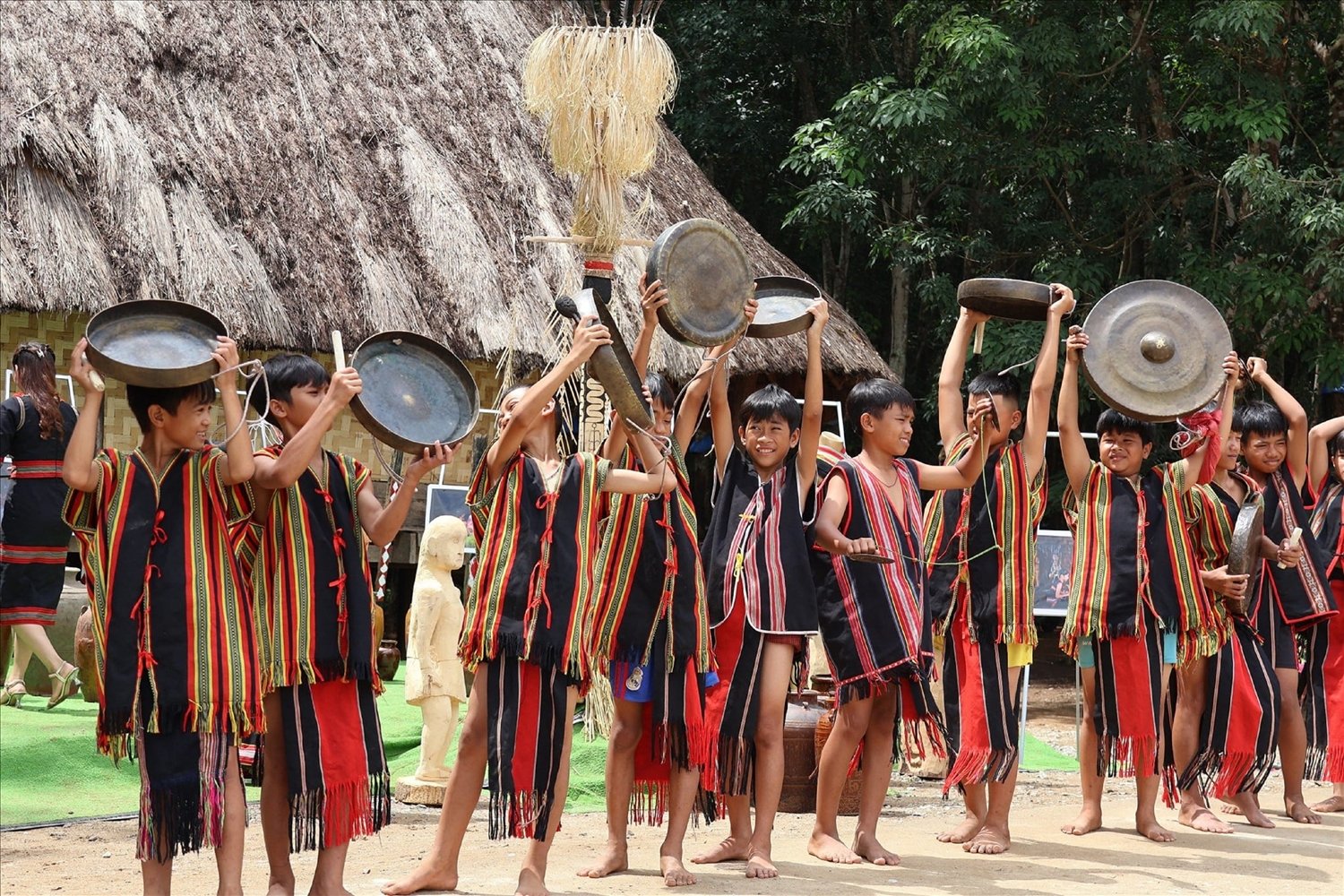
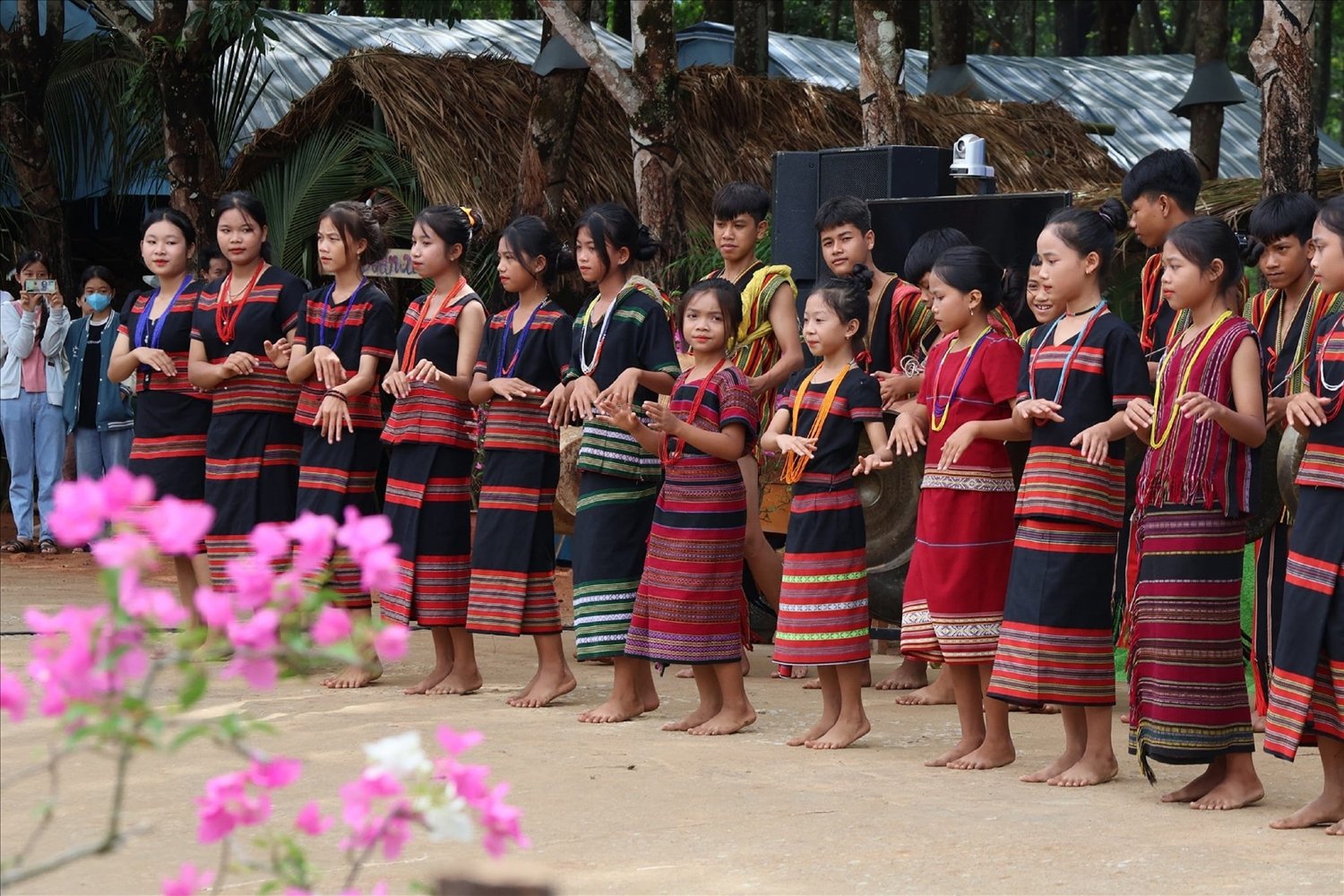
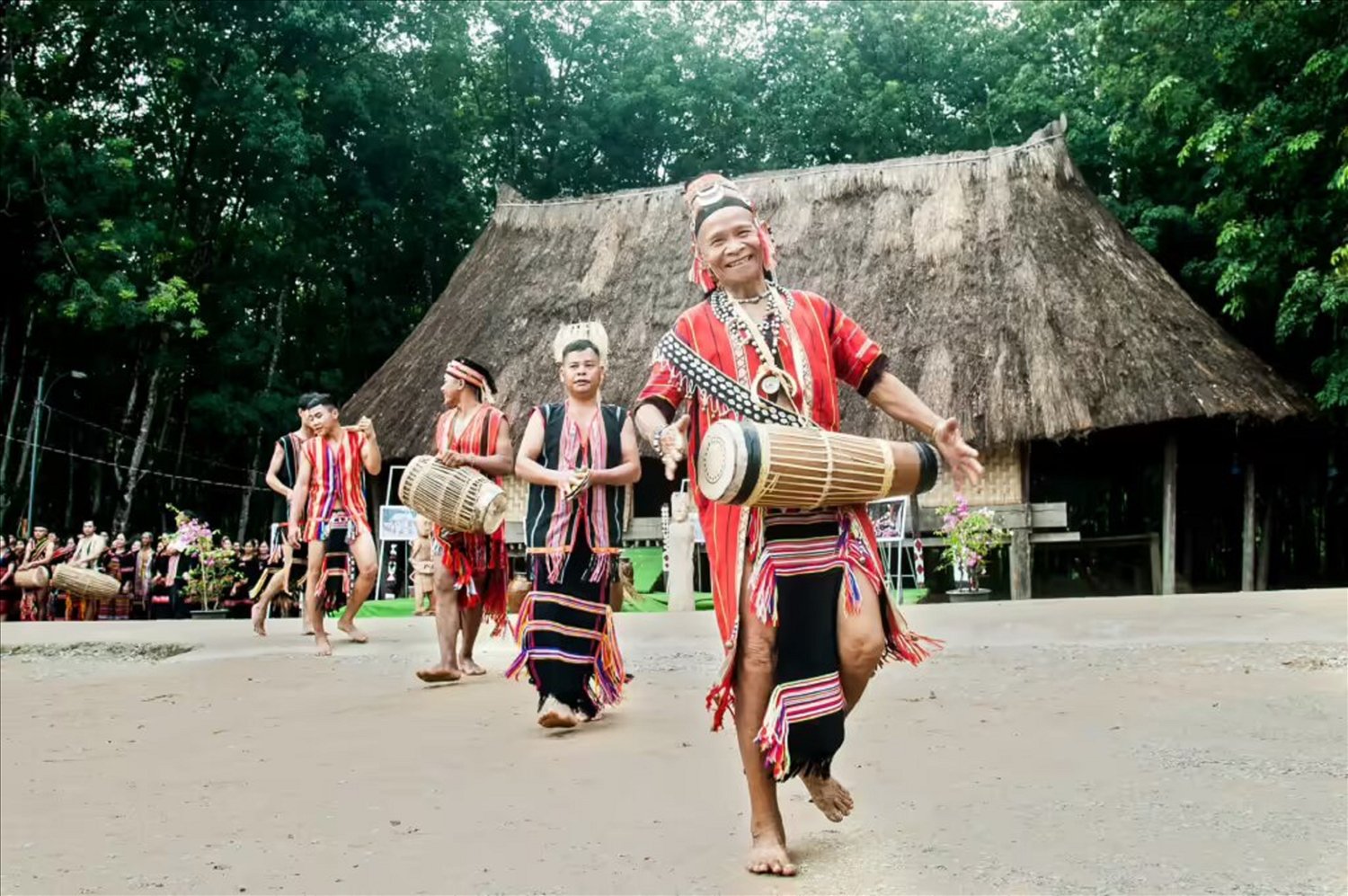
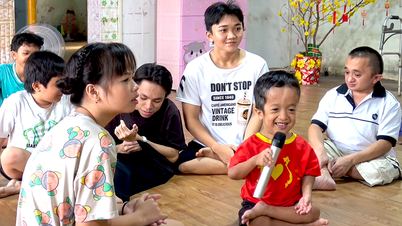
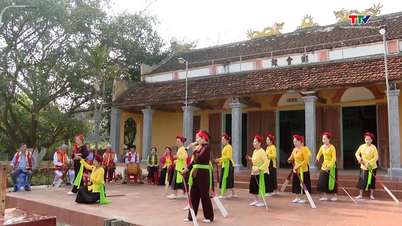
Despite the whirlwind of civilization and urbanization sweeping through every corner of life, the people here still preserve their old traditions. The village has established two teams of artisans to maintain the sounds of gongs and drums, along with the graceful and fluid Xoang dances. In the past, village elders A Brol Vẻ and Bloong Lê mobilized the villagers to form two teams of artisans, one for the elderly and one for the young. Thanks to these artisans "passing on the torch," the two teams are now thriving. Old and young, men and women, enthusiastically practice and engage in cultural exchanges with other ethnic groups within and outside the province. The people of Đăk Răng village also participate in cultural and sports festivals of various ethnic groups, gong and drum cultural festivals, and folk song and dance festivals of different scales… These activities have made a significant contribution to the preservation and promotion of the cultural heritage of the Giẻ Triêng ethnic group.
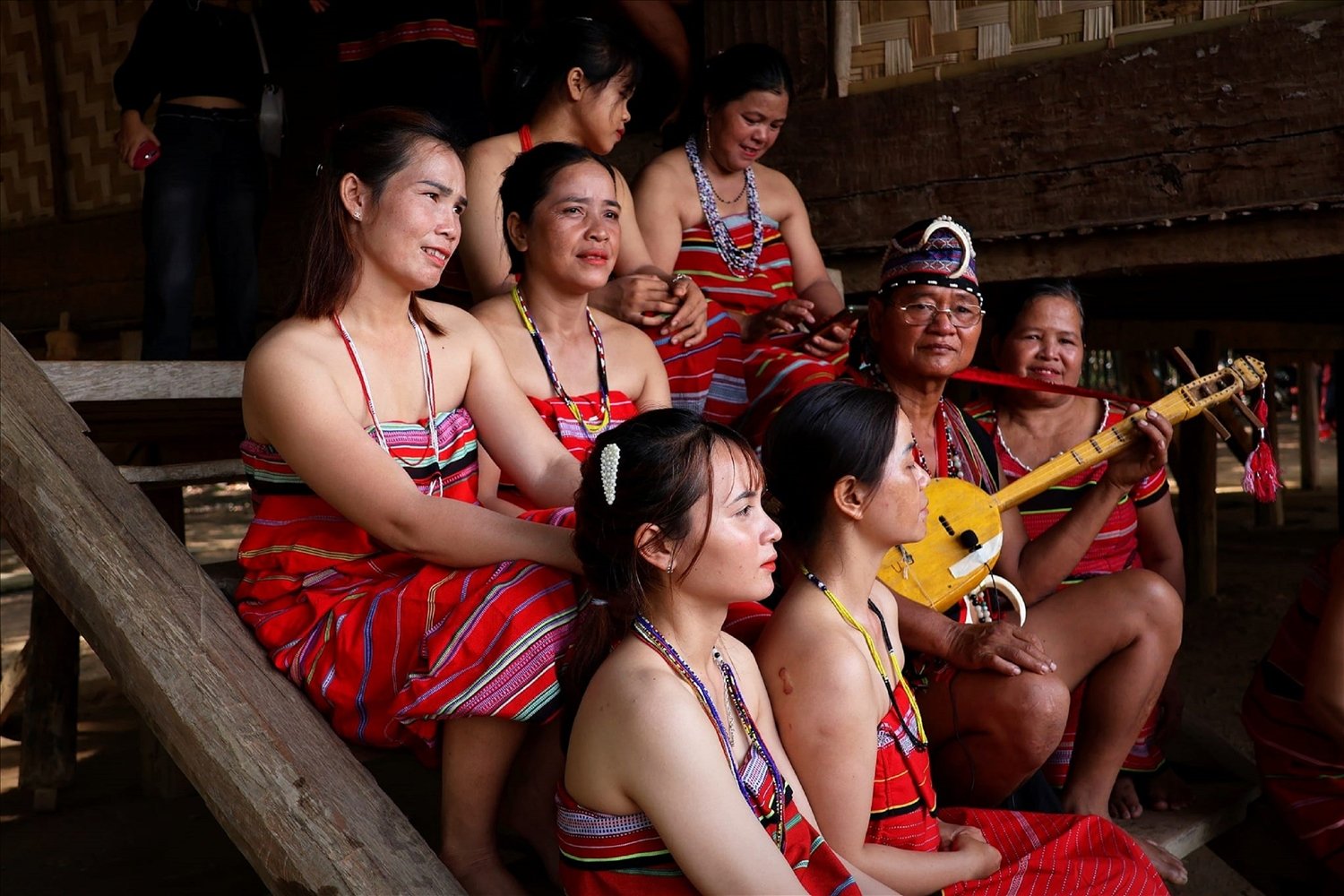
Remarkably, Elder A Brol Vẻ is skilled in crafting and using 15 different musical instruments. To preserve his cultural heritage, he has opened numerous classes teaching instrument making, flute playing, and gong playing to young people in the village. He has traveled to Hanoi three times and Ho Chi Minh City once to perform at major festivals.
In the village of Dak Rang, twice a month, a group of about 50 male and female artisans in traditional costumes rehearse the Xoang dances and gong music, and create new dances, so that the sounds resonate throughout the mountains and forests. Lacking money, the entire village carefully pooled their savings and rice to buy a set of gongs so that the sound could be heard far and wide. Most villagers today are wholeheartedly dedicated to preserving and passing on these traditions, while continuing to maintain the beautiful festivals, customs, and practices.
The vitality of culture
Dak Rang attracts tourists with its quintessential traditional culture. Many come here to find peace from the honest and simple people, to immerse themselves in the sounds of gongs and drums played by artisans, to admire traditional musical instruments and costumes under the cool thatched roofs of the communal houses, to enjoy traditional cuisine, and to be captivated by the melodious Gie Trieng folk songs. Along the village roads, dressed in traditional costumes, the men play gongs and drums, the women perform the xoang dance, and the whole village seems to be celebrating.
It's heartening to see that in Dak Rang, from one end of the village to the other, almost every house has a loom and colorful brocade fabrics. Many Gie Trieng women, like Mrs. Y Ngoi, Y Gio, Y Pleor, and Y Ngan, despite their age, still diligently work at their looms weaving brocade fabrics every day. On festival days, young and old, men and women alike, "show off their beauty" in vibrant brocade outfits. Currently, about 30 women in Dak Rang village regularly maintain the brocade weaving craft. In the group, there are two main artisans who teach brocade weaving to the younger generation: artisans Y Ngan and Y Gio. Besides these two main artisans, the village also invites several older, skilled brocade weavers to teach the younger generation.
Mr. Hieng Lang Thang, Chairman of the People's Committee of Dak Duc commune, shared that to develop tourism effectively, some well-off households have built homestay models and guided tourists to visit cultural activities in the village. The Dak Duc commune government also supports and encourages people to build community tourism models and provide experiential services related to agricultural and rural production activities. In the future, they will continue to focus on exploiting the strengths of traditional handicraft products such as weaving, statue carving, and brocade weaving. At the same time, they will request support from higher authorities to invest in infrastructure serving tourism development.
To preserve and protect its traditional cultural identity, Dak Rang village established an artisan group led by Elder Brol Ve, attracting 30 members including gong makers, traditional musical instrument makers, sculptors, and brocade weavers. Besides participating in cultural events and festivals, the Dak Rang village artisan group also teaches the folk culture of the Gie Trieng people to the younger generation in the village.
Source: https://baodantoc.vn/lang-van-hoa-o-nga-ba-bien-gioi-1733901879654.htm
![[Photo] Solemn bathing ceremony and Buddha procession in Hue](https://vphoto.vietnam.vn/thumb/1200x675/vietnam/resource/IMAGE/2026/05/31/1780228263543_1-jpg.webp)

![[Image] Hanoi Police officially crowned champions of V-League 2025/2026](https://vphoto.vietnam.vn/thumb/1200x675/vietnam/resource/IMAGE/2026/05/31/1780244769054_ndo_br_039d561b692be875b13a-jpg.webp)
![[Photo] The General Secretary, President and his wife begin their state visit to the Philippines.](https://vphoto.vietnam.vn/thumb/1200x675/vietnam/resource/IMAGE/2026/05/31/1780230559452_anh-man-hinh-2026-05-31-luc-19-28-11.png)

![[Photo] Admire the coral "masterpiece" amidst the million-year-old heritage of Dak Lak province.](https://vphoto.vietnam.vn/thumb/1200x675/vietnam/resource/IMAGE/2026/05/31/1780221235105_anh-man-hinh-2026-05-31-luc-16-53-27.png)














![[Video] Sunset at Lap An Lagoon – Where the sun sets over the fishing nets](https://vphoto.vietnam.vn/thumb/340x192/vietnam/resource/IMAGE/2026/05/31/1780192137701_beach-landscape-sea-water-nature-grass-745871-pxhere-com.jpeg)
































![[Photo] Admire the coral "masterpiece" amidst the million-year-old heritage of Dak Lak province.](https://vphoto.vietnam.vn/thumb/402x226/vietnam/resource/IMAGE/2026/05/31/1780221235105_anh-man-hinh-2026-05-31-luc-16-53-27.png)






























Comment (0)