

Every year, on the 20th day of the 12th lunar month, when the gentle southerly wind begins to blow offshore, people gather at the temple to pay tribute to the Fisherman God and express their wishes for peace and prosperity.
From that traditional ritual, a unique cultural space is preserved, reflecting the harmonious relationship between people, the sea, and the community, creating a distinct identity for the coastal inhabitants of Quang Ngai .

A place where the fishing village places its hopes.
According to the elders of Hoa Hai hamlet, Thanh Thuy village, more than 300 years ago, a whale first "stranded" on the shore in this area. Recognizing this as a sacred omen, the people respectfully buried the whale's remains in the village shrine. After three years, the remains were exhumed, placed in a wooden coffin, and enshrined. To this day, the shrine still preserves the remains of the Whale God and the Goddess of the South Sea. From that event, the custom of offering sacrifices to the Whale God at the Nuoc Ngọt shrine officially formed and has been preserved through many generations.
The name "Thuong Van Nuoc Ngot" (Sweet Water Mausoleum) is also associated with a legend passed down through generations. According to legend, hundreds of years ago, the king and his entourage stopped here to rest. Lacking fresh water, the king ordered his soldiers to dig a well. From then on, a source of cool, refreshing water was discovered, and the place was named Thanh Thuy Sweet Water Mausoleum. "Thanh" means clear, and "Thuy" means water – implying a source of clean, pure water.
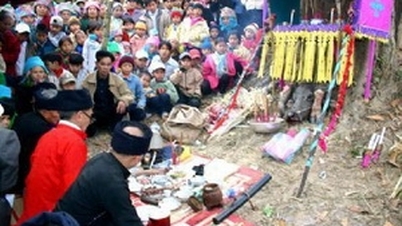
Following in the footsteps of their ancestors, every year on the 20th day of the 12th lunar month, the people of Thanh Thuy solemnly hold a ceremony to commemorate the Whale God and the Whale Goddess at the village shrine. Not only villagers from the hamlet and commune, but also fishermen from many neighboring areas come to participate, sincerely praying for the blessings of the Great General of the South Sea for safe and successful voyages at sea.
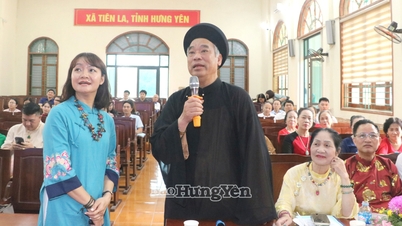
Mr. Le Gioi (62 years old), owner of the Nuoc Ngọt fishing village, said: "The ceremony to worship the Whale God is performed very solemnly. The chief officiant carries out all the traditional rituals, and the scribe reads a eulogy praising the merits of the God of the South Sea - a sacred being who has repeatedly helped fishermen overcome hardships at sea."

The belief in worshipping the Whale God - a faith amidst the vast ocean.
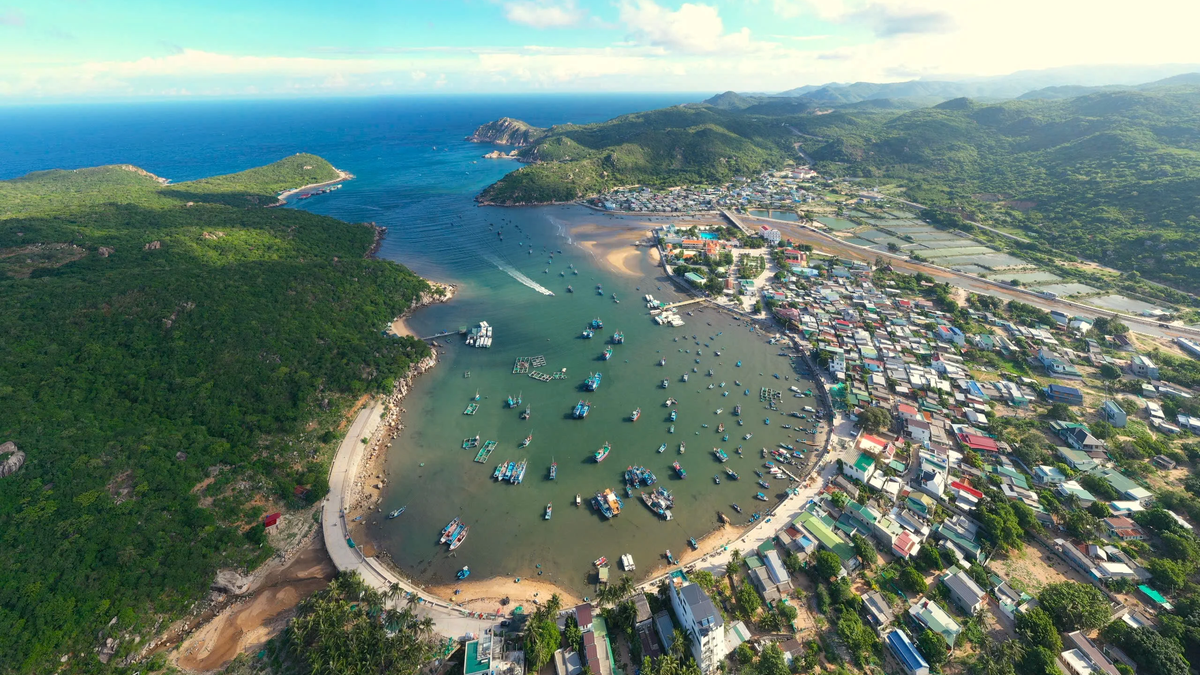
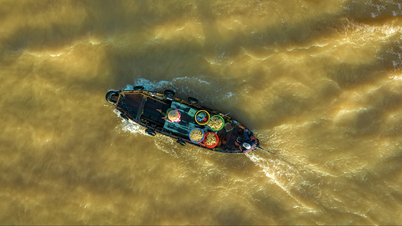
Earning a living on fragile boats amidst the vast ocean, faith in the Fisherman God has been a spiritual anchor for the coastal residents of Quang Ngai for hundreds of years. In folk beliefs, this giant fish of the ocean possesses mystical strength, gentleness, and generosity.
For fisherman Nguyen Van Tien (55 years old), the Whale God worship ceremony is an indispensable event in his life intertwined with the waves and wind. “I’ve never missed the ceremony. We fishermen believe that any fishing village that worships the God of the South Sea diligently will have a peaceful year and a bountiful catch. Before each fishing trip, everyone comes to the shrine to light incense and ask the God and Goddess for blessings, safety, and a full catch,” Mr. Tien shared.
According to folklore, in ancient times, many fishermen in distress at sea were protected by whales, bringing them safely ashore. From then on, this species of fish was revered and called "Ông Cá" (Mr. Whale) or "Thần Nam Hải" (God of the South Sea). Along the coast of Quang Ngai, there are still dozens of whale shrines, some hundreds of years old. Wherever there is a whale shrine, that place is considered a "blessed" land – where the whale once landed and rested.
For coastal residents, wherever a whale washes ashore is considered a lucky place, bringing bountiful harvests and calm seas. Therefore, each whale washes ashore is a momentous event for the entire region. The burial ceremony is held solemnly according to traditional rituals, with traditional music including eight-instrument ensembles, large and small drums; a ceremonial committee consisting of scholars and ritual masters reads the eulogy. The villagers appoint a respected elder to mourn the whale, showing their respect as if it were a family member.
Following the main ceremony, the sword and rowing team of the fishing village performed the Ba Trao dance and song – a distinctive form of folk performance. The melodies recreated the life of the fishing community, the dangers of the sea and the protection of the God of the South Sea. Through this, it contributed to strengthening community bonds and reminded people of the journey of exploration and settlement by Vietnamese people in the coastal region.
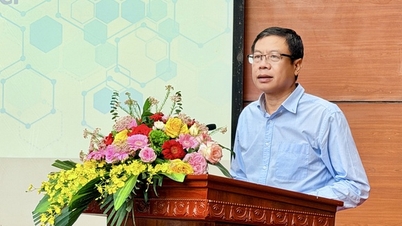
According to cultural researcher Cao Van Chu, former Deputy Director of the Department of Culture, Sports and Tourism of Quang Ngai province: The "Ông" fish is actually a whale – an animal that the people have deified as the God of the South Sea, the guardian deity of fishermen. The belief in worshipping the "Ông" fish is widespread along the Vietnamese coast, originating from the ancient Vietnamese belief in worshipping fish, and was strongly reinforced under the Nguyen dynasty through royal decrees.
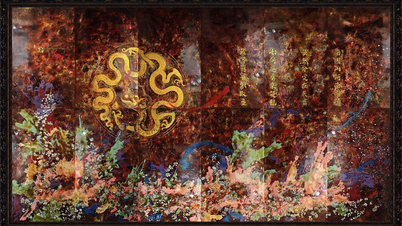
Today, the Thanh Thuy Freshwater Mausoleum still preserves many valuable Han Nom (Sino-Vietnamese) inscriptions. Most notably, a sign hung prominently in the central hall bears the four characters "Hai Oc Tang Linh" – meaning "A place containing many sacred and miraculous things from generations past." The mausoleum's pillars are inscribed with couplets praising the scenery and the mausoleum's history. Significantly, it also preserves six royal decrees from five emperors, from Minh Mang to Khai Dinh.
Source: https://baovanhoa.vn/van-hoa/le-cung-than-nam-hai-203661.html































































Comment (0)