

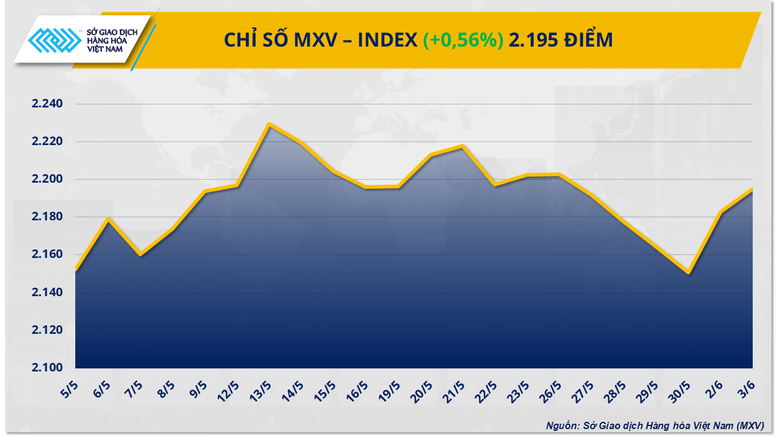
Geopolitical tensions continue to drive oil prices higher.
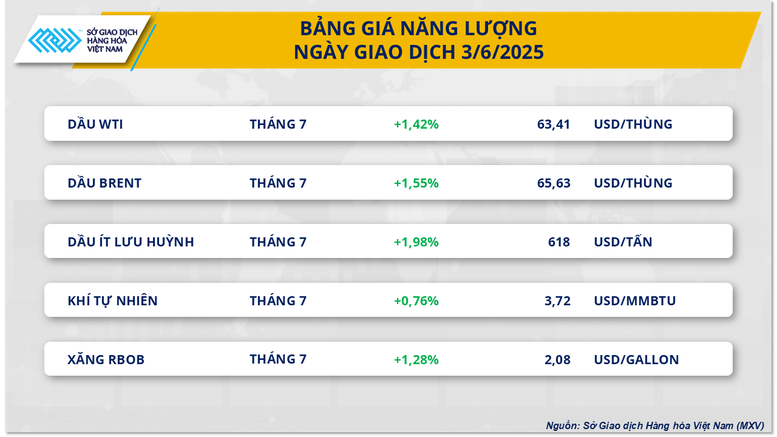
According to MXV, at the close of yesterday's trading session, the energy sector continued to see gains across all five commodities. Brent crude rose 1.55% to $65.63 per barrel, while WTI crude increased 1.42% to $63.41 per barrel – both reaching their highest levels in three weeks. MXV notes that the global crude oil market continues its upward trend as geopolitical tensions show no signs of easing.
The latest developments indicate that tensions are escalating again in the Russia-Ukraine conflict, despite negotiation efforts from all parties involved.
Furthermore, the market is also concerned about the US-Iran relationship and negotiations toward a new agreement surrounding Tehran's controversial nuclear program, replacing the previous 2015 deal. Currently, the two sides have yet to find common ground on the issue of uranium enrichment, making the prospect of lifting US oil sanctions against Iran very distant.
If the disagreements between the US and Iran are not resolved satisfactorily, the risk of a new flashpoint in the Middle East is very real, especially in the Strait of Hormuz south of Iran, a vital shipping route for many Gulf countries.
The US government is currently imposing sanctions on oil supplies from Venezuela. Meanwhile, wildfires continue in southwestern Canada, disrupting oil production there. These factors have significantly diminished the impact of OPEC+'s production increase of 411,000 barrels per day for the third consecutive month.
In addition to supply concerns, oil prices are also being supported by expectations of cyclically higher oil demand in the US. Many market forecasts suggest that commercial crude oil inventories in the country will fall by another 1 million barrels in the week ending May 30th, continuing the trend from the previous week, driven by expectations of increased demand during the peak travel season in the US.
Positive supply prospects are putting pressure on coffee prices.
In contrast to trends in the energy market, the industrial raw materials group witnessed a clear differentiation among key commodities.
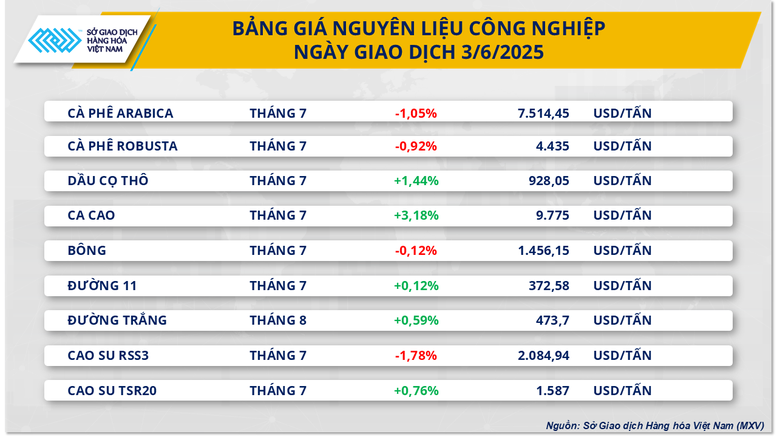
Contrary to the general market trend, Arabica coffee prices fell to their lowest level in nearly two months, losing 1.05% to $7,514 per ton, while Robusta coffee prices continued to decline by another 0.92%, reaching $4,435 per ton, the lowest level in seven months.
The global coffee market has witnessed a significant decline since May 2025, primarily attributed to increased supply from the world's two largest producing countries, Brazil and Indonesia.
In addition, the market is facing further pressure from new Robusta supplies from Uganda – Africa's leading Robusta exporter, accounting for approximately 10% of total global Robusta exports. In April 2025, the country's total coffee exports reached 694,318 bags, a 77.44% increase compared to the same period last year, with Robusta accounting for 594,188 bags, a sharp 104.63% increase compared to the same month the previous year.
Furthermore, coffee inventories remain high, continuing to put pressure on prices. According to ICE data, Robusta inventories on June 3rd decreased only slightly by 29 lots compared to the peak in 8.5 months of 5,438 lots on May 30th. Similarly, Arabica inventories also decreased slightly compared to the peak in 4 months of 892,468 bags last Tuesday.
Source: https://baochinhphu.vn/mxv-index-tro-lai-muc-cao-nhat-ke-tu-cuoi-thang-5-102250604084339766.htm























































































Comment (0)