

 |
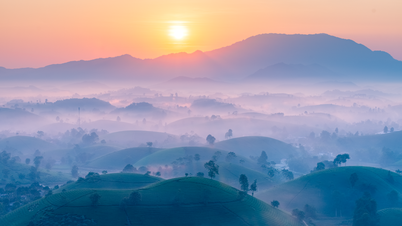
The Oolong tea plantation is located about 7-8 km from the center of Sa Pa ward, on National Highway 4D leading up to the O Quy Ho pass. Currently, this area is included in the planning for a cultural tourism and urban service zone along the Muong Hoa valley, covering an area of nearly 30 hectares. |
 |
The urban area is oriented towards developing a modern ecological model, with synchronized technical and social infrastructure, combining urban space with tourism, commercial, and resort services. The projects will maximize the exploitation of the natural landscape and local culture of the Sa Pa region. |
 |
According to the plan, all legal procedures will be completed in the first quarter of 2026, and the project will then commence construction and be put into operation from the third quarter of 2030. The total investment capital is over 2,424 billion VND . |
 |
The People's Committee of Lao Cai province expects that, upon completion, the O Quy Ho Tea Hill Eco-Urban Area will become a new highlight of the urban and tourism space of Sa Pa, contributing to the realization of the goal of developing an ecological, cultural, and tourism urban area according to the Sa Pa National Tourist Area plan. |
 |
According to reports, the Oolong tea plantation area has temporarily stopped receiving visitors since the beginning of December, with some areas restricting access. This has led many tourists to take advantage of the last few days to visit and take photos before the landscape changes. |
 |
For many years, this place has become an indispensable destination for tourists every year-end, when the lush green tea plantations winding along the hillsides blend with the characteristic pink color of cherry blossoms, creating a scene with a unique mark of the Northwest region. |
 |
At this time of year, cherry blossoms bloom profusely, their pink hues blending with the tea plantations and the lingering clouds on the mountainside. As the first rays of sunlight pierce through the mist, the entire hillside is bathed in a soft, gentle color. |
 |
The cherry blossoms in Sa Pa, also known locally as "tớ dày," have a different appearance from Japanese cherry blossoms. The trees are tall and straight, with dark pink, single-petaled flowers that bloom in clusters. This variety thrives in the cool climate year-round, so it is widely planted in the Ô Quy Hồ area, creating long stretches of blossoms during the season. |
 |
According to locals living near the tea hills, this year's flowering season is more abundant and uniform than in previous years. |
 |
However, the joy of admiring the flowers is mixed with a sense of regret, as many believe this may be the last time this familiar scene will appear intact. |
 |
Arriving at the tea hills early in the morning, Ms. Mai Phuong (a tourist from Hanoi ) said she had arrived in Sa Pa the night before to catch the sunrise amidst the blooming flowers. "I've been here a few times before, but this year the flowers are blooming so densely and evenly. Waking up early in the cold, standing in the middle of the tea hills admiring the pink blossoms covering the slopes is a very memorable experience. I heard this is the last flowering season, so I want to capture as many pictures as possible," Ms. Phuong shared. |
 |
According to observations, workers are currently digging up the flower roots, preparing to move them to another area for replanting. |
 |
Typically, the cherry blossom season in Sa Pa lasts about 3-4 weeks, depending on the weather conditions each year, and begins to fade in late December or early January. |
 |
This year, in the final days of the season, flowers are still blooming profusely on many hillsides, but scattered petals are also falling in the cold highland winds. |
Source: https://znews.vn/ngam-mai-anh-dao-doi-che-o-long-sa-pa-mua-cuoi-truc-khi-bi-di-doi-post1611357.html
![[Image] Vietnam's colorful journey of innovation](/_next/image?url=https%3A%2F%2Fvphoto.vietnam.vn%2Fthumb%2F1200x675%2Fvietnam%2Fresource%2FIMAGE%2F2025%2F12%2F14%2F1765703036409_image-1.jpeg&w=3840&q=75)

















































![[Image] Vietnam's colorful journey of innovation](https://vphoto.vietnam.vn/thumb/402x226/vietnam/resource/IMAGE/2025/12/14/1765703036409_image-1.jpeg)



























Comment (0)