

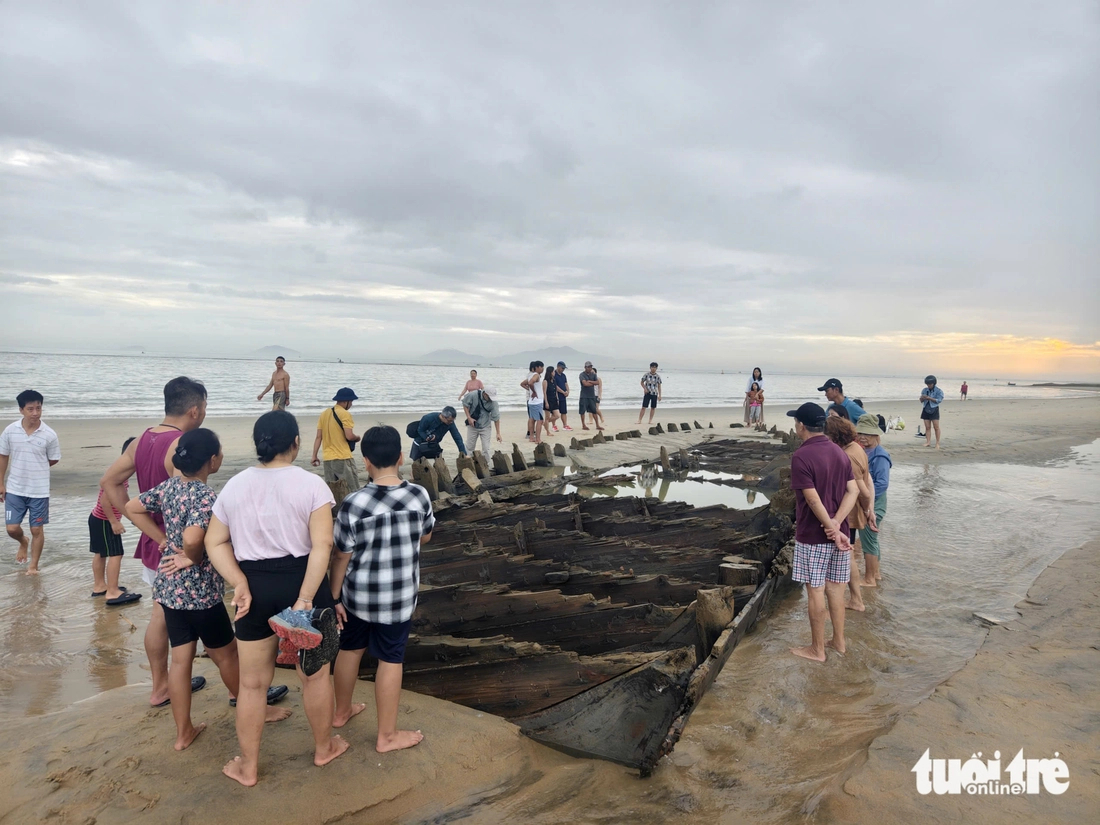
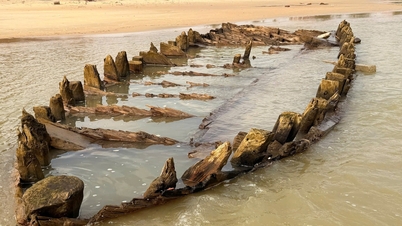
Hoi An residents go see ancient ships on the morning of November 9 - Photo: BD
Hoi An World Cultural Heritage Conservation Center is making a report to send to the superior management agency.
Meanwhile, since the morning of November 9, many people in the vicinity have also come to the area where the ancient ship surfaced to observe its shape. Signs prohibiting access have also been put up by the authorities.
Where did the ancient ship Hoi An come from?
According to research results reported by the Hoi An World Cultural Heritage Conservation Center, the ship is suspected to be an ancient ship that sank at least several centuries before 1905.
Ethnographic and archaeological fieldwork revealed the location of ancient boats (ships, sampans) in Cam An sea (Cam An ward, old Hoi An city; now Hoi An Tay ward, Da Nang city), which used to be a coastal sand dune. Next to the sand dune is a road built during the French colonial period.
Due to sea erosion, only a short section of the road remains. In the area where the boat appeared, the road has been eroded away without a trace.
Through maps, satellite images from many periods and memories of many local people, it is clear that from the 20th century until now, sea erosion has become increasingly stronger.
It also confirmed that the location of the ancient boat was not only deep under the sand dunes, but in 1905 the ship could have been about 700 - 800m from the water's edge.
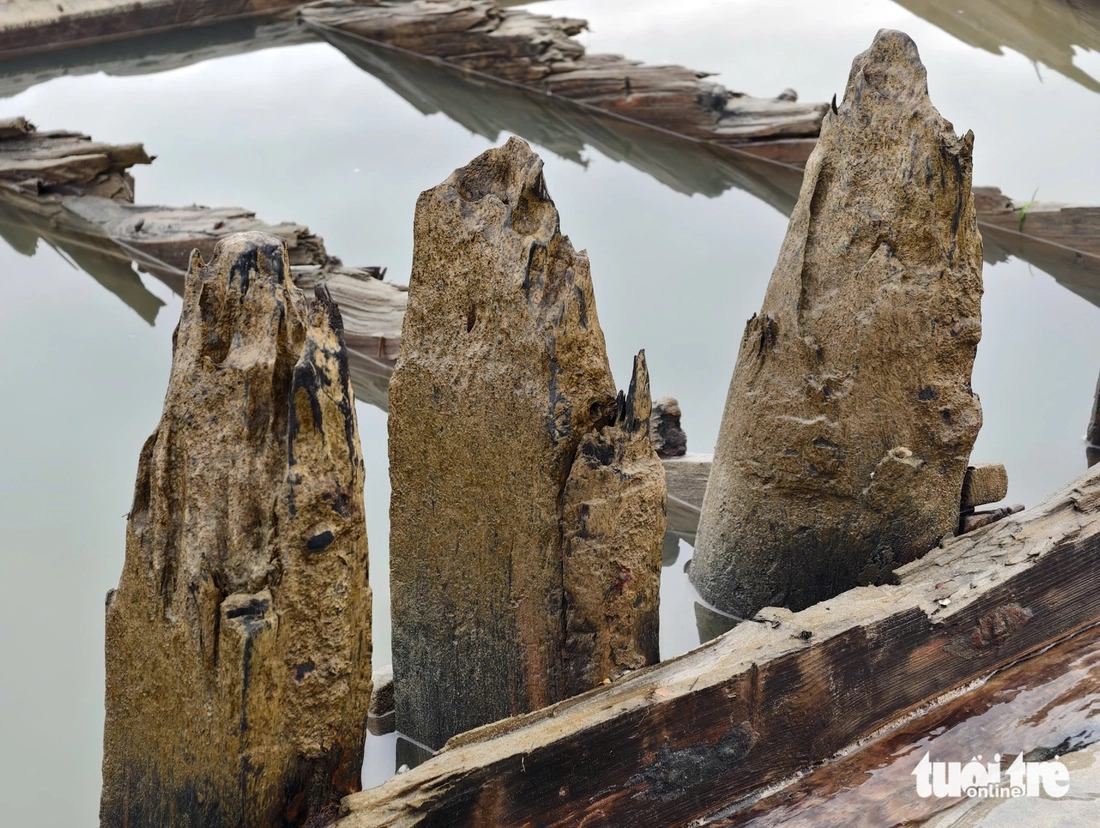
Close-up of a position on the ancient ship - Photo: BD
According to scientists , even if the ship that appeared a few days ago was sunk or abandoned, the time of sinking or abandonment is most likely "at least several centuries earlier than 1905".
Preliminary research results also determined that the wood used to build Cam An boats had two origins: tropical wood was Lagerstroemia (Cang Le) and Kien Kien, temperate wood was Pine. These are also the types of wood commonly found in traditional East Sea ship structures.
Regarding some iron nails used on ancient ships currently in Hoi An sea, preliminary research results show that iron nails are commonly used on Cam An boats such as on the crossbar, on the slats and possibly on the planks and rafters.
The technique of building the side walls or bulkheads of boats by nailing diagonal nails at the edge was used by the Chinese as early as the 1st millennium AD to build river and coastal ships.
The ancient ship in Hoi An is a "hybrid ship"
According to scientists, it can be initially determined that the boat structure in Hoi An shows some typical features of traditional Southeast Asian boat structures.
Specifically: Bow bridge (bow bone), boat with many layers of planks (at least 2 layers), planks covering the bow bridge, tropical wood as the main structure of the hull and skeleton of the boat such as Lagerstroemia wood (Latin) as giang and Kien Kien wood as planks.
Besides the boat, there are also some typical features of traditional Chinese ship structure such as: cross-bulks, rafters, iron nails, the technique of driving iron nails diagonally at the edge of the planks and using pine wood for the cross-bulks and rafters.
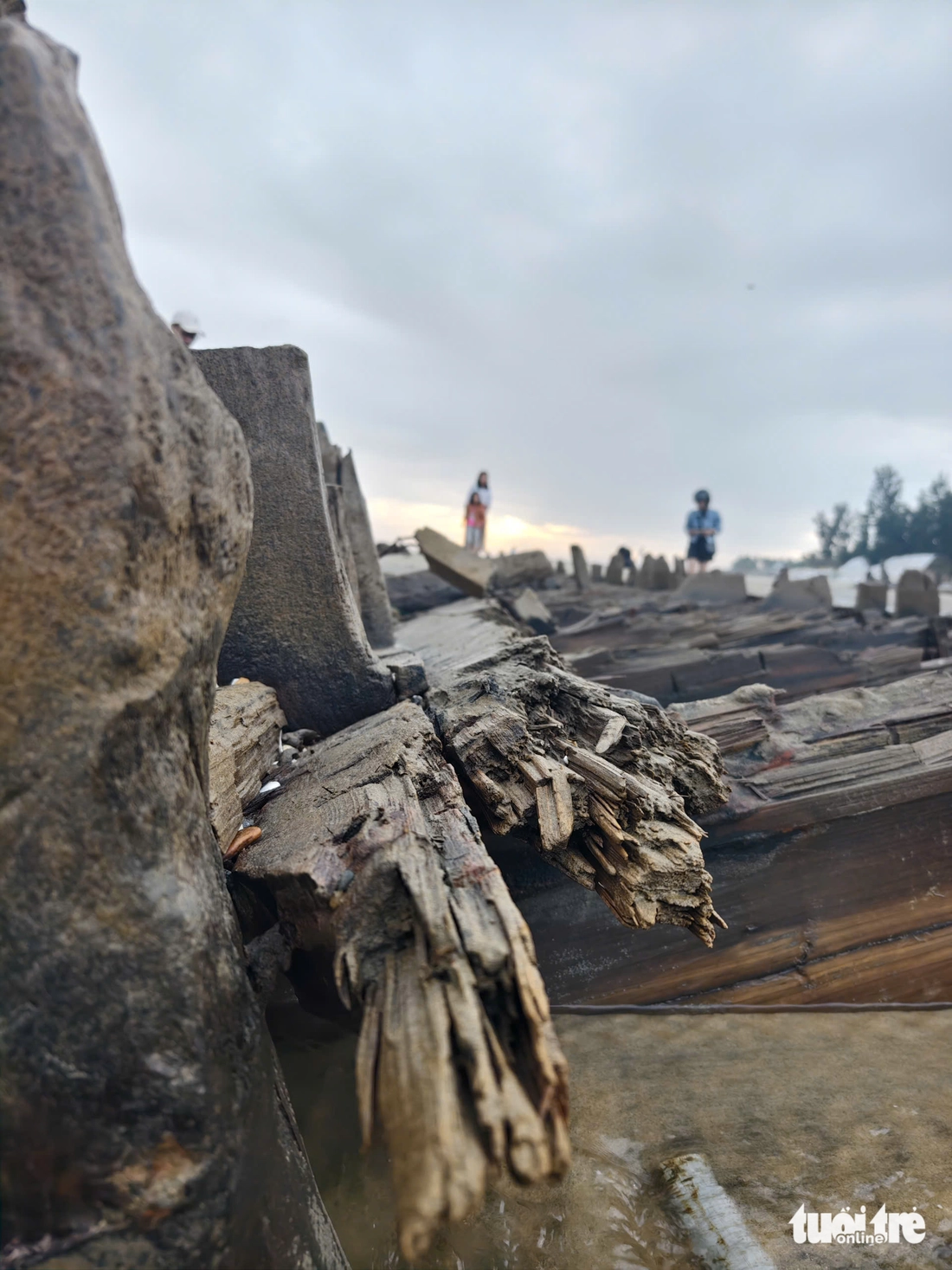
Some positions on the ship are made of pine wood - Photo: BD
These characteristics show that Cam An boat is actually a traditional East Sea boat, also known as a hybrid boat.
From the research results, scientists came to the conclusion that Cam An boat is an important underwater cultural heritage in Hoi An, Quang Nam.
Therefore, it is necessary to have an excavation project carried out by experts with interdisciplinary coordination. Along with that are plans and methods for effective management, conservation and development of the boat after excavation and research.
Hoi An people flock to see ancient ships
After Tuoi Tre Online published the article, public opinion was abuzz and expressed hope that measures would soon be taken to protect and excavate the ship. If this is indeed a valuable ancient ship, it would truly be a "treasure", a resource for historical research and tourism activities.
According to Tuoi Tre Online, on the morning of November 9, at the Cam An sea area, dozens of people came around the ship to film and take pictures. Signs limiting contact were also put up to prevent damage to the ship's structure.
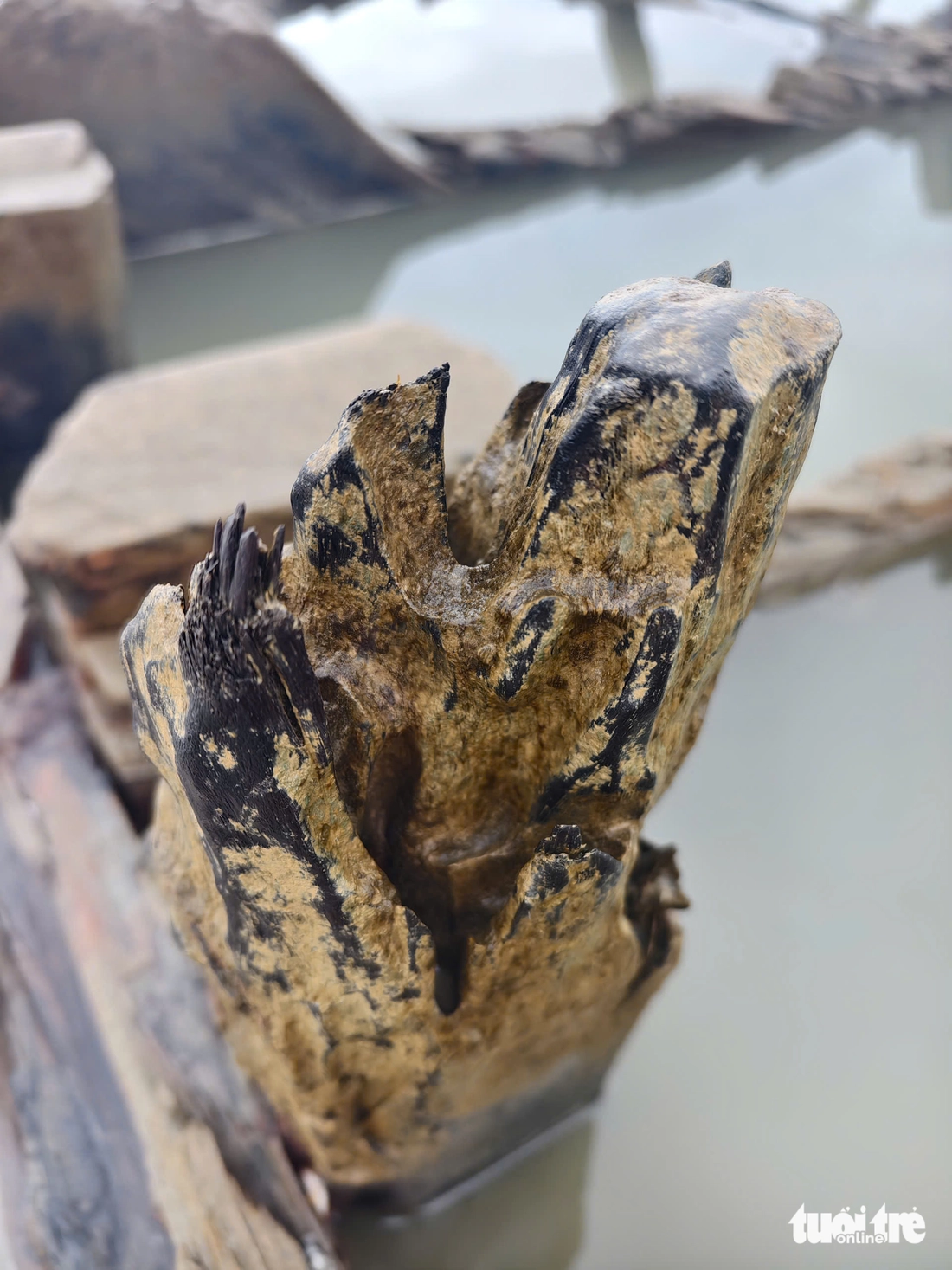
The load-bearing part surrounding the hull - Photo: BD
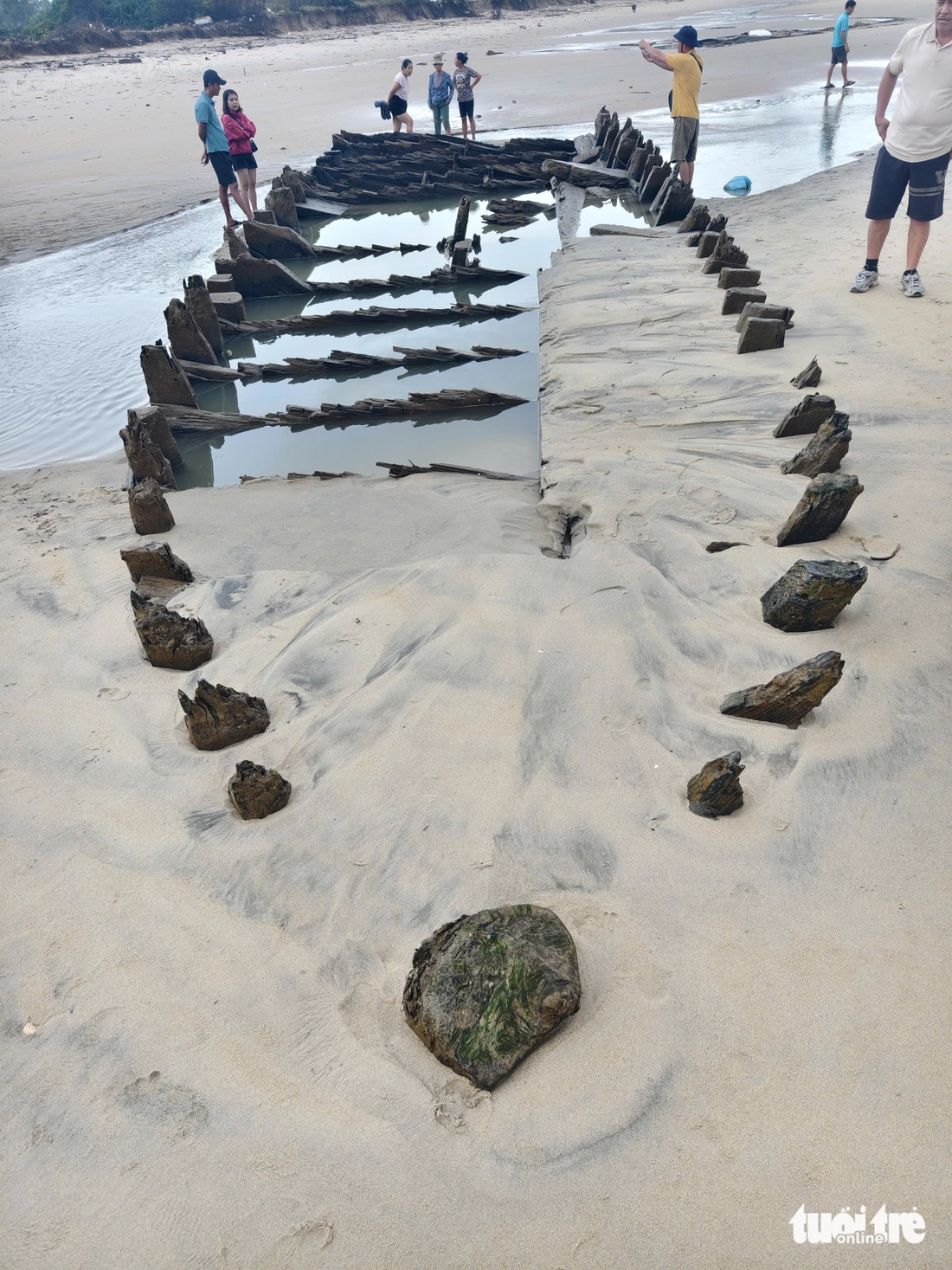
Compared to the day before, the shape of the ancient ship that emerged on the morning of November 9 was somewhat smaller - Photo: BD
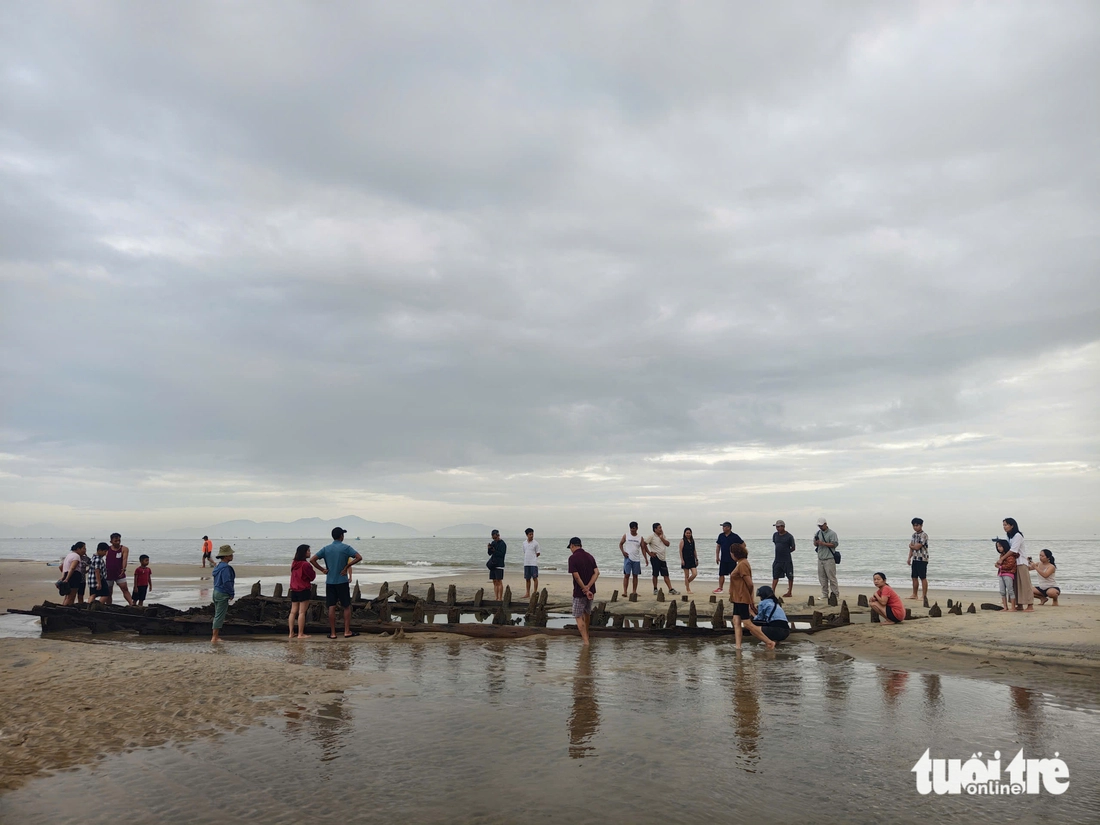
People observe the ancient ship on the morning of November 9 - Photo: BD
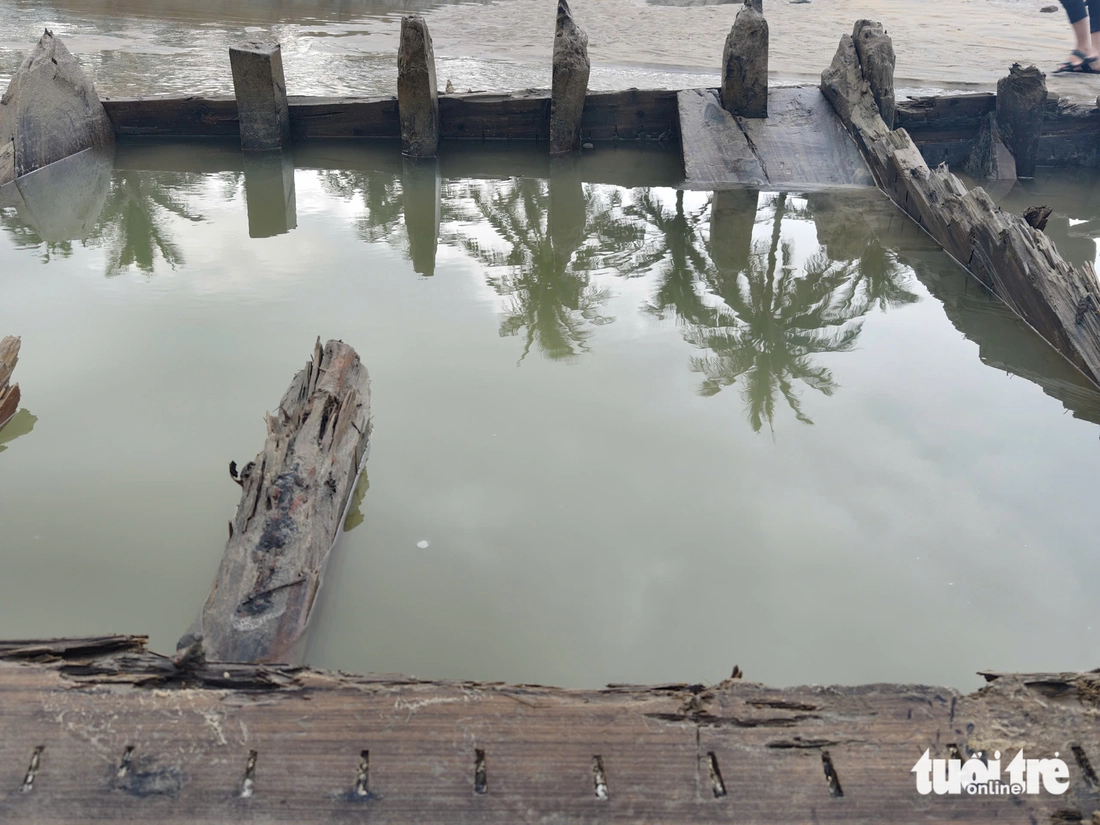
A corner of the old ship on the morning of November 9 - Photo: BD
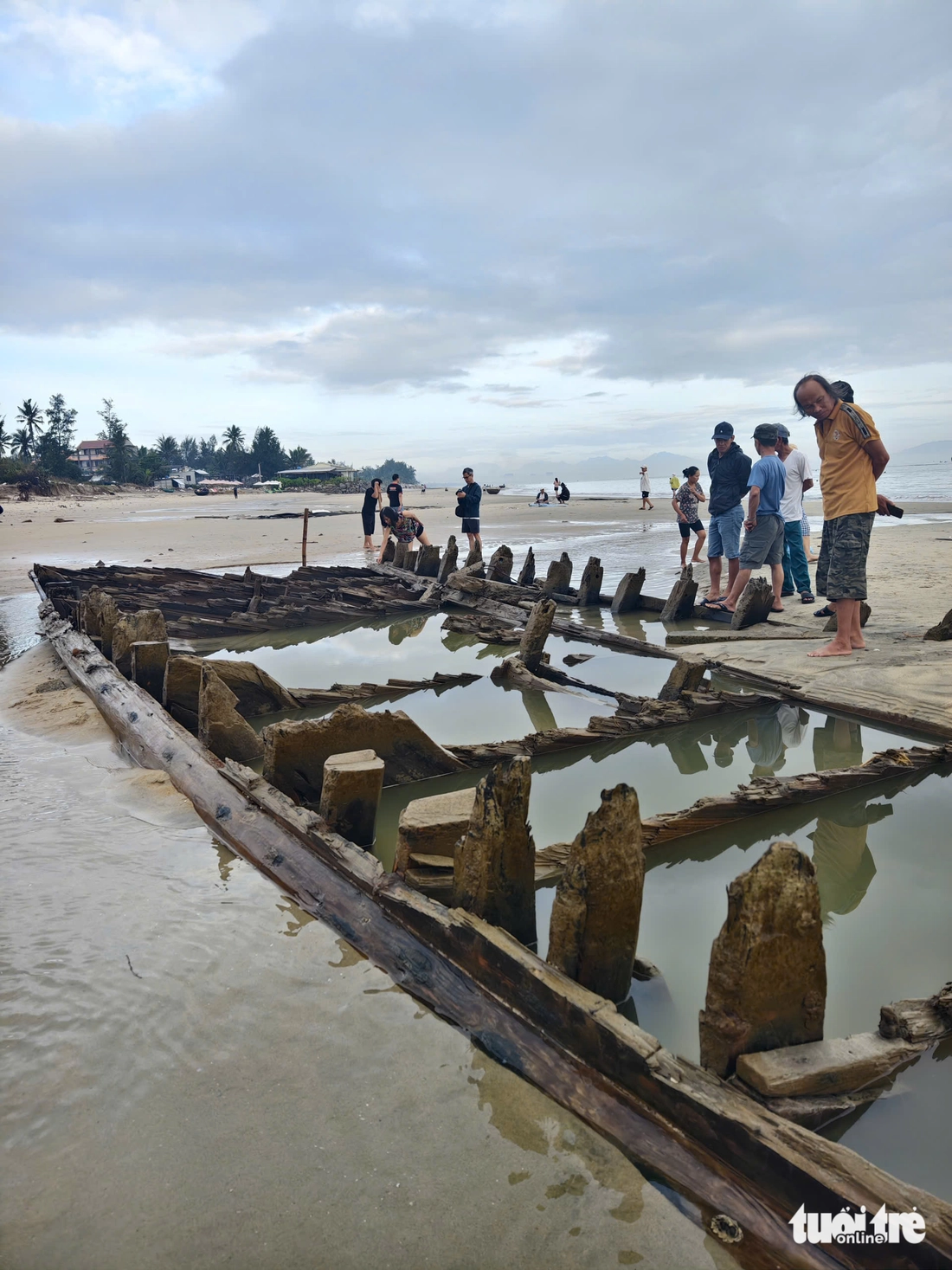
The origin and value of the ancient ship are still a question mark - Photo: BD
Source: https://tuoitre.vn/nguoi-dan-keo-den-xem-tau-co-noi-len-o-bien-hoi-an-tu-sang-som-lai-lich-con-tau-ra-sao-20251109073518162.htm





























































































Comment (0)