

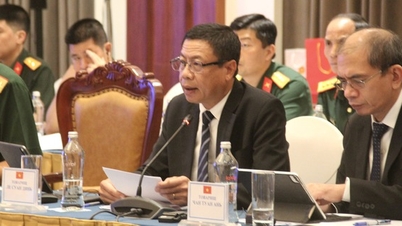
On May 26th, the Ministry of Industry and Trade held a press conference to share information related to the electricity supply situation.
Responding to a question from VietNamNet reporters regarding electricity imports, Mr. Dang Hoang An, Deputy Minister of Industry and Trade, stated: The volume of imported electricity is relatively small, with approximately 7 million kWh/day imported from Laos and 4 million kWh/day from China. Electricity production in the North is 450 million kWh/day, while total imported electricity is only about 10 million kWh/day, resulting in a very low proportion of imported electricity.
"These sources aren't necessarily new imports due to shortages. We've been buying electricity from China since 2005. We also import electricity from Laos under an intergovernmental agreement. We've also been selling electricity to Cambodia for a long time based on agreements between neighboring countries," the leader of the Ministry of Industry and Trade noted.
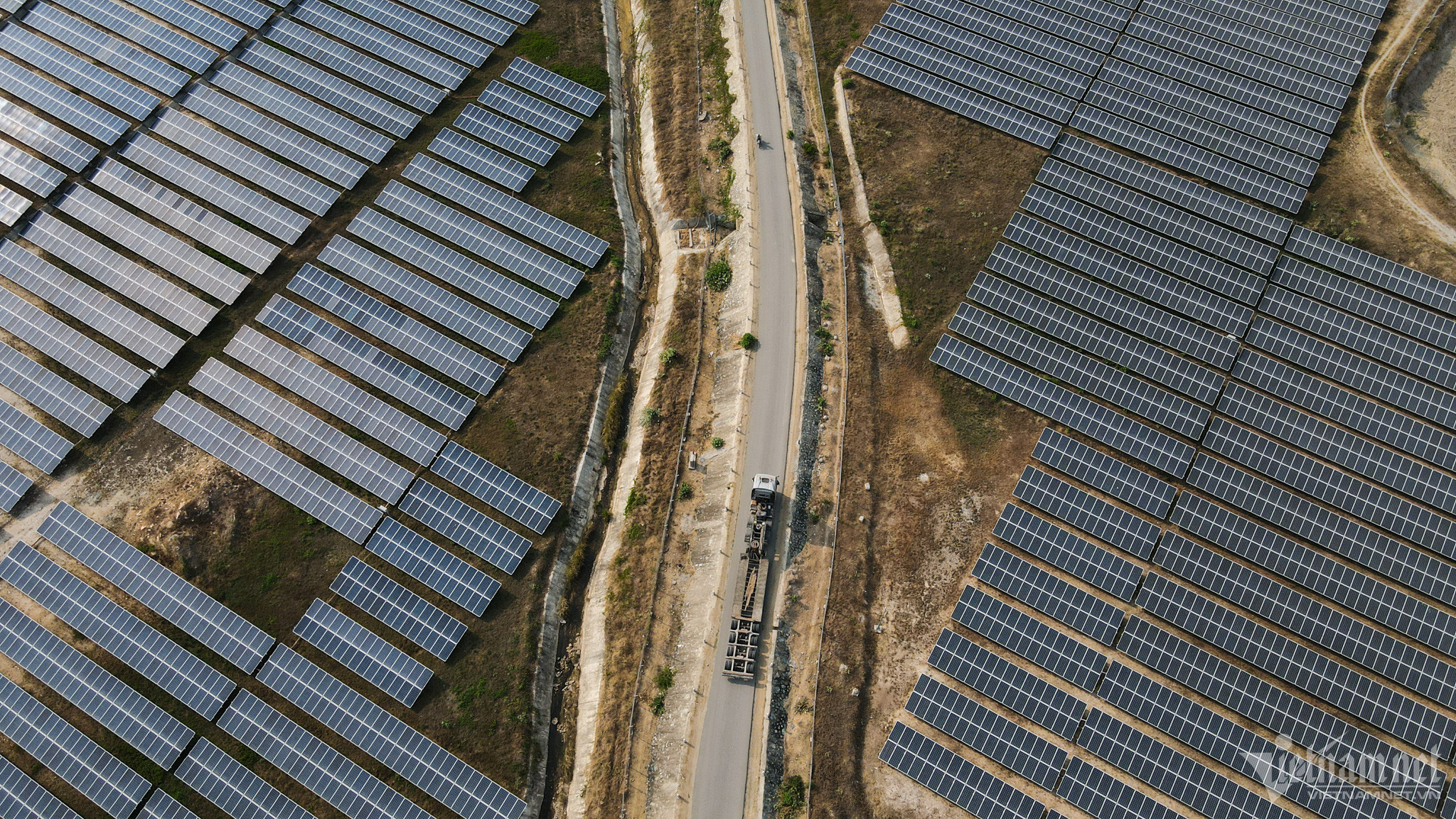
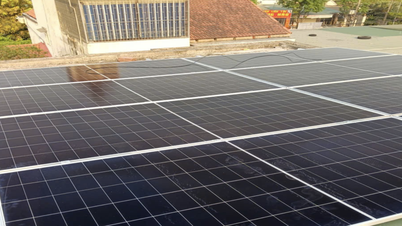
Regarding information on renewable energy production in the system, Mr. Dang Hoang An assessed: Current renewable energy production is 100 million kWh per day, accounting for 1/9 of the total system output. That is a relatively large amount.
"If more renewable energy sources are introduced, we can absorb them. In the future, if the proportion of renewable energy continues to increase, the power sector will need more technical solutions such as pumped-storage hydropower and battery storage to support this power source," Mr. An shared.

Providing an update on the price negotiations for transitional renewable energy power plants, Mr. Dang Hoang An said that he met with investors two days ago and "listened to their concerns for an entire afternoon."
To date, after much urging, 52 projects with over 3,000 MW have submitted their dossiers to EVN for consideration and negotiation, while 33 projects have yet to submit their dossiers. Within this group, not all projects have completed their investment and construction.
Currently, 39 projects with a total capacity of 2,363 MW have proposed to EVN to sign temporary price agreements at 50% of the regulated ceiling price. To date, 16 projects have been connected to the grid for parameter testing. The remaining 5 projects have met the documentation requirements and are eligible to generate electricity for the grid after final testing. The total capacity of these 5 projects is 391 MW. Therefore, in the next few days, these 391 MW projects could be commercially operational.
"That figure is still modest. If the investor doesn't make an effort, it will be very difficult to operate commercially because power projects have many regulations to comply with. The main responsibility lies with the investor, but the Ministry of Industry and Trade also has responsibility. The Ministry has also directed that when there is a request for inspection, acceptance testing, or granting of electricity operation licenses, inspections and handling must be carried out immediately," a leader of the Ministry of Industry and Trade shared.
The remaining projects are currently still undergoing various procedures. For example, inspection and acceptance testing, electricity operation licenses, and some projects require adjustments to their investment policies at the provincial level People's Committee.
Representatives from the Ministry of Industry and Trade pledged to create all favorable conditions for investors to complete the procedures related to the Ministry's responsibilities and authority so that electricity can be connected to the grid as soon as possible.
Electricity supply: The North remains under strain, while the Central and Southern regions are breathing easier.
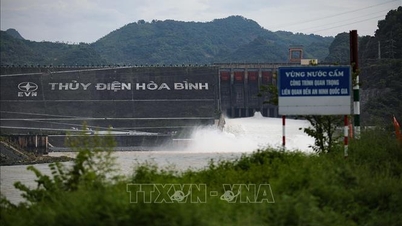
Sharing his views on the electricity supply situation recently, Mr. Dang Hoang An said that we are in the final stage of the dry season, with high temperatures and increased electricity demand during hot days. Normally, at the end of the dry season, water levels in hydroelectric reservoirs are low, and the capacity of hydroelectric power plants decreases due to water level fluctuations.
In response to this situation, on May 8th, the Standing Committee of the Government held a meeting and directed that all measures be taken to ensure electricity supply for production and daily life. Following numerous solutions directed by the Prime Minister, Deputy Minister An stated that the situation has improved.
The first and most important solution is to ensure the operational reliability of power plants. During this dry season, ensuring the stable operation of thermal power plants, including gas turbine plants, is the number one priority.
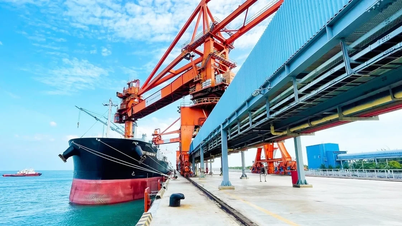
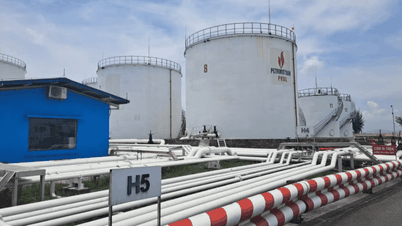
The second equally important solution is for the Prime Minister to direct all power generation corporations, power plant companies, and enterprises with power plants to ensure sufficient fuel for power generation by all means. First is the issue of coal supply. Second is oil, including fuel oil (FO) and diesel. When gas levels decline, diesel must be injected for combustion. This is a relatively expensive source of electricity. Recently, there have been some disruptions in oil supply, but now sufficient oil has been stockpiled and replenished to meet demand.
"We can't have a factory without fuel. That's an unchangeable principle that the Prime Minister has instructed very carefully," Mr. An shared.
To date, EVN has had to mobilize 900 million kWh of electricity from oil-fired sources. Given EVN's financial difficulties, this is a tremendous effort.
Mr. An also emphasized the importance of "thoroughly saving electricity" because electricity conservation is a crucial solution. Continuing to use oil-fired power plants without saving electricity is very wasteful.
Regarding future forecasts, a representative from the Ministry of Industry and Trade stated: The North is currently in the hot season, while the South has officially entered the rainy season. Therefore, electricity demand in the South will not increase significantly. The national power system will remain at high levels in the North in the coming days, while demand in the Central and Southern regions has stabilized.
“Currently, the country has nearly 80,000 MW of installed capacity, while the peak demand is over 44,000 MW. If we ensure that the generating units operate reliably without incidents, have sufficient fuel, regulate water levels in reservoirs effectively, and save electricity efficiently, we will overcome the difficulties in electricity supply,” Mr. An emphasized, adding that the Prime Minister and Deputy Prime Minister are directing this issue daily.
Representative of the Finance and Accounting Department (Vietnam Electricity Group) Recently, EVN has been working with coal suppliers such as TKV and the Northeast Corporation, hoping that these two corporations will supply enough coal for electricity generation. Due to recent financial difficulties, EVN has requested that these two entities consider extending the payment period for fuel. Both entities have generally agreed to EVN's proposal. "Even if EVN is not granted an extension for coal payments, it must still purchase enough coal to generate electricity," Deputy Minister of Industry and Trade Dang Hoang An emphasized. |

Source

![[Photo] General Secretary and President To Lam presides over a working session with the Central Policy and Strategy Committee on the development of the materials industry.](https://vphoto.vietnam.vn/thumb/1200x675/vietnam/resource/IMAGE/2026/05/21/1779359935432_a3-bnd-3129-1412-jpg.webp)
![[Photo] National Assembly Chairman Tran Thanh Man working with the Standing Committee of the Law and Justice Committee](https://vphoto.vietnam.vn/thumb/1200x675/vietnam/resource/IMAGE/2026/05/21/1779378929214_ndo_br_1-4610-jpg.webp)





![[Infographic] Stock market on May 21st: VN-Index falls 16.34 points, market liquidity decreases.](https://vphoto.vietnam.vn/thumb/402x226/vietnam/resource/IMAGE/2026/05/21/1779379204295_screenshot-2026-05-21-220948-jpg.webp)































































Comment (0)