

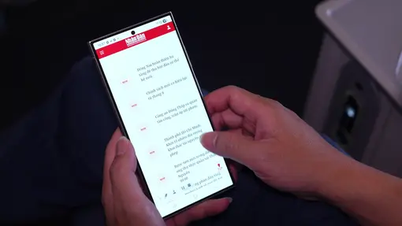
Ms. Nguyen Thuy, an office worker in District 3, Ho Chi Minh City, said that after connecting to free Wi-Fi at places around sidewalk cafes or parks, she often received calls from unknown numbers a few days later advertising services such as tourism , beauty treatments, and stock market investments.
"To use that free Wi-Fi, Ms. Thuy was asked to provide information such as her full name, date of birth, or age. Some Wi-Fi networks even required logging in with her Facebook account using the link provided by the Wi-Fi network. 'I wonder if this is the reason for the information leak, but I'm very worried that my information might be used for fraud,' Ms. Thuy expressed her concern."
Meanwhile, Quoc Tan, an office worker in Ho Chi Minh City, said that when using free Wi-Fi, he felt like someone was eavesdropping, and related websites would appear a few minutes later.

Illustrative image
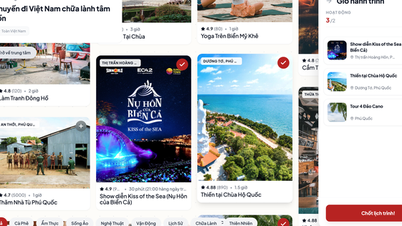
"For example, if I say I'm going to Phu Quoc soon, ads for tour packages to that destination will appear on Facebook, or Wifi will send a website with similar content and ask the user to fill in their name and phone number to continue connecting to Wifi," Mr. Tan cited as an example.
According to some cybersecurity experts, users can have their data hacked by accessing fake Wi-Fi hotspots created by hackers. To use the Wi-Fi, users are then required to provide information, which means the hackers obtain their data.
Furthermore, with the rapid development of technology, hackers can easily infiltrate public Wi-Fi networks to scan devices in use and collect data...
"To avoid being hacked by free Wi-Fi, users need to find out which organization the Wi-Fi network they are about to connect to belongs to. For example, if you are working at organization ABC, ask the manager there before connecting. Or users can install software such as AVG Antivirus, Kaspersky Mobile Antivirus, and Kaspersky Mobile Antivirus to prevent hackers from infiltrating their devices to eavesdrop or steal data," a cybersecurity expert recommends.
Furthermore, experts advise users to ensure that the website they are accessing uses the HTTPS protocol (indicated by a padlock icon in the browser), which will protect their information. Additionally, when accessing free Wi-Fi, users should avoid using accounts related to money, such as bank accounts or e-wallets, to minimize the risk of data leakage.
Source: https://nld.com.vn/nhung-dieu-can-luu-y-de-tranh-bi-hack-du-lieu-khi-su-dung-wifi-mien-phi-196240406233943827.htm


![[Photo] Prime Minister Pham Minh Chinh presides over a meeting on private sector economic development.](/_next/image?url=https%3A%2F%2Fvphoto.vietnam.vn%2Fthumb%2F1200x675%2Fvietnam%2Fresource%2FIMAGE%2F2025%2F12%2F20%2F1766237501876_thiet-ke-chua-co-ten-40-png.webp&w=3840&q=75)





















































































Comment (0)