

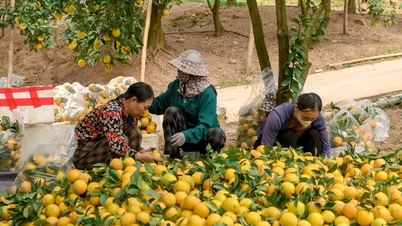
In Vinh Son village, Dong Yen commune ( Tuyen Quang province), the early winter morning was calm and windless. Oranges were ripening golden on the hillside. Amidst the orange groves, Mr. Giang Quang Ha, who had previously received a Certificate of Merit from the Prime Minister for his achievements in labor and production, was diligently tending to the trees that had just recovered from disease. Mr. Ha said that mandarin oranges have supported his family for over a decade.
Mr. Ha said that on average, his orange orchard generates over 700 million VND in revenue annually. Furthermore, he provides a steady monthly income for 8 workers, all villagers. Each worker earns an average of about 6 million VND per month. In addition, during the harvest season, he also provides extra support with food and other expenses.
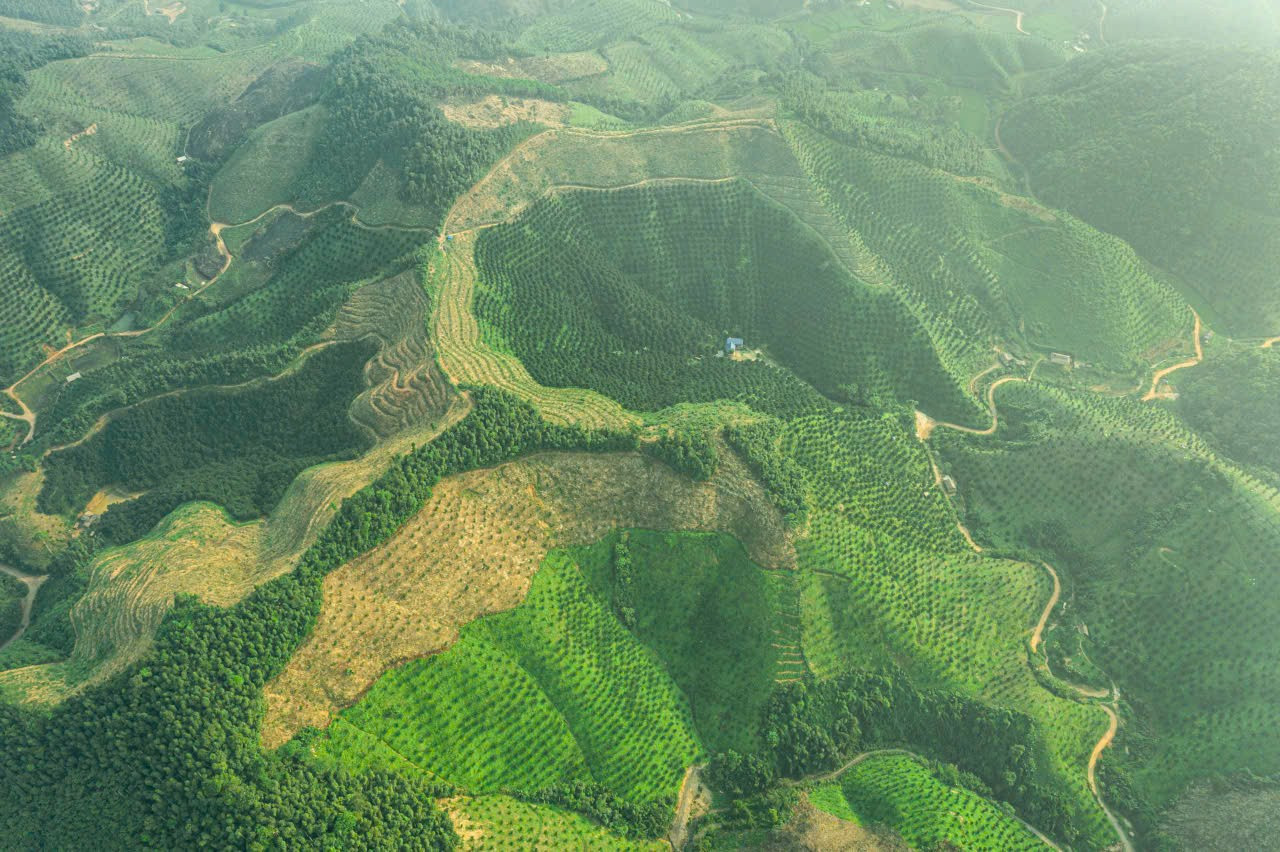
According to Pham Van Minh, Vice Chairman of the People's Committee of Dong Yen commune, for many years, oranges and dragon fruit have been the two main crops, helping hundreds of households escape poverty and significantly increase their income. The commune government, in coordination with specialized agencies, has organized training courses, transferred technology, guided pruning and shaping, promoted organic farming, and reduced the use of chemicals. Thanks to the shift from focusing on quantity to quality, diseases are gradually being controlled, and agricultural products are selling at higher prices.
At one point, Mr. Ha's farm spanned over 30 hectares, making it one of the largest mandarin orange growers in the region.
“The old orange trees, inconsistent cultivation techniques, and rising material costs… make it impossible for many households to cope. Once the disease reaches the roots, the trees can hardly survive,” Mr. Ha said. Not only his family's orange orchard, but the entire southern region of Ha Giang (formerly), now part of Tuyen Quang, is in a similar situation: weakened trees, depleted soil, and erratic weather make the crops vulnerable.
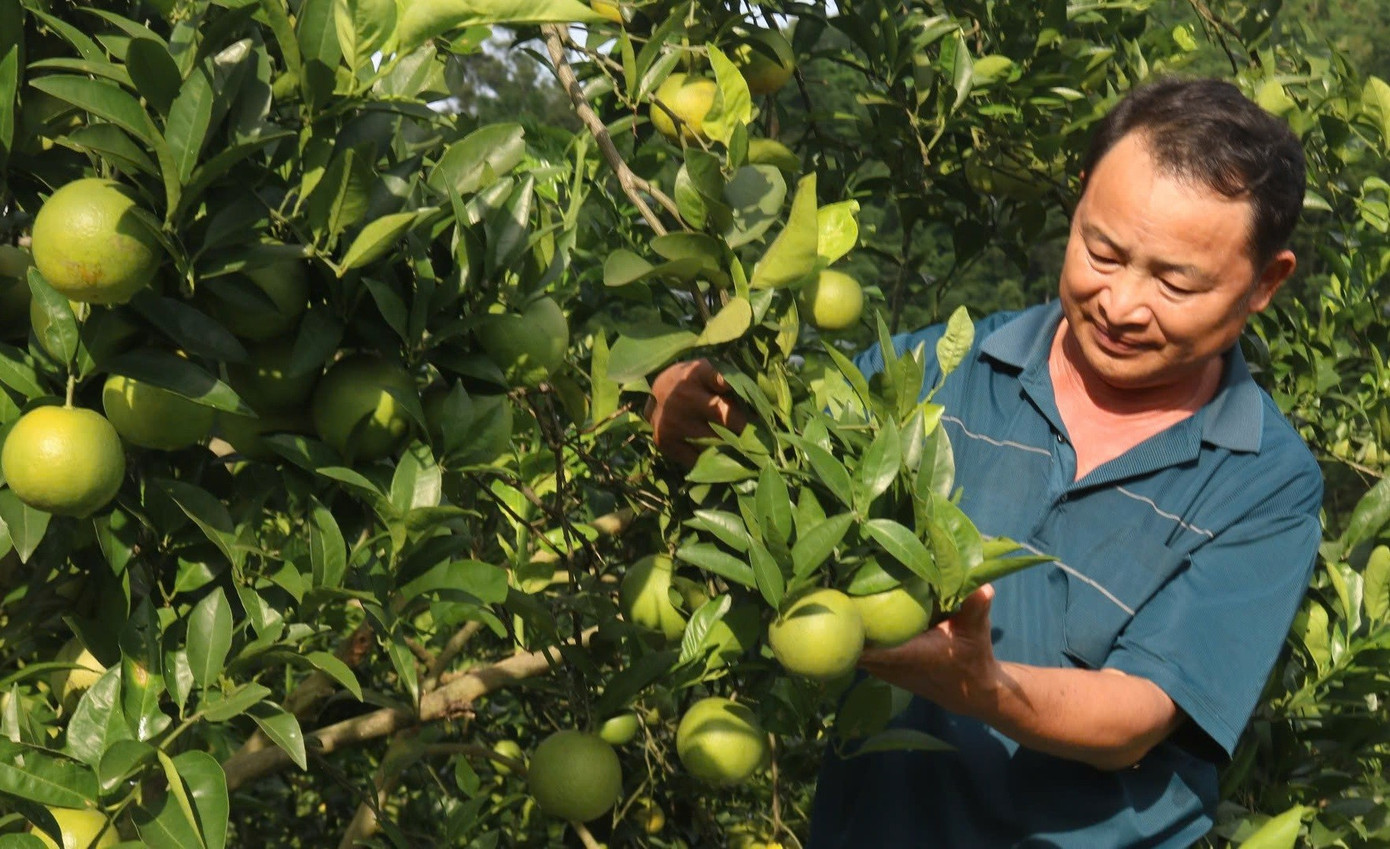
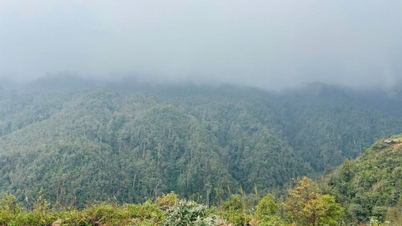
The "old Ha Giang" mandarin orange is considered one of Vietnam's top specialty oranges. The fruit is round and slightly flattened, with a rough peel, yellow-red flesh, and a sweet and slightly sour taste that is very satisfying. The mild climate, abundant rainfall, and the expertise of the people in Bac Quang, Quang Binh, and Vi Xuyen districts have created this renowned brand. In 2016, this orange variety was even granted geographical indication status.
Besides disease, orange growers also face another heartbreaking issue: brand misrepresentation. Trucks of oranges from China or elsewhere are brought in, disguised as Ha Giang oranges, causing price chaos in the market. "The oranges from my orchard sell for around 10,000 VND/kg, while in some years they reached 20,000–40,000 VND," said Mr. Ha.
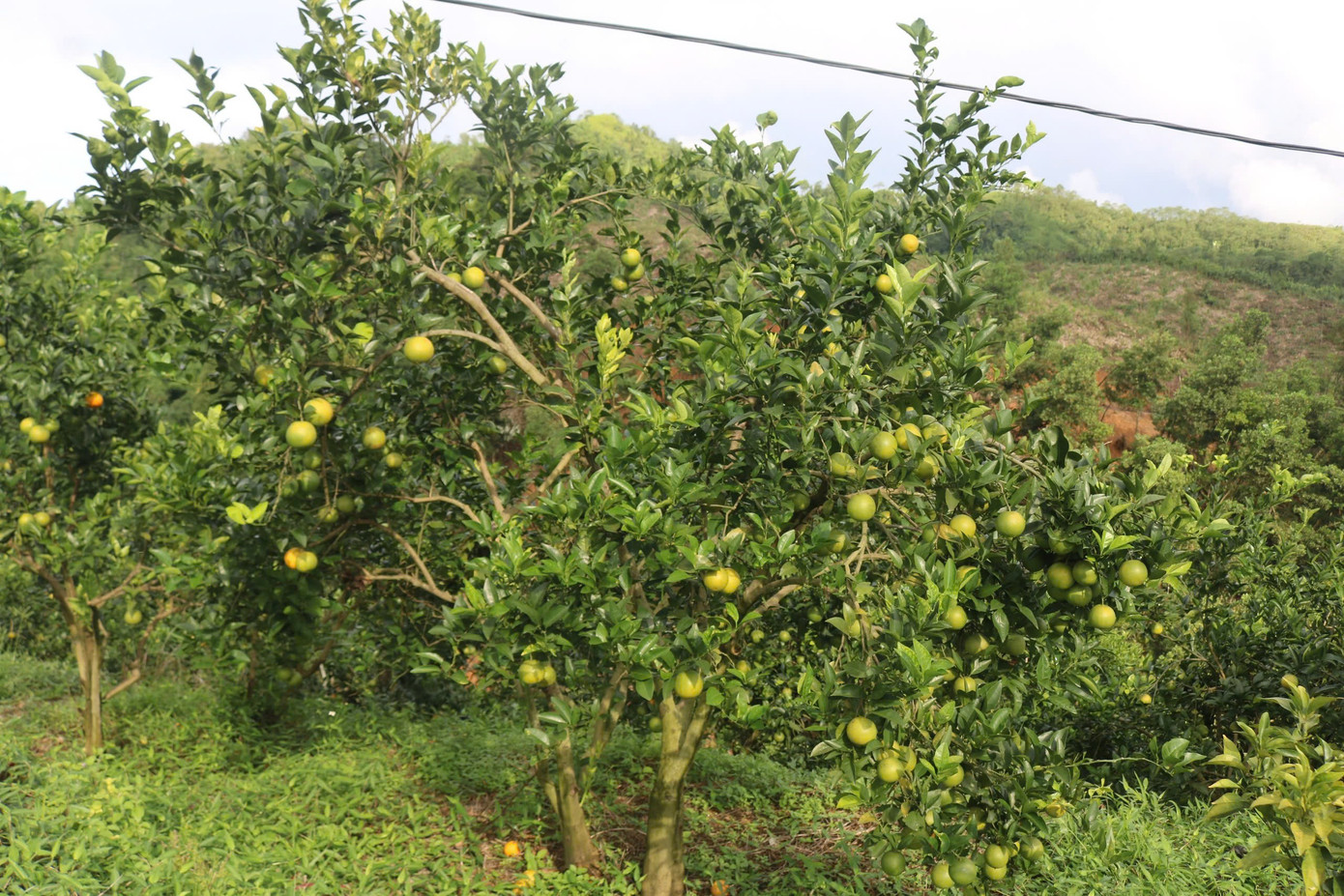
Faced with this situation, Mr. Ha proactively sought out pesticides, supplemented fertilizers, rejuvenated his orchard, and intercropped with new varieties like Vinh oranges… but according to him, the efforts of each household are not enough. “We hope for preferential loan schemes to replant and care for the trees more systematically. Most importantly, the province and the agricultural sector need to tighten control over smuggled oranges, support people in building VietGAP brands, and use traceability codes to protect genuine oranges.”
Therefore, Mr. Ha hopes that the local government will implement supportive policies such as creating conditions for farmers to access sufficiently strong loans, advanced techniques, and especially a transparent market so that Dong Yen mandarin oranges no longer have to compete with smuggled and counterfeit goods.
According to Pham Van Minh, Vice Chairman of the People's Committee of Dong Yen commune, for many years, oranges and dragon fruit have been the two main crops, helping hundreds of households escape poverty and significantly increase their income. The commune government, in coordination with specialized agencies, has organized training courses, transferred technology, guided pruning and shaping, promoted organic farming, and reduced the use of chemicals. Thanks to the shift from focusing on quantity to quality, diseases are gradually being controlled, and agricultural products are selling at higher prices.
The commune also connects with businesses for guaranteed purchase, encourages the establishment of cooperatives, expands raw material areas, promotes the "four-party" linkage (farmers, businesses, scientists, and the government), and supports people in accessing e-commerce and promoting OCOP products. This is the direction the locality hopes will help average income exceed 85 million VND/person/year and achieve the goal of sustainable poverty reduction in the 2025-2030 period.
Source: https://tienphong.vn/nhung-vuon-cam-triu-qua-tao-sinh-ke-ben-vung-cho-ba-con-tren-vung-nui-cao-cua-tuyen-quang-post1803485.tpo
![[Photo] Prime Minister Pham Minh Chinh receives the Governor of Tochigi Province (Japan)](/_next/image?url=https%3A%2F%2Fvphoto.vietnam.vn%2Fthumb%2F1200x675%2Fvietnam%2Fresource%2FIMAGE%2F2025%2F12%2F16%2F1765892133176_dsc-8082-6425-jpg.webp&w=3840&q=75)
![[Photo] Prime Minister Pham Minh Chinh receives Lao Minister of Education and Sports Thongsalith Mangnormek](/_next/image?url=https%3A%2F%2Fvphoto.vietnam.vn%2Fthumb%2F1200x675%2Fvietnam%2Fresource%2FIMAGE%2F2025%2F12%2F16%2F1765876834721_dsc-7519-jpg.webp&w=3840&q=75)


![[Image] Leaked images ahead of the 2025 Community Action Awards gala.](/_next/image?url=https%3A%2F%2Fvphoto.vietnam.vn%2Fthumb%2F1200x675%2Fvietnam%2Fresource%2FIMAGE%2F2025%2F12%2F16%2F1765882828720_ndo_br_thiet-ke-chua-co-ten-45-png.webp&w=3840&q=75)
![[Live] 2025 Community Action Awards Gala](/_next/image?url=https%3A%2F%2Fvphoto.vietnam.vn%2Fthumb%2F1200x675%2Fvietnam%2Fresource%2FIMAGE%2F2025%2F12%2F16%2F1765899631650_ndo_tr_z7334013144784-9f9fe10a6d63584c85aff40f2957c250-jpg.webp&w=3840&q=75)














































![[Photo] Prime Minister Pham Minh Chinh attends the Vietnam Economic Forum 2025](https://vphoto.vietnam.vn/thumb/402x226/vietnam/resource/IMAGE/2025/12/16/1765893035503_ndo_br_dsc-8043-jpg.webp)




























Comment (0)