

UAV pilot training programs are becoming increasingly popular in China, as job opportunities are opening up in many fields, from logistics and tourism to agriculture and urban management.
Seeing the potential of drone (UAV) operation in the logistics sector, Bai Wuhen enrolled in a full-time training program in Shenzhen, China's "drone capital," to obtain a license and advance his career.
Wuhen, 28, previously worked in the hospitality industry. He wanted to pilot medium-sized drones beyond visual range, a skill in high demand in the drone delivery sector.
According to Wuhen, as the field becomes more standardized, obtaining a degree is the first step towards becoming more professional.
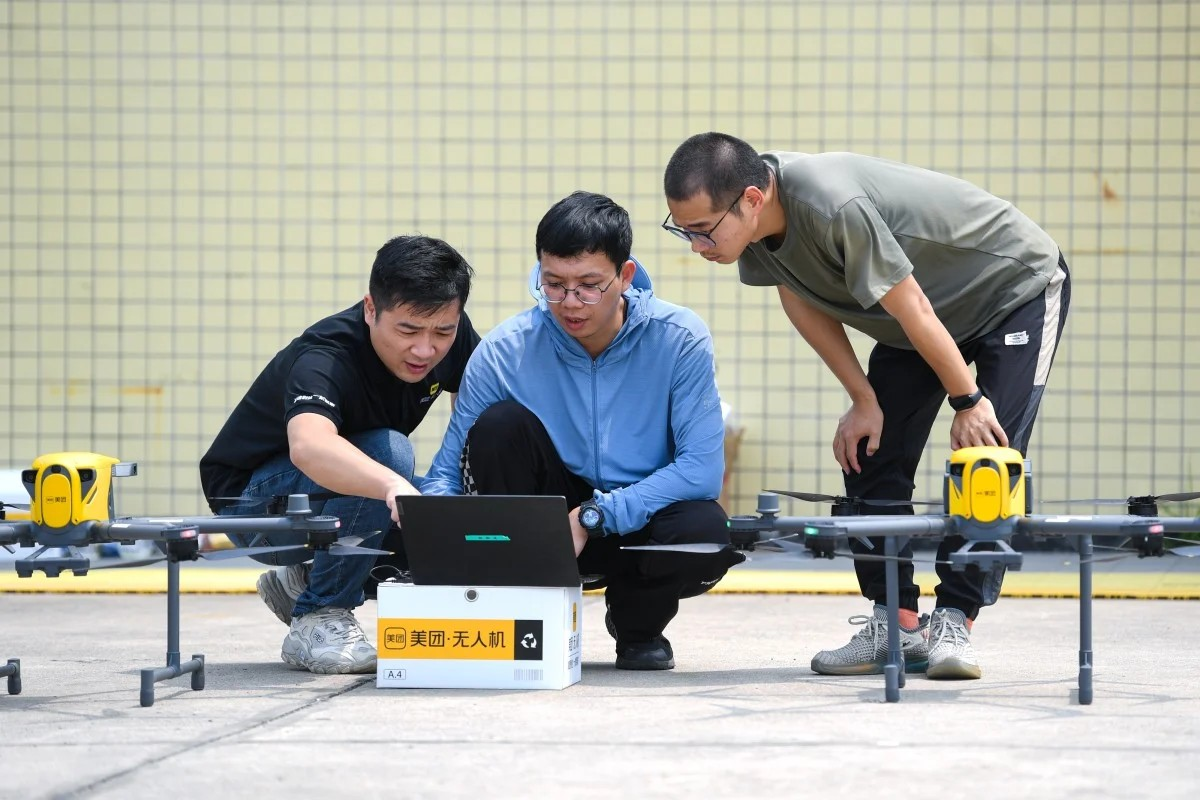
Demand for drone pilot certifications is rising as Chinese workers and recent graduates pursue emerging jobs related to drone operations, amid Beijing's encouragement of the low-level economy , which is seen as a new growth engine for the world's second-largest economy.
The center where Wuhen is studying is run by Global Hawk UAV. According to founder Yu Jingbing, the number of students has skyrocketed over the past year. He predicts that the number of students in 2024 will double that of last year. In fact, the number is so high that they may not have enough instructors.
The Zhifei training center in Shanghai has also seen a sharp increase in trainees since the summer. According to an employee, most want the certification to meet the requirements for certain positions in the military or in government agencies. These organizations are actively applying drones in fields such as urban management.
In addition, demand is booming as businesses seek personnel to operate new drone applications in logistics, tourism, aerial surveying, and energy inspection. Many people working in finance and real estate are also contributing to this trend as they want to change jobs and need the appropriate permits.
The Chinese real estate market has been in a prolonged downturn, and the financial sector is also struggling with rising bad debt amid a general economic slowdown.
At a press conference in October, Li Chunlin, Vice Chairman of the National Development and Reform Commission, said that the low-altitude economy, which typically includes manned and unmanned operations at altitudes up to 1,000 meters, is facing a shortage of approximately 1 million skilled workers.
The term "low-level economy" was included in Premier Li Qiang's government work report in March and referred to as a strategic emerging industry. It is expected to create jobs, boost technological innovation, and provide impetus to the economy.
According to the Civil Aviation Administration of China (CAAC), only 225,000 people in China had been officially licensed to operate UAVs by the end of June. However, more than 2 million UAVs had been registered with the CAAC by the end of September, revealed Wang Changshun, chairman of the China Air Transport Association, at a forum in Beijing on October 28. Including unregistered devices, at least 3 million UAVs are currently in use domestically.
"We are currently in urgent need of licensed professionals who can not only fly drones but also repair and maintain them," Yu said.
China has stepped up its oversight of the drone sector in recent years, while also acknowledging its role in boosting economic growth. Regulations that came into effect earlier this year require operators of small, medium, and large drones to obtain civil aviation licenses, unless they operate lightweight models under 120 meters in unrestricted airspace.
(According to SCMP)
Source: https://vietnamnet.vn/phi-cong-uav-thieu-hut-tram-trong-2345671.html
![[Image] Leaked images ahead of the 2025 Community Action Awards gala.](/_next/image?url=https%3A%2F%2Fvphoto.vietnam.vn%2Fthumb%2F1200x675%2Fvietnam%2Fresource%2FIMAGE%2F2025%2F12%2F16%2F1765882828720_ndo_br_thiet-ke-chua-co-ten-45-png.webp&w=3840&q=75)
![[Photo] Prime Minister Pham Minh Chinh receives the Governor of Tochigi Province (Japan)](/_next/image?url=https%3A%2F%2Fvphoto.vietnam.vn%2Fthumb%2F1200x675%2Fvietnam%2Fresource%2FIMAGE%2F2025%2F12%2F16%2F1765892133176_dsc-8082-6425-jpg.webp&w=3840&q=75)
![[Photo] Prime Minister Pham Minh Chinh receives Lao Minister of Education and Sports Thongsalith Mangnormek](/_next/image?url=https%3A%2F%2Fvphoto.vietnam.vn%2Fthumb%2F1200x675%2Fvietnam%2Fresource%2FIMAGE%2F2025%2F12%2F16%2F1765876834721_dsc-7519-jpg.webp&w=3840&q=75)


![[Live] 2025 Community Action Awards Gala](/_next/image?url=https%3A%2F%2Fvphoto.vietnam.vn%2Fthumb%2F1200x675%2Fvietnam%2Fresource%2FIMAGE%2F2025%2F12%2F16%2F1765899631650_ndo_tr_z7334013144784-9f9fe10a6d63584c85aff40f2957c250-jpg.webp&w=3840&q=75)












































![[Photo] Prime Minister Pham Minh Chinh attends the Vietnam Economic Forum 2025](https://vphoto.vietnam.vn/thumb/402x226/vietnam/resource/IMAGE/2025/12/16/1765893035503_ndo_br_dsc-8043-jpg.webp)

























Comment (0)