

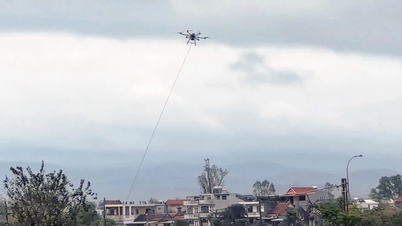
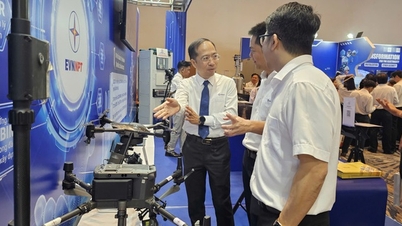
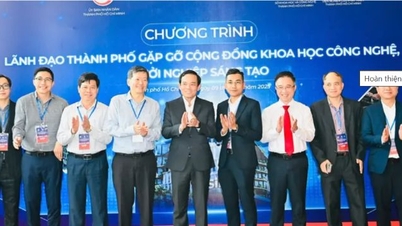
At the event "Ho Chi Minh City Towards Becoming a Digital Economic Center and an International-Class Innovation and Entrepreneurship Center" on December 9th, reporting to the City Party Secretary Tran Luu Quang, Mr. Truong Gia Binh - Chairman of the Board of Directors ofFPT Group - stated that the Low-Level Economic Alliance, comprising FPT and related businesses, is coordinating with Ho Chi Minh City to aim for the formation of a $10 billion UAV industry within the next 10 years and create approximately one million jobs.
To achieve this goal, Vietnam must maintain an economic growth rate of 60-70% per year, double the world average. "We are dreaming of building a drone hub in Vietnam," shared Mr. Truong Gia Binh.
According to the Chairman of the Board of Directors of FPT, he was informed by his Japanese partners that Japan is preparing to announce 17 strategic technologies this year. Japan is also adjusting its international cooperation policy, shifting from a one-way cooperation model to expanding to Southeast Asian countries, with Vietnam identified as a top priority. One of the areas of particular interest to Japan is the lower-income economy, although implementation currently faces many difficulties due to Vietnam's incomplete institutional and procedural systems.
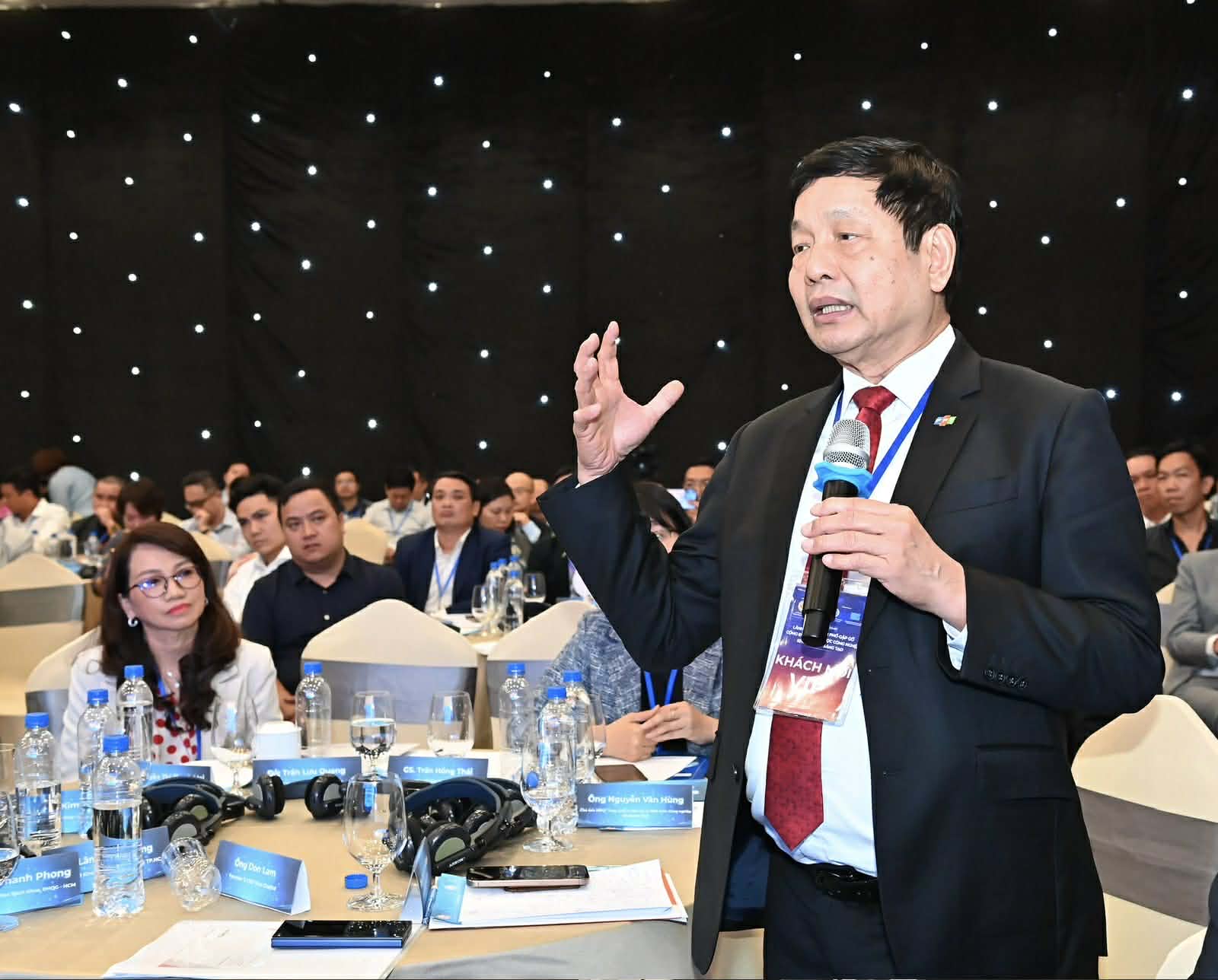
Mr. Truong Gia Binh said he proactively suggested that his Japanese partners come to Vietnam to test the models first, and once Vietnam completes the legal framework, they can be applied again in Japan. "The Japanese partners are not only aiming for bilateral cooperation but also for the global production of UAVs," Mr. Binh said.
However, according to the Chairman of the Board of Directors of FPT, the biggest obstacle currently is the almost complete lack of institutional framework. Vietnam does not yet have a definition of a sandbox, technical standards and regulations, or licenses or certificates of origin for the UAV sector. Meanwhile, Japan is ready to support Vietnam in building this entire legal framework.
He suggested that Ho Chi Minh City allow FPT to directly participate in the city's pilot sandbox development process as a preliminary step before expanding it to a national scale.
Currently, the UAV industry in Vietnam is worth only about $100 million per year, but the goal is to increase it 100 times within a decade. According to Mr. Truong Gia Binh, Vietnam possesses significant advantages in labor costs and software development capabilities, factors that can help it compete globally.
"Software is a field where we can win on almost any playing field. I believe the lower-income economy will be the same," Mr. Truong Gia Binh affirmed.
During the exchange, Mr. Tran Luu Quang, Secretary of the Ho Chi Minh City Party Committee, questioned the scope and focus of the low-level economy: should it concentrate on UAV production or UAV applications in daily life? In response, Mr. Truong Gia Binh stated that in the long term, UAVs will be part of the national defense capability, and Vietnam's greatest opportunity lies in production to serve the world, as the global market is currently experiencing a severe shortage of supply.
Regarding applications, the Chairman of the Board of Directors of FPT stated that agriculture is the sector with the greatest potential, with many successful practical models already implemented. UAV delivery models are also feasible if Vietnam can build a standardized digital address system for all delivery points.
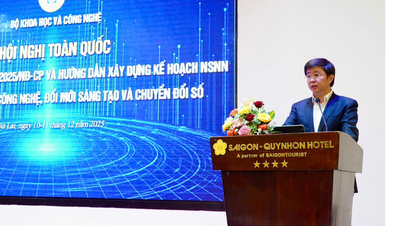
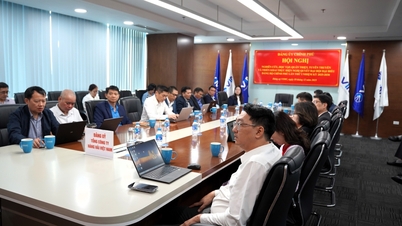
At the meeting, Ho Chi Minh City leaders listened to and exchanged views with scientists, technologists, and innovative startups, aiming to transform Ho Chi Minh City into a digital economy center and a national and international-level innovation and startup center. Delegates discussed mechanisms and solutions to strongly promote the development of science and technology and innovation; and how science and technology can contribute even more significantly to the city's socio-economic development. Delegates also raised questions about what the city needs to implement to continue being a pioneer and breakthrough in science and technology and innovation.
Concluding the dialogue, the Secretary of the Ho Chi Minh City Party Committee emphasized that developing science and technology is a necessary task, not only for the city but also for the whole country. This is a very difficult task, because Ho Chi Minh City still has to address many more pressing and immediate issues, especially the four tasks assigned by the Central Government: flooding, traffic congestion, pollution, and drug control. However, if science and technology are developed well, they will in turn support and help the city solve the problems it is currently facing.
Mr. Tran Luu Quang believes that the leaders of Ho Chi Minh City must pay special attention to the field of science and technology. Institutional issues are not just about incentives and priorities, but also about reforming administrative procedures to create favorable conditions for innovation.
Source: https://doanhnghiepvn.vn/cong-nghe/chu-tich-fpt-chung-toi-mo-uoc-xay-thu-phu-uav-tai-viet-nam/20251210042953595
























![[Video] The craft of making Dong Ho folk paintings has been inscribed by UNESCO on the List of Crafts in Need of Urgent Safeguarding.](https://vphoto.vietnam.vn/thumb/402x226/vietnam/resource/IMAGE/2025/12/10/1765350246533_tranh-dong-ho-734-jpg.webp)

















































Comment (0)