


The traditional night market of Định Yên mat weaving village in Lấp Vò district is revived twice a month to attract tourists.

On the evening of September 29th, a live performance of the "ghost mat market" was recreated at Dinh Yen communal house in Lap Vo district, with the participation of hundreds of local people. These included mat weavers, mat dyers, and small traders from the craft village who had witnessed the rise and fall of the "ghost mat market."
Along with the development of the craft village over two centuries, the night mat market opened to meet the buying and selling needs of hundreds of mat-making households and small traders from across the provinces.
According to the elders, the reason they hold the market at night is to take advantage of the daytime hours for weaving mats, so that buyers can transport the mats to sell throughout the region early in the morning.

During the reenactment of the "ghost" market, vendors, armed with lamps and measuring sticks and dressed in traditional Vietnamese "áo bà ba" attire, waited for mat weavers to bring out their goods. The scene was recreated as in the past, with buyers and sellers negotiating prices based on the face value of the currency (Vietnamese dong), and the selling price depending on the quality of the mats.
In the past, traditional markets didn't have specific opening hours. When enough sellers and buyers arrived, they would issue orders for buying and selling, usually between midnight and 4 am. Particularly at the "ghost mat market," buyers would sit in one place while sellers carried mats around, hawking their wares.

According to artisan Âu Thị Lĩnh (66 years old), during its heyday, the market had 200-300 vendors and more than 30 traders, gathering on the dirt roads along the Định Yên market near the current communal house.
"After the market closed, we'd quickly stop by the village market to buy food and reeds to weave mats, while the small traders would rush to carry the mats down to their boats to sell," she recounted.

An artisan from the craft village, acting as a mat buyer, inspects a pair of mats before negotiating the price at a reenactment of the market.
According to artisans, simply by touching the mats sold by vendors, one can immediately tell the skill of the weaver, the quality of the sedge fibers, and whether they have been dried in the sun enough.

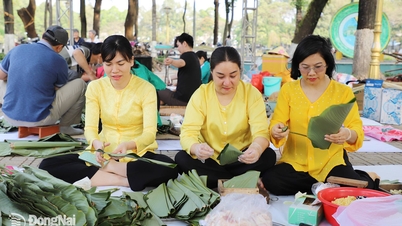
To enrich the show, the market also features street vendors selling local delicacies such as sticky rice and traditional cakes, and some artisans performing with Dong Thap folk songs and traditional melodies.

Ms. Tuyen, from Kien Giang province, held a lamp and took souvenir photos with the mat-making artisans. "The performance was very interesting," Ms. Tuyen said.

Hundreds of spectators came to watch and experience the show.
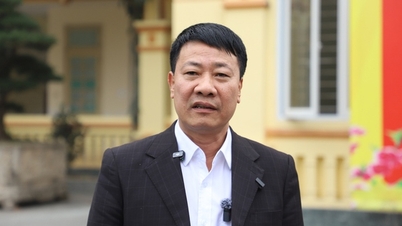
Ms. Huynh Thi Hoai Thu, Director of the Department of Culture, Sports and Tourism of Dong Thap province, said that they will promote the "ghost mat market" tour to many localities and travel companies to create tours within and between provinces, thereby bringing income to people in the craft village and to the province's tourism industry.


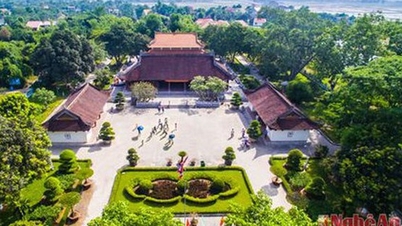
The miniature landscapes in front of Dinh Yen communal house have become a popular "check-in" spot for many young people.

When encouraged by the local authorities to participate in recreating the traditional mat-weaving market, many elderly artisans readily agreed. Mr. Bay (center), who has been involved in mat weaving for more than half his life, said he was very happy that the craft village was being introduced to tourists from near and far, and hoped that the development of tourism would revive the traditional craft that is gradually fading away.
Vnexpress.net




























































































Comment (0)