

In the garden of Mrs. Tran Thi Huong (Tien Chau commune), longan fruit is in full bloom, waiting for traders to come and buy it.
Ms. Huong said: “This year, the weather has been favorable. From June, the trees started flowering, and now we are harvesting in abundance. This is my second batch; the first batch sold for 30,000 VND/kg, earning 15 million VND. If I sell all 50 trees in this orchard, I will earn about 30 million VND.”
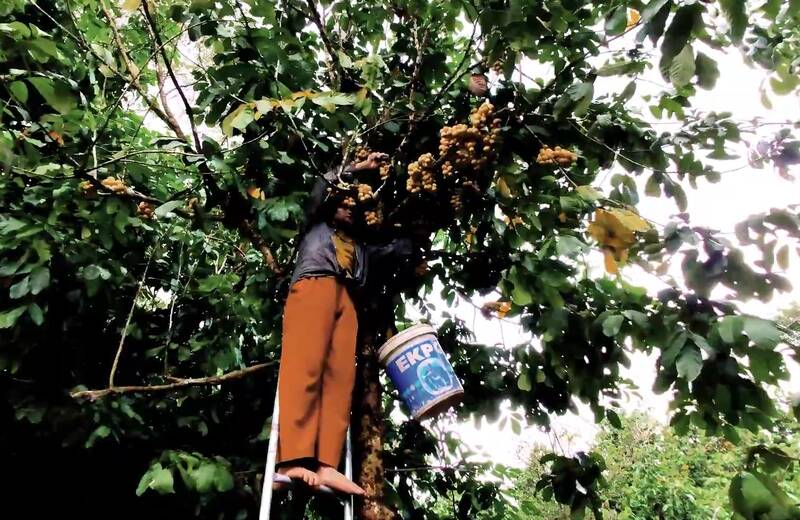
Like Mrs. Huong, hundreds of households in the communes of Tien Chau, Tien Canh, Tien My, Tien Phuoc district… are eagerly harvesting the main crop of longan. These days, the rural markets of Tien Phuoc are bustling with buyers and sellers of longan.
Ms. Nguyen Thi Thuyen, a small business owner, said: “Every day, my business buys 1-2 tons of longan to ship to customers in Tam Ky and Da Nang , and keeps some at home to sell. This is a specialty that is only available once a year, so customers really like it. This year's selling price is 10,000-15,000 VND/kg higher than in previous years.”
In the mountainous district of Nam Giang, for many years, the lòn bon tree has been chosen by local people to be planted interspersed with many other fruit trees in their gardens, in order to diversify intensive farming models.
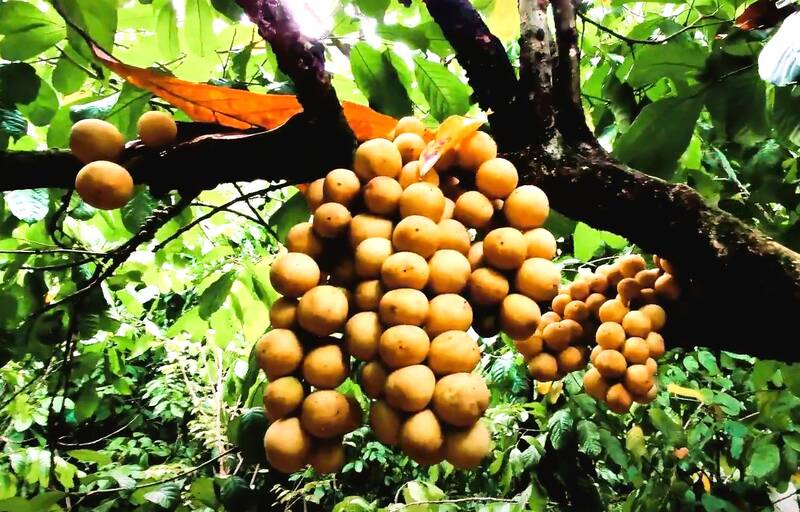
Ms. Alung Ich (from Ta Po'o commune), pointing to her garden of about 300 20-year-old rambutan trees laden with ripe fruit, excitedly said: "It's only the beginning of the season, but this rambutan garden has already brought me an income of over 30 million VND. Thanks to the rambutan cultivation model combined with livestock farming, my family has risen out of poverty."
According to the Department of Agriculture and Rural Development of Tien Phuoc district, rambutan is an easy-to-grow plant that requires little care and investment, and after a short period of planting, it yields a considerable amount of fruit, bringing high economic value.
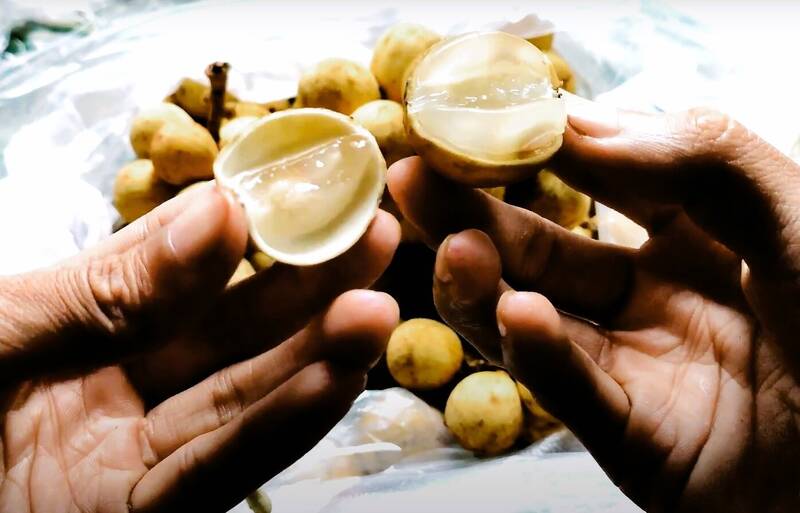
With nearly 120 hectares of rambutan trees bearing fruit, the entire district can produce approximately 600 tons annually if the harvest is good, providing a stable source of income and helping many mountainous households achieve sustainable poverty reduction. In the future, the district will expand the rambutan cultivation model, combining it with the development of ecotourism.
Lòn bon also has a very beautiful name: "Nam Trân" (precious gem of the South), or another name, Phụng Quân Mộc (tree that met the king), because it is associated with Lord Nguyễn Phúc Ánh when he was fleeing from danger and found the wild fruit (lòn bon) that saved his life. Upon ascending the throne, he bestowed the name "Nam Trân" upon it. The lòn bon tree has also been carved as a symbol on the Nhân Đỉnh (Hue Imperial Citadel) in the Imperial Palace.
Source
![[Photo] Prime Minister Pham Minh Chinh holds a phone call with the CEO of Russia's Rosatom Corporation.](/_next/image?url=https%3A%2F%2Fvphoto.vietnam.vn%2Fthumb%2F1200x675%2Fvietnam%2Fresource%2FIMAGE%2F2025%2F12%2F11%2F1765464552365_dsc-5295-jpg.webp&w=3840&q=75)
![[Photo] Closing Ceremony of the 10th Session of the 15th National Assembly](/_next/image?url=https%3A%2F%2Fvphoto.vietnam.vn%2Fthumb%2F1200x675%2Fvietnam%2Fresource%2FIMAGE%2F2025%2F12%2F11%2F1765448959967_image-1437-jpg.webp&w=3840&q=75)







































![[OFFICIAL] MISA GROUP ANNOUNCES ITS PIONEERING BRAND POSITIONING IN BUILDING AGENTIC AI FOR BUSINESSES, HOUSEHOLDS, AND THE GOVERNMENT](https://vphoto.vietnam.vn/thumb/402x226/vietnam/resource/IMAGE/2025/12/11/1765444754256_agentic-ai_postfb-scaled.png)

















































Comment (0)