


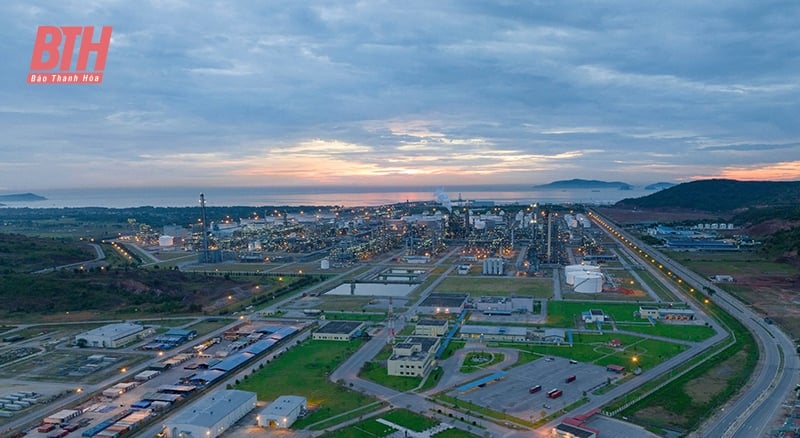
A view of the Nghi Son Economic Zone - the "heart" of Thanh Hoa province's industrial sector. Photo: Minh Hang.
When writing "The Condemnation of the French Colonial Regime" (1925), he mentioned great historical figures of Thanh Hoa : "Le Dai Hanh bravely refused to submit to the demands of a neighbor far more powerful than himself. He defeated the enemy, killing the enemy general. Therefore, he liberated the people from enslavement..."; "Le Loi bravely led the revolution in Vietnam, crushing the brutal and oppressive regime that those who called themselves protectors forced upon us"... Or in "The Historical Narrative of Our Country," written by him in 1941, he also praised many historical figures of this land, such as Lady Trieu: "In Thanh Hoa province there is a Lady/ Named Trieu Au, just twenty years old/ Talented and courageous beyond compare/ She raised an army to save the country, her name will be remembered for generations/ Our women are not ordinary/ Fighting in the East and suppressing in the North, setting an example for generations to come"...
With deep affection and concern for Thanh Hoa, even under extremely urgent circumstances, seizing every minute and hour to prepare for the resistance against French colonialism, President Ho Chi Minh still found time to visit Thanh Hoa (February 20, 1947). His first visit to this land left a profound impression, due to the care and high expectations he had for Thanh Hoa. Speaking with provincial leaders at Rung Thong (present-day Thanh Hoa City), he instructed: “Cadres are the connecting link in the machinery. If the connecting link is not good, if it doesn't run, then even if the engine is good and running, the entire machine will be paralyzed. Cadres are the people who implement the policies of the Government and the Party among the people; if the cadres are incompetent, even good policies cannot be implemented.”
When speaking with the delegates, including gentry, intellectuals, and wealthy individuals, he reminded them: “Before I came here, I received a letter from Mr. Le Thuoc about the task of building Thanh Hoa province into a model province. While we are destroying houses and roads, is it contradictory to talk about construction? No, it's not contradictory. To build, we must destroy. We must destroy to achieve victory in the struggle, and only then can we build. Now, I would like to offer a few opinions on the matter of construction. A model province must be exemplary not only in one aspect but in many aspects; resistance must be waged in all aspects, and construction must be undertaken in all aspects. In my opinion, Thanh Hoa province can certainly become a model province because it has a large population, vast land, and abundant resources; it only lacks proper management and organization. We need fields to cultivate so that there is rice, and we need people, but we must know how to distribute resources.” In short, “For Thanh Hoa province to become a model province, it must ensure that all aspects—political, economic, and military—are exemplary. To create a model person, a model family, a model village, a model district, a model province. With determination, it will become a model. A model province, a model country, then the world will know that our country is a nation worthy of independence, national freedom, victorious resistance, and unification.” Uncle Ho “called on the people of the province to roll up their sleeves and get to work,” so that when he returned later, “he would see each person as a model person.”
Deeply imbued with President Ho Chi Minh's teachings, the people of Thanh Hoa, regardless of gender, age, ethnicity, or religion, rose up in unison to drive out the invading French colonialists, with the determination: "We would rather sacrifice everything than lose our country or become slaves." During the nine years of resistance against the French, Thanh Hoa actively contributed to the great victory of the nation, culminating in the Dien Bien Phu victory. Upon returning to Thanh Hoa in 1957, President Ho Chi Minh praised: "During the resistance, the people of our province, all strata of society, showed unity and participation in the resistance. I will only mention a few points. For example: Our civilian laborers exerted themselves greatly in the Dien Bien Phu campaign; Thanh Hoa contributed 120,000 civilian laborers transporting food for the troops. Now, wherever the Vietnamese language is spoken, the name Dien Bien Phu is also heard. Wherever the name Dien Bien Phu is heard, the people of Thanh Hoa share in that honor."
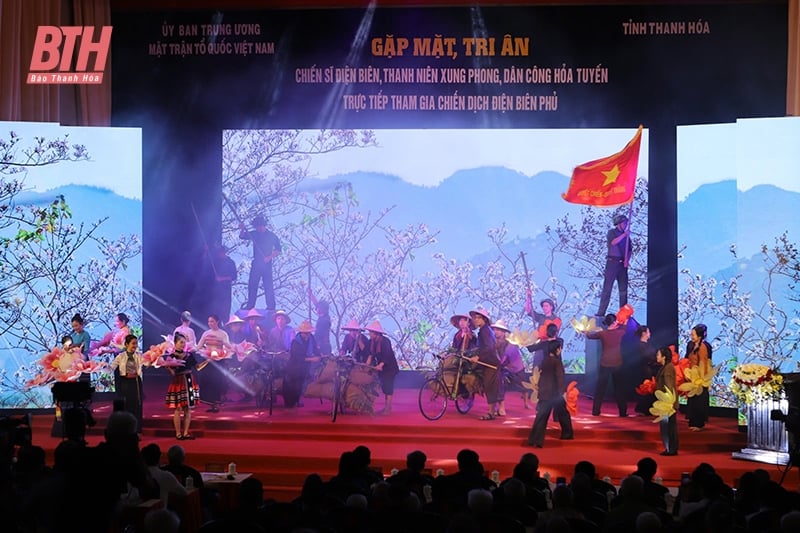
Thanh Hoa province organized a meeting to express gratitude to the soldiers of Dien Bien Phu, the youth volunteers, and the civilian workers who directly participated in the Dien Bien Phu campaign.
As Thanh Hoa embarked on the socialist construction in the North and the struggle for the liberation of the South and national reunification, following President Ho Chi Minh's teachings, it simultaneously strived to build and develop its socio-economic sector while contributing to the fight against the sabotage of the American invaders. In particular, the resounding victory of our army and people on the Ham Rong front (April 3rd and 4th, 1965) became an immortal epic of the Ho Chi Minh era. At the same time, with the spirit of "All for our beloved South," and "Determined to defeat the American invaders," Thanh Hoa launched many emulation movements in labor and production, and patriotic emulation movements to provide the highest possible human and material resources to the Southern battlefield, contributing to the glorious milestone of April 30th, 1975, for the nation.
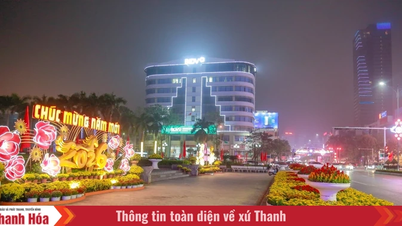
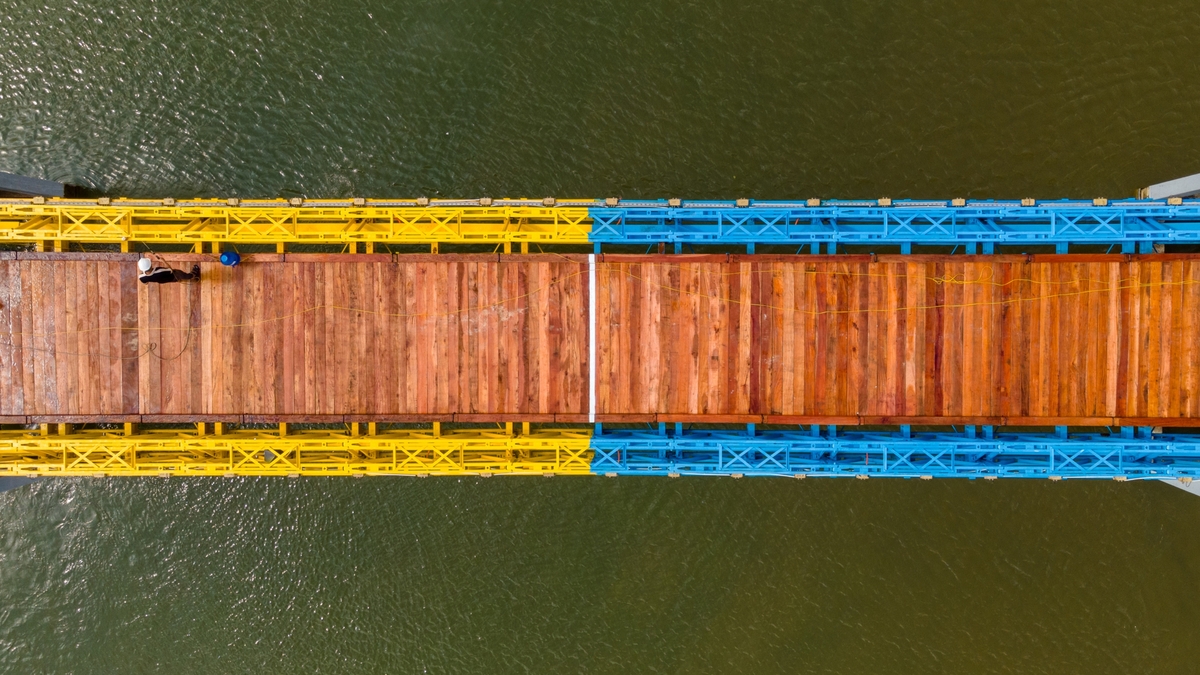
Nearly 80 years have passed since President Ho Chi Minh first visited Thanh Hoa, and this land, though arduous, has been undergoing a transformation, gradually realizing his aspiration to become a model province. The Ham Rong Bridge – a symbol of the nation's fighting spirit and determination to win – has been rebuilt after years of enduring bombardment. The presence of this historic bridge alongside the Hoang Long Bridge serves not only as a reminder of the past but also as a beacon of hope for the future. And indeed, the city on the banks of the Ma River is brimming with life, with modern streets intertwined with the rich history and culture of this ancient land. From the provincial capital, spreading throughout cities and villages from the plains to the mountains, a new vitality and rhythm of life are bursting forth everywhere from the process of urbanization, rural development, and the building of cultural life in residential areas... These "livable villages" can be seen as images of the "model villages" and "model districts" that President Ho Chi Minh once mentioned. There, the living standards and quality of life of rural residents are being brought closer to those of urban residents, thanks to policies on economic development, transportation infrastructure, social welfare, and especially the widespread adoption of information and telecommunication technology. Consequently, the cultural and spiritual lives of the people are also improving, aiming for prosperity and happiness for all.
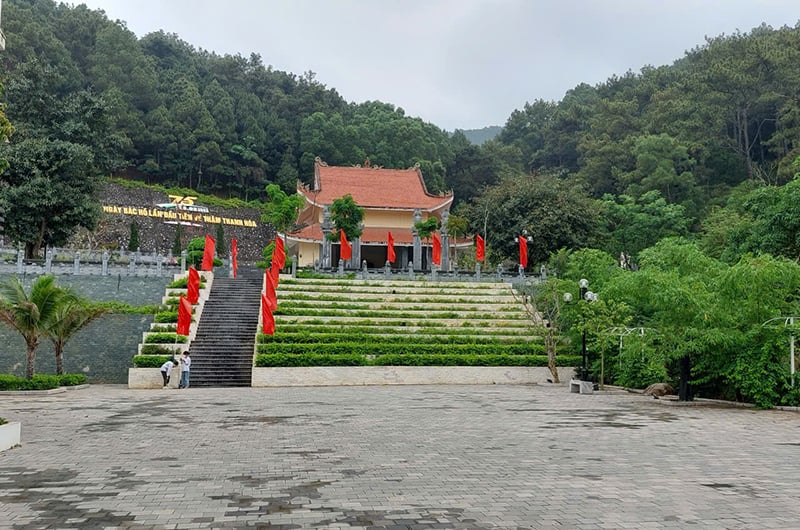
National historical site and scenic spot: Pine Forest - where President Ho Chi Minh visited and spoke with officials of Thanh Hoa province.
Among the many achievements that Thanh Hoa has attained, several impressive growth figures stand out, contributing to affirming Thanh Hoa's rising position on the national socio-economic development scale. For example, in 2024, the Gross Regional Domestic Product (GRDP) growth rate is estimated at 12.16%, ranking second nationwide (after Bac Giang province). GRDP per capita is estimated at 3,494 USD, an increase of 427 USD compared to 2023. This was also a year of "bumper" budget revenue for the province, with a "record" figure of over 56,000 billion VND, the highest ever.
The country is facing a great opportunity to make a strong breakthrough and assert its national position on the international stage. In this general context, many favorable opportunities for Thanh Hoa to rise are also present. These include the specific mechanisms and policies that the Party, State, and National Assembly have dedicated to Thanh Hoa, most notably Resolution No. 58-NQ/TW of the Politburo on building and developing Thanh Hoa province until 2030, with a vision to 2045, and Resolution No. 37/2021/QH15 of the National Assembly on piloting some specific mechanisms and policies for the development of Thanh Hoa province. These resolutions can be considered extremely important "policy levers" for Thanh Hoa's rapid and sustainable development. Along with this is the high determination, great effort, decisive action; unity, creativity, willingness to think, act, overcome challenges, and take responsibility; This reflects the self-reliance and self-strengthening spirit of the Party committees, the government, the entire political system, and every citizen of Thanh Hoa province. This will be the "driving force" for Thanh Hoa to aim towards becoming a model province as envisioned by President Ho Chi Minh.
Text and photos: Le Phuong
Source: https://baothanhhoa.vn/que-thanh-lam-theo-loi-bac-day-249141.htm

















































Comment (0)