A team of researchers led by Cornell University (USA) has created two types of robots that can sense and react to their environment by exploiting the electrical signals produced by the king oyster mushroom (Pleurotus eryngii) and its light sensitivity for control.
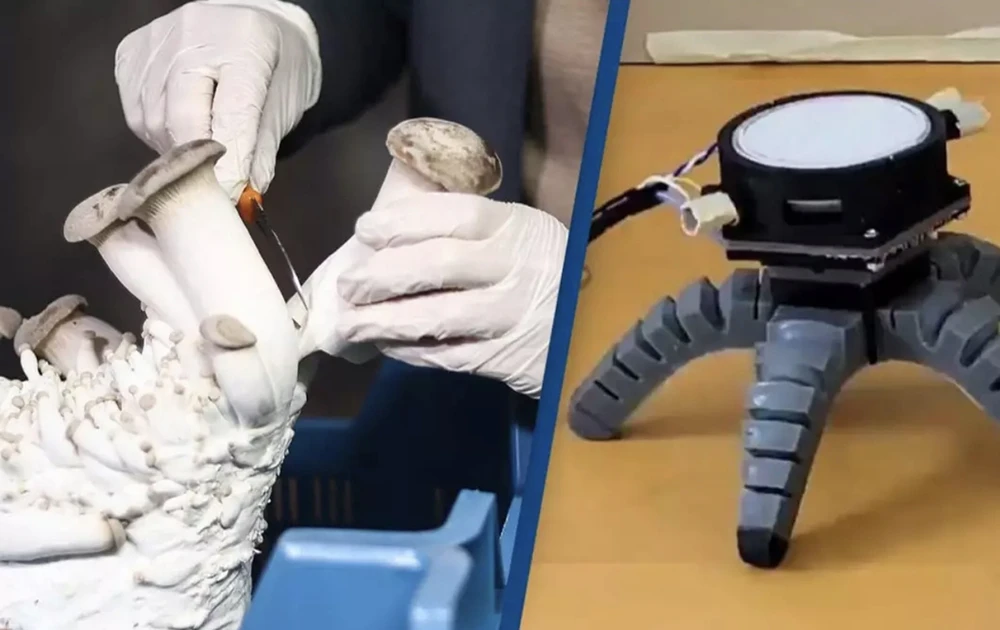



The research team began by growing king oyster mushrooms in the lab, then cultivating the mushroom's filament-like structures, forming networks that can sense, communicate, and transport nutrients—functioning much like nerve cells in the human brain. The cultivated mushrooms take between 14 and 33 days to fully integrate with the robot's framework. The fungal filaments generate small electrical signals and can be connected to electrodes.
Essentially, all living cells generate impulses similar to action potentials, and fungi are no exception. Researchers designed a device that can accurately read the raw electrical activity of fungal hyphae, then process and convert it into digital information that can trigger robot actuators. The robots can walk and roll in response to the electrical impulses generated by the hyphae, and when stimulated with ultraviolet light, they changed their gait and trajectory, demonstrating their ability to respond to their environment.


HUY QUOC
Source: https://www.sggp.org.vn/robot-cong-sinh-voi-nam-post757452.html













![[Weekend Podcast] The Strength of the US Dollar as Seen Through History](https://vphoto.vietnam.vn/thumb/402x226/vietnam/resource/IMAGE/2026/07/05/1783267584546_chatgpt-image-22_28_12-5-thg-7-2026.png)