An antique charm amidst a modern lifestyle.
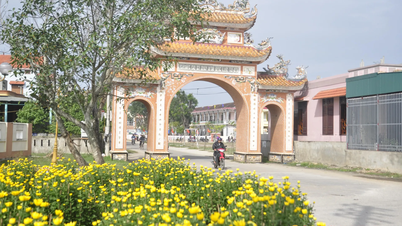
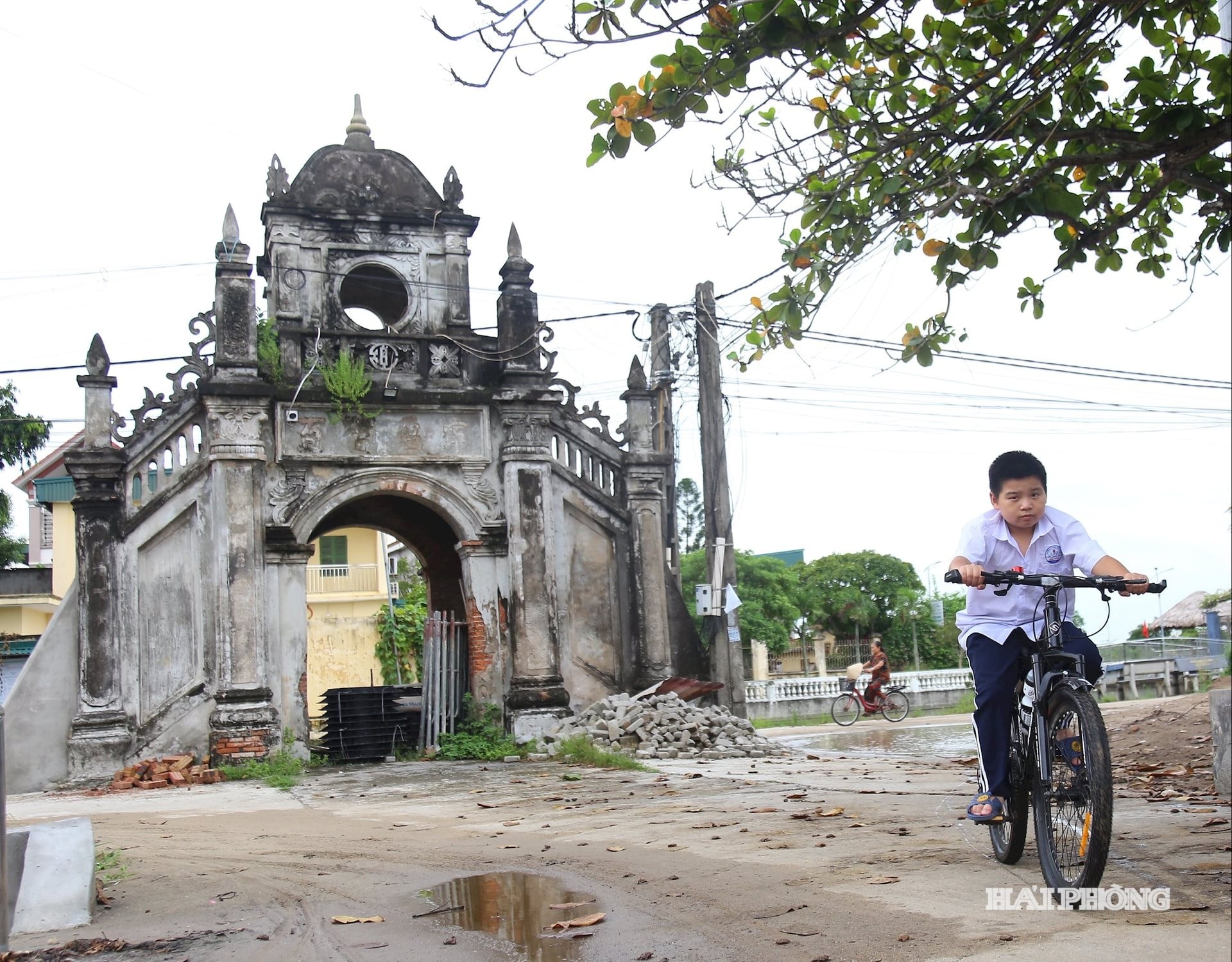
In Phuong Xa village (Yet Kieu commune), the centuries-old village gate still stands silently beside the ancient well. Mr. Doan Van Tho (88 years old) reminisced: “I’ve seen this village gate since I was born; my parents don’t know exactly when it was built. When I was young, I used to climb onto the gate and jump into the well to cool off.”
Mr. Tho recalled the elders' stories, saying that in the old days, the gate was built with molasses, without cement, and had been repaired many times by villagers contributing labor and resources. Inside the gate, there are still traces of a plaque recording the contributions of those who donated and a reminder that "Everyone has a responsibility to protect the village gate."
Passing through the gate of Phuong Xa village leads to the site where the Gia Loc District Party Committee (formerly Hai Duong province) was founded. Many tourists who visit and offer incense at the site where the Gia Loc District Party Committee was founded are impressed by the Phuong Xa village gate. Therefore, for the people here, the village gate is not just an architectural structure, but a symbol of pride and memories of their homeland.
The gate of Dau Tri village (Ninh Giang commune) is also one of the few ancient structures that have been preserved intact. Over 100 years old, the gate reflects the architectural style of the Nguyen dynasty, constructed from brick, stone, lime mortar, molasses, sand, and seashells. The two Chinese characters "Tat Thuc" (meaning "All Knowledge") are clearly visible on the ridge, a reminder to the villagers to maintain order when entering and leaving the village.
Mr. Pham Dinh Tai, an elder in the village, shared: “When I was a child, the elders told me that this gate had two guardhouses and a watchtower to protect cadres during the resistance war. Even though the village road has been widened, we always encourage each other to preserve the village gate as a precious heritage of our homeland.”
Ancient village gates like those of Phuong Xa and Dau Tri are not elaborate or ostentatious, but they exude a sense of solemnity and dignity, reflecting the order and discipline of the old villages, and serving as connecting points between families, clans, and the community.



Cultural symbols that unite the community.
More than just a geographical boundary, the village gate is a special cultural space where people greet each other, chat, and meet every day. For those far from home, the image of the old village gate is often the first memory that comes to mind when thinking of their homeland.
Architect Nguyen Van Thuong, Chairman of the Hai Duong Architects Association, analyzed: "In the past, not every village had the resources to build gates. Only some villages with greater potential could erect elaborate three-arched gates with separate ceremonial roofs. Now, with increased traffic, village gates must be built larger and more modern, but they still need to retain their traditional layout so as not to lose the soul of the village."
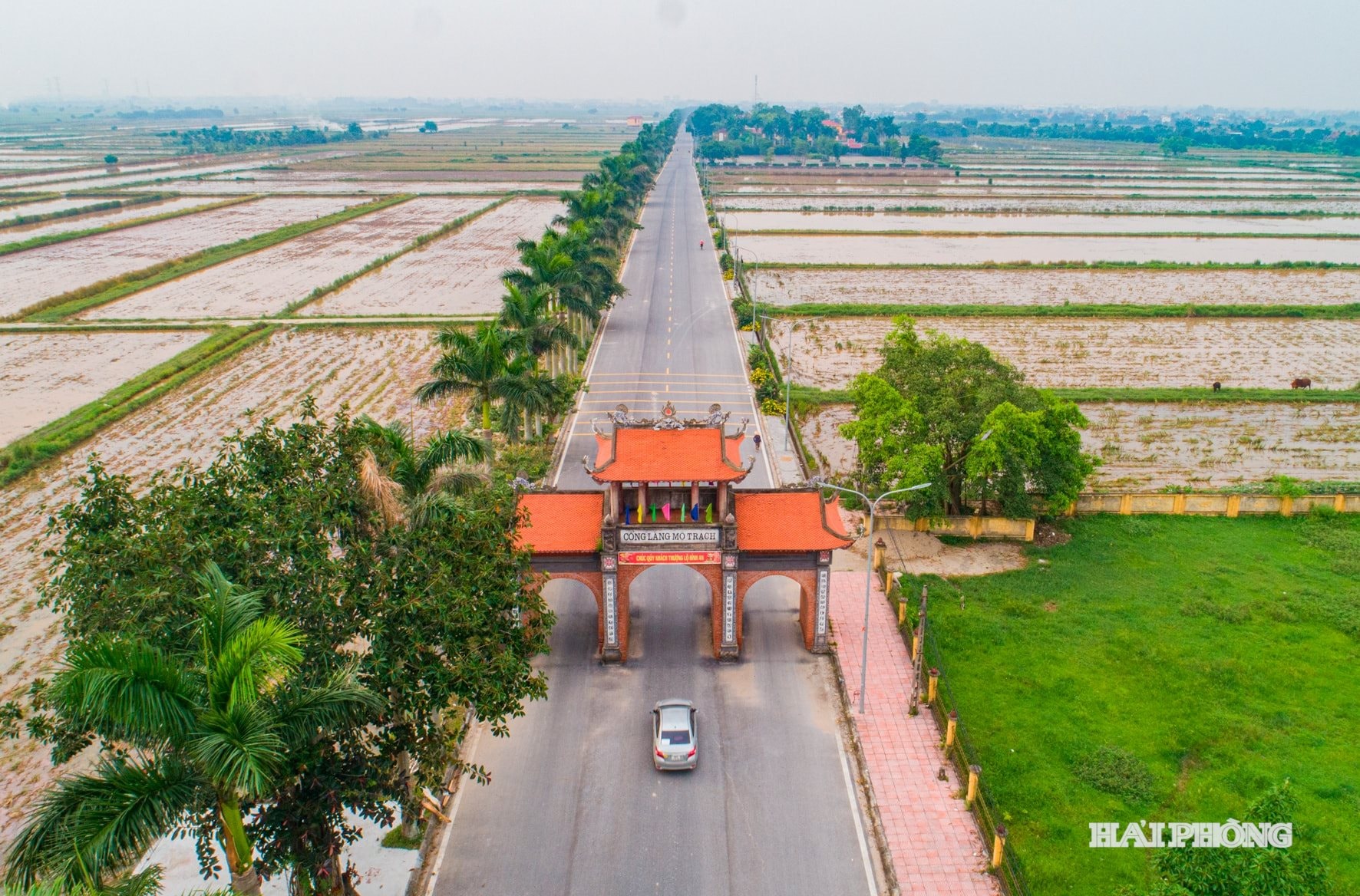
A prime example is the gate of Mo Trach village (Duong An commune), a village renowned for its scholarly tradition. The gate, rebuilt in 2007, retains its traditional three-arched structure: a main gate, two side gates, and a curved tiled roof. The gate bears the inscription "Mo Trach Village Gate" and three pairs of couplets donated by Professor and Labor Hero Vu Khieu. Among them, the most prominent is: "Entering with filial piety, leaving with loyalty, glorious achievements begin from this gate / Sending off and welcoming academic success, radiant in this village."
The reinterpretation of traditional architecture in new structures like the Mo Trach village gate shows that, despite modern development, the people still deeply understand the cultural value of the village gate, considering it the "face" that reflects the character and essence of the community. Therefore, the village gate is not just an architectural structure, but a connecting thread between generations, reminding each person of their roots.
In today's modern lifestyle, many villages are replacing their old village gates with grand, modern ones to meet transportation needs. However, this mass construction, lacking proper research, has caused many village gates to lose their inherent Vietnamese charm.
Cultural researchers believe that ancient village gates are the heritage that best reflects the identity and lifestyle of Vietnamese rural communities, especially in the Northern Delta region. Therefore, preserving ancient village gates is not just about preserving a structure, but also about preserving the soul and essence of the countryside.


"The village gate is a symbol of community connection. House doors may be simple, people may be hardworking, but the village gate must be dignified and respectable, because it is the face of the village," Mr. Pham Dinh Tai expressed.
The village gate, along with the banyan tree, the well, the communal house... is the birthplace and a space holding countless memories for the Vietnamese people. Preserving ancient village gates is not just about maintaining the physical form of a structure, but more importantly, about preserving memories and community bonds, which have sustained the enduring vitality of Vietnamese villages for generations.
From the ancient, moss-covered village gates of Phuong Xa and Dau Tri to the imposing new gates of Mo Trach, all are sacred landmarks reminding everyone of their origins. In modern life, village gates not only mark a geographical space but also preserve cultural memories, symbolize community cohesion, and express gratitude to ancestors who worked hard to build the village and defend the country.
LINH LINHSource: https://baohaiphong.vn/sinh-ra-toi-da-thay-cong-lang-521125.html
![[Photo] General Secretary and President To Lam working with the Technical and Professional Center, Ministry of Public Security](https://vphoto.vietnam.vn/thumb/1200x675/vietnam/resource/IMAGE/2026/07/06/1783318005842_a1-bnd-1129-2263-jpg.webp)