

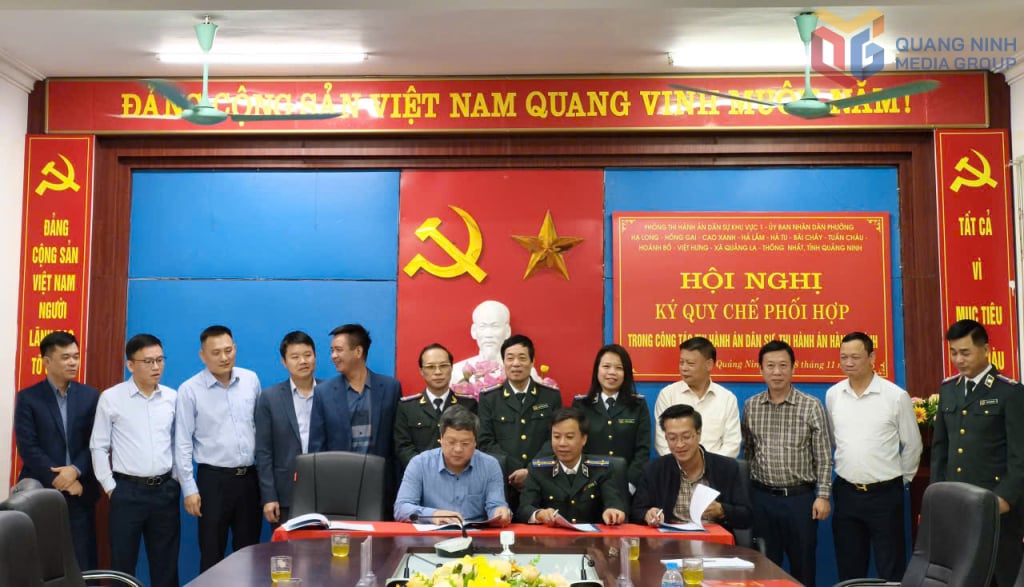
According to the assessment of the Provincial Steering Committee for Civil Judgment Enforcement, in 2025, civil judgment enforcement work in Quang Ninh province achieved many positive results, with the enforcement rate for both cases and monetary amounts meeting and exceeding the assigned targets. Many complex and long-standing cases were focused on and gradually resolved, contributing to ensuring law enforcement, maintaining security and order, and improving the investment and business environment in the province.
Despite the achievements, civil enforcement work still faces difficulties and limitations. The number of cases that are not yet enforceable remains high; many cases that are enforceable have not been completed; and coordination in verification, persuasion, and enforcement at the grassroots level is sometimes untimely and inconsistent. Notably, from July 1, 2025, with the implementation of a two-tiered local government model, the District-level Civil Enforcement Steering Committee will no longer exist, creating new requirements for organizing enforcement and coordinating with commune-level authorities.
In response to this need, the province has issued several important directives to strengthen leadership, guidance, and improve the effectiveness of civil and administrative enforcement in the new phase. Accordingly, the Provincial Civil Enforcement Agency continues to play its role as the standing agency, proactively advising and proposing solutions to improve the quality and effectiveness of enforcement work; strengthening review and verification, resolutely organizing enforcement for cases that meet the conditions; and promoting inter-agency coordination, especially with local authorities.
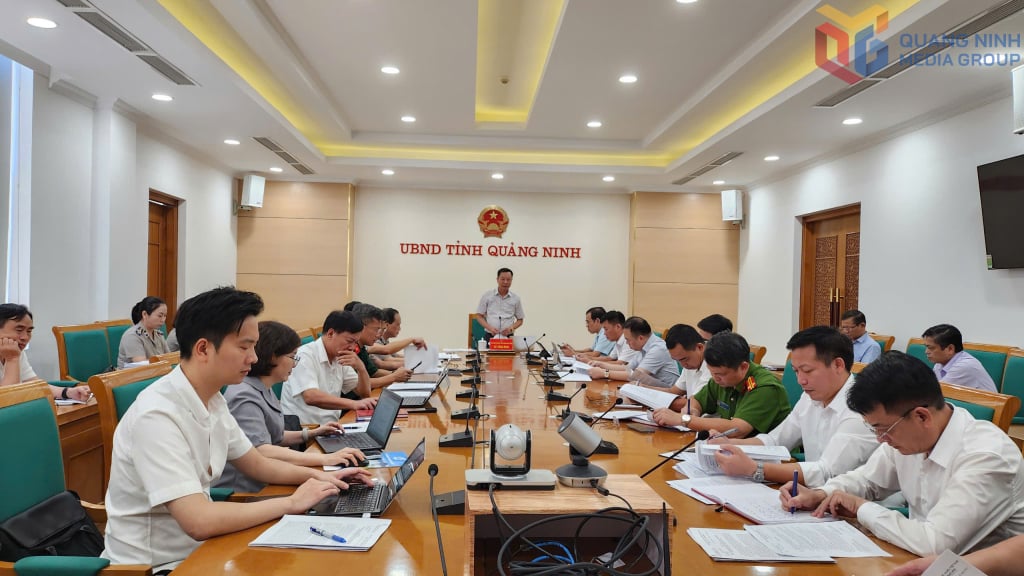
The Provincial Steering Committee for Civil Judgment Enforcement has requested that departments, agencies, localities, the Fatherland Front Committee, and political and social organizations strengthen coordination with enforcement agencies in disseminating information, mobilizing support, verifying conditions for judgment enforcement, organizing coercive enforcement of civil judgments, and monitoring the enforcement of administrative judgments. At the same time, it directed the regional Civil Judgment Enforcement Offices to sign coordination regulations with the People's Committees of communes, wards, and special zones in accordance with the new organizational model.
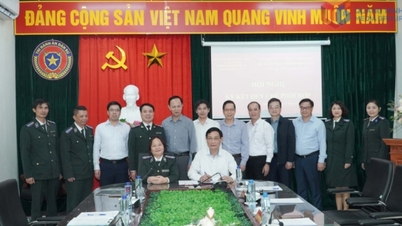
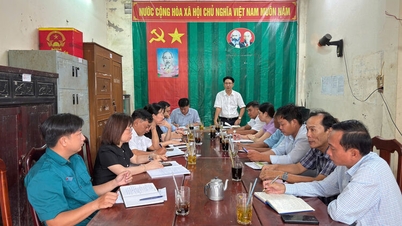
Following directives, in November 2025, the regional Civil Enforcement Offices proactively developed and signed coordination regulations with the People's Committees at the commune level. The coordination covered a comprehensive range of areas, from disseminating legal information on enforcement; coordinating the verification of enforcement conditions; persuading parties to voluntarily comply with civil judgments; to organizing coercive measures, resolving complaints and denunciations, and monitoring the enforcement of administrative judgments.
The signing of the coordination regulations not only creates a unified legal framework for coordination work, but also contributes to overcoming the "gaps" in the organization of judgment enforcement after the restructuring of the apparatus, and enhances the role and responsibility of local authorities in ensuring the enforcement of court judgments and decisions.
Head of the Civil Enforcement Department of Region 1, Le Hai Hoa, emphasized: “ The Civil Enforcement Department of Region 1 handles nearly 3,000 cases annually, accounting for approximately one-third of the total number of cases to be enforced in the entire province. While the workload is increasing, with many cases involving credit, banking, and commercial business involving large sums of money and complex nature, the pressure on the staff is considerable. Local authorities have the advantage of having a firm grasp of the local area, the population situation, and the socio -economic conditions of each individual and organization. The signing and strict implementation of the Coordination Regulations with the People's Committees of communes and wards creates a close coordination mechanism at the grassroots level, helping to promptly resolve difficulties and improve the effectiveness of verification, mobilization, organization of civil enforcement, and monitoring of administrative enforcement. We expect this close and regular coordination to create clear and sustainable changes in enforcement work in the area.”
Chairman of Ha Long Ward People's Committee, Luu Manh Tuan, said: "The ward always cooperates with the civil enforcement agency in providing information, assisting in verification, and disseminating information to encourage parties to comply with court judgments and decisions, contributing to ensuring security and order in the area."
In 2025, the Provincial Civil Enforcement Department successfully enforced 6,627 out of 7,783 enforceable cases, collecting over 1,115.4 billion VND out of 2,023.6 billion VND that were eligible for enforcement. The enforcement rate for civil judgments in terms of cases reached 85.15%, and the enforcement rate for civil judgments in terms of money reached 55.12% (exceeding the 2025 targets by 1.1% and 3.12% respectively).
Source: https://baoquangninh.vn/tang-cuong-phoi-hop-nang-cao-hieu-qua-thi-hanh-an-dan-su-hanh-chinh-3388667.html
![[Photo] Prime Minister Pham Minh Chinh receives Lao Minister of Education and Sports Thongsalith Mangnormek](/_next/image?url=https%3A%2F%2Fvphoto.vietnam.vn%2Fthumb%2F1200x675%2Fvietnam%2Fresource%2FIMAGE%2F2025%2F12%2F16%2F1765876834721_dsc-7519-jpg.webp&w=3840&q=75)

![[Live] 2025 Community Action Awards Gala](/_next/image?url=https%3A%2F%2Fvphoto.vietnam.vn%2Fthumb%2F1200x675%2Fvietnam%2Fresource%2FIMAGE%2F2025%2F12%2F16%2F1765899631650_ndo_tr_z7334013144784-9f9fe10a6d63584c85aff40f2957c250-jpg.webp&w=3840&q=75)

![[Photo] Prime Minister Pham Minh Chinh receives the Governor of Tochigi Province (Japan)](/_next/image?url=https%3A%2F%2Fvphoto.vietnam.vn%2Fthumb%2F1200x675%2Fvietnam%2Fresource%2FIMAGE%2F2025%2F12%2F16%2F1765892133176_dsc-8082-6425-jpg.webp&w=3840&q=75)
![[Image] Leaked images ahead of the 2025 Community Action Awards gala.](/_next/image?url=https%3A%2F%2Fvphoto.vietnam.vn%2Fthumb%2F1200x675%2Fvietnam%2Fresource%2FIMAGE%2F2025%2F12%2F16%2F1765882828720_ndo_br_thiet-ke-chua-co-ten-45-png.webp&w=3840&q=75)

















































![[Photo] Prime Minister Pham Minh Chinh attends the Vietnam Economic Forum 2025](https://vphoto.vietnam.vn/thumb/402x226/vietnam/resource/IMAGE/2025/12/16/1765893035503_ndo_br_dsc-8043-jpg.webp)
























Comment (0)