

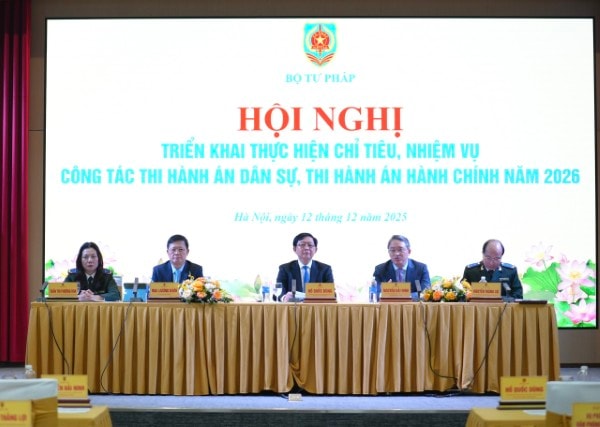
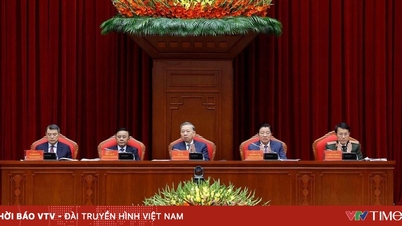
Member of the Central Committee of the Party, Minister of Justice Nguyen Hai Ninh chaired the conference. Co-chairing the conference were Deputy Minister Mai Luong Khoi, Director of the Civil Judgment Enforcement Management Department Nguyen Thang Loi, and Deputy Director of the Civil Judgment Enforcement Management Department Tran Thi Phuong Hoa.
This marks a significant step forward in the digital transformation of civil enforcement.
In 2025, the volume of cases and the amount of money to be enforced continued to increase, with the emergence of many unprecedented large-scale corruption and economic cases. In this context, with the decisive leadership and direction of the Government and the Ministry of Justice, and the efforts of the entire system, civil enforcement work achieved many outstanding results.
Specifically, regarding the number of cases, civil enforcement agencies have completed the enforcement of 576,884 cases, achieving 84.27%. In terms of monetary value, 150,060 billion VND has been collected, an increase of nearly 33,529 billion VND compared to 2024, reaching 56.62%. At the end of the year, civil enforcement agencies have completed and exceeded the targets set by the National Assembly.
In the recovery of assets obtained through corruption and economic crimes, positive results have been achieved, with over 27,416 billion VND recovered, an increase of over 5,239 billion VND compared to 2024. The results of enforcing credit and banking judgments have also shown significant progress, with 6,484 cases completed, recovering 36,904 billion VND, a 20.82% increase compared to 2024.

During the year, civil enforcement agencies monitored 2,105 administrative judgments, of which 868 were fully enforced. The Ministry of Justice established inter-agency inspection teams in Binh Thuan and Kien Giang provinces and continued to expand inspections in localities with a high number of delayed judgment enforcements.
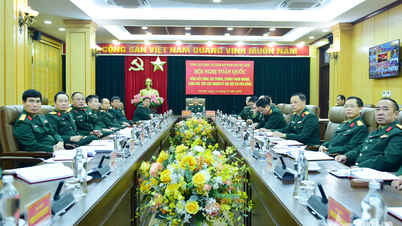
2025 also marks a significant step forward in the digital transformation of civil enforcement through the deployment of software supporting civil enforcement activities, such as electronic receipt software, decision-making support software, and automated payment applications for tens of thousands of parties involved. The civil enforcement system is also implementing an online meeting project connecting 355 regional civil enforcement offices, building a digital platform and database for civil enforcement that is interconnected with the Courts, Procuratorates, and Police.
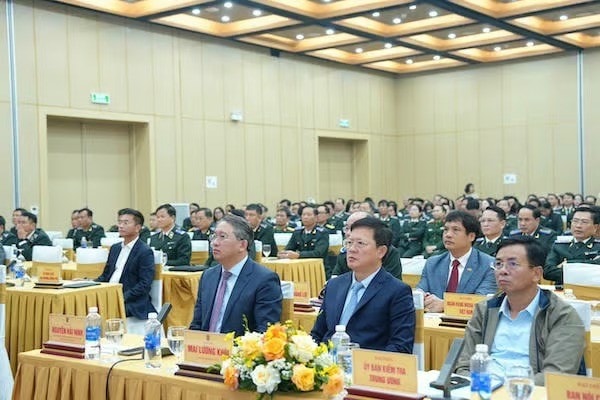
In implementing the policy of restructuring and organizing the political system, the Ministry of Justice has developed and finalized the Project "Continuing to restructure and streamline the civil enforcement system to ensure effective and efficient operation." On June 6, 2025, the Politburo and the Secretariat issued Conclusion No. 162-KL/TW, agreeing on the principle of the Project. Accordingly, the civil enforcement system will be restructured and reorganized into a two-tier model, comprising: the Civil Enforcement Management Department and 34 provincial and city civil enforcement agencies. This includes 355 regional civil enforcement offices.
Strengthening discipline and implementing strong reforms are crucial for improving the effectiveness of civil judgment enforcement.
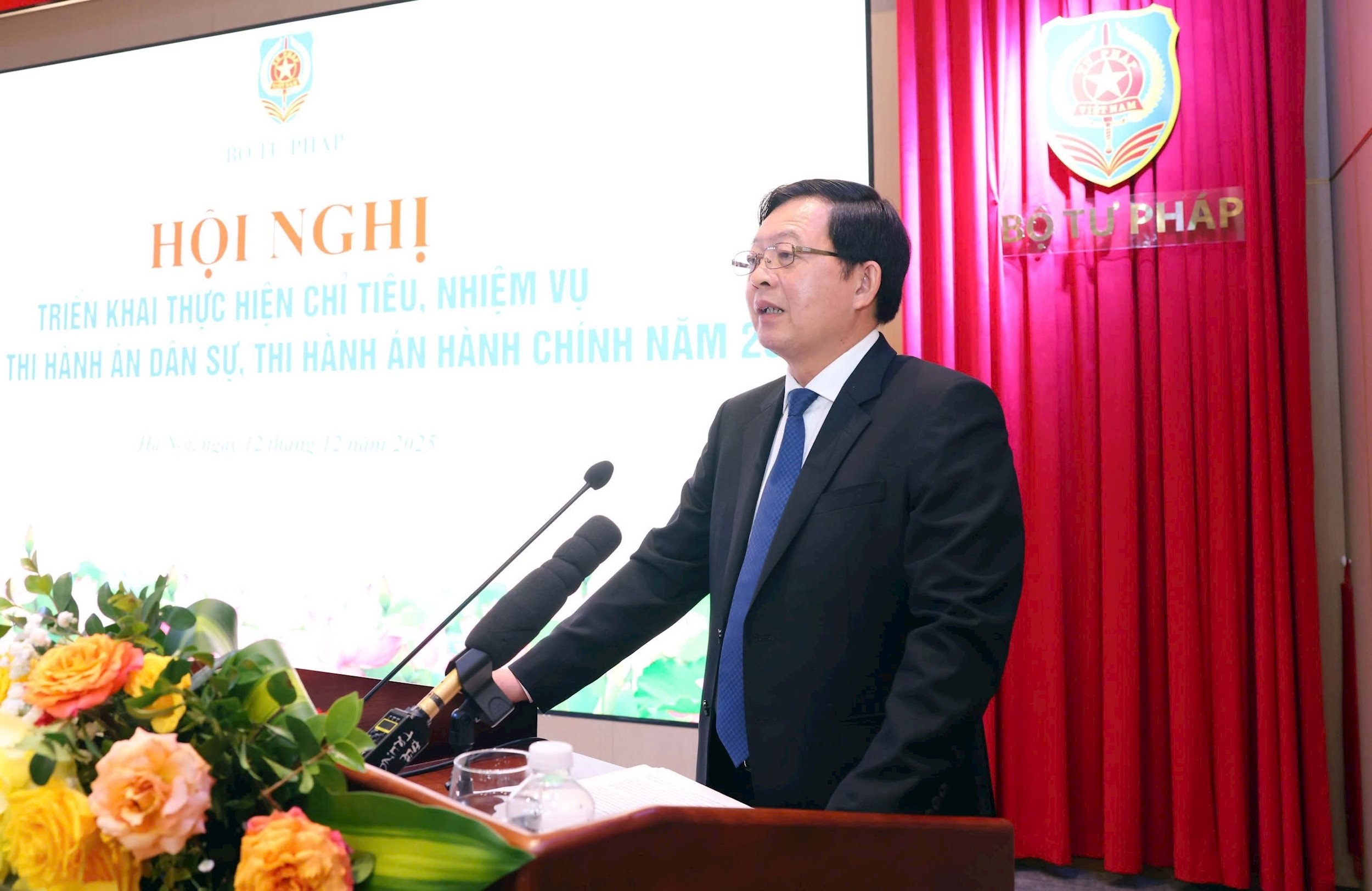
Speaking at the conference, Deputy Prime Minister Ho Quoc Dung emphasized that 2025 is a year of special significance as the country implements a major reform to reorganize and streamline its organizational structure. The reorganization and consolidation of agencies, including civil enforcement agencies, has yielded positive results.
On behalf of the Government, Deputy Prime Minister Ho Quoc Dung respectfully acknowledged and commended the achievements of the civil enforcement agencies in 2025, as reflected in the following key areas: The Ministry of Justice's role in state management continued to be affirmed; and the work of advising on and improving the institutional framework, including the Law on Civil Enforcement, was proactively and effectively implemented.
The efforts of civil servants working in enforcement at all levels, with their large workload and high pressure, have helped recover hundreds of trillions of dong for the state budget, compensate victims, and contribute to ensuring justice and social stability.
However, alongside the achievements, the Deputy Prime Minister noted that there are still some shortcomings that need serious consideration.
Deputy Prime Minister Ho Quoc Dung emphasized that 2026 is of paramount importance as we begin implementing the Resolution of the 14th National Party Congress with many groundbreaking ideas, opening a new phase – a phase of strong development. This is a challenging goal, requiring the efforts of the entire political system, including the role of civil enforcement agencies.
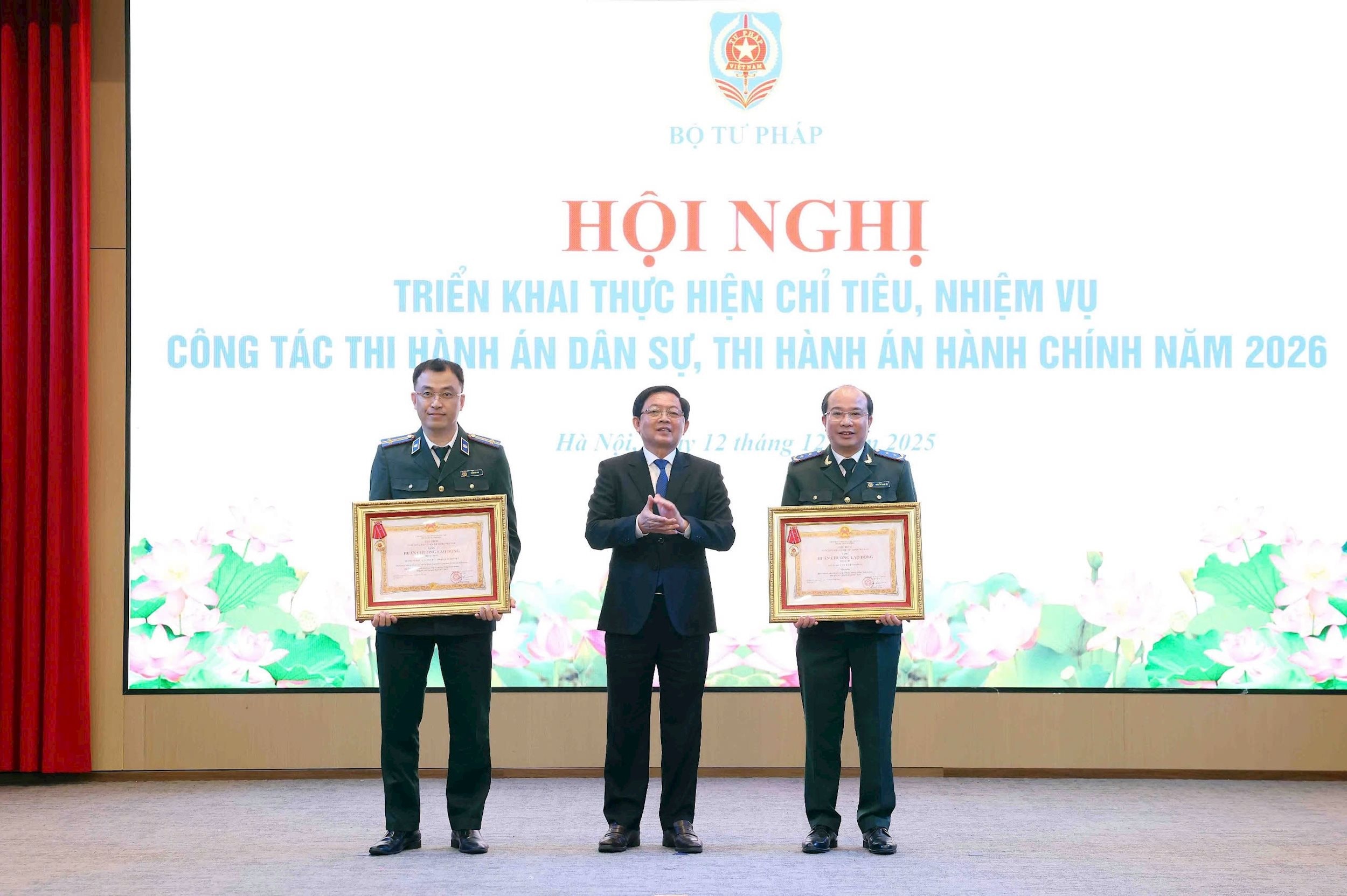
The Deputy Prime Minister requested that the Ministry of Justice and civil enforcement agencies continue to place enforcement work under the comprehensive leadership of Party committees at all levels; clearly define responsibilities in enforcement work, ensuring synchronized and effective coordination.
In addition, we must strengthen Party building and enhance discipline and order within the system. We must focus on building clean and strong enforcement agencies; strengthen political and ideological education; tighten discipline and order; promote inspection and supervision; and improve public service ethics and the spirit of serving the people.
The Deputy Prime Minister also requested the Ministry of Justice to finalize the institutional framework and guidelines for the implementation of the Law on Civil Judgment Enforcement; to complete decrees, circulars, and guiding documents; and to review and resolve obstacles in the organizational model and mechanisms for administrative judgment enforcement.
The Ministry of Justice and the civil enforcement sector need to develop specific plans and organize the implementation of targets from the early months of the year, ensuring that the results in 2026 are higher than in 2025; strengthen control over power, prevent and combat corruption and negative practices; and emphasize the responsibility of leaders in management and administration.

Furthermore, we will continue to streamline internal organizational structures for greater efficiency and effectiveness; strictly implement Party and State regulations on personnel work; and promote the rotation, training, and utilization of talented individuals. We will also continue to vigorously implement digital transformation throughout the entire system, ensuring that the digital platform for enforcement operates synchronously and effectively.
The Deputy Prime Minister expressed his hope that in 2026, the Ministry of Justice and the civil enforcement system would continue to strive, unite, demonstrate courage and intelligence, uphold a high sense of responsibility, discipline, integrity, creativity, exemplary conduct, and decisive action, determined to successfully accomplish the key tasks of 2026.
Specifically, this should be translated into programs and actions to improve the quality of judgment enforcement.
In his response, Minister of Justice Nguyen Hai Ninh respectfully thanked and accepted all the directives from Deputy Prime Minister Ho Quoc Dung. The Minister affirmed that he would concretize these directives into decisive action programs and plans to improve the quality of enforcement work.
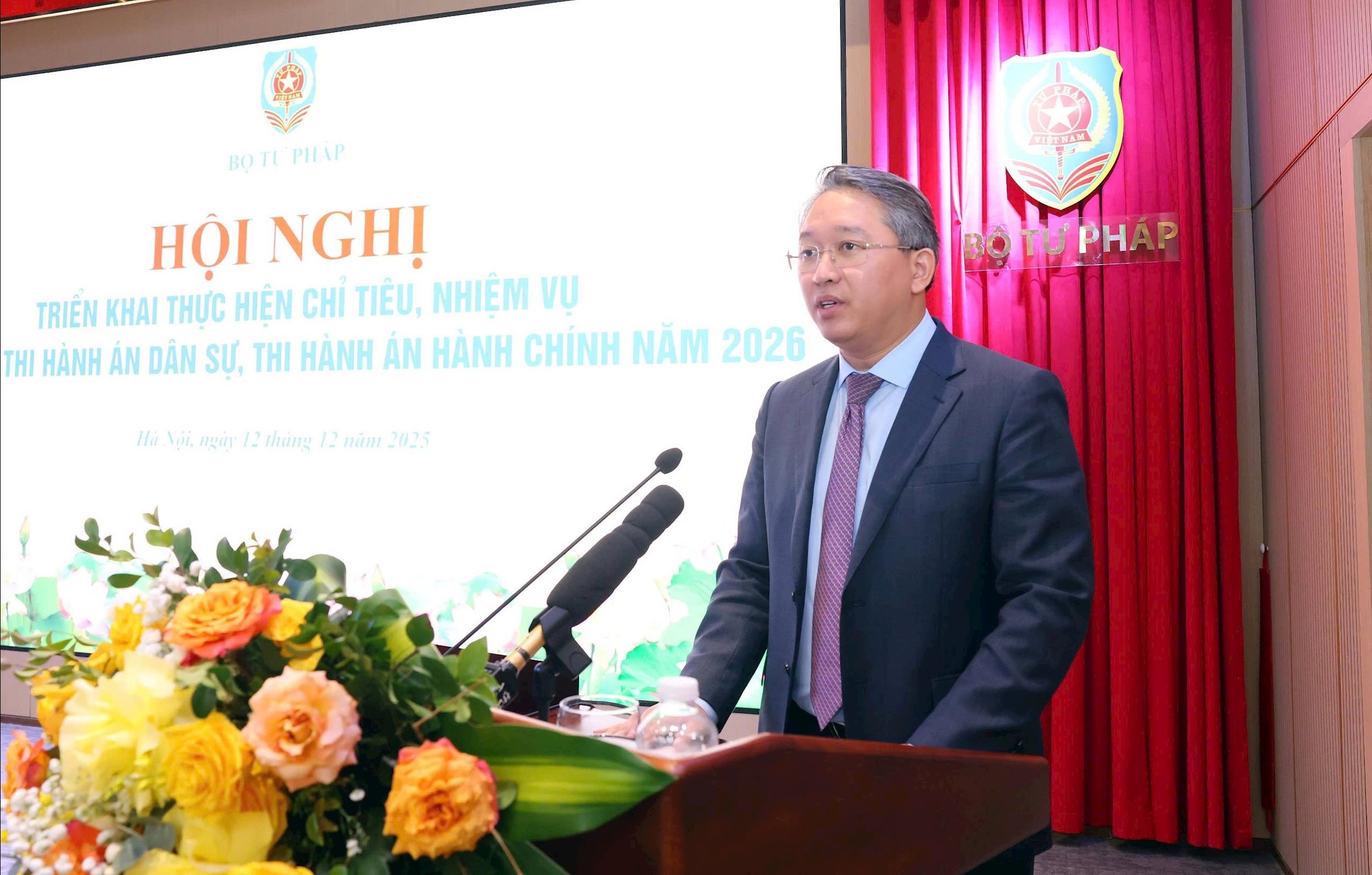
Acknowledging the positive results of 2025, when both the targets for civil enforcement in terms of cases and monetary amounts exceeded the targets set by the National Assembly, Minister Nguyen Hai Ninh also frankly pointed out the limitations, especially the low effectiveness of administrative enforcement, which only reached 41.37%. Therefore, the Minister emphasized that this is one of the key breakthrough tasks for 2026.
To successfully complete the tasks for 2026, Minister Nguyen Hai Ninh requested the entire civil enforcement system to focus on seven key tasks. These include: decisively implementing targets and tasks from the beginning of the year, linking the responsibility of the head of each agency to the results of the work; and promptly and effectively implementing the Plan for the implementation of the new Law on Civil Enforcement (Law 106). In particular, the development of 3 decrees and 12 circulars is crucial. Of these, 8 circulars, chaired by the Ministry of Justice, will provide detailed regulations and guidance for the implementation of the new Law on Civil Enforcement, ensuring there are no outstanding or delayed detailed regulations and guidance documents.
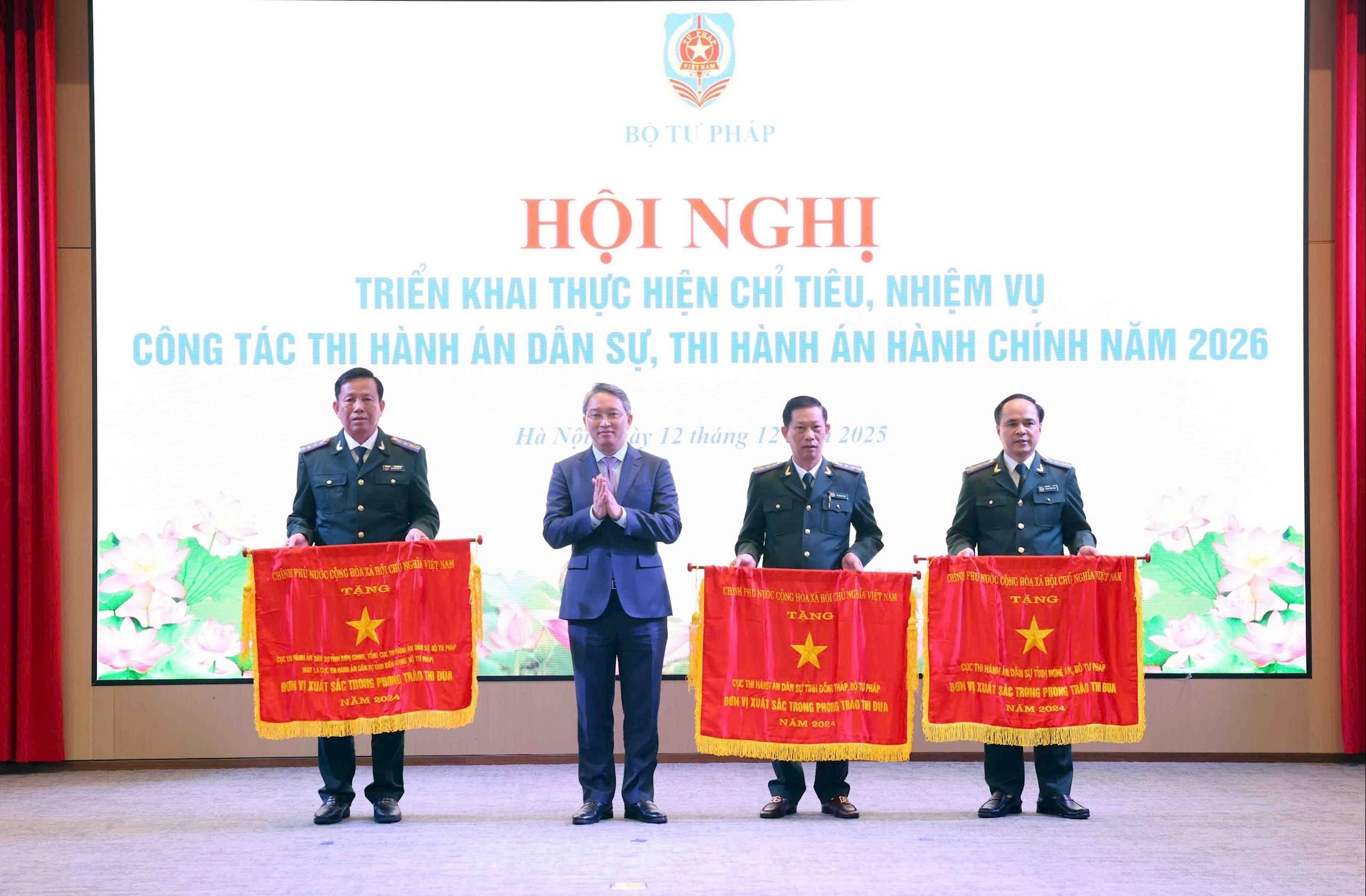
At the same time, Minister Nguyen Hai Ninh also requested strengthening discipline and order, improving public service ethics, and promoting the prevention of negativity, corruption, and violations in civil enforcement. This is especially important in the process of organizing enforcement and the collection and disbursement of enforcement funds. He called for strict and timely handling of acts of corruption and negativity; and the comprehensive implementation of solutions to improve the effectiveness of administrative enforcement management.
Within the framework of the Conference on Implementing the Targets and Tasks of Civil and Administrative Enforcement in 2026, on December 12th, the Ministry of Justice officially activated the Digital Platform for Civil Enforcement and the Smart Monitoring and Operating Center for the Civil Enforcement System.
Accordingly, the civil enforcement digital platform is built as a comprehensive solution, seamlessly digitizing the entire civil enforcement process, integrating and linking all business processes, databases, and digital services with groundbreaking benefits: the digital platform allows for the resolution of procedures across administrative boundaries, regardless of geographical distance; real-time data helps reduce the workload of statistical reporting, effectively serving management and decision-making; prominent digital technologies, especially AI, help automate data extraction, task assignment, and progress monitoring; citizens can easily interact, search for files, and receive notifications via QR code, VNeID, etc.; it is ready to connect and share data between civil enforcement agencies and the Supreme People's Court, the Supreme People's Procuracy, the Ministry of Public Security, the Ministry of Finance, the State Bank of Vietnam, and other relevant ministries and agencies to serve documents, verify enforcement conditions, and coordinate work.
Source: https://daibieunhandan.vn/pho-thu-tuong-ho-quoc-dung-du-hoi-nghi-trien-khai-cong-tac-thi-hanh-an-dan-su-hanh-chinh-nam-2026-10400297.html




































































Comment (0)