

Hyperbaric oxygen therapy, with protocols issued by the Ministry of Health , has long been considered an effective supportive oxygen therapy for many groups of acute and chronic diseases, surgical conditions, multiple traumas, etc. In the past year or so, since oxygen therapy was included in the list of treatments covered by health insurance, the number of patients accessing and benefiting from this therapy has steadily increased.
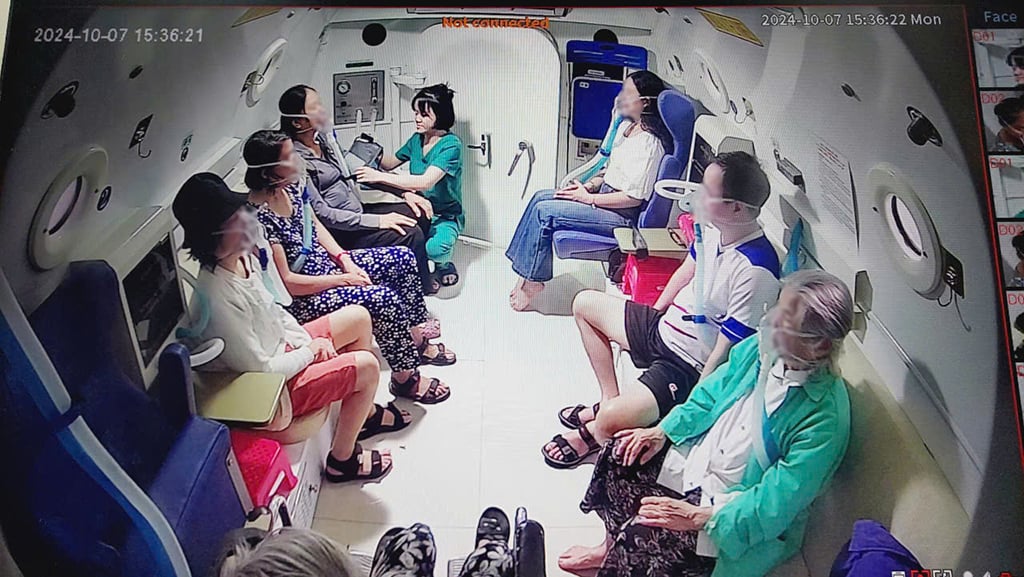
Patients receive oxygen therapy in hyperbaric chambers at Da Nang Traditional Medicine Hospital.
Patient H. (53 years old, residing in Lien Chieu District, Da Nang City) stated that nearly two years ago she suffered a stroke. Throughout this time, she has undergone post-stroke rehabilitation treatment, including four sessions of hyperbaric oxygen therapy. "Through each treatment session, I clearly see the improvement in my body; I'm more alert and more agile," she said. For almost a year now, since hyperbaric oxygen therapy has been covered by health insurance, she has been prescribed pure oxygen by her doctors, actively participating in her rehabilitation treatment.
Patient TP (40 years old, residing in Quang Tri province ) was prescribed this therapy to aid in the recovery from a cervical spinal cord injury sustained in a traffic accident 5 months prior. "By the third session, I had already felt a positive difference in my health," said patient TP.
The patient's treating physician said that this therapy increases oxygen in the blood to the damaged organs, especially those compressed like the heart and lungs that previously caused shortness of breath, helping the patient feel better and reducing fatigue, dizziness, and headaches.
According to MSc. Phan Nguyen Huy (Head of the General Internal Medicine Department, Da Nang Traditional Medicine Hospital): Each treatment session lasts 6-10 consecutive days, with approximately 90 minutes each day, depending on the doctor's prescription and the patient's decision. Currently, the Ministry of Health has included 48 diseases in the list of indications for hyperbaric oxygen therapy, including diseases in the following groups: vascular occlusion, decompression sickness due to diving, ischemia due to acute trauma, arterial occlusion, intracranial abscess, cerebral edema…; surgical diseases such as trauma, open wounds, post-operative conditions, tissue damage, muscle, bone, and joint damage; internal medicine diseases such as cerebral infarction, cerebral circulatory insufficiency, vestibular disorders, migraines, damage due to diabetic complications, infectious arthritis, osteoarthritis…; rehabilitation after brain injury, spinal cord injury, paralysis; and health recovery due to stress, nervous tension, and psychological trauma…
"Hyperbaric oxygen therapy at the hospital is now combined with many other methods such as traditional medicine, acupuncture, massage, and rehabilitation... Based on monitoring of patients with multiple diseases and geriatric conditions, we have seen an increased response to treatment. After completing the treatment course, patients are advised on nutrition, exercise, rest, and medication maintenance to prevent recurrence...", said Dr. Phan Nguyen Huy.
According to MSc. Nguyen Anh Khoa (Department of Acupuncture and Rehabilitation, Da Nang Traditional Medicine Hospital), when entering a hyperbaric oxygen chamber, patients breathe pure oxygen. In a normal environment, oxygen accounts for about 20%, while with hyperbaric oxygen therapy, patients breathe pure oxygen or an oxygen-rich mixture up to 98% in a high-pressure environment. The partial pressure of oxygen on the alveolar surface is 10-13 times higher than breathing pure oxygen in an isobaric environment. The amount of oxygen combined with blood also increases, and under high pressure, the blood delivers oxygen to tissues and cells more efficiently. As a result, damaged areas regenerate and recover quickly.
Source: https://thanhnien.vn/tang-hieu-qua-dieu-tri-voi-lieu-phap-oxy-cao-ap-185241015204402655.htm


![[Photo] Prime Minister Pham Minh Chinh presides over a meeting on private sector economic development.](/_next/image?url=https%3A%2F%2Fvphoto.vietnam.vn%2Fthumb%2F1200x675%2Fvietnam%2Fresource%2FIMAGE%2F2025%2F12%2F20%2F1766237501876_thiet-ke-chua-co-ten-40-png.webp&w=3840&q=75)


![[Photo] Prime Minister Pham Minh Chinh presides over the conference announcing the establishment of the International Finance Centre in Vietnam.](/_next/image?url=https%3A%2F%2Fvphoto.vietnam.vn%2Fthumb%2F1200x675%2Fvietnam%2Fresource%2FIMAGE%2F2025%2F12%2F21%2F1766309817714_ndo_br_dsc-3400-jpg.webp&w=3840&q=75)













































































Comment (0)