

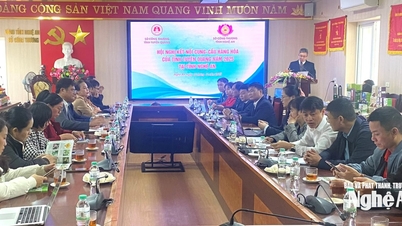
On the afternoon of September 11th, the Central Propaganda and Mass Mobilization Department, in coordination with the Ministry of Education and Training, organized a workshop titled "Orientation on Autonomy and Accountability in Vocational Education and Training Institutions" at Ly Thai To College, Bac Ninh.
The workshop took place in the context of the Politburo issuing Resolution No. 71-NQ/TW, which identifies the development of education and training, including vocational education and training, as one of the three strategic breakthroughs.
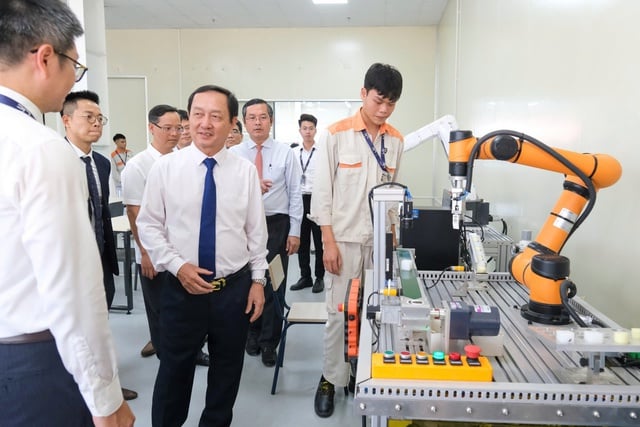
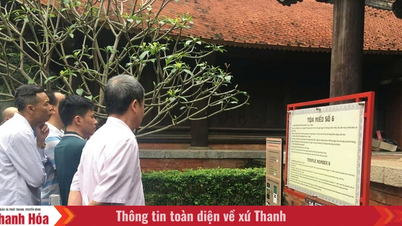
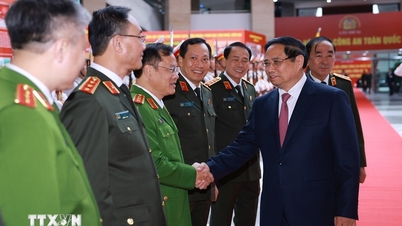
Leaders from the Central Propaganda and Mass Mobilization Department and the Ministry of Education and Training visited Ly Thai To College.
PHOTO: DANG CHUNG
THE DILEMMA OF A SCHOOL THAT IS NOT YET AUTONOMOUS
At the seminar, Mr. Truong Duc Cuong, Principal of Dong Nai College of Decorative Arts, a 122-year-old institution, shared the dilemma of not yet being self-sufficient. "According to the development roadmap, the school's scale by 2030 is to have 1,000 students. Previously, the school had 80 staff and lecturers. But according to the Ministry of Culture, Sports and Tourism's requirement to reduce the number of departments and personnel (by 20%), the school has to gradually reduce the number of staff and lecturers. Previously, we had 80 staff and lecturers, then down to 70, then 65, and now 60, and we don't know if there will be further reductions! While the school still has to ensure 100% enrollment, the staffing is limited, and the budget is reduced due to having to be partially self-sufficient," Mr. Cuong said.
According to Mr. Cuong, not only the Dong Nai College of Decorative Arts but also numerous other vocational training institutions in the "cultural industry" (dance, circus, music, etc.) are struggling due to their complete dependence on the state budget. They operate only when the government provides funding; they stop when it ceases. He questioned: If autonomy means ceasing government funding, can these schools survive? What human resources will be used to build and preserve an advanced culture rich in national identity, and to maintain traditional crafts?
Mr. Nguyen Tien Dong, Principal of Ly Thai To College, also shared that when given autonomy and clear direction, vocational education institutions can innovate in their training programs, creating high-quality human resources. However, even with the few existing autonomous institutions, many have not fully utilized their potential. This is partly due to limited management capacity and a mentality of waiting for guidance; and partly due to a lack of mechanisms and resources to support schools in innovating their programs. "The vocational education sector needs breakthrough solutions to effectively implement autonomy in developing training programs, thereby building a truly open and flexible vocational training system. In particular, autonomy must go hand in hand with accountability, considering output results and social satisfaction as important metrics," Mr. Dong proposed.
Q. HALF-HEARTED AUTONOMY
According to Mr. Truong Anh Dung, Director of the Department of Vocational Education and Continuing Education, Ministry of Education and Training, autonomy in vocational education is currently only in its "early stages". The policy mechanisms regarding autonomy are not yet synchronized, overlapping, and inconsistent across different sectors. Many vocational education institutions still depend significantly on the state budget, while their operational revenue is limited due to low enrollment volumes and limited ability to mobilize social resources. The internal management capacity of many institutions does not meet requirements; the organizational structure is cumbersome and inflexible; and accountability is not effectively implemented in many places.
Incomplete reports from 34 out of 63 former localities show that by 2024, among the 262 public vocational training institutions whose autonomy plans have been approved, 30% will still belong to the group whose recurrent expenditures are fully covered by the state (group 4), while 61% will be partially covered (group 3). Only 5% will be fully self-sufficient in covering recurrent expenditures (group 2), and 4% will be fully self-sufficient in covering both recurrent and investment expenditures (group 1).
Mr. Truong Anh Dung said: "These figures reflect that the process of implementing financial autonomy is still in a transitional phase, with the majority of institutions still depending on the budget to varying degrees. The percentage of institutions achieving full financial autonomy (Group 1) is still very low, indicating that full autonomy is not yet widespread. However, the majority of institutions in Group 3 show that there is a certain shift in the vocational education and training system towards gradual autonomy, which needs to be continuously monitored and supported in terms of institutional and organizational capacity to promote this process more effectively."
Explaining this situation, Mr. Dung cited several reasons, including policy mechanisms and laws. The current Vocational Education and Training Law (2014) primarily approaches and institutionalizes the issue from the perspective of autonomy and self-responsibility of vocational education and training institutions. "It can be seen that current laws on vocational education and training stipulate that the autonomy of some basic activities of vocational education and training institutions (such as opening new training programs) must be based on the level of financial autonomy," Mr. Dung stated.
Mr. Huynh Thanh Dat, Deputy Head of the Central Propaganda and Mass Mobilization Department, also stated that "we need to frankly look at the reality." Compared to the requirements of national development in the context of the fourth industrial revolution, globalization, and increasingly fierce competition for human resources, our vocational education and training system still has many limitations. Autonomy is still half-hearted; many schools still have to wait for permission for things they could proactively do; creativity is restricted. Accountability is unclear, data lacks transparency, the monitoring mechanism is still superficial, and society finds it difficult to assess the actual quality…

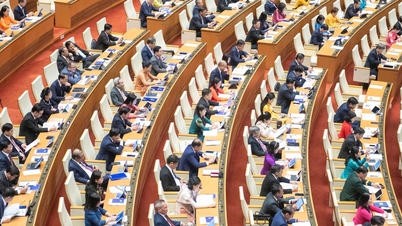
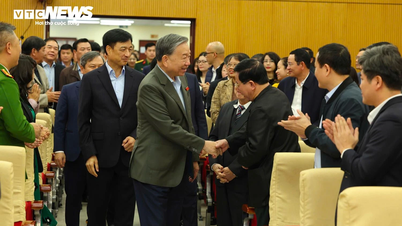
There is a certain shift in the vocational education and training system towards gradual autonomy.
Photo: My Quyen
The State plays the role of "Creating and Guaranteeing"
Concluding the workshop, Mr. Nguyen Van Phuc, Deputy Minister of Education and Training, also noted that autonomy in vocational education and training in Vietnam is only in its early stages and needs further refinement of mechanisms and strengthening of capacity to achieve depth and sustainability. A new aspect of Resolution 71 is a significant development in educational governance. From considering financial autonomy as the central focus, it has now expanded to comprehensive autonomy across all aspects. This opens up a more balanced and holistic approach, linking autonomy with accountability, while simultaneously fulfilling the mission of improving the quality of vocational education and training to serve national development. The role of the state remains extremely important, continuing to play a "facilitator and guarantor" role through commissioning projects, assigning tasks, and providing basic funding for vocational education and training institutions to fulfill their mission of serving the public.
The next steps for the education sector include perfecting the legal framework on autonomy and accountability to ensure consistency, clarity, and feasibility. This involves stratifying and classifying autonomy by building mechanisms that match the capabilities and conditions of each institution, linking rights with responsibilities and corresponding oversight mechanisms. Furthermore, the state needs policies to balance the three pillars of autonomy: finance, organization and personnel, and professional expertise, ensuring harmony and avoiding bias, so that autonomy is genuine and sustainable…
A groundbreaking new feature.
According to Mr. Huynh Thanh Dat, Deputy Head of the Central Propaganda and Mass Mobilization Department, the Party's views on the autonomy mechanism in public service units, especially in the field of education, have clearly developed step by step, demonstrating flexible adjustments to suit practical realities. In particular, Resolution 71 of the Politburo introduced a groundbreaking new point: affirming the full and comprehensive autonomy of educational institutions, regardless of their level of financial autonomy.
"This represents a fundamental shift in our Party's thinking on educational governance: eliminating the previous notion that 'only financially self-sufficient institutions are entitled to autonomy,' and instead affirming that autonomy is a fundamental right of all vocational education institutions, regardless of size or financial capacity. Autonomy is not limited to financial matters, but also manifests in proactively developing and implementing training programs, innovating teaching methods, organizing the organizational structure, developing the workforce, expanding international cooperation, and closely linking with businesses and the labor market," said Mr. Huynh Thanh Dat.
Source: https://thanhnien.vn/thuc-day-tu-chu-thuc-chat-trong-giao-duc-nghe-nghiep-185250911225542787.htm

















































































Comment (0)