

AI is still inferior to the intelligence of the biological brain.

Thanks to their unique mechanisms, monkeys and even humans can adapt to challenges and tasks they have never encountered before (Photo: Getty).
Although AI (artificial intelligence) has made tremendous strides and even surpassed humans in some specific tasks, the human brain still possesses a core advantage that machines have yet to replicate: the flexibility to transfer and reuse skills across different tasks.
This is a noteworthy conclusion from a new study by a team of scientists at Princeton University (USA), published on December 15th.
Instead of conducting experiments directly on humans, the researchers chose rhesus monkeys (Macaca mulatta), a primate species whose brain structure and function are similar to those of humans.
In the experiment, the monkeys were asked to distinguish shapes and colors displayed on a screen, and to perform specific eye movements to provide answers. Simultaneously, their brain activity was monitored using advanced neural scanning techniques to identify activated brain regions and overlapping activity patterns.
The results showed that the monkey brain does not process each task as a separate entity, but uses relatively stable groups of neurons for a variety of different tasks.
Scientists liken these groups to "cognitive Lego blocks," which can be disassembled, reused, and combined flexibly to solve new requirements. This mechanism allows the brain to adapt quickly, while many current AI models still need to be retrained almost from scratch when switched to a different task.
What are the major weaknesses of artificial intelligence?
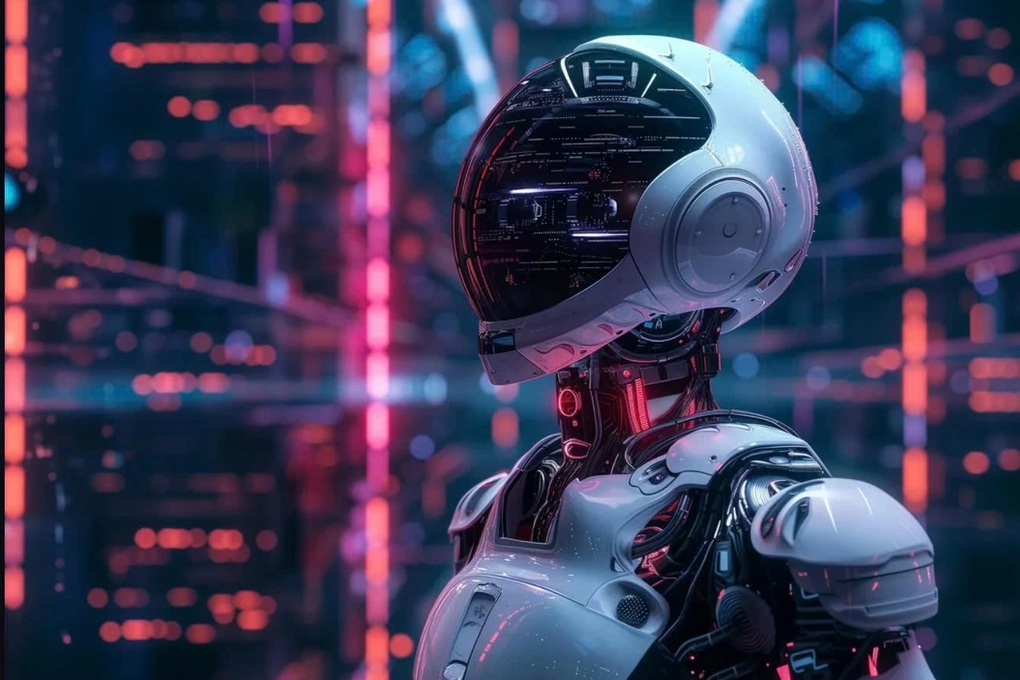
Current AI models easily lose old skills when learning new tasks. This is a fatal weakness, but it also gives biological brains an advantage (Image: Getty).
According to neuroscientist Tim Buschman of Princeton University, the most advanced AI systems can achieve performance equal to, or even surpass, humans in individual tasks, but they struggle significantly when it comes to learning and performing multiple tasks consecutively.
Conversely, the biological brain can piece together existing cognitive components to build new strategies without having to "learn from scratch."
These “cognitive blocks” are primarily concentrated in the prefrontal cortex, the brain region associated with higher-order cognitive functions such as planning, problem-solving, and decision-making. This is considered the center of cognitive plasticity in primates and humans.
Notably, the research team found that when certain cognitive blocks were no longer necessary for the current task, their activity levels decreased. This suggests that the brain has the ability to "store" unused neural programs, thereby avoiding overload and focusing resources on the immediate task.
Buschman likened this mechanism to how functions in a computer program operate. A group of neurons might be responsible for distinguishing colors, then the output signal is passed to another function to control the action. Thanks to this structure, the brain can solve complex tasks by sequentially performing simpler steps.
This discovery helps explain why monkeys, and very possibly humans, can adapt to entirely new challenges by leveraging existing knowledge and skills. This is also a major weakness of current artificial intelligence, as neural networks often suffer from "forgetting," meaning they lose old skills when learning new tasks.
Furthermore, scientists believe that the research results not only clarify the cognitive superiority of the biological brain over AI, but also open up new avenues for developing more flexible artificial intelligence systems.
At the same time, these findings could also contribute to research and treatment of neurological and psychiatric disorders where patients have difficulty transferring skills from one context to another.
While constantly switching between tasks isn't always beneficial for the brain, research suggests that the ability to reuse "cognitive pieces" is a clever shortcut that helps humans adapt quickly to an ever-changing world —an advantage that artificial intelligence, at least for now, is still striving to catch up with.
Source: https://dantri.com.vn/khoa-hoc/tim-thay-diem-yeu-lon-cua-ai-thua-ca-nao-khi-20251215075622649.htm
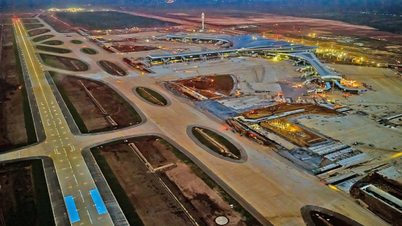
![[Photo] Two flights successfully landed and took off at Long Thanh Airport.](/_next/image?url=https%3A%2F%2Fvphoto.vietnam.vn%2Fthumb%2F1200x675%2Fvietnam%2Fresource%2FIMAGE%2F2025%2F12%2F15%2F1765808718882_ndo_br_img-8897-resize-5807-jpg.webp&w=3840&q=75)



















































































Comment (0)