

Located in the remote border region at the headwaters of the Mekong River, An Giang is not only notable for its picturesque riverine landscapes but also for preserving valuable "cultural sediments," reflecting the intermingling and blending of many communities. Throughout thousands of years of history, An Giang has accumulated precious "cultural sediments"—from the ancient Oc Eo civilization to its multi-ethnic and multi-religious life, along with the process of cultural assimilation—creating a unique identity unlike anywhere else.
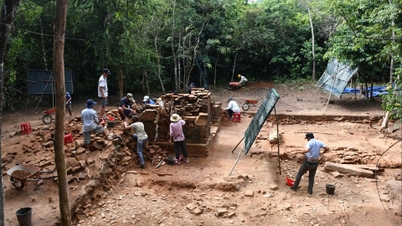
When mentioning An Giang, it's impossible not to talk about the Oc Eo culture – an ancient civilization associated with the existence of the Funan Kingdom – one of the earliest formed states in Southeast Asia, flourishing from the 1st to the 7th centuries AD. Archaeologists have discovered a series of valuable relics and artifacts in the Ba The - Oc Eo area (Thoai Son district)... These traces show that this place was once an important international trading center of the Funan Kingdom, connecting with India, China, and other Southeast Asian countries… More than just a distant past, the Oc Eo heritage is a precious "gem" for An Giang to build its cultural identity and tourism today.
As one of the provinces with a unique geographical location – bordering Cambodia and situated within the economic and cultural development axis of the Southwestern region of Vietnam – An Giang is home to many ethnic groups: Kinh, Khmer, Cham, Hoa, etc. Each community brings with it distinctive cultural values, creating a rich and unique cultural landscape.
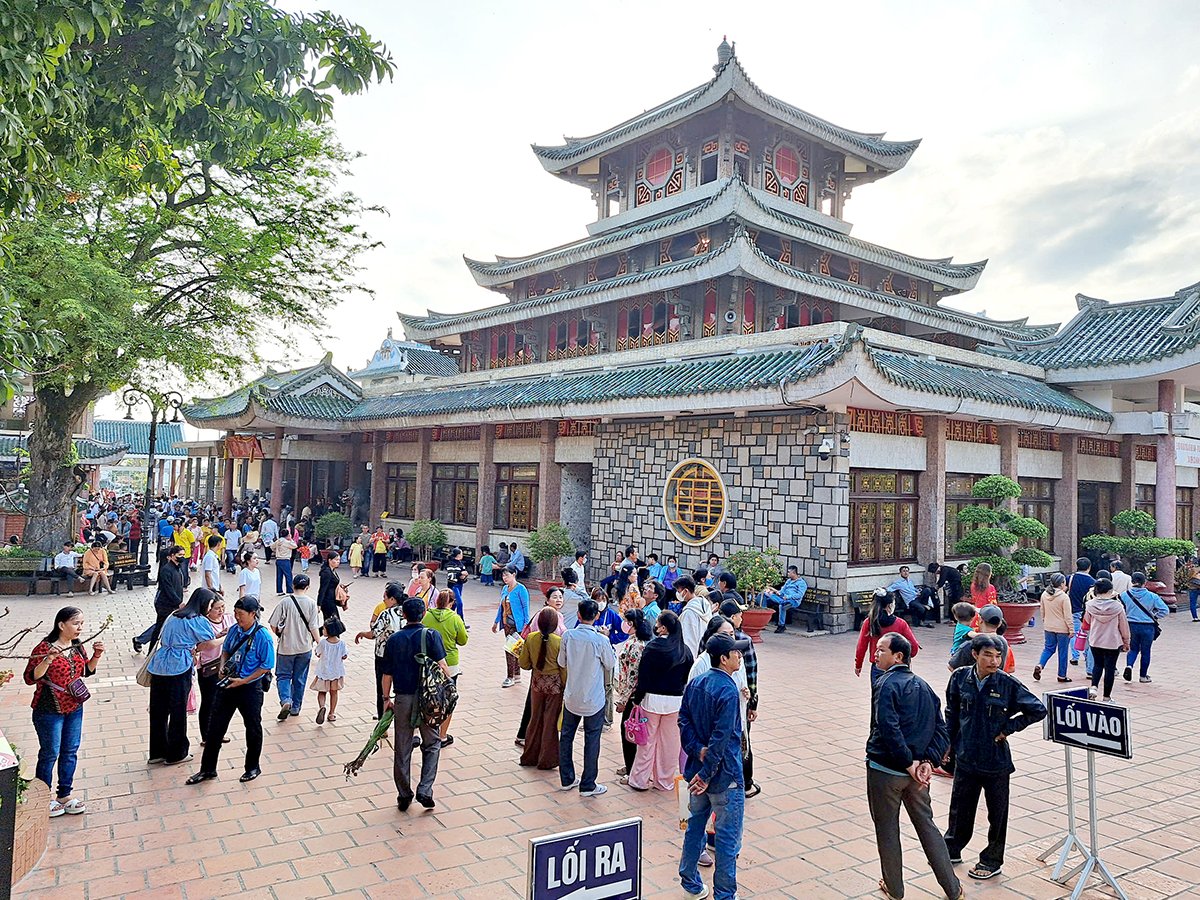
Ba Chua Xu Temple on Sam Mountain - a famous spiritual destination.
It's impossible not to mention the Lady of Sam Mountain Temple in Chau Doc City – the most sacred religious site in the Mekong Delta, attracting millions of pilgrims every year. The Via Ba festival, held in the fourth lunar month, is an occasion for people to pray for peace and prosperity, and is also a unique cultural and spiritual festival. At the end of 2024, the Via Ba Chua Xu festival at Sam Mountain was officially inscribed by UNESCO as a Representative Intangible Cultural Heritage of Humanity.
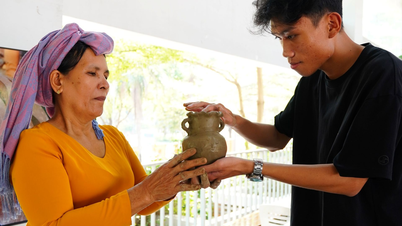
An Giang also boasts 10 National Treasures (including the Linh Son Bac Buddha relief, the Khanh Binh stone Buddha statue, the Giong Xoai wooden Buddha statue, the Giong Xoai Brahma statue, the Linga-Yoni set, the Linh Son Linga-Yoni set, the Giong Cat Nandin ring, the Ba The Mukhalinga statue, the head of the Linh Son Bac Buddha statue (dating from the 1st-3rd centuries), and the Go Cay Tram burial jar (dating from the 4th-5th centuries); national intangible cultural heritage; and 90 ranked historical and cultural relics and scenic spots (2 special national relics, 28 national relics, and 60 provincial relics), combining indigenous beliefs with Buddhist rituals and folk elements… creating a rich and diverse culture.
It would be a great oversight to talk about An Giang without mentioning the Bay Nui bull racing festival. This is a folk activity of the Khmer people associated with the Lunar New Year celebrations, but it has become a unique cultural and sporting event of regional significance. “The festival is not only about competition, but also carries spiritual value, praying for a bountiful harvest and providing a joyful occasion for the Khmer ethnic community. This unique folk sports and cultural activity attracts a large number of domestic and international tourists to explore the unique culture of the Khmer people in An Giang,” said Thach Son, a tourist from Tra Vinh province…
An Giang province is also famous for its Long Xuyen floating market, Chau Doc floating village, and unique local dishes (fermented fish hotpot, fish noodle soup, Thai-style fermented fish paste, palm sugar rice cake, etc.), which are vivid expressions of the riverine culture of the Mekong Delta – a place where cuisine, daily life, and social interaction are closely intertwined with the alluvial flow of the river.
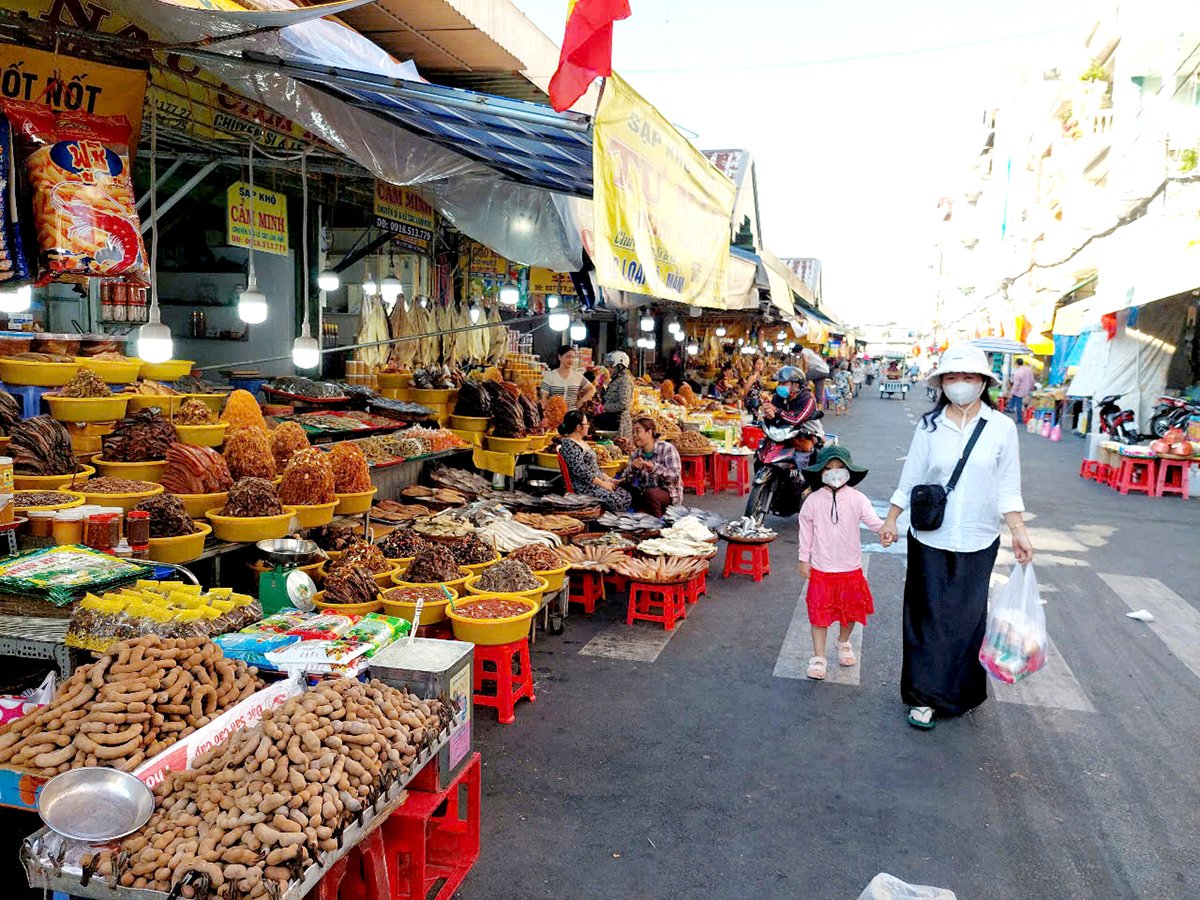
Chau Doc Market is famous for its many renowned local specialties.
With its rich cultural heritage potential, An Giang has been focusing on developing cultural and spiritual tourism, with historical sites being one of the important resources to exploit. An Giang also has the advantage of distinctive ecotourism, such as river tourism and agricultural tourism. The province is aiming to develop smart tourism, ecotourism combined with experiential and relaxing activities. Carefully designed tours are available on e-commerce platforms, making them easily accessible and enjoyable for tourists. Tourist areas such as Mount Cam, Ta Pa - Soai Chek, and Tra Su Melaleuca Forest are also developing trekking and homestay tourism models to meet the diverse needs of visitors.
According to the Department of Culture, Sports and Tourism, the province focuses on investing in the preservation and restoration of historical and cultural relics in the area; promoting the preservation and promotion of cultural heritage values, both tangible and intangible. These efforts are carried out through the development of scientific dossiers, preservation projects, and programs to promote the value of tangible and intangible cultural heritage of the ethnic groups living in the province.
An Giang, a land at the headwaters of the river, boasts not only beautiful natural scenery but also a treasure trove of valuable culture, a place where historical, religious, artistic, and folk traditions are continuously enriched. Amidst globalization, An Giang is gradually preserving and promoting its traditional cultural values through activities such as monument conservation, community tourism development, spiritual tourism, and experiential tourism. Traditional festivals are not only religious activities but also cultural and tourism products, contributing to showcasing An Giang to domestic and international tourists.
According to experts, every citizen should be a cultural ambassador, contributing to promoting the image, cultural characteristics, and tourism of their locality. For sustainable tourism development, it requires not only the contributions of businesses and relevant agencies, but also the active participation of the community and each individual; especially in preserving, developing, and transmitting cultural values and the beauty of cultural behavior, creating products with unique characteristics...
Source: https://baoangiang.com.vn/tram-tich-van-hoa-dong-luc-phat-trien-a421226.html
![[Photo] Prime Minister Pham Minh Chinh receives the Chinese Ambassador to Vietnam](https://vphoto.vietnam.vn/thumb/1200x675/vietnam/resource/IMAGE/2026/04/05/1775397481797_ndo_br_dsc-5512-jpg.webp)











































Comment (0)