

Speaking during Prime Minister Pham Minh Chinh's official visit to Australia, Australian Prime Minister Anthony Albanese happily announced that he was proud that the new partnership between the two countries has concrete pillars, including cooperation in energy.
Energy - a concrete pillar of cooperation.
“I am delighted today that we have agreed to establish an annual dialogue mechanism between the Australian Minister for Industry, Science, Energy and Resources and the Vietnamese Minister for Industry and Trade , ” said Australian Prime Minister Anthony Albanese, emphasizing that this will be the foundation for closer cooperation in the energy and resources sectors of the two countries, including critical mineral supply chains to support the goals of both countries.
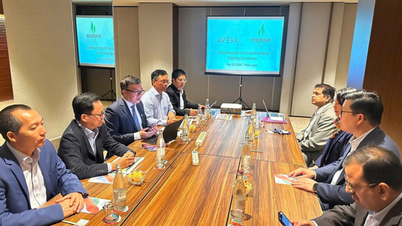
Previously, Minister of Industry and Trade Nguyen Hong Dien and Mr. Tim Ayres, Co-Minister for Trade and Manufacturing, Department of Foreign Affairs and Trade of Australia, had made many efforts to contribute to creating that important "pillar". At a working meeting between the two ministers on the sidelines of the Prime Minister's official visit, Minister Nguyen Hong Dien recalled the bilateral meeting between the two ministers in July 2023 in New Zealand, where they agreed to expedite the signing of a Memorandum of Understanding to establish a Ministerial Dialogue mechanism on Energy and Minerals between Vietnam and Australia. And very quickly, just 5 months later, that became a reality.
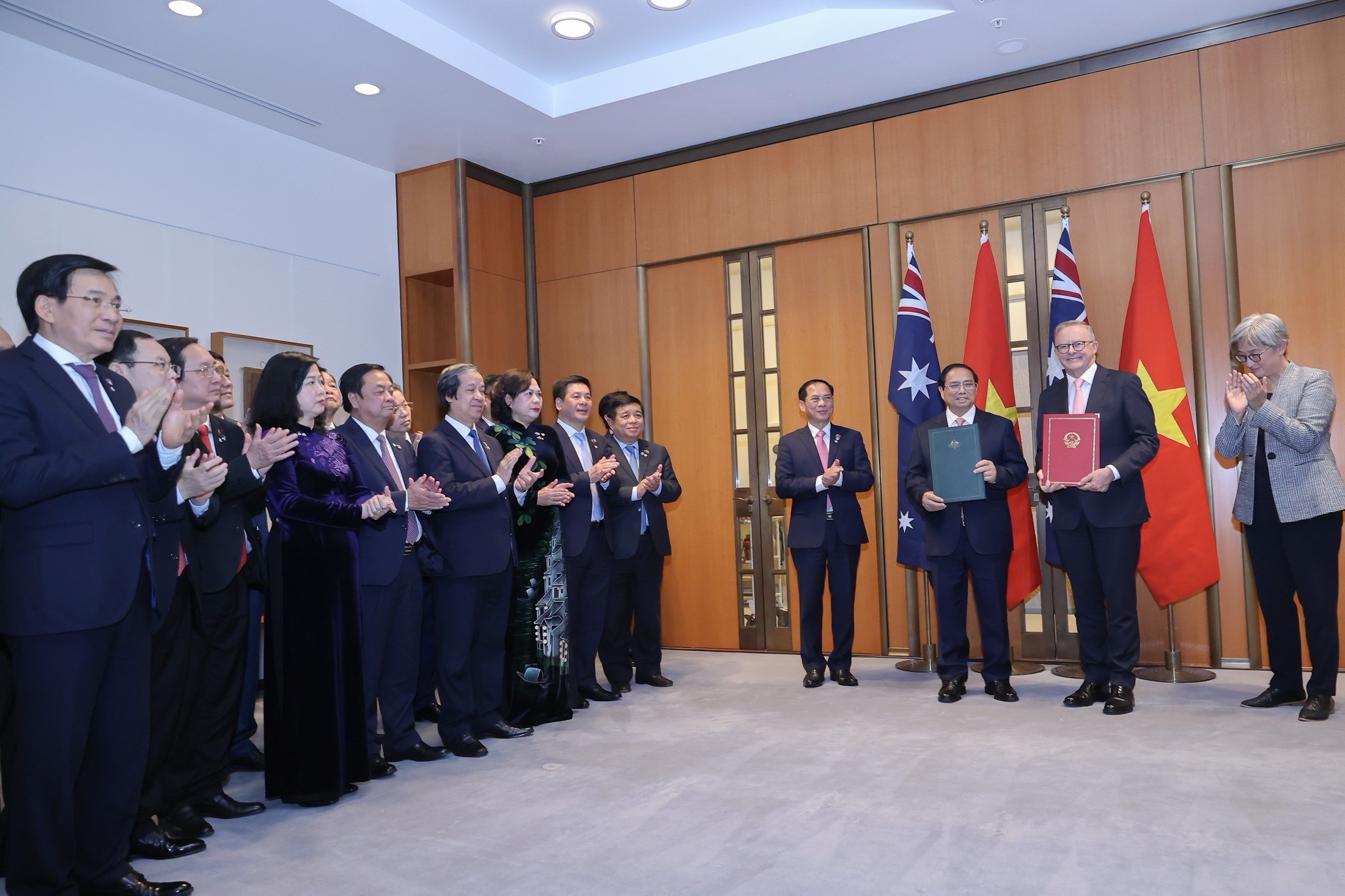 |
Prime Minister Pham Minh Chinh and Australian Prime Minister Anthony Albanese witnessed the signing and exchange of cooperation documents between leaders of ministries, agencies and organizations of the two countries - Photo: VGP/Nhat Bac |
According to Minister Nguyen Hong Dien, Vietnam is currently Australia's 10th largest trading partner, and Australia is also Vietnam's 10th largest trading partner, with total bilateral trade reaching US$13.8 billion in 2023. Australia is an important source of raw materials for several Vietnamese industries and energy sectors, such as coal, ore, minerals, and base metals. The fact that these product groups account for over 40% of Vietnam's total trade turnover with Australia demonstrates the importance of strengthening and developing Vietnam-Australia's energy and mineral relations.
The ministerial-level dialogue mechanism on energy will create new momentum.
The establishment of the Ministerial Dialogue Mechanism on Energy and Minerals is a significant event. Through this mechanism, the Vietnamese Ministry of Industry and Trade; the Australian Department of Industry, Science, Energy and Resources; the Australian Department of Foreign Affairs and Trade; and other relevant agencies will have the opportunity to exchange and implement cooperation strategies aimed at maintaining stable trade in mineral products and raw materials, while simultaneously opening up new investment opportunities, moving towards green and sustainable development in general, and helping Vietnam achieve its Net Zero goal by 2050 as committed at COP26.
 |
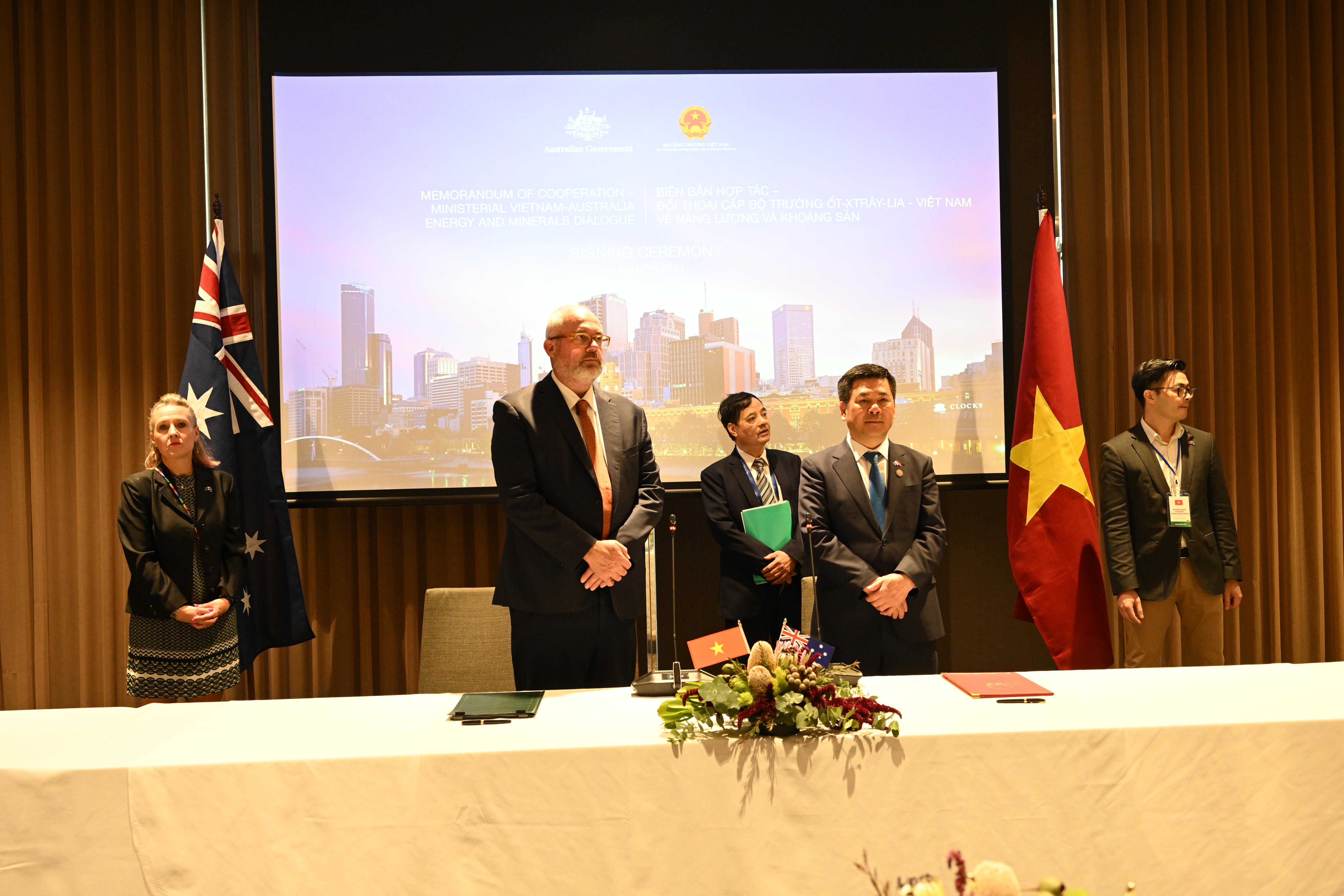 |
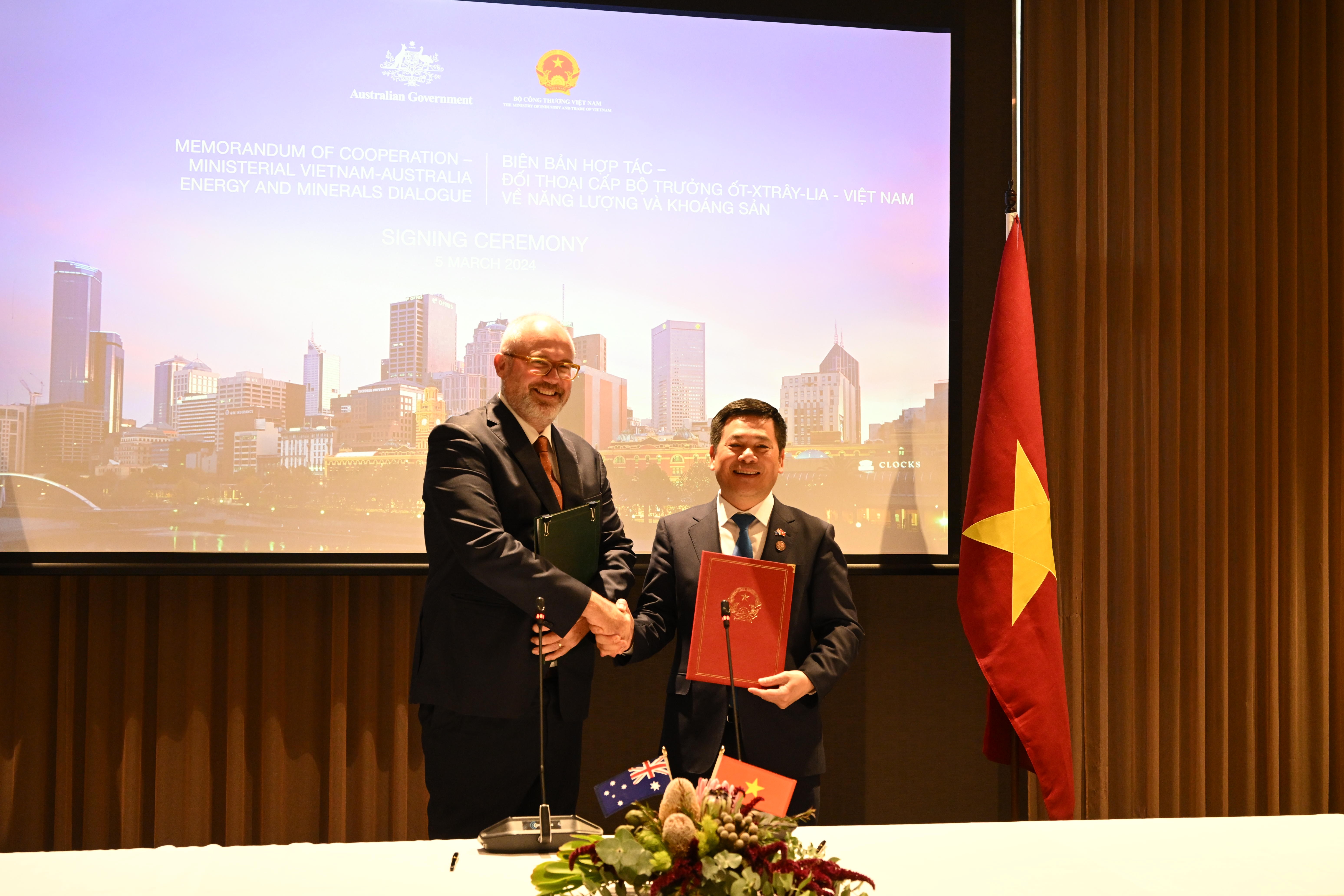
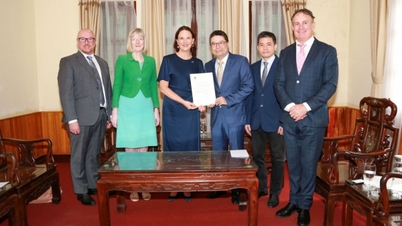
| Minister of Industry and Trade Nguyen Hong Dien and Mr. Tim Ayres, Co-Minister for Trade and Manufacturing, Department of Foreign Affairs and Trade of Australia, signed a Memorandum of Understanding to establish a Ministerial Dialogue mechanism on Energy and Minerals - Photo by Nguyen Minh |
Along with the Memorandum of Understanding establishing the Ministerial Dialogue on Trade signed in June 2023, the two Ministries have promoted the establishment of two crucial dialogue mechanisms in the fields of trade and energy and minerals. Together, these two mechanisms will contribute to promoting cooperation in trade, energy, and minerals between the two countries, developing in line with the recently upgraded Comprehensive Strategic Partnership.
Long-term vision and commemoration of the North-South 500 KV power line.
The significant impact of cooperation in mineral energy, which became a "major avenue," was immediately recognized by experts and observers. Professor Carl Thayer of the Australian Defence College, University of New South Wales, reflected on the historical reality: One month after the Paris Agreement on ending the war and restoring peace in Vietnam was signed, in February 1973, Australia established diplomatic relations with the Democratic Republic of Vietnam... He believes that the Australia-Vietnam relationship was formed in this way, and that this reflects the long-term vision of the Australian Government, and to this day, economic and trade cooperation continues to develop.
Looking back in history, Vietnam and Australia have a long and deep understanding of energy cooperation. Right from the beginning of the Doi Moi (Renovation) period in the early 1990s, Vietnam faced a difficult problem: electricity shortages in the South but surpluses in the North. The then Prime Minister, Comrade Vo Van Kiet, was deeply concerned and assigned the electricity sector the task of finding a way to bring electricity from the North to the South.
According to electricity industry experts, the only way to bring electricity to the South is to build ultra-high voltage power lines, of which there are two types: 400kV or 500kV. Some countries like France and Russia use the 500kV type, but they only build 400-500km, while in Vietnam, to bring electricity to the South, nearly 1,600km must be built, a record unprecedented in the world. Public opinion and scientists are also concerned that it is "impossible" due to technical factors related to electrical wavelengths. There has been much public opposition, even in the National Assembly.
Fortunately, Vietnamese power industry experts received crucial support from Australian experts. Pacific Power International (PPI - an Australian high-voltage power line design consulting company) stepped in and confirmed that the project was feasible if additional voltage compensation substations were built along the North-South line. Later, PPI (Pacific Power International) from New South Wales and SECVI (State Electricity Commission of Victoria International) from Victoria also provided consulting, supervision, operational management training, and safety training, with funding from the Australian Government, contributing significantly to the project's completion.
Currently, Vietnam is constructing the 500 KV circuit 3 transmission line in the reverse direction, "bringing electricity from the South to the North," to address the electricity shortage problem. Simultaneously, it is implementing various solutions to both strongly develop power sources and transition energy in accordance with international commitments. Not long ago, Prime Minister Pham Minh Chinh issued early and far-reaching directives focusing on the decisive and effective implementation of solutions to ensure electricity supply in 2024 and subsequent years.
Minister of Industry and Trade Nguyen Hong Dien, in his role as Deputy Head of the Standing Committee of the State Steering Committee for important national programs, projects, and key projects in the energy sector, has chaired eight briefing meetings (both in person and online) to monitor the progress of the 500 kV circuit 3 transmission line project from Quang Trach (Quang Binh) to Pho Noi (Hung Yen).
Minister Nguyen Hong Dien requested relevant units to demonstrate the highest sense of responsibility, accelerate progress, and bring the project to completion on schedule. The Minister emphasized that the completion of the 500kV circuit 3 transmission line will not only help ensure energy security, especially for the northern region, but also serve to connect the regional and national power grids at the 500 kV voltage level, contributing to making the "backbone" of power transmission increasingly robust.
Cooperation for energy diversification
The 13th National Congress of the Communist Party of Vietnam set the goal of Vietnam becoming a developed, high-income country by 2045. Ensuring national energy security is a fundamental and crucial prerequisite for socio-economic development. Furthermore, Resolution No. 55-NQ/TW of the Politburo dated February 11, 2020, on “Orientation of the National Energy Development Strategy of Vietnam to 2030, with a vision to 2045,” sets the goal of providing sufficient domestic energy by 2030 to meet the objectives of the 10-year socio-economic development strategy (2021-2030). It emphasizes the synchronized, rational, and diversified development of energy types; prioritizing the thorough and efficient exploitation and utilization of renewable energy sources, new energy sources, and clean energy…
In that spirit, cooperation in energy development with countries leading in the modernization of their energy systems is very significant for Vietnam. While Vietnam is only just beginning its steps in developing renewable energy, Australia has already focused on energy sources such as solar and wind since 1997, achieving many successes, including: leading the world in per capita energy generated from solar and wind power, leading to reduced greenhouse gas emissions and lower electricity prices. Australia has also successfully developed and implemented many energy development strategies and programs that Vietnam is currently implementing and should learn from, such as: the National Energy Productivity Plan (NEPP); Australia's National Hydrogen Strategy; Australia's Offshore Renewable Energy Strategy…
With liquefied natural gas (LNG), a crucial energy source that Vietnam is investing in to build thermal power plants by 2023, Australia and the United States are currently the world's leading suppliers. The Albanese government is also seeking to make Australia a renewable energy superpower in the coming years, as evidenced by its AUD 2 billion commitment to the "Hydrogen Start" program, aimed at making the country a leading global hydrogen producer.
In Vietnam, the development of hydrogen energy has been directed by the Politburo in Resolution No. 55-NQ/TW. Notably, on February 7, 2024, the Prime Minister signed Decision No. 165/QD-TTg approving the Strategy for the Development of Hydrogen Energy in Vietnam until 2030, with a vision to 2050. On February 22, Minister of Industry and Trade Nguyen Hong Dien chaired a conference to implement the Hydrogen Energy Strategy immediately after its approval. This is one example demonstrating the determination and potential for cooperation in energy development between the two countries, with a very high probability of realization.
For the Vietnamese Ministry of Industry and Trade, not long ago, an Australian energy delegation visited Vietnam to support businesses from both countries in accessing and exchanging cooperation opportunities in the field of renewable energy development and energy exchange between the two countries. Eight leading energy companies participated in the delegation, including: Ardexa, Entura, Gentrack, Magellan Power, Powerledger, Reclaim Energy, Ultra Power System, Village Energy…
Source



![[Photo] General Secretary and President To Lam presides over a working session with the Central Policy and Strategy Committee on the development of the materials industry.](https://vphoto.vietnam.vn/thumb/1200x675/vietnam/resource/IMAGE/2026/05/21/1779359935432_a3-bnd-3129-1412-jpg.webp)





















































Comment (0)