


Memories make up the city.
Saigon in the early 20th century presented a vibrant tapestry of colors. It was a place of colonial extravagance, yet beneath its glamorous exterior lay the suffering of those living under colonial rule. The Nha Rong Port, a bustling trading hub, witnessed countless separations and the immense hardships of a people deprived of their country. It was in this context that the young Nguyen Tat Thanh, with his fervent patriotism, recognized the powerlessness of contemporary patriotic movements and resolved to find a new path to national salvation. On June 5, 1911, aboard the ship Amiral Latouche Tréville, the young man, harboring a grand vision for a free Vietnam, departed Saigon, taking his first steps on his journey to national salvation. His decision to leave was not only a momentous event in his life but also a historical turning point, marking a shift in Vietnam's national salvation ideology. From this city, a new chapter in the nation's history unfolded, a journey fraught with challenges but illuminated by the light of independence and freedom.
Throughout the long and arduous revolution, Saigon - Gia Dinh City continuously upheld the resilient and indomitable traditions of our nation, achieving many outstanding victories. After the reunification of the country, on July 2, 1976, the Sixth National Assembly decided to rename Saigon - Gia Dinh to Ho Chi Minh City. This historical event not only demonstrates profound gratitude for the immense contributions of President Ho Chi Minh but also serves as a source of pride and a great motivation for the Party Committee, government, and people of the city to continue emulating him, building a city that is increasingly developed, civilized, and modern.
The light of the past illuminates the path to the future.
After the reunification of the country, Ho Chi Minh City faced numerous difficulties: outdated infrastructure, a stagnant economy , and many hardships for its people. However, with a dynamic, creative spirit and a determination to overcome challenges, the city has gradually risen strongly. In nearly half a century bearing President Ho Chi Minh's name, Ho Chi Minh City has made remarkable transformations, affirming its position as a leading economic, cultural, and scientific-technological center of the country.
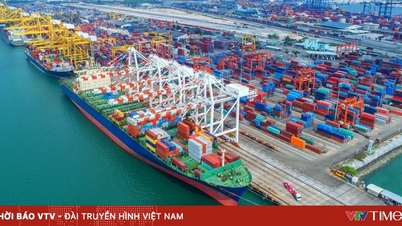
In 1986, Vietnam began its Doi Moi (Renovation) process, and Ho Chi Minh City was a pioneer in implementing market economy policies. By 2015, per capita income reached US$5,538. From a city with an estimated total economic value of over VND 2.5 billion, it now boasts over VND 957,000 billion. Income inequality between population groups has decreased from 10 times in 1992 to 6.6 times in 2014. Today, according to data from the Ho Chi Minh City Statistics Department, the city's Gross Regional Product (GRDP) is estimated to grow by approximately 8.03% in 2024 compared to 2023, exceeding the set target. The city's economic size continues to lead the country, accounting for about 24% of the national GDP. Total social investment in 2024 is estimated at 450 trillion VND, a 12% increase compared to the previous year, demonstrating the city's attractive investment environment and strong development potential. The city's export turnover in 2024 is expected to reach approximately 50 billion USD, further solidifying its role as an important international trade hub.
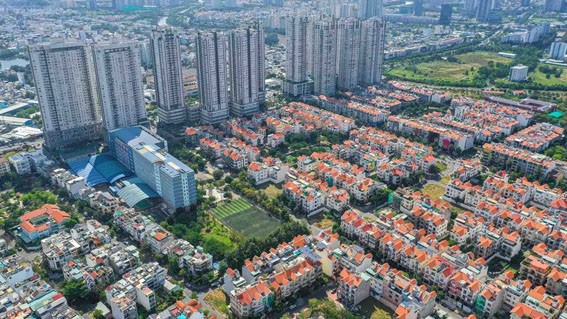 |
Currently, Ho Chi Minh City is on track to become a smart, modern city. (Photo: SE) |
Ho Chi Minh City is also a major cultural center of the country, preserving and promoting many traditional cultural values while absorbing the best of world culture. Historical relics and ancient architectural works such as Nha Rong Wharf, Independence Palace, and the City Theatre are not only symbols of the city but also witnesses to history. In addition, the city's cultural and artistic life is extremely vibrant with many rich activities such as traditional festivals, art performances, exhibitions, and international cultural events. The city is also the birthplace of many talented artists, writers, and poets, contributing to the development of contemporary Vietnamese culture.
Currently, Ho Chi Minh City is on track to become a smart, modern city. Many key transportation infrastructure projects have been and are being implemented, contributing to resolving traffic congestion and connecting areas within and outside the city. Information and communication technology applications are being promoted in urban management, providing online public services, improving the efficiency of government operations and the quality of life for citizens. Modern new urban areas with full amenities are being built, meeting the increasing demand for housing and living space from the people.
A humane city - a city of compassion
But the essence of a city lies not only in impressive economic figures but also in its unique identity. Ho Chi Minh City, named after President Ho Chi Minh, is younger than many other cities across the country. However, worthy of its sacred name, it is truly a city rich in identity. That identity stems from a culturally diverse community that has gathered in this auspicious land, and from the kindness, humanity, and compassion that the city's government and people have cultivated over the years.
Since its establishment, the City Government has always prioritized social welfare, job creation, and sustainable poverty reduction. Ho Chi Minh City was the initiator of the "Poverty Eradication" program in February 1992, aiming to eliminate hunger by April 30, 1995, essentially addressing daily food needs and preventing a return to poverty. By the end of 2020, the city had achieved the goal of "basically eliminating poverty according to the city's poverty standard." Now, the multidimensional poverty rate in the city has decreased to below 1% (data from 2024). The city's healthcare and education systems are continuously invested in and improved to meet the growing needs of the people. The number of schools at all levels, hospitals, and medical centers is constantly increasing, medical equipment is being modernized, and the medical staff and teachers are receiving professional training.
Ho Chi Minh City also stands out for its humanitarian activities, demonstrating a profound spirit of compassion and solidarity. Over the past 20 years, through the "For the Poor" Fund, the city has built more than 30,208 houses and repaired more than 17,327 houses for poor, near-poor, and disadvantaged households, along with providing many "means of livelihood" to help people escape poverty. Particularly during the COVID-19 pandemic, the city implemented many support activities for the people, such as: free rice ATMs, zero-cost supermarkets and stores, charitable meals, and discounted accommodation.
Following the example of the great President Ho Chi Minh, the Party Committee, government, and people of Ho Chi Minh City have always deeply embraced his thoughts on national independence linked with socialism, on the strength of national unity, on the spirit of self-reliance and self-improvement, and on the aspiration for peace and unity. Proud to bear the name of Uncle Ho, the city constantly innovates and creates, maximizing its internal strengths and leveraging external resources to build a city with a dynamically developing economy, an advanced culture rich in national identity, a civilized and compassionate society, and an increasingly improved material and spiritual life for its people.
It is commendable that in this young city, not only veterans and older generations who have experienced the hardships of the times understand the value of peace and freedom, but also young people, the youth of the 90s and 2000s generations, now possess valuable and cherished knowledge about the history of national defense and the contributions of President Ho Chi Minh to the country. Many young people in the city regard President Ho Chi Minh as an "idol," a shining example of morality, of a spirit of continuous learning, and of patriotism to strive to emulate. At the parade held on the occasion of the 50th anniversary of national reunification (April 30, 1975 - April 30, 2025), amidst the sea of people watching the ceremony, many sang from the hearts of young people: "Vietnam, Ho Chi Minh."
From the historic Nha Rong Port, where more than a century ago, an outstanding son of the nation departed to seek a path to national salvation, Ho Chi Minh City today has risen to become a modern, dynamic, and compassionate metropolis. The memory of Uncle Ho lives on in the hearts of every citizen of the city, a great source of spiritual strength, urging succeeding generations to continuously strive to build a city that is increasingly prosperous, beautiful, and civilized, worthy of the name Ho Chi Minh City – the city named after him, the city of aspirations for greater heights.
Source: https://baophapluat.vn/tu-hao-thanh-pho-mang-ten-bac-post548689.html
![[Photo] Prime Minister Pham Minh Chinh receives the Minister of Emergency Situations of the Russian Federation.](https://vphoto.vietnam.vn/thumb/1200x675/vietnam/resource/IMAGE/2026/03/05/1772712011395_ndo_br_thiet-ke-chua-co-ten-76-png.webp)

![[Photo] General Secretary To Lam working with the Central Inspection Committee](https://vphoto.vietnam.vn/thumb/1200x675/vietnam/resource/IMAGE/2026/03/05/1772718314670_a1-bnd-8682-5192-jpg.webp)












































Comment (0)