

In that spirit, back in the 1930s, from a small village on Gieng Island (Cho Moi - An Giang ), my grandfather traveled extensively to find his relatives and trace back to his ancestral roots.
The family tree, as recorded by him, goes back to the first generation, stating that the great-grandfather was "from Quang Ngai or Binh Dinh, but his origins were probably from the Thanh Nghe region, fleeing from seasonal invaders and wandering to this place...". According to this family tree, my grandfather's generation is the 5th, and I am the 7th.
Land reclamation period
Many family and clan genealogies in Southern Vietnam also record their ancestral homeland as Central Vietnam from many generations ago… Historically, migrations from the Five Quang regions to Dong Nai - Gia Dinh occurred not in massive numbers but were relatively regular and continuous.
Spontaneous migrations of people from the same hometown and clan, following the rule of "those who go first lead those who follow," to large-scale migrations organized by the Nguyen dynasty, "people with resources from Quang Nam, Dien Ban, Quang Ngai, and Quy Nhon were recruited to the South to cultivate the land," as recorded by Le Quy Don in Phu Bien Tap Luc...
Following the coast in traditional boats, migrants entered the new land via two main routes: from the Can Gio estuary upstream along the Dong Nai River into the Gia Dinh region. From there, they could follow the rivers and canals to the Mekong Delta, with their first stop being the area of present-day Long An.
Another path is to enter the Tien River estuaries in the My Tho and Ben Tre regions, then settle on the still wild but spacious and flat hills and mounds, painstakingly clearing the land for cultivation, fishing, and shrimp farming... beginning life in this "new land".
Several generations later, due to livelihoods, wars, or other reasons, their descendants moved and dispersed to many places, developing the vast plains.
Therefore, in Southern Vietnam there are many relics reflecting the "land opening" period: village communal houses, temples, shrines, tombs... dedicated to the worship of historical figures, most of whom originated from the Ngũ Quảng region.
To be remembered in history
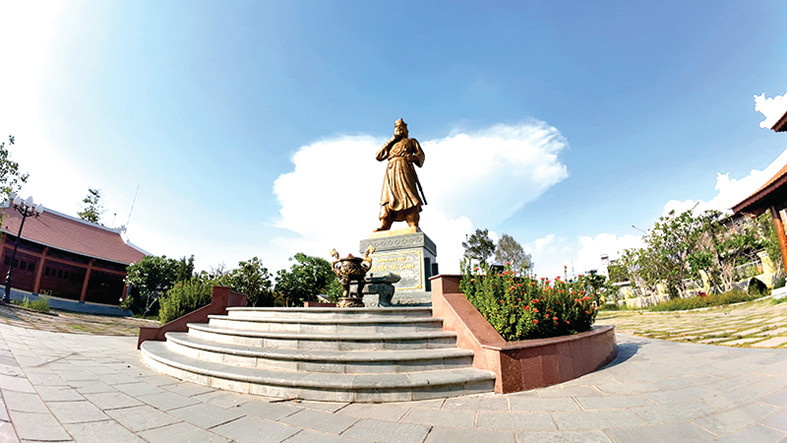
My hometown, An Giang, is home to many historical sites related to the meritorious officials of the Nguyen dynasty from Central Vietnam, most notably the two renowned figures Nguyen Huu Canh and Nguyen Van Thoai.
Lord Nguyen Huu Canh played a major role in reclaiming land, establishing villages, asserting sovereignty, and pacifying the people in the former Gia Dinh region. Therefore, the people of Southern Vietnam built many temples and shrines, respectfully worshipping him as a "Supreme Blessed Deity".
In An Giang, along the Tien River in the past, where his boats used to pass or stop, the locals built many temples and shrines to commemorate his achievements. In Cho Moi district, where he once stopped in 1700, it is called Ong Chuong islet.
Ong Chuong Island has long been associated with the history of the formation and development of Cho Moi district. It is one of the first areas to be settled in An Giang province, opening up opportunities for Vietnamese migrants to explore, settle, establish villages, and eventually assert sovereignty.
Another distinguished figure from a different era of territorial expansion was Thoại Ngọc Hầu.
His name was Nguyen Van Thoai, and he was from Dien Phuoc district, Dien Ban prefecture, Quang Nam province. Thoai Ngoc Hau's military career spanned the battles and hardships of the "Gia Long's flight from the country" period...
After the Nguyen dynasty unified the country, he assumed the position of governor of Vinh Thanh province (1817). There, he carried out land reclamation and settlement, dug canals and built roads, and developed and protected the new land.
In 1818, he obeyed the king's order to dig the Thoại Hà canal connecting the Đông Xuyên stream (Long Xuyên) with the Giá Khê stream (Rạch Giá). King Gia Long allowed his name to be used for the mountain (Thoại Sơn) and the canal (Thoại Hà).
In 1819, Thoại Ngọc Hầu began the construction of the Vĩnh Tế Canal, and after five years, this important canal was completed (in 1824). The canal, connecting Châu Đốc and Hà Tiên, was of significant importance in transportation and national defense.
The canal had a particularly significant impact on agricultural development because it brought freshwater from the Hau River to leach out the acidity from the saline soil, creating favorable conditions for people to reclaim land and establish villages. From there, many more families and clans from Central Vietnam continued the tradition of clearing land and settling in this "new land".
In 1823, he established five villages on the banks of the Vinh Te Canal. In 1825, he had a road built from Chau Doc to Lo Go (the town of Angkor Borei in Cambodia today) - Soc Vinh, connecting the villages and making travel much more convenient for the people. In 1826, he had the Nui Sam - Chau Doc road built, 5km long. Upon completion, he had a stele inscribed with "Chau Doc Tan Lo Kieu Luong" and erected at Nui Sam to commemorate the project.
In 1828, he erected the Vinh Te Mountain stele, commemorating the souls of the militiamen, and at the same time, he had the remains of those who died while digging the Vinh Te canal collected and reburied...
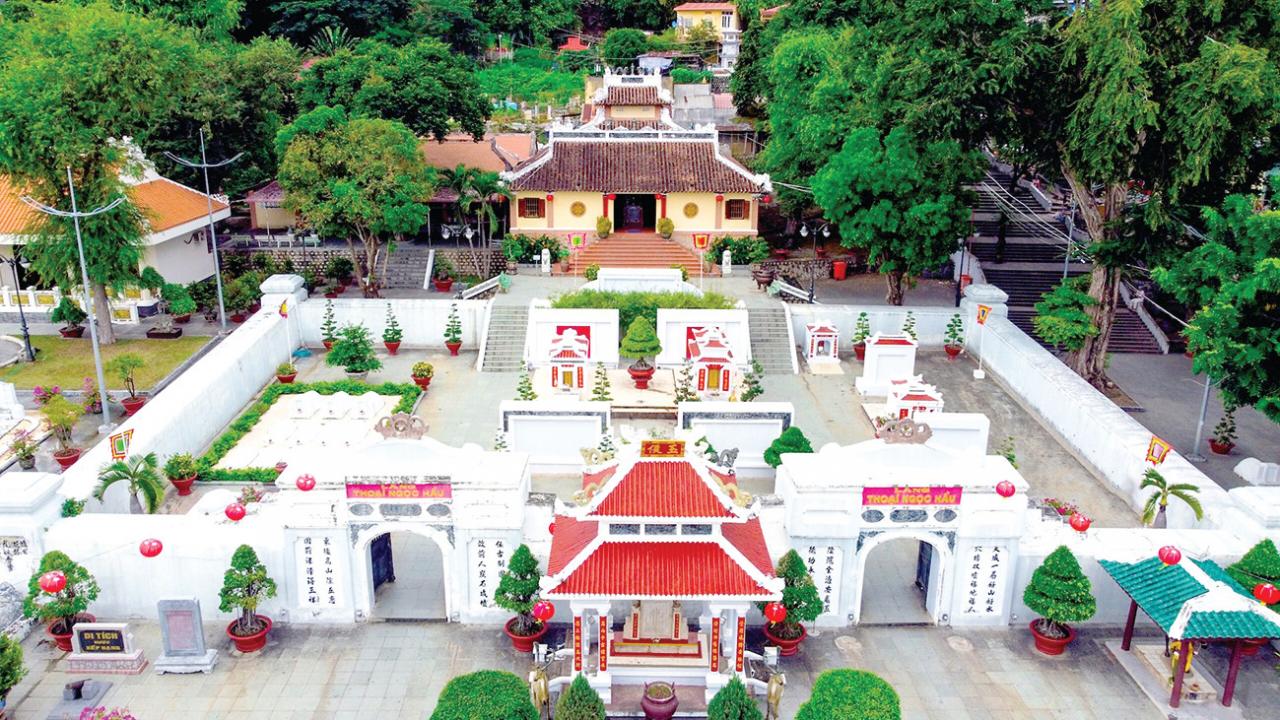
Currently, the tomb of Thoai Ngoc Hau and his two wives at the foot of Mount Sam is a National Historical and Cultural Monument. This area is also an important spiritual and cultural site for the entire Southern region, marking a period of building and consolidating the southwestern borderland of the country.
Culture passed down from the Five Guang provinces.
Looking back at the history of our ancestors' pioneering efforts to reclaim and settle new lands, we realize that migration to new territories involved countless difficulties and challenges.
During the Nguyen dynasty, free migration was frequent, with the principle of "people going first, the government following." Throughout the Nguyen dynasty, migrations became increasingly larger, organized and encouraged by the state, resulting in clear and rapid effectiveness.
In the first half of the 19th century, the Nguyen dynasty organized its administrative apparatus to promptly meet the demands of territorial expansion, organized the army to safeguard the achievements gained, and stabilized the lives of the people in the new lands… This process involved the important role of migrants from the Five Provinces of Quang Nam, the Chinese, and the indigenous inhabitants, who together carried out the reclamation and development of the new lands.
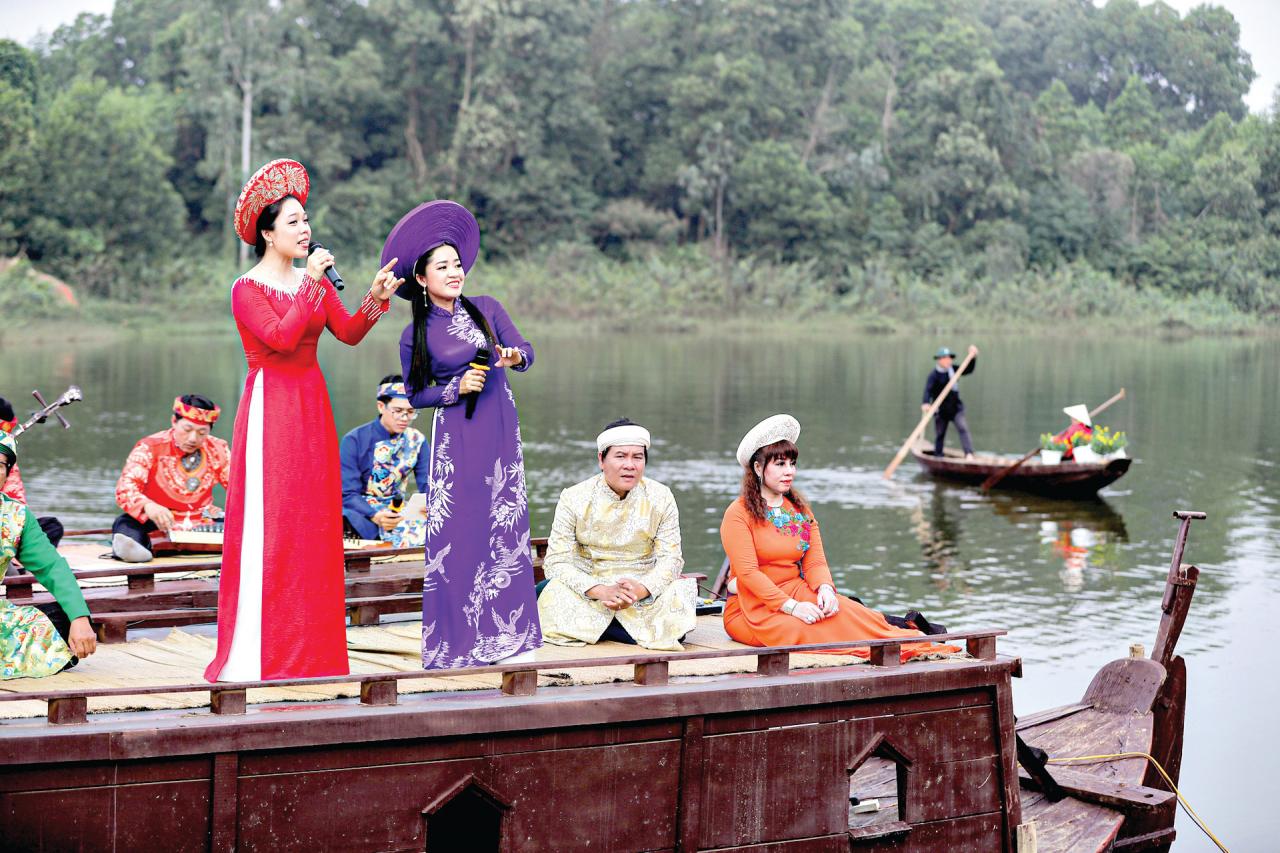
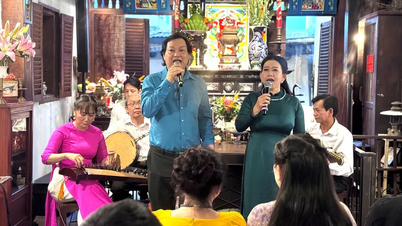
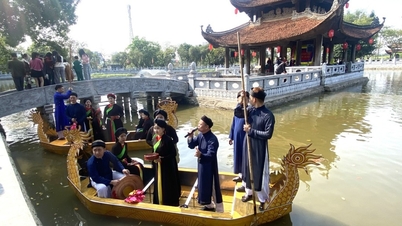
Emerging on the South with tools, weapons, and labor experience, migrants also brought with them a rich culture. Southern Vietnamese folk music (Đờn ca tài tử Nam Bộ) is one of the achievements that inherited and developed the cultural heritage passed down from the Five Provinces of Quang Nam.
From ceremonial music, traditional opera, and other musical activities, Southern Vietnamese folk music (đờn ca tài tử) is characterized by improvisational creativity, with lyrics and melodies reflecting the needs of people in a new socio-cultural space. People in Southern Vietnam have always considered đờn ca tài tử an important part of their spiritual life, indispensable during festivals, anniversaries, weddings, and gatherings.
Listening to traditional Southern Vietnamese folk music in the South, we are immersed in nostalgia for our roots, reflected in each melody, each folk song, and each simple, sincere voice...
And despite centuries of historical changes, there still remain temples and shrines dedicated to meritorious generals who contributed to the development of the Mekong Delta, and communal houses honoring the "old and new" ancestors who helped build each village.
For over 300 years, countless generations have migrated from Central Vietnam. Traveling far and wide, the wisdom of previous generations has always been absorbed, accumulated, and enriched by subsequent generations, contributing to the development of Southern Vietnam and many other regions.
Source: https://baoquangnam.vn/ve-phuong-nam-lang-nghe-3139072.html














![[Photo] Reception to welcome General Secretary and President To Lam and his wife on their State visit to the Philippines](https://vphoto.vietnam.vn/thumb/1200x675/vietnam/resource/IMAGE/2026/06/01/1780295488620_vna-potal-chieu-dai-chao-mung-tong-bi-thu-chu-tich-nuoc-to-lam-va-phu-nhan-tham-cap-nha-nuoc-toi-philippines-8798060-7855-jpg.webp)








































Comment (0)