

According to documents at the Air Defense - Air Force Museum, on December 29, 1967, during a meeting with the Commander and Political Commissar of the Air Defense - Air Force Command, President Ho Chi Minh said:
"...Sooner or later, the American imperialists will bring B-52s to bomb Hanoi , and only admit defeat after they are defeated. We must anticipate this situation as early as possible to have time to think and prepare... In Vietnam, America will certainly lose. But it will only admit defeat after being defeated in the skies over Hanoi..."
From December 18 to 29, 1972, the Hanoi- Haiphong Air Defense Campaign against the strategic air attack, primarily carried out by the US bomber force, was a fierce confrontation.
During the 12 days and nights of fighting against the B-52 "flying fortresses," the Air Defense Missile Troops became the main force, making a decisive contribution to the historic victory.
At the same time, the campaign also highlighted the collective efforts of everyone, from the leadership and command to the agencies and units responsible for providing weapons and missile equipment, logistics, command, and the combat crews of the artillery battalions, who directly contributed to this glorious historical victory.

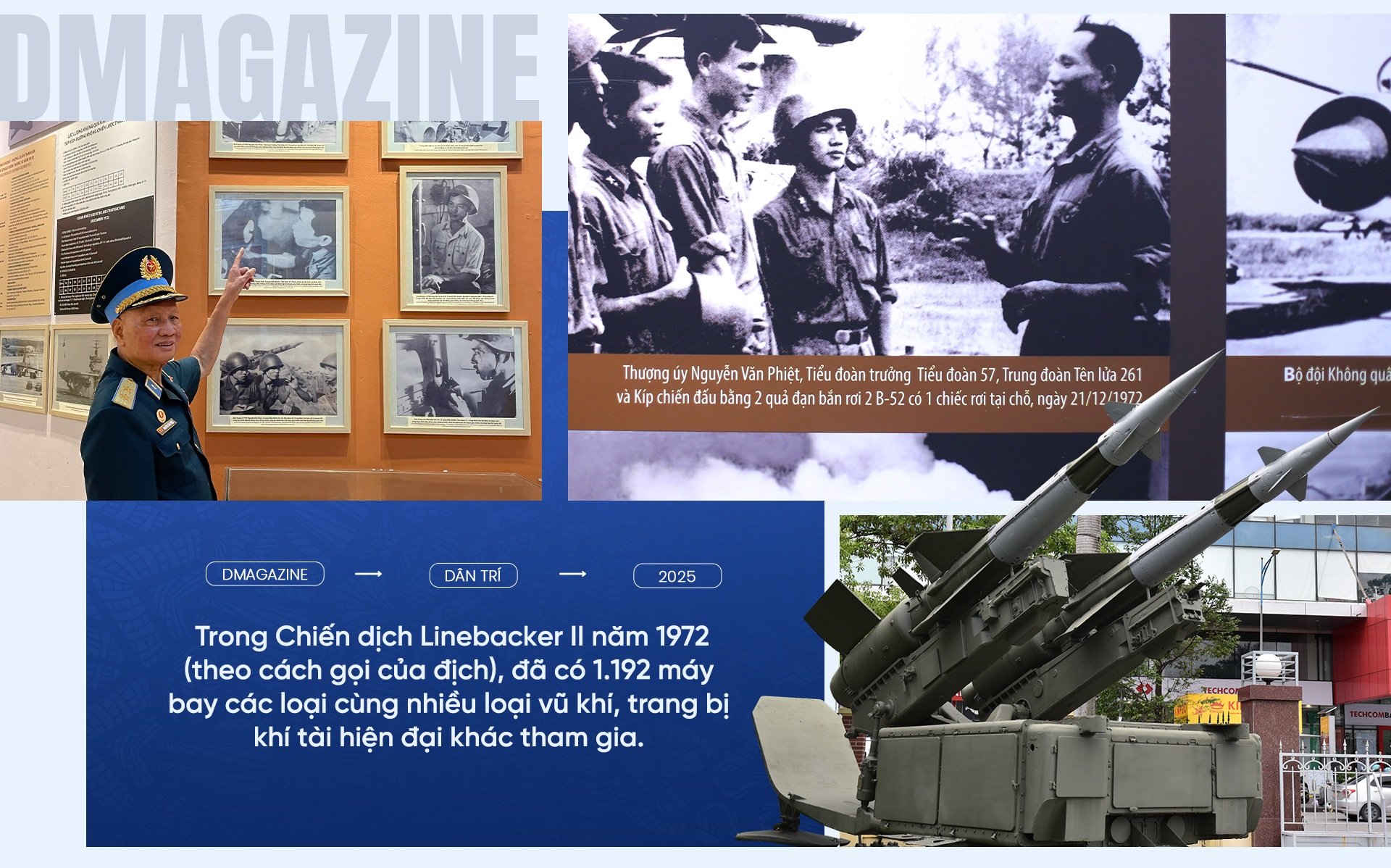
According to the book "Legends of Hanoi - Dien Bien Phu in the Air," during Operation Linebacker II in 1972 (as the enemy called it), 1,192 aircraft of various types, along with many other modern weapons and equipment, participated.
Specifically, 193 B-52s out of a total of 400 (nearly 50% of the total number of B-52s the US had at that time) along with 250 crews.
The Tactical Air Force has 1,077 aircraft of various types out of a total of 3,043 (more than 30% of the total US aircraft).
Six out of the fourteen aircraft carriers participating were aircraft carriers.
This was an unprecedented mobilization of US Air Force forces since World War II for a strategic air strike. The most dangerous and "invincible" weapon in the US Air Force's view for this operation was the B-52.
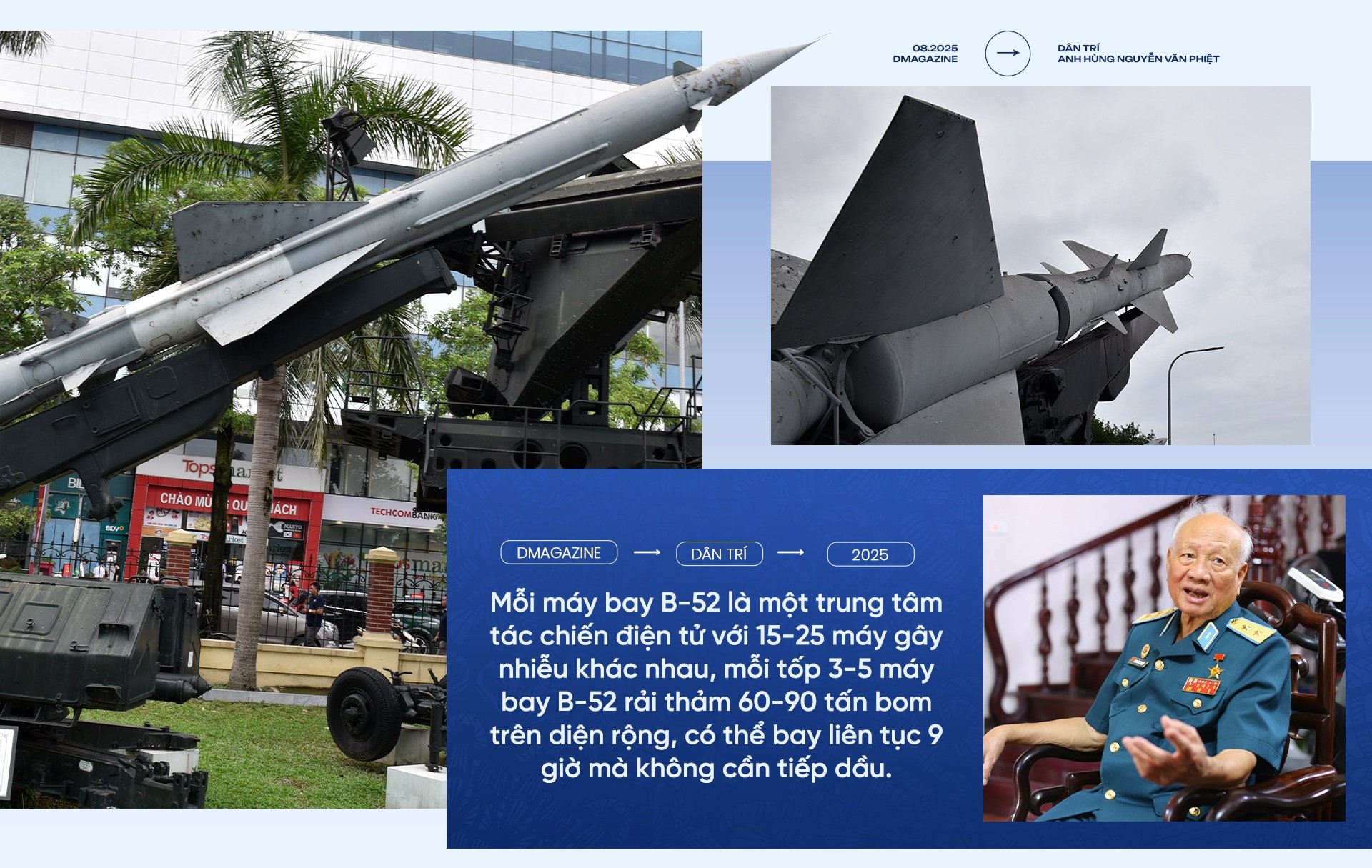
These aircraft operate at an average altitude of approximately 10,000 meters. Each one is an electronic warfare center with 15-25 different jamming devices. Each group of 3-5 B-52s carpet-bombs 60-90 tons of bombs over a wide area, and can fly continuously for 9 hours without refueling.
Previously, during the June 1967 war in the Middle East, some intact SAM-2 systems were studied and analyzed by the US.
After four months of dissecting the SAM-2, the US has produced numerous jamming devices to counter this missile, including a type of jamming that is dangerous to the missile's guidance channels (missile groove jamming).
In the Vietnam War, the US Air Force used upgraded aircraft (including four types: B-52 D, F, G, and H) to increase the number of bombs they could carry and their electronic warfare capabilities.
According to documents at the exhibition "60 Years of the Power of the Vietnamese Fire Dragon" held at the Air Defense - Air Force Museum, the B-52 long-range strategic bomber is 48.07m long, 12.39m high, and 56.42m wide. Its maximum speed is 1,050km/h, its highest ceiling is 16,700m, its maximum range is 18,000km, and its operational radius is 4,000m.
A B-52 can carry 18,000-30,000 kg of bombs, and is also equipped with a 12.7 mm four-barreled gun, with 20 Sram missiles in the tail.
A U.S. military leader once stated: "The enemy has no way to defend itself, and no living creature can survive the horrific bombing raids of the seemingly invincible B-52s."

Faced with the overwhelming power of the US Air Force, the Vietnamese missile troops overcame countless hardships, maneuvered and fought across complex terrains, and coordinated closely with air defense forces.
The S-75 Dvina (SAM-2) missile, researched and designed by the former Soviet Union starting in 1953, quickly became a key weapon, considered a direct countermeasure to the B-52 bomber.
On March 27, 1965, the Soviet Union signed a military aid agreement, transferring 54 SAM-2 missiles and all accompanying equipment to Vietnam.
Soon after, our missile troops received intensive training and mastered this modern weapon, laying the foundation for the resounding victories that followed.
Given the technological prowess and sophisticated electronic jamming systems of the US Air Force, detecting and destroying B-52s over Hanoi was a huge challenge.
Air defense missile troops fight not only with weapons, but also with intelligence, courage, and bold innovations right on the battlefield.
It was precisely in the context of ammunition shortages, jamming, and facing an enemy considered "invincible," that our combat crews devised many unique tactics, transforming the anti-aircraft fire network into a terror for any aircraft that trespassed.
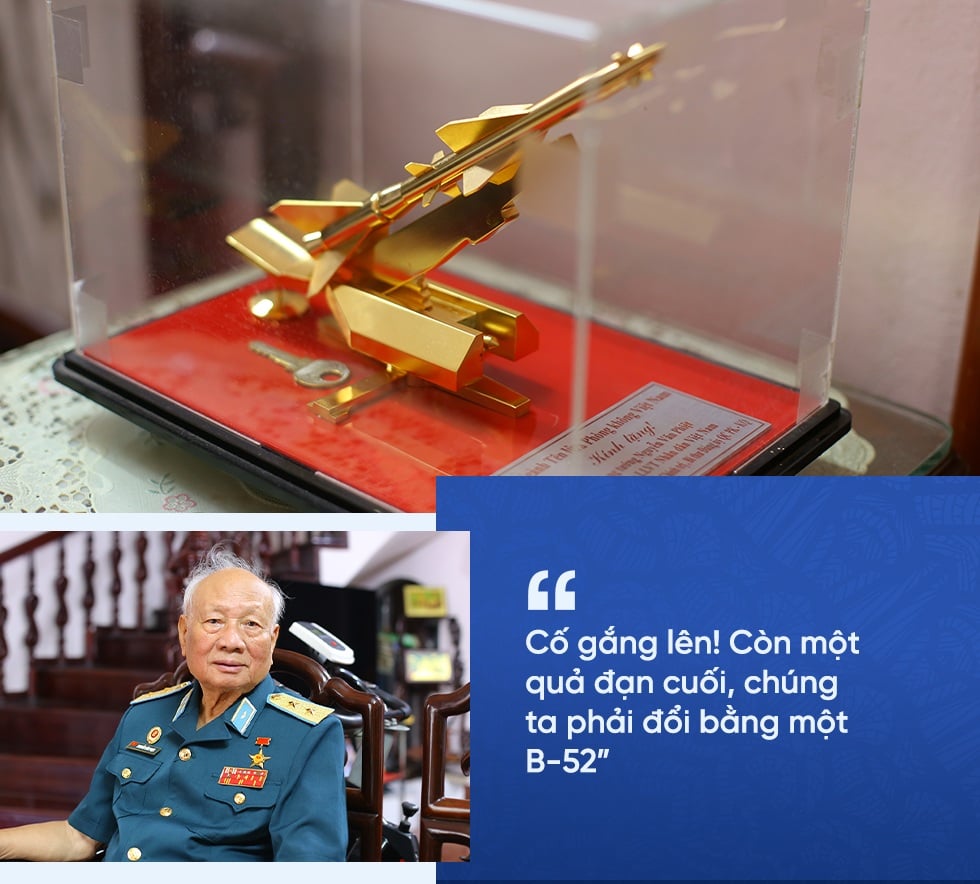
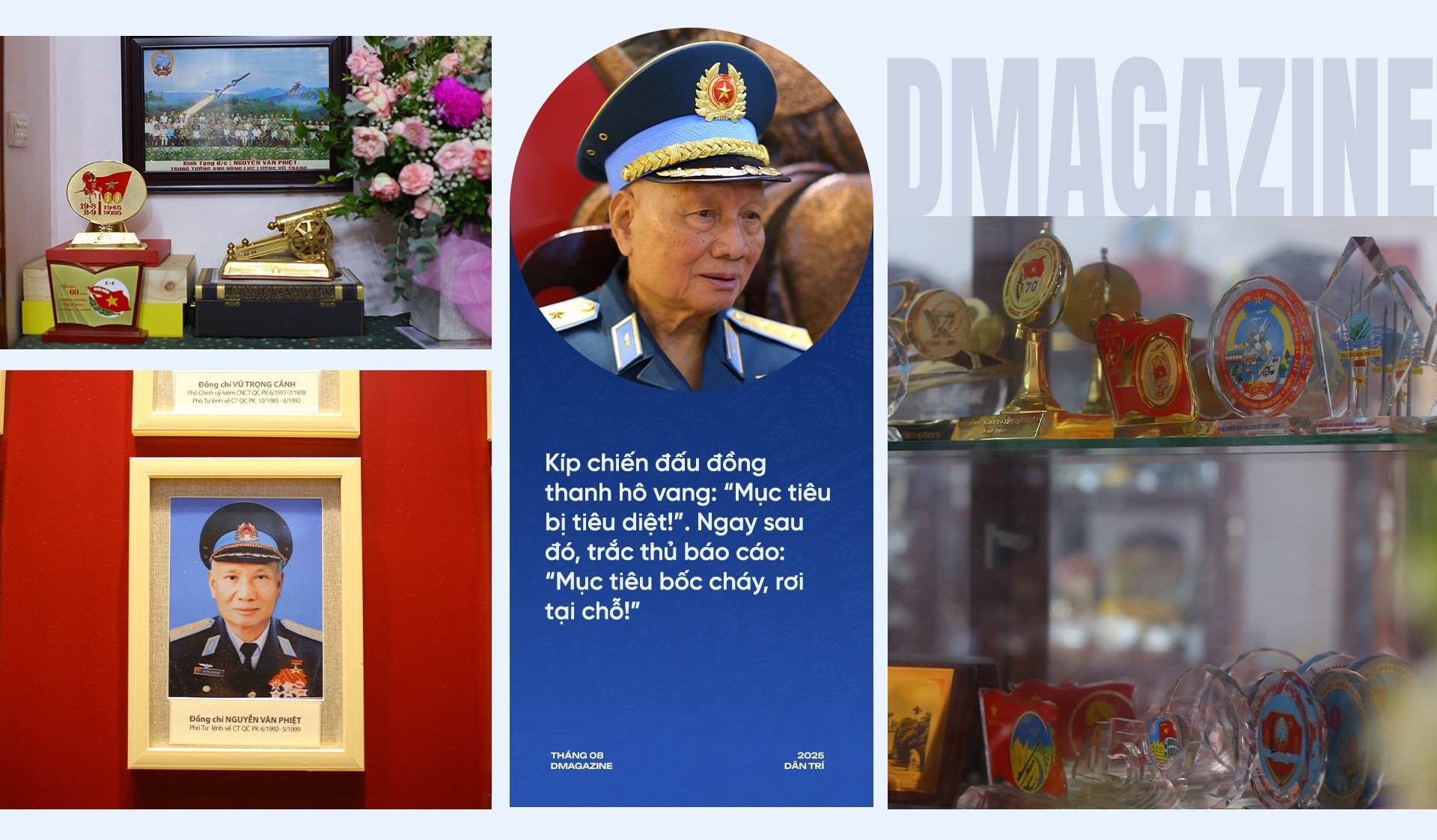
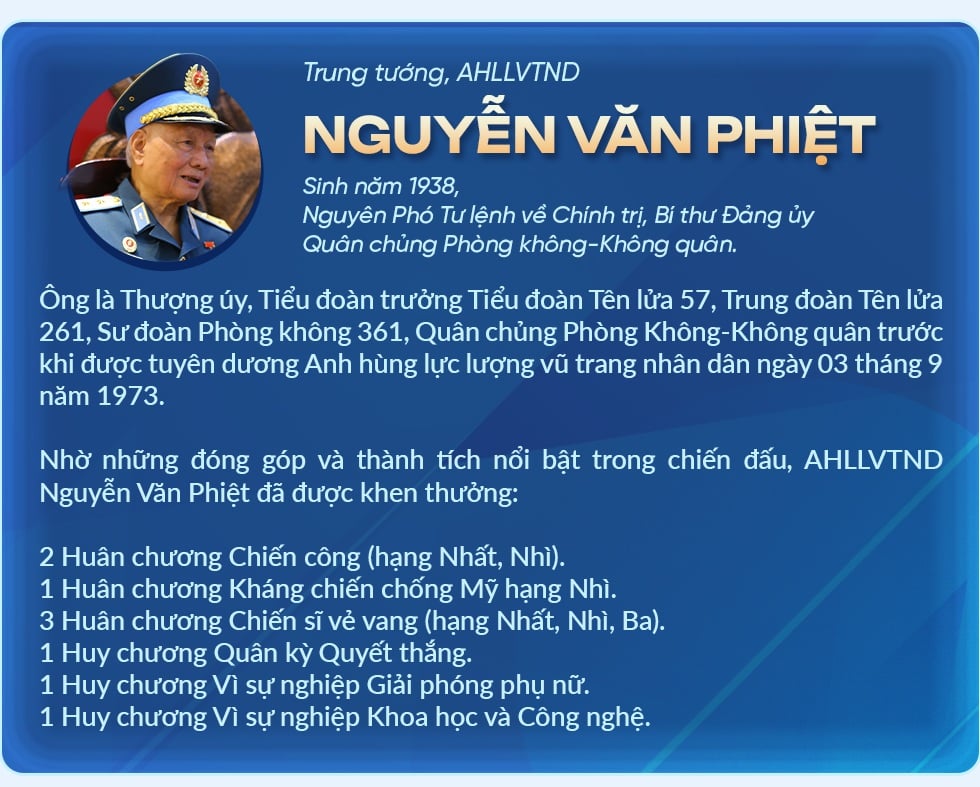
Looking at the artifacts at the Air Defense - Air Force Museum, Lieutenant General Nguyen Van Phiệt (Battalion commander who led the combat team that shot down 4 B-52s during the Dien Bien Phu Air Campaign) still vividly remembers the moment the flying fortress exploded in the sky over the capital.
Speaking to a reporter from Dan Tri newspaper , the 87-year-old general described the situation: "The interference completely blocked the radar, not only from the B-52s but also from the EB-66s, F-4s… (the accompanying aircraft), and amplified by interference from outside our country's borders."
Without a specific strategy, the Air Defense and Air Force Command finds it very difficult to accurately identify the type of aircraft they are looking for on radar.
Regarding how to control the SAM-2 missile, he said there are two main methods.
Firstly, there was the "half-angle advance" tactic, which involved rapid transmission; upon encountering the B-52's jamming range, the combat crew would only monitor for no more than 10 seconds, immediately switch off the radar, and issue the order to launch the missiles.
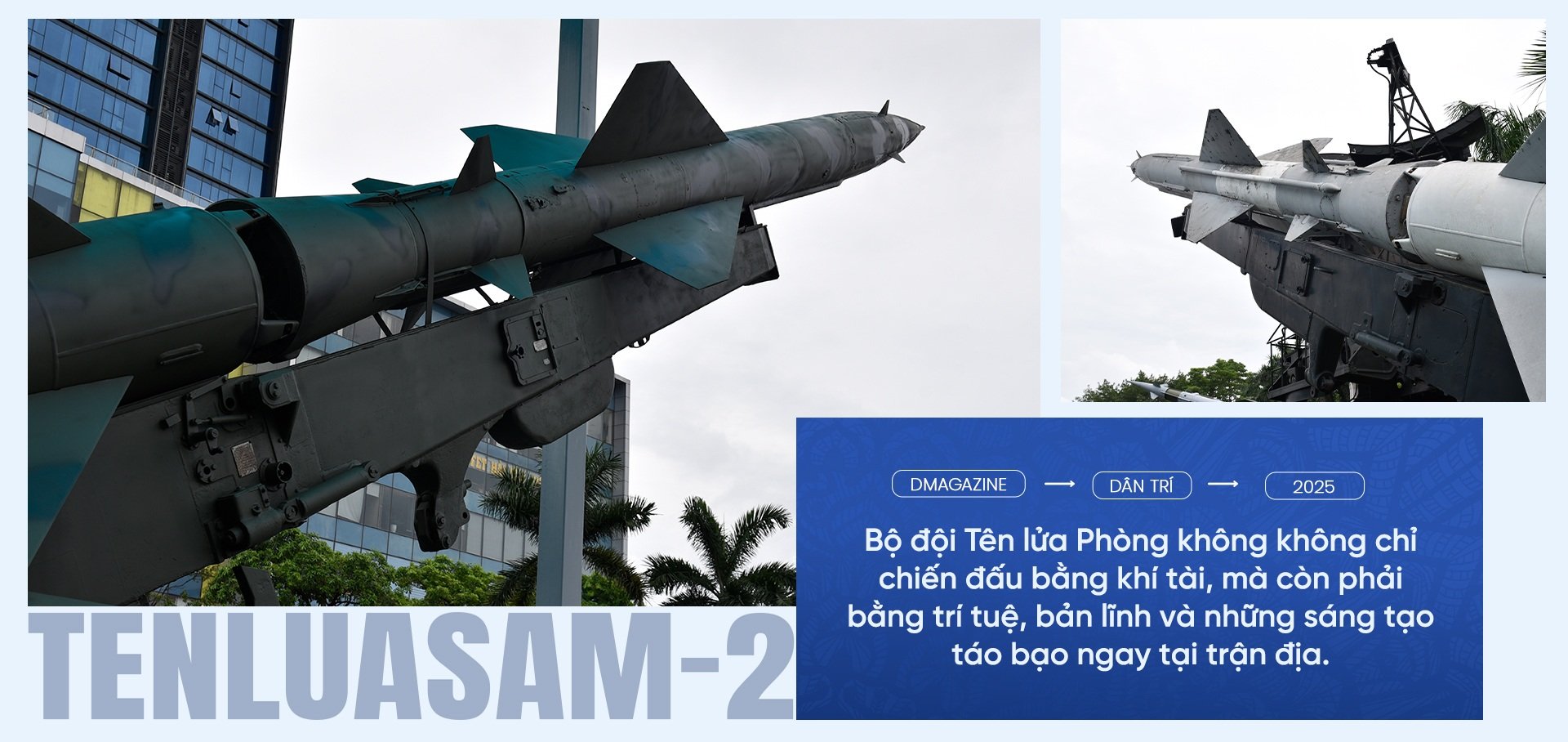
Secondly, there is the "three-point optical guidance" method, in which the operator on the vehicle closely tracks the target, coordinating with guidance from optical operators to achieve precise orientation.
"When a jamming band is detected on the radar, if the target aircraft has not yet been identified, the crew will flip a pre-made special switch."
At that moment, the missile was still on its launch pad, but the guidance signal had appeared on the enemy's radar screen. The B-52 escort planes thought they were about to be shot down, so they immediately dispersed.
"The B-52, following orders, maintained a straight flight path, so a very flat and smooth interference pattern appeared on the radar," the Lieutenant General said.
“Once the B-52 was identified, it was crucial to maintain a constant, close-range pursuit, absolutely not losing sight of it. Success or failure at this point depended greatly on the piloting skills and courage of the combat crew of the Air Defense Missile Corps,” Lieutenant General Phiệt analyzed, alongside a photograph capturing his glorious moment.
Standing before a photograph titled: “Lieutenant Nguyen Van Phiệt, Battalion Commander of Battalion 57, 261st Missile Regiment, and his crew using two missiles to shoot down a B-52, one of which crashed on the spot, December 21, 1972,” displayed at the Air Defense - Air Force Museum, he said: “At that time, I was reviewing the combat crew's performance in the recent battle. Looking back now, some comrades have sacrificed their lives, while others are still alive in Hanoi.”

On the night of December 20, 1972, a sudden ammunition shortage struck the 57th Battalion, commanded by Battalion Commander Nguyen Van Phiệt, as well as many other missile battalions on the Hanoi front.
It wasn't until the third phase of the night's fighting that the 57th Battalion received orders to sortie. At 5:00 AM, the alert from the Thành Loa Missile Regiment's command post was transmitted to the battle positions. Just five minutes later, the entire battalion was on high alert.
On the 9x9 target board, the target dots gradually appeared. Checking the ammunition depot, the entire battalion had only three missiles left on the launchers, while the resupply vehicles had not yet returned. In this critical situation, Battalion Commander Nguyen Van Phiệt made a firm resolution: each missile had to shoot down one B-52.
Following the target trajectory, group number 318 sped into Hanoi airspace. Signals were clearly visible on both radar station 1 and the auxiliary radar station, confirming it was definitely a B-52; no tracking tactics were needed.
The battalion commander ordered the two radar stations to select a interference band for comparison, determining the nature of the interference suppression. The radar crew quickly pinpointed the correct interference band of the B-52, tracking it continuously, ready to await orders.
When the target was within range, Battalion Commander Nguyen Van Phiệt issued a stern order:
"Launch!"
Immediately, control officer Nguyen Dinh Kien pressed the firing button.
But when the button was pressed, the missile didn't leave the launch pad. The battalion commander ordered the launch of the second missile, and upon leaving the pad, the oscilloscope clearly showed the missile's signal reaching a range of 28km.
The bullet exploded!
The entire crew shouted in unison: "Explode! Destroy the target!" Immediately, the operator reported: "The target is on fire in the southwest direction" (it was 5:09 AM).
Before they could even hold a debriefing session after the first battle, the voice of the mapmaker rang out again: "B-52, distance 45 km!"
Immediately, Battalion Commander Nguyen Van Phiệt ordered the two radar stations to select the interference band and compare it. In just one minute, the combat crew had locked onto the target at a distance of 30 km. In that tense moment, Lieutenant Nguyen Van Phiệt encouraged his comrades:
"Keep going! We have one last round, we have to trade it for a B-52."
The broadcast command was given, and the target was clearly visible at a distance of 29km.
The command was firm: "Fire!"
The final projectile hurtled straight into the pitch-black void; on the oscilloscope screen, two signals approached each other, then suddenly flashed brightly. A violent explosion ripped through the sky.
The crew shouted in unison: "Target destroyed!" Immediately afterward, the radar operator reported: "Target bursts into flames and crashes on the spot!"
The 532nd B-52 was hit by gunfire and crashed in the Tha Market area, near Doi Mountain, at 5:19 AM on December 21, 1972. In just 10 minutes, from 5:09 AM to 5:19 AM, Battalion 57, commanded by Battalion Commander Nguyen Van Phiệt, used two missiles to shoot down two giant bombers in quick succession.

On the morning of December 21, 1972, General Vo Nguyen Giap personally telephoned the 361st Air Defense Division.
“The whole country is looking towards Hanoi! The whole world is looking towards Hanoi! Every hour, every minute, the Politburo and the Central Military Commission are monitoring Hanoi's fighting. The fate of the Fatherland rests in the hands of the air defense soldiers protecting Hanoi,” the General said.
According to information from the Air Defense - Air Force Museum, during the December 1972 air defense campaign, the Air Defense - Air Force Command shot down 53 out of hundreds of American aircraft of various types.
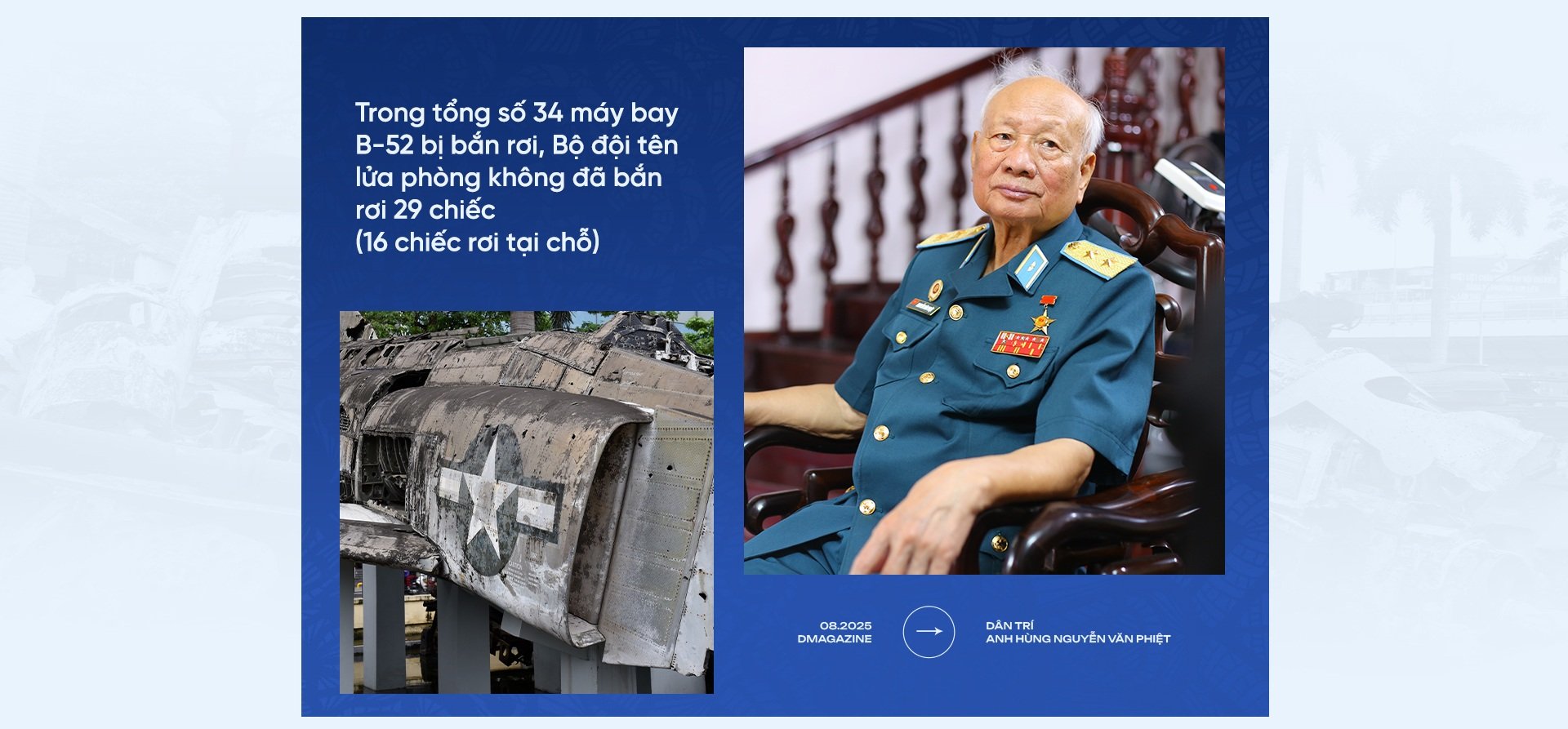
The core force in the 12-day and 12-night confrontation with the US strategic air force (December 1972) was the Missile troops, who shot down 29 out of 34 B-52 aircraft (16 crashed on the spot).
First Lieutenant Nguyen Van Phiệt, Battalion Commander of Battalion 57, 261st Missile Regiment, commanded the combat team that shot down 4 B-52 aircraft in the operation (2 crashed on the spot).
Upon hearing the news from the battlefield that "the Paris Agreement had been signed," Lieutenant General Nguyen Van Phiệt said he was overjoyed.
"I am just a small individual within the collective. The most important thing is to always think of the collective; brothers and sisters must be united, units and ethnic groups must be united. It is this strength of unity that brought about this glorious victory," he expressed.
Throughout the fierce years of the war, he spent three Tet holidays away from home. At the end of the "Dien Bien Phu in the Air" campaign, this commanding soldier proudly returned to his hometown of Hung Yen with his glorious victory.
In the midst of fierce and arduous combat, the revolutionary heroism of the Air Defense Missile troops was displayed to the highest degree.
Many intelligent and creative combat teams have achieved outstanding accomplishments, and numerous examples of tenacious fighting and courageous sacrifice by missile operators and officers have illuminated the noble qualities of Uncle Ho's soldiers in the cause of protecting the sacred skies of the Fatherland.
Content: Thanh Binh
Photos: Huyen Mai, Thanh Binh
Source: https://dantri.com.vn/khoa-hoc/anh-hung-nguyen-van-phiet-va-ky-uc-10-phut-ban-roi-2-b-52-tren-bau-troi-ha-noi-20250825100908538.htm



















































































Comment (0)