

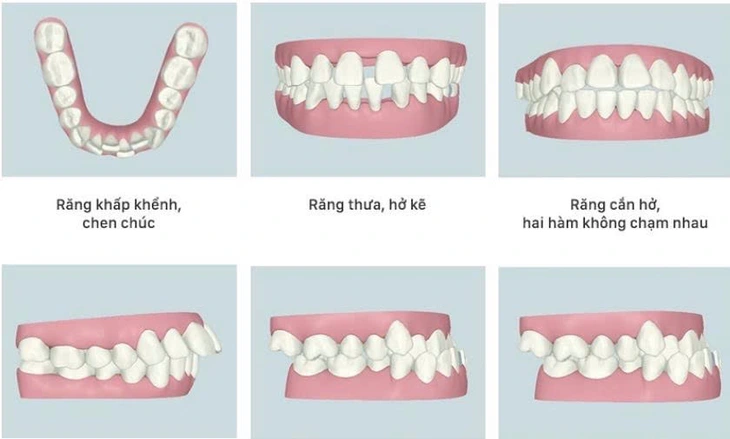
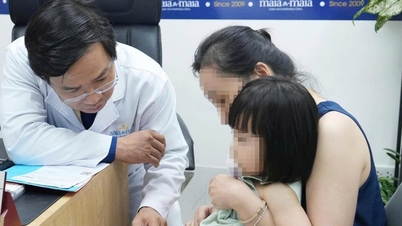
Certain types of teeth should be straightened with braces to achieve a beautiful smile and ensure proper chewing function, but dentists warn against following their doctor's instructions to prevent cavities during the treatment process - Illustration.
Despite increasingly modern orthodontic techniques and continuous improvements in materials and appliances, the rate of tooth decay and early-stage carious lesions during orthodontic treatment remains high.
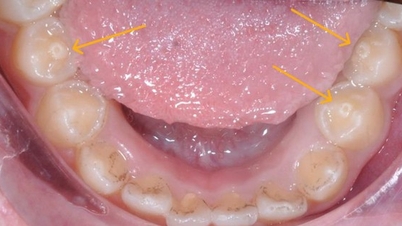
Many studies show that the incidence of white spot lesions around braces ranges from 40-60%, especially common in fixed orthodontic treatment. These lesions usually appear early, just a few months after treatment, often after 6 months of starting treatment, but are difficult to detect with the naked eye without a thorough examination or the use of diagnostic tools.
Clinically, in many cases, white spots are only discovered after braces are removed, affecting aesthetics and reducing the value of orthodontic treatment results.
In many cases, orthodontic results are good, with a good bite and straight teeth, but the enamel loses demineralization, resulting in white spots, also known as early-stage tooth decay. Besides tooth decay, gingivitis is also a common condition in patients undergoing orthodontic treatment.
Preventing tooth decay during orthodontic treatment.
Tooth decay in orthodontic patients is not an inevitable consequence of orthodontic appliances, but rather a result of improper oral hygiene and failure to change bad habits that increase the risk of tooth decay, such as snacking and consuming sugary drinks.
- Mechanical causes
Brackets, archwires, elastic bands... create many areas where plaque accumulates, especially at the neck of the teeth and around the brackets. These areas are very difficult to clean with conventional hygiene methods, especially in children and uncooperative patients.
For clear aligners, although they are easy to remove and reinsert, if patients wear them while continuously eating or drinking sugary foods and beverages, the enclosed environment under the aligners can become a favorable factor for tooth decay.
- Biological causes
When wearing orthodontic appliances, the oral environment and microbiome change. Many studies have shown an increase in acid-producing bacteria such as Streptococcus mutans and Lactobacillus during fixed orthodontic treatment.
Simultaneously, the pH of plaque decreases, and the demineralization of tooth enamel occurs more rapidly, leading to the formation of early-stage caries around the braces.
- Causes of behavior
This is the most important but often overlooked cause. Many patients don't brush their teeth properly or for long enough. Other contributing factors include not using dental floss or interdental brushes, frequent snacking throughout the day, consuming sugary and acidic drinks, or not following their dentist's preventative care instructions.
In children, this behavior is also highly dependent on family supervision and cooperation. Therefore, dental caries in orthodontics is not just a matter of orthodontic technique, but also a matter of managing behavior and lifestyle habits.
- How to prevent tooth decay in orthodontic patients
Preventive measures against tooth decay during orthodontic treatment should be proactive, continuous, and individualized. Treatment should be based on the risk of tooth decay, rather than applying a single procedure to all patients.
Prior to orthodontic treatment, a systematic assessment of the risk of tooth decay is necessary. Thorough treatment of cavities, enamel damage, and gingivitis is required. Oral hygiene re-education for patients and their families is also essential. Orthodontic treatment should only begin when the patient knows how to effectively control plaque buildup.
Skipping this stage is a common mistake that increases the risk of cavities throughout the orthodontic treatment process.
During orthodontic treatment, a combination of measures is needed, such as plaque control: instructing patients on proper brushing techniques for orthodontics, using specialized toothbrushes, interdental brushes, dental floss, and water flossers; and using plaque dyes to help patients understand "what constitutes clean teeth."
In addition, remineralization of tooth enamel can be achieved by using fluoride toothpaste as recommended by the dentist, applying fluoride varnish periodically; and combining remineralizing materials in patients at medium and high risk.
It's important to note that when patients wear orthodontic appliances, the risk of tooth decay is at least moderate. It's especially crucial to monitor and detect early signs of tooth decay through regular check-ups based on the level of risk, and to identify white spots early so that timely intervention can be provided.
Dentists also need them. Advise on a low-sugar and low-acid diet, remind patients not to eat or drink while wearing orthodontic aligners, and increase parental involvement in monitoring oral hygiene.
After removing the orthodontic appliance, continued monitoring, preventive measures, and early treatment of any remaining enamel damage are necessary to ensure long-term aesthetic and oral health results.
Preventive measures to maintain healthy teeth.
Tooth decay during orthodontic treatment is not an inevitable consequence of orthodontic treatment, but mainly a result of not properly assessing and controlling risk factors for tooth decay. Among these, proper oral hygiene as instructed by the dentist is a key factor.
Successful orthodontic treatment is judged not only by the alignment of teeth or an ideal bite, but also by the presence of healthy enamel and stable periodontal tissue.
Source: https://tuoitre.vn/bac-si-canh-bao-sau-rang-gia-tang-o-nguoi-nieng-rang-2025121616304354.htm
![[Photo] Prime Minister Pham Minh Chinh receives the Governor of Tochigi Province (Japan)](/_next/image?url=https%3A%2F%2Fvphoto.vietnam.vn%2Fthumb%2F1200x675%2Fvietnam%2Fresource%2FIMAGE%2F2025%2F12%2F16%2F1765892133176_dsc-8082-6425-jpg.webp&w=3840&q=75)
![[Image] Leaked images ahead of the 2025 Community Action Awards gala.](/_next/image?url=https%3A%2F%2Fvphoto.vietnam.vn%2Fthumb%2F1200x675%2Fvietnam%2Fresource%2FIMAGE%2F2025%2F12%2F16%2F1765882828720_ndo_br_thiet-ke-chua-co-ten-45-png.webp&w=3840&q=75)
![[Live] 2025 Community Action Awards Gala](/_next/image?url=https%3A%2F%2Fvphoto.vietnam.vn%2Fthumb%2F1200x675%2Fvietnam%2Fresource%2FIMAGE%2F2025%2F12%2F16%2F1765899631650_ndo_tr_z7334013144784-9f9fe10a6d63584c85aff40f2957c250-jpg.webp&w=3840&q=75)

![[Photo] Prime Minister Pham Minh Chinh receives Lao Minister of Education and Sports Thongsalith Mangnormek](/_next/image?url=https%3A%2F%2Fvphoto.vietnam.vn%2Fthumb%2F1200x675%2Fvietnam%2Fresource%2FIMAGE%2F2025%2F12%2F16%2F1765876834721_dsc-7519-jpg.webp&w=3840&q=75)




























































































Comment (0)