

The cold, dry monsoon winds in the North are always a concern for many poultry farmers regarding disease outbreaks in their flocks. Harsh weather not only affects growth but also creates conditions for dangerous pathogens such as avian influenza and Newcastle disease to spread, potentially causing significant losses.
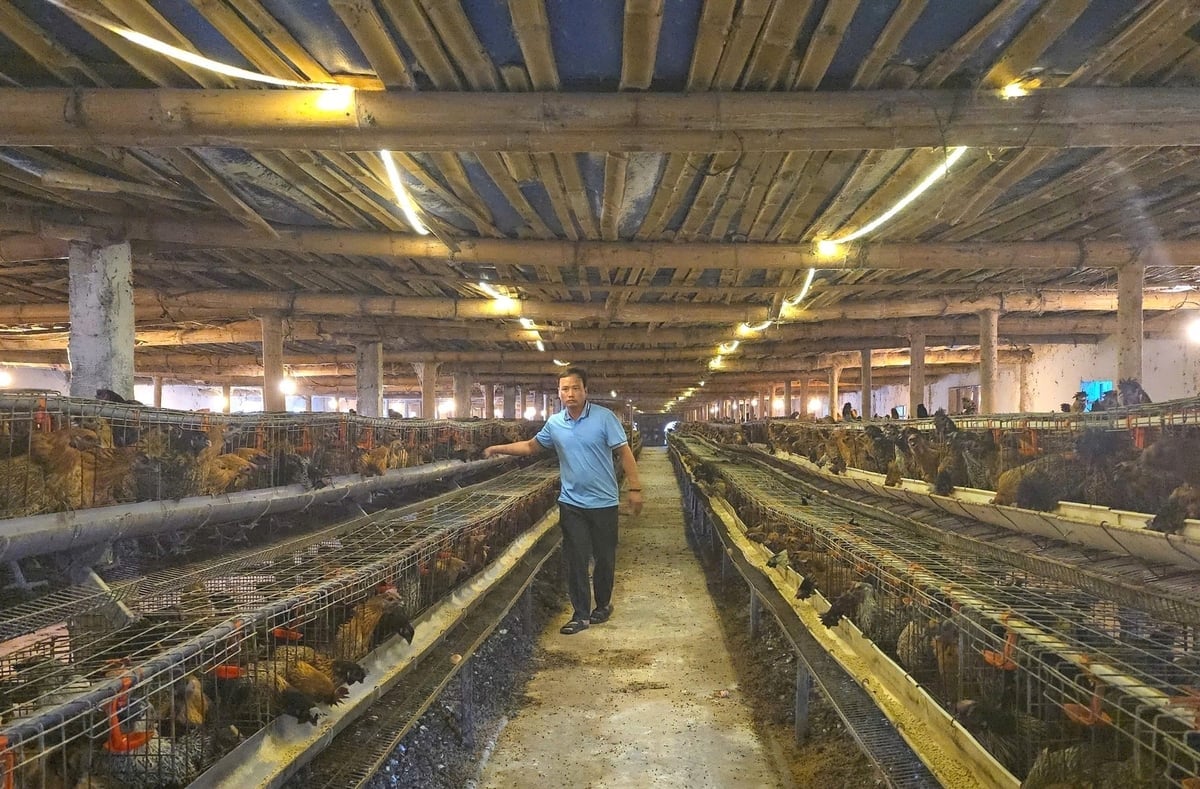
A large-scale farm raising black chickens for egg production, with strict disease prevention procedures, owned by Mr. Le Ngoc Khiem in Tan Minh commune, Hai Phong city. Photo: Dinh Muoi.
After numerous trials and tribulations, Mr. Le Ngoc Khiem - Director of Le Ngoc Livestock Company (Tan Minh commune, Hai Phong city), who has many years of experience with a farm of nearly 10,000 egg-laying black chickens, had to independently research and develop a comprehensive and scientific disease prevention process to help his flock of chickens stay healthy and maintain stable productivity.
"Given the unique climate of Northern Vietnam, winter is the most worrying period for disease outbreaks, especially avian influenza. To ensure the chickens have sufficient resistance, vaccination must be carried out from the end of autumn," Khiem shared.
According to Mr. Khiem, a common mistake many people make is waiting until the weather turns very cold before starting to worry about epidemic prevention. However, the most effective measure is proactive disease prevention and taking a proactive approach.
He explained that this staggered vaccination schedule gives the chickens enough time for their bodies to produce strong antibodies. When winter arrives, they will already have a solid immune "shield" to overcome the harsh weather and highest disease pressure.
To succeed, Mr. Khiem applies a year-round disease prevention strategy, adapting to the weather characteristics of each season: In spring, focus on combating humidity; in summer, prioritize heat control and ensuring backup power; in autumn, maintain hygiene and prepare for vaccinations; and in winter, emphasize keeping the livestock warm and sheltered.
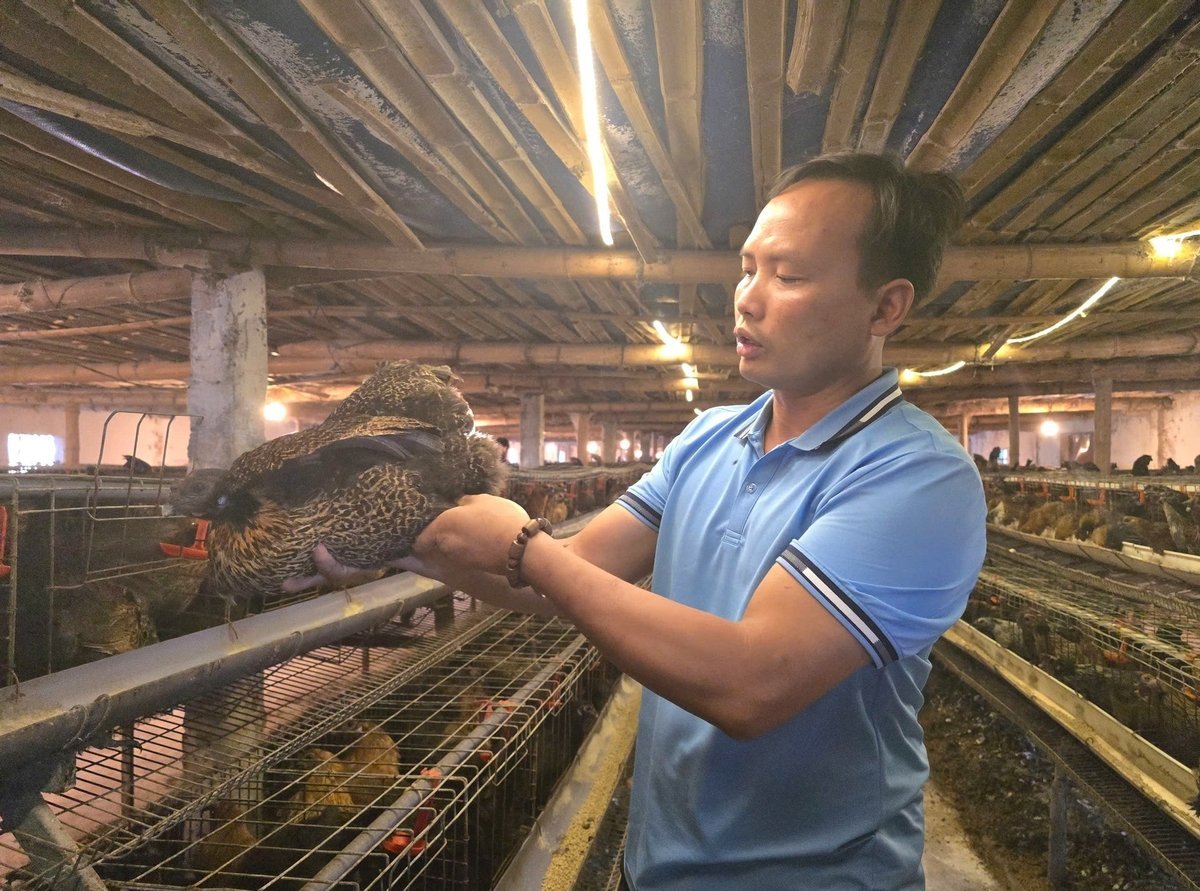
Mr. Khiem believes that besides disease outbreaks, the most worrying aspect of raising chickens is the complacency in disease prevention. Photo: Dinh Muoi.
Besides scientific procedures, practical experience is also a crucial factor. Mr. Do Van Huynh, a farmer raising 6,000-7,000 chickens in Tien Lang commune, believes that farmers must act like "doctors" in the coop, constantly observing and adjusting the breeding environment accordingly.
Although winter requires protection from the cold, the transitional period between seasons is equally dangerous, when the weather is humid, oxygen-deficient, and disease is most likely to occur. Therefore, applying the correct vaccination procedures from large breeding facilities and the ability to flexibly adjust the rearing environment according to the weather are two crucial factors in keeping the flock healthy.
"Pig farming now relies heavily on experience. We have to pay attention to the temperature difference between day and night; if it's hot, we increase the number of fans, and if it's cold, we have to decrease it. If we just leave the fans running at the same temperature all the time, the chickens will suffer from heat shock," Mr. Huynh shared.
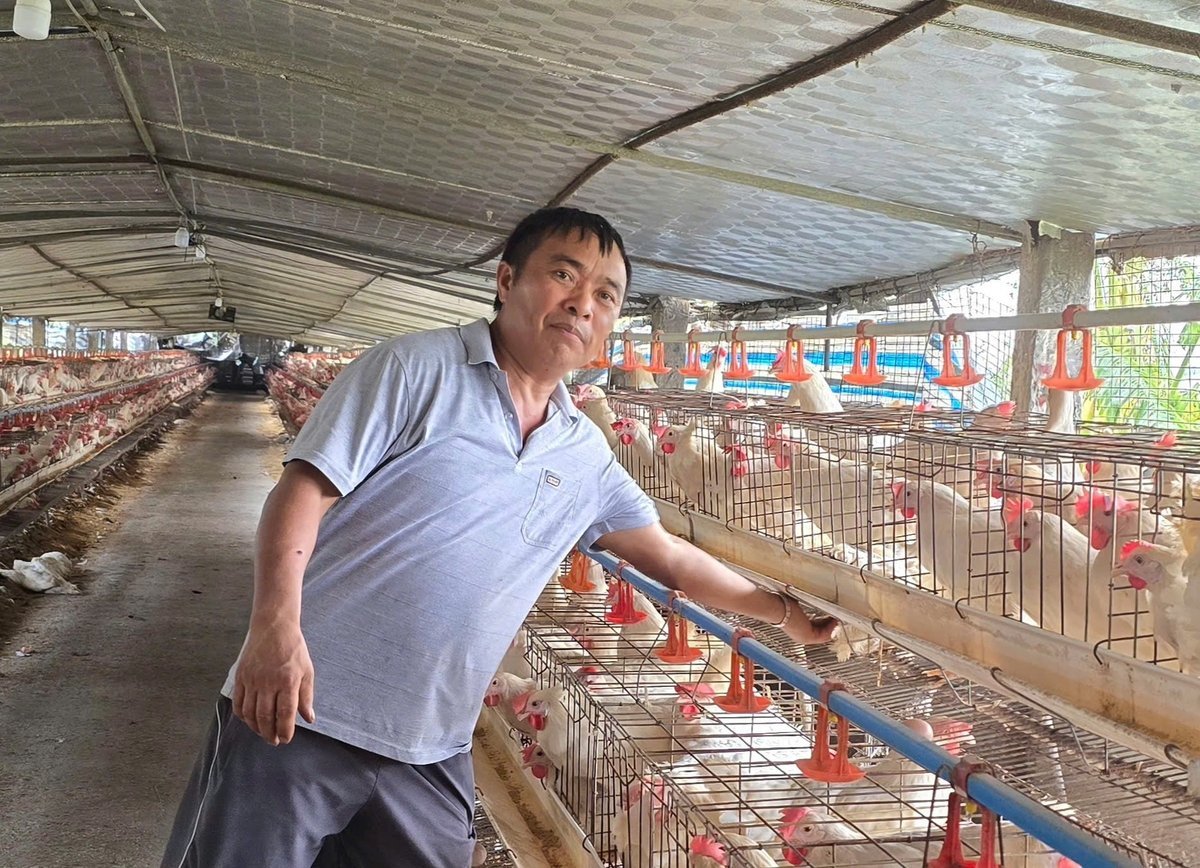
Mr. Do Van Huynh, who currently raises 7,000 laying hens in Tien Lang commune, believes that poultry farmers need to pay attention to the temperature differences between day and night to avoid losses to their flocks during the winter. Photo: Dinh Muoi.
Currently, Hai Phong city has nearly 2,000 poultry farms and tens of thousands of small-scale household farms, with a total poultry population of approximately 27 million birds. Mr. Bui Van Luyen, Deputy Head of the Hai Phong Fisheries, Livestock and Veterinary Department, stated that the transitional period between seasons is a sensitive time when poultry diseases are easily spread.
Therefore, Mr. Luyen advised people to pay special attention to proper care and nurturing to boost the animals' resistance, and to carefully protect the barns from cold and dampness. Regarding specialty chicken breeds like the black chicken, he said that although they have better resistance, the disease prevention process must still be strictly followed as with common poultry breeds,” Mr. Bui Van Luyen said.
Source: https://nongnghiepmoitruong.vn/bi-quyet-giup-dan-ga-chong-choi-dich-benh-qua-mua-dong-d782978.html

![[Image] Shipbuilders exposed to steel and record-breaking heat.](https://vphoto.vietnam.vn/thumb/1200x675/vietnam/resource/IMAGE/2026/06/04/1780545781745_ndo_br_img-5402-4683-jpg.webp)


















![The Essence of Viet Bac Villages: [Part 3] The Precious Fragrance of Nghinh Tuong](https://vphoto.vietnam.vn/thumb/402x226/vietnam/resource/IMAGE/2026/05/29/1780020600366_5237-tinh-tuy-ban-lang-viet-bac-bai-3-chuyen-o-nghinh-tuong-050626_700.jpeg)
![The Quintessence of Northern Vietnam's Villages: [Part 2] The Famous Cassava Noodles of Kunming](https://vphoto.vietnam.vn/thumb/402x226/vietnam/resource/IMAGE/2026/05/28/1779937455892_3929-3144-mien-dong-15-nongnghiep-023138.jpeg)
![The Essence of the Village: [Part 1] Wine on the mountain, tea in the clouds - Bang Phuc](https://vphoto.vietnam.vn/thumb/402x226/vietnam/resource/IMAGE/2026/05/27/1779841729178_3821-1jpg-nongnghiep-103814.jpeg)



























![[Video] Sunset at Lap An Lagoon – Where the sun sets over the fishing nets](https://vphoto.vietnam.vn/thumb/1200x675/vietnam/resource/IMAGE/2026/05/31/1780192137701_beach-landscape-sea-water-nature-grass-745871-pxhere-com.jpeg)



















![[INFOGRAPHICS] Sustainable Business Support Program (2026 – 2030)](https://vphoto.vietnam.vn/thumb/402x226/vietnam/resource/IMAGE/2026/06/04/1780552996067_1780552915.webp)















Comment (0)