

A miniature "bio-factory".
With the support of their teachers, a group of science- loving students from Huynh Man Dat Specialized High School (Rach Gia ward, An Giang province) have collaborated on research and processing to enhance the value of taro. Few would have imagined that taro – a traditional tuber closely associated with the meals of many rural families – is emerging as a "super ingredient" of the future.
Yam is currently a widely cultivated food crop with many different varieties and genetic diversity. Not only are they diverse in flesh color (white, yellow, purple), but yams are also highly valued by scientists for their nutritional value and biological activity.
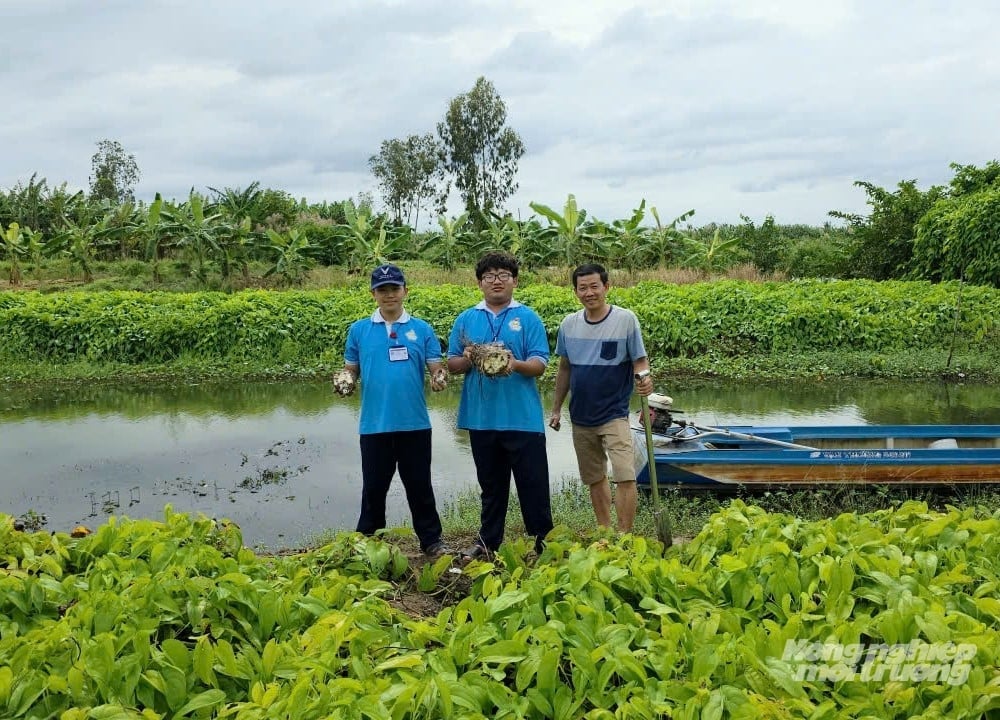
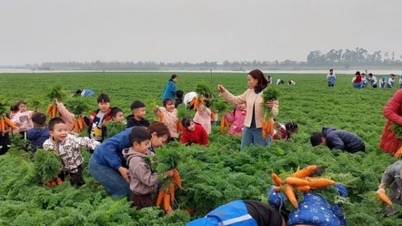
Teachers and students of Huynh Man Dat Specialized High School harvest yam tubers for research and further processing to enhance their value. Photo: Trung Chanh.
In An Giang province , the buffer zone of U Minh Thuong National Park (U Minh Thuong commune) has suitable soil and land conditions for specific crops such as yam, taro, cassava, ginger, etc. Among them, the Mong Linh yam variety is chosen by many farmers because it is easy to cultivate, adapts well to ecological conditions, and produces very large tubers (some weighing up to tens of kilograms), resulting in outstanding yields.
In recent years, the Kenh 10 Agricultural Production and Service Cooperative has successfully implemented a model of integrated cultivation and consumption of yam in the buffer zone of U Minh Thuong National Park, contributing to stable output and increased income for farmers. Through the Cooperative, farmers receive technical support for cultivation, standardized production processes, and product purchase contracts.
Local cooperatives and specialized departments are also focusing on improving product quality. Many households have invested in water-saving irrigation systems, used organic fertilizers, and are gradually adopting production processes according to VietGAP standards to meet the requirements of purchasing businesses and the consumer market.
Currently, taro grown by cooperative members and affiliated farmers is purchased under contract at relatively stable prices, giving growers confidence to expand their cultivated area. Specifically, the Kênh 10 Cooperative has signed contracts to purchase hundreds of tons of Mộng Linh taro annually to supply processing facilities and markets both within and outside the province.
Notably, the Mong Linh white yam from the U Minh Thuong buffer zone has been certified as a 3-star OCOP product, opening up opportunities for brand building and expanding distribution channels. This is considered an important step in standardizing production and enhancing the value of local agricultural products.
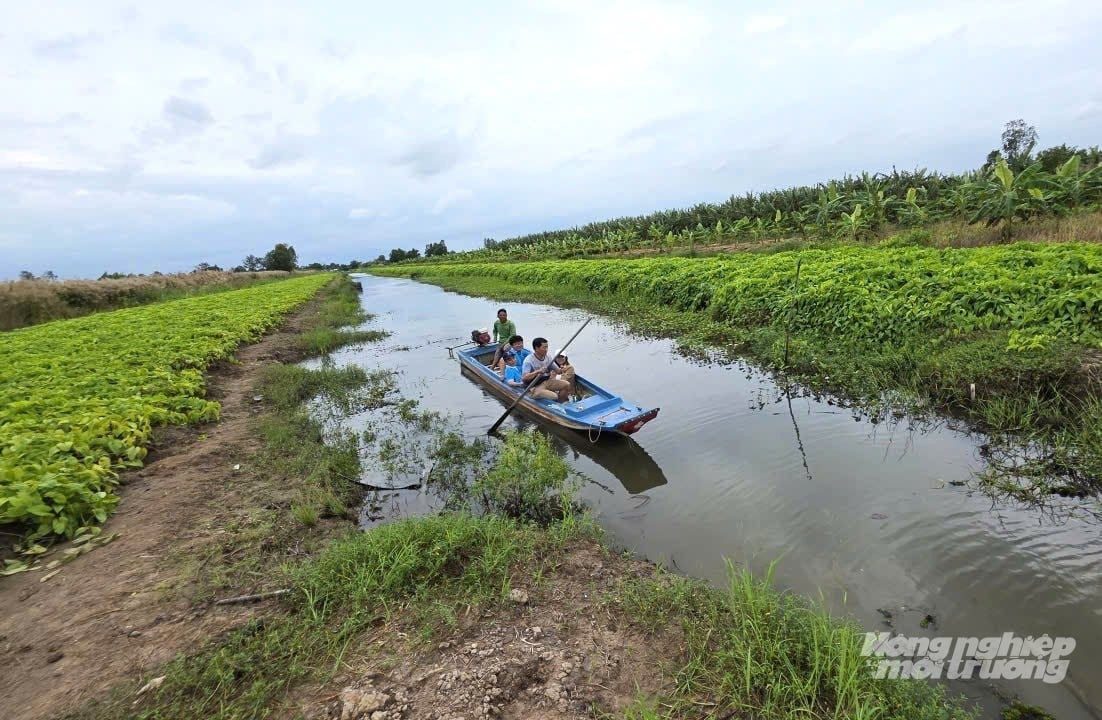
The buffer zone of U Minh Thuong National Park has soil and land conditions suitable for growing yam, resulting in very large tubers and outstanding yields. Photo: Trung Chanh.
However, according to Ms. Lam Thi Van Ha, a teacher at Huynh Man Dat Specialized High School and the mentor who guided and supported the students during the research process, simply consuming the tubers fresh (in soup) would not fully exploit the value of the yam. Therefore, the teacher and students collaborated on research and processing to enhance the value of this type of yam.
According to Ms. Ha, in terms of basic composition, yam has a superior protein content compared to many other tubers, is rich in fiber and trace minerals, while having a low fat content. Yam starch contains a high percentage of amylose (from 13.7 - 43.5%), and its small particle size helps create a stable genetic structure, making it suitable for many industrial processing applications.
Specifically, hidden deep within the flesh of the purple yam tuber is a "treasure trove of natural chemicals" including phenol-flavonoid groups (catechin, epicatechin), anthocyanins (giving its characteristic purple color), saponins, diosgenin, and allantoin. These are all compounds with strong antioxidant and anti-inflammatory properties, supporting cell regeneration, protecting cardiovascular health, and controlling blood sugar. Scientific evidence shows that products extracted from purple yam have positive effects in protecting cardiovascular health, neutralizing free radicals, fighting inflammation, regulating immunity, supporting glucose control, and contributing to the prevention of diabetes.
"From a common root vegetable, yam is gradually being recognized as a 'miniature biological factory,' where nutritional value, medicinal properties, and biomaterials converge simultaneously," said Ms. Ha.
Green industry and circular economy
According to Ms. Lam Thi Van Ha, the research team's goal is not only to apply yam to food but also to conduct further research to transform it into a new raw material chain serving green industries. From fresh tubers, yam is processed into flour, primary starch, and modified starch – the foundation for a range of modern applications.
The teachers and students of Huynh Man Dat Specialized High School process yam starch into various food products to meet daily consumer needs. Photo: Trung Chanh.
In the food industry, yam starch is used as a functional flour to improve the texture of bread, processed foods, and gluten-free products. This starch also acts as a thickener and natural stabilizer in yogurt, sauces, and dairy-free beverages. Notably, edible food coatings made from yam starch help extend shelf life and reduce plastic waste.
In the environmental field, processed yam peels are transformed into activated carbon capable of treating water pollution. Test results show that this material can remove up to 99.76% of COD (a measure of organic pollution levels) and 86% of turbidity in wastewater. This is a further step demonstrating the research team's circular economy mindset, transforming agricultural waste from the yam processing process into an environmental solution.
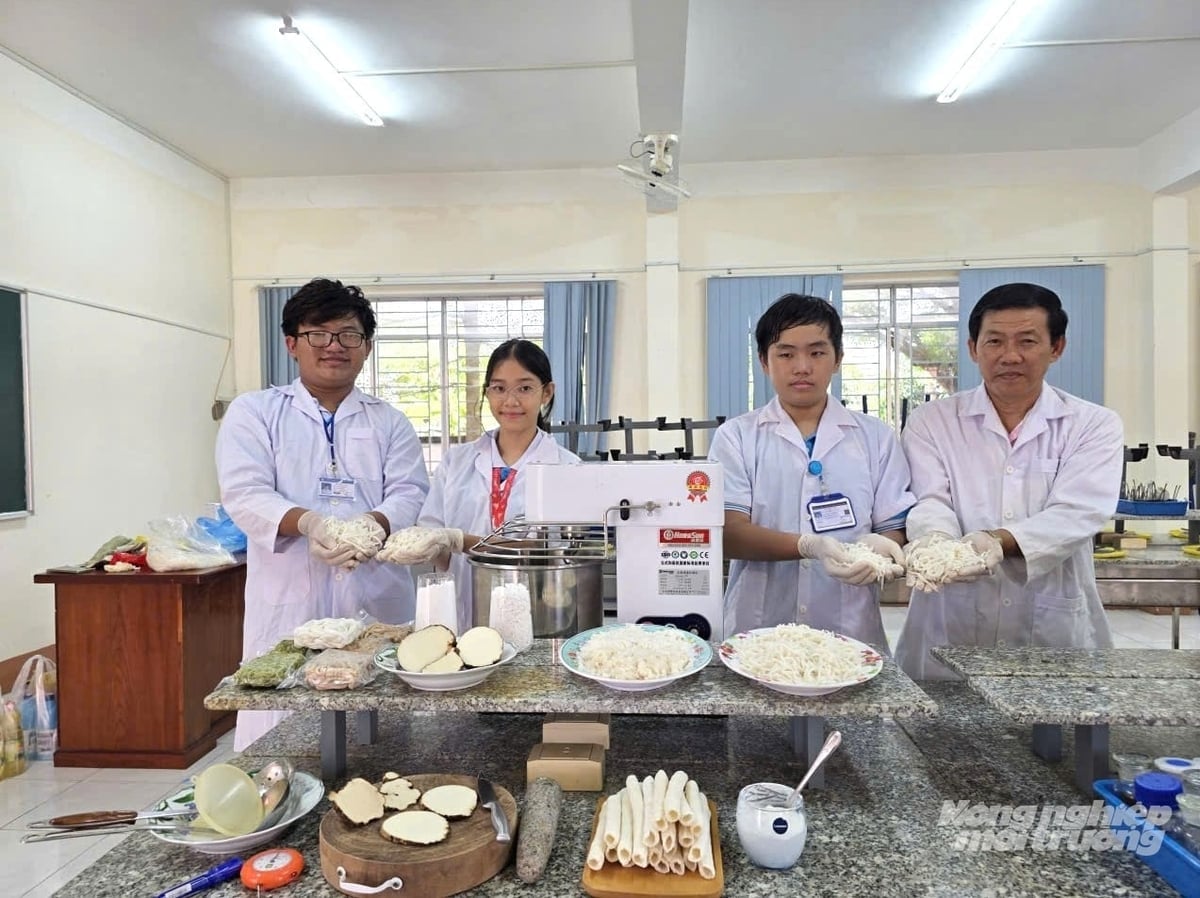
The laboratory at Huynh Man Dat Specialized High School is conducting in-depth research to enhance the value of yam tubers. Photo: Trung Chanh.
"Especially in the biomaterials industry of the future, yam starch is considered an ideal raw material for producing biodegradable bioplastics and bio-dyes from anthocyanins. These products are not only safe for health but also contribute to replacing fossil plastics, reducing pollution pressure," said Ms. Lam Thi Van Ha, M.Sc.
In the context of Vietnam's efforts to promote green agriculture, the circular economy, and biotechnology, yam – a familiar crop in many rural areas – has the potential to become a strategic raw material if properly invested in, from seed selection and cultivation areas to deep processing and marketing. Therefore, yam is no longer just a "staple food to stave off hunger" but is becoming a building block for a green industrial ecosystem encompassing clean food, biomaterials, environmental treatment, and the creation of a circular economy.
Rich in starch and antioxidants, yam-derived ingredients are used in functional foods, biodegradable films, biodegradable plastics, wastewater treatment, and sustainable biochemical industries.
Source: https://nongnghiepmoitruong.vn/bien-khoai-mo-thanh-nguyen-lieu-da-ung-dung-d789231.html
![[Photo] Prime Minister Pham Minh Chinh receives the Governor of Tochigi Province (Japan)](/_next/image?url=https%3A%2F%2Fvphoto.vietnam.vn%2Fthumb%2F1200x675%2Fvietnam%2Fresource%2FIMAGE%2F2025%2F12%2F16%2F1765892133176_dsc-8082-6425-jpg.webp&w=3840&q=75)
![[Photo] Prime Minister Pham Minh Chinh receives Lao Minister of Education and Sports Thongsalith Mangnormek](/_next/image?url=https%3A%2F%2Fvphoto.vietnam.vn%2Fthumb%2F1200x675%2Fvietnam%2Fresource%2FIMAGE%2F2025%2F12%2F16%2F1765876834721_dsc-7519-jpg.webp&w=3840&q=75)
![[Live] 2025 Community Action Awards Gala](/_next/image?url=https%3A%2F%2Fvphoto.vietnam.vn%2Fthumb%2F1200x675%2Fvietnam%2Fresource%2FIMAGE%2F2025%2F12%2F16%2F1765899631650_ndo_tr_z7334013144784-9f9fe10a6d63584c85aff40f2957c250-jpg.webp&w=3840&q=75)


![[Image] Leaked images ahead of the 2025 Community Action Awards gala.](/_next/image?url=https%3A%2F%2Fvphoto.vietnam.vn%2Fthumb%2F1200x675%2Fvietnam%2Fresource%2FIMAGE%2F2025%2F12%2F16%2F1765882828720_ndo_br_thiet-ke-chua-co-ten-45-png.webp&w=3840&q=75)




































































Comment (0)