

In Scotland , Hugh Gray spotted a large object in Loch Ness during a trip in 1933, quickly took a photograph, and became convinced he had seen the monster Nessie.
On November 12, 1933, Hugh Gray was strolling along Loch Ness, near Inverness, Scotland, on a sunny Sunday when he spotted a "large object" rising from the water not far from him. Gray took out his Kodak camera to photograph what looked like the tail of an animal stirring the water before it sank back down.
Gray sent the story, along with the only photograph he took that day, to the Scottish Daily Record . He believed he had photographed Nessie for the first time, the mysterious creature rumored to be in Loch Ness for decades, according to Roland Watson, who analyzed Gray's photograph.
Loch Ness has a circumference of approximately 37 km and is deeper than 200 m in many places, potentially holding more than 7.4 million cubic meters of water. The first records of the Nessie monster appear in the Middle Ages, when the Irish monk St. Columba is said to have encountered the giant creature on the Ness, the river that flows from Loch Ness.
Gray's story contributed to the ever-growing list of reports about this mysterious creature. The black-and-white photograph he took fueled the Nessie craze not only in the region but worldwide .
"The photograph launched the modern era of Nessie hunting. Before that, it was considered just a local legend," said Watson, author of several books about the Loch Ness monster. "Ninety years later, Gray's photograph is still considered one of the best photographs of Nessie."
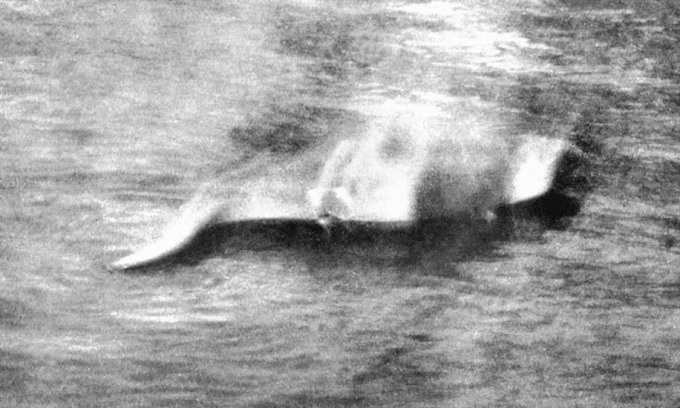
This photograph of an object on Loch Ness was taken by Hugh Gray in November 1933. Photo: Washington Post
To date, Nessie hunters have yet to obtain a more convincing image of the mysterious creature, despite the aid of many new technologies such as digital cameras, sonar, satellite imagery, and smartphones.
The Loch Ness Centre and the Loch Ness Exploration volunteer research group organized a Nessie Monster Hunting Campaign last weekend, with hundreds of volunteers from around the world participating, but without success.
Gray, an employee of the Foyers aluminum mill, located on the eastern shore of Loch Ness, was highly respected by his colleagues and the community for his discovery of Nessie, according to Watson. However, skeptics at the time believed he was merely photographing a floating log or perhaps a whale.
However, Gray's photograph was taken at a time when there were many important discoveries related to the Loch Ness Monster. In April 1933, the Inverness Courier newspaper published a story by local hotel manager Aldie Mackay who claimed to have seen a whale-like "monster" stirring the waters of Loch Ness as they drove along the shore. Tourists then flocked to Loch Ness hoping to catch a glimpse of the monster.
That summer, George Spicer, a tourist from London, reported seeing a creature over two meters long with a long neck crossing the road while he was driving near Loch Ness.
"The creature looked very much like a dragon or a prehistoric animal. It crossed the road about 45 meters in front of my car and seemed to be snatching a small sheep or some other animal," he recounted.
Spicer's story "grabbed media attention and the story of the 'Loch Ness Monster' was born," said Gary Campbell, who runs a site documenting Loch Ness Monster sightings. The site has recorded 1,148 sightings of unidentified creatures in and around the lake.
Campbell created the page documenting the discovery after he himself saw what he believed to be Nessie in 1996. He told the Washington Post at the time that he saw "a black hump disappear and then reappear. It was unlike anything I had ever seen."
Campbell's website notes that many of these findings can easily be refuted. What might be mistaken for Nessie could actually be a boat, a log, or a human illusion. Seals, otters, large eels, sturgeon, and catfish are also sometimes mistaken for Nessie.
In 1934, London physician R. Kenneth Wilson sold a black-and-white photograph to the Daily Mail showing a creature-like object with a long neck protruding its head from the water. Wilson claimed to have taken the photograph at Loch Ness while passing through with a friend.
Wilson's photograph quickly spread through the media, becoming the most widely circulated "proof" of Nessie's existence, overshadowing Gray's photograph. However, by 1994, the photograph was determined to be a fake.
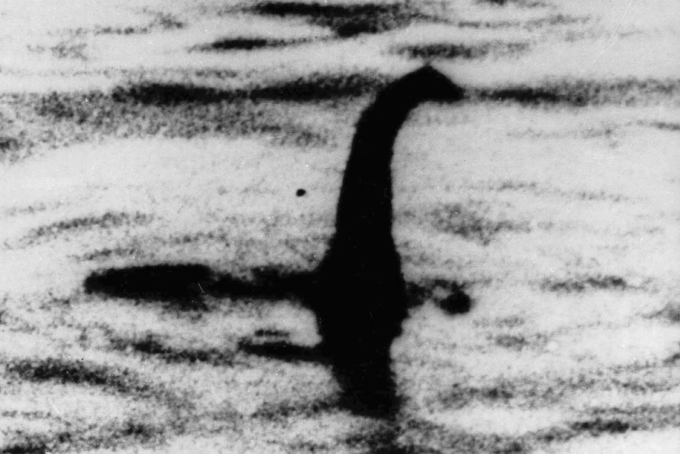
The photograph, allegedly "evidence" of the Loch Ness Monster, was released by Dr. Wilson. Photo: Washington Post
Many people subsequently hypothesized that Nessie was a giant sea serpent that had entered Loch Ness and become trapped there.
However, according to Darren Naish, a zoologist and founder of the blog Tetrapod Zoology, with thousands of people visiting Loch Ness every day, if such a creature actually existed, surely someone would have captured a clearer photograph of it.
Gray never managed to take another photograph of Nessie. However, the Scottish man remained convinced of what he saw and the photograph he had taken.
Even as early as 1960, not long before Gray's death, he took a researcher of occult creatures to the location where he had taken the photograph and "spoke about what he had seen with unwavering conviction," according to Watson.
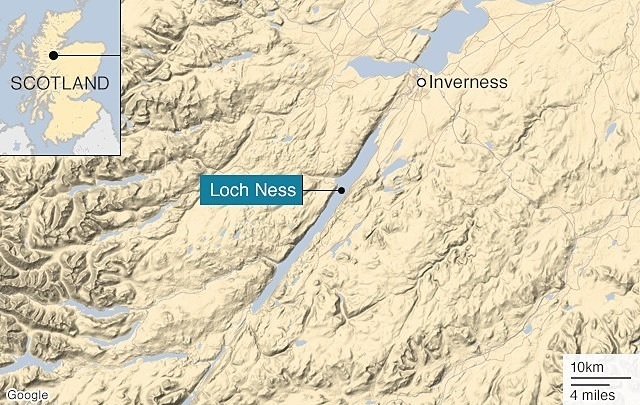
Location of Loch Ness, Scotland. Graphic: BBC
Thanh Tam (According to Washington Post )
Source link
![[Image] Leaked images ahead of the 2025 Community Action Awards gala.](/_next/image?url=https%3A%2F%2Fvphoto.vietnam.vn%2Fthumb%2F1200x675%2Fvietnam%2Fresource%2FIMAGE%2F2025%2F12%2F16%2F1765882828720_ndo_br_thiet-ke-chua-co-ten-45-png.webp&w=3840&q=75)
![[Photo] Prime Minister Pham Minh Chinh receives Lao Minister of Education and Sports Thongsalith Mangnormek](/_next/image?url=https%3A%2F%2Fvphoto.vietnam.vn%2Fthumb%2F1200x675%2Fvietnam%2Fresource%2FIMAGE%2F2025%2F12%2F16%2F1765876834721_dsc-7519-jpg.webp&w=3840&q=75)
![[Photo] Prime Minister Pham Minh Chinh receives the Governor of Tochigi Province (Japan)](/_next/image?url=https%3A%2F%2Fvphoto.vietnam.vn%2Fthumb%2F1200x675%2Fvietnam%2Fresource%2FIMAGE%2F2025%2F12%2F16%2F1765892133176_dsc-8082-6425-jpg.webp&w=3840&q=75)
![[Live] 2025 Community Action Awards Gala](/_next/image?url=https%3A%2F%2Fvphoto.vietnam.vn%2Fthumb%2F1200x675%2Fvietnam%2Fresource%2FIMAGE%2F2025%2F12%2F16%2F1765899631650_ndo_tr_z7334013144784-9f9fe10a6d63584c85aff40f2957c250-jpg.webp&w=3840&q=75)



















































































Comment (0)