

Accordingly, more than two-thirds of the world's top studios have taken steps to explore the Web3 game market. Specifically, 29 out of the top 40 game studios by market capitalization have invested in or developed products exploring the Web3 segment, according to statistics published by CoinGecko .
Web3 games are not just for entertainment.
The biggest difference between Web3 games on the Blockchain and traditional games today is that Web3 game users (players) own the items they purchase or collect from in-game sources or on the exchange, and these become their assets, no longer belonging to the game developer or publisher. They have full rights to give away or trade items independently of the game developer. These transactions are publicly tracked according to the characteristics of Blockchain.
Compared to the traditional game ecosystem, which typically consists of groups like gamers (players) and streamers, the Web3 game ecosystem adds groups such as Guilds, DAOs, and investors. Investors don't usually play the game directly; instead, they invest in groups that "grind" to collect in-game items or generate resources, which they then trade on exchanges to profit. Owners don't necessarily trade in-game items on the game developer's exchange but can trade them on other platforms within the same blockchain. Guilds have a community-like nature, similar to Clans in previous games, but with added economic elements, and DAOs have a greater impact on the game developer's strategy and content release.
Accordingly, the purely entertainment-based economy in 'Web2 Games' becomes a digital item economy with exchangeable value in the 'Web3 Games' market.
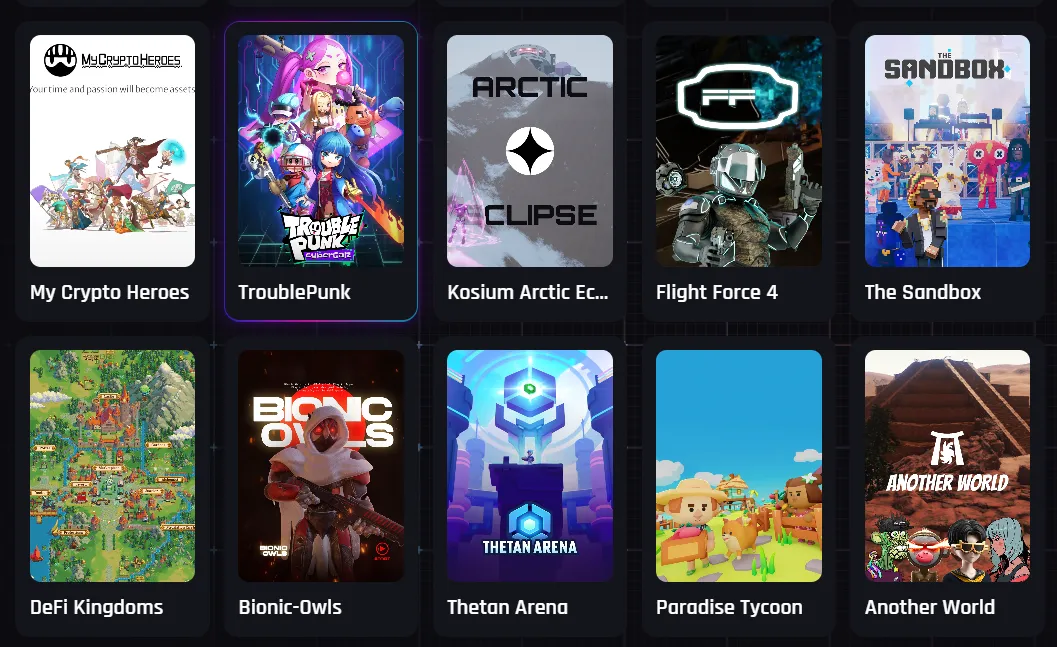
The increasing number of high-quality Web3 games being released adds to the appeal of this very promising market.
A 'gold mine' waiting to be exploited.
The period from 2019 to 2021 saw the explosion of Gamefi, a trend that can be considered the precursor to Web3 Games. Major game studios observed and explored this new market, or simply didn't pay attention to it. 2023 marked the year when major game companies worldwide "laid the foundation" for Web3 Games, with numerous big names announcing their projects.
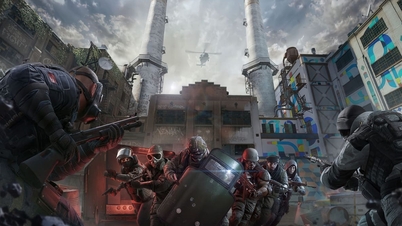
Zynga recently officially introduced Sugartown, a 'Universe' NFT built on the Ethereum blockchain, while in June, Bandai Namco launched RYUZO, a virtual pet NFT game. Two other giants, Square Enix and Ubisoft, unveiled Symbiogenesis and Champion Tactics: Grimoire Chronicles, respectively, a Web3 strategy PvP RPG.
Another "blockbuster" in the Korean gaming industry is Nexon's launch of MapleStory Universe, featuring NFTs integrated into their popular game MapleStory N, as well as other online role-playing games.
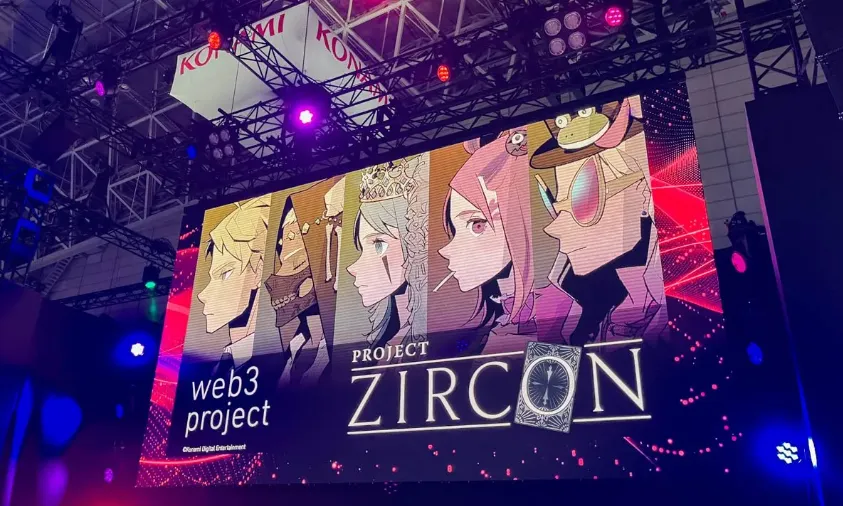
Project ZIRCON was introduced by Konami at Tokyo Game Show in September 2023.
For its part, Konami thrilled gamers with Project Zircon, unveiled at the Tokyo Game Show last September. Project Zircon is based on the storyline of the highly popular Netflix animated series Castlevania, depicting the conflict between legions of vampires, wizards, warriors, and dark forces. News of this Web3 game project created a sensation, coinciding with the release of Castlevania: Nocturne on Netflix.
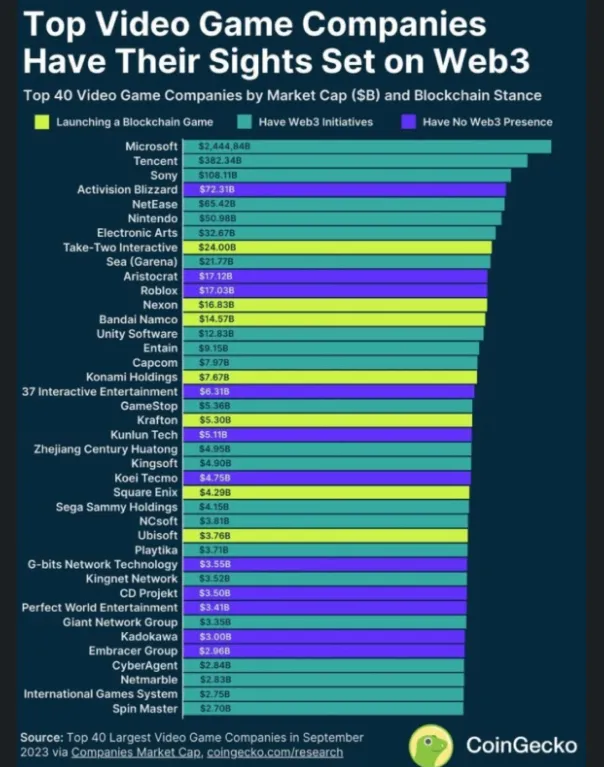
List of the world's top game studios by market value and level of interest in the Web3 game market.
The list of highly anticipated news doesn't stop there, as Krafton, the studio behind the globally popular PUBG game, is preparing to unveil Overdare, a Metaverse project, later this year.
Source link





![[Photo] General Secretary and President To Lam presides over a meeting on assessing national development resources.](https://vphoto.vietnam.vn/thumb/1200x675/vietnam/resource/IMAGE/2026/05/20/1779253785852_a1-bnd-2943-8519-jpg.webp)














































































Comment (0)