

 |
| The crape myrtle changes color to pure white along the road through the Binh Chau-Phuoc Buu forest. |
In early March, we traveled along Provincial Road 44 (Tam An commune, Long Dat district) and through the forest of Binh Chau-Phuoc Buu Nature Reserve (Xuyen Moc district) to admire the beauty of the Camellia sinensis tree.
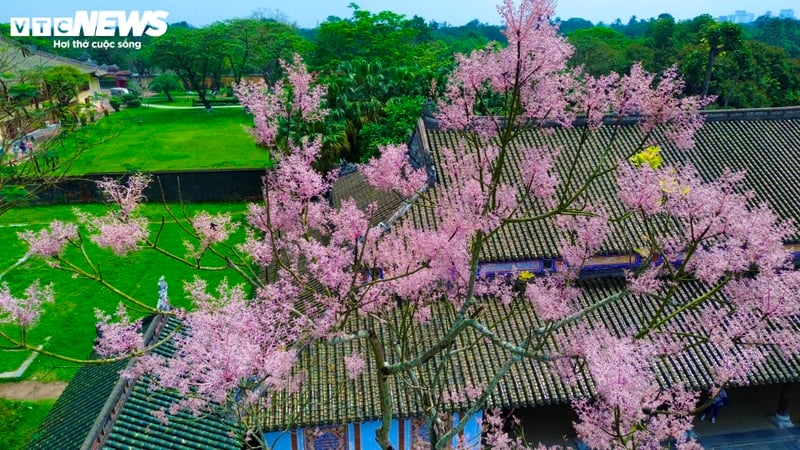
When the sun is shining brightly, the crape myrtle trees also enter their leaf-changing season. From a drone's perspective, the pristine white blossoms, sparkling in the sunlight, stretch across the mountain slopes and forest edges.
According to Ms. Le Thi Nga, President of the Provincial Ornamental Plants Association, the Shorea siamensis tree has the scientific name Shorea siamensis. It belongs to the Malvaceae family and the Malvaceae order. Shorea siamensis is also known by other names such as green ca chac and rang tree. It is a woody tree, usually 10-30m tall with a trunk diameter of up to 80cm. Its leaves are oval, broadly oblong, with heart-shaped petioles 11-22cm long. Shorea siamensis mainly grows in open forests and deciduous forests. The tree is drought-tolerant and distributed on shallow, dry, rocky sandy soil. Shorea siamensis wood is classified as Group I in the 8-group Vietnamese wood classification system. The heartwood is reddish-brown, while the sapwood is light red. The wood is widely used in construction due to its durability and strength.
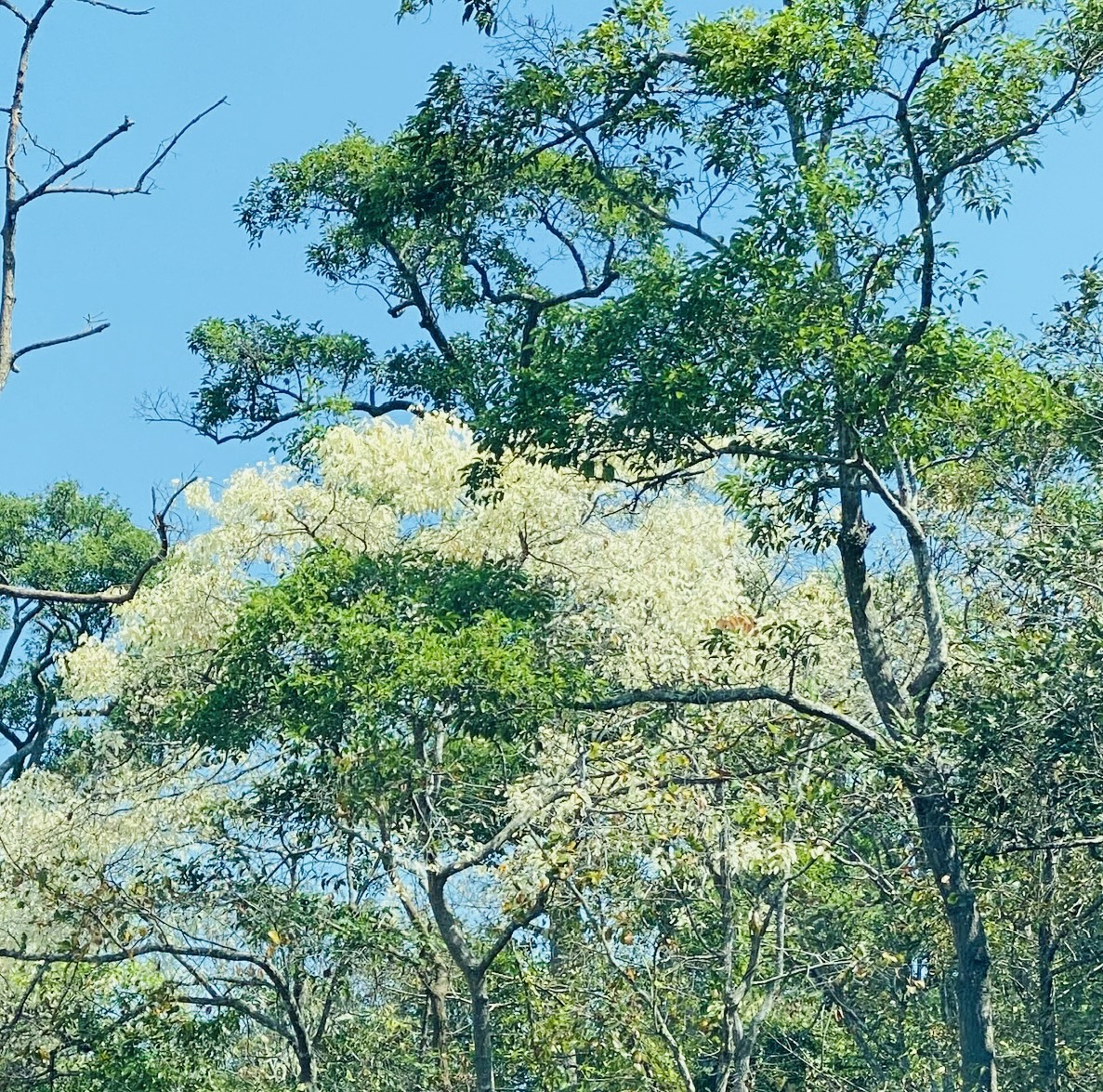 |
| The crape myrtle tree sheds its leaves, turning them pure white, in the Binh Chau-Phuoc Buu forest. |
According to the Binh Chau-Phuoc Buu Nature Reserve (Xuyen Moc district), the remaining forest area is quite large (approximately 22,000 hectares), accounting for two-thirds of the district's area. This tropical forest is located at the head of the Ray River and along the coast. The forest contains 200 plant species belonging to 60 families, including many valuable timber species, among which is the Dalbergia tonkinensis. Following a cycle, from the end of February to mid-March, the Dalbergia tonkinensis sheds its leaves, creating a colorful tapestry on the mountain slopes and forests, giving the Binh Chau-Phuoc Buu mountains and forests a unique "coat."
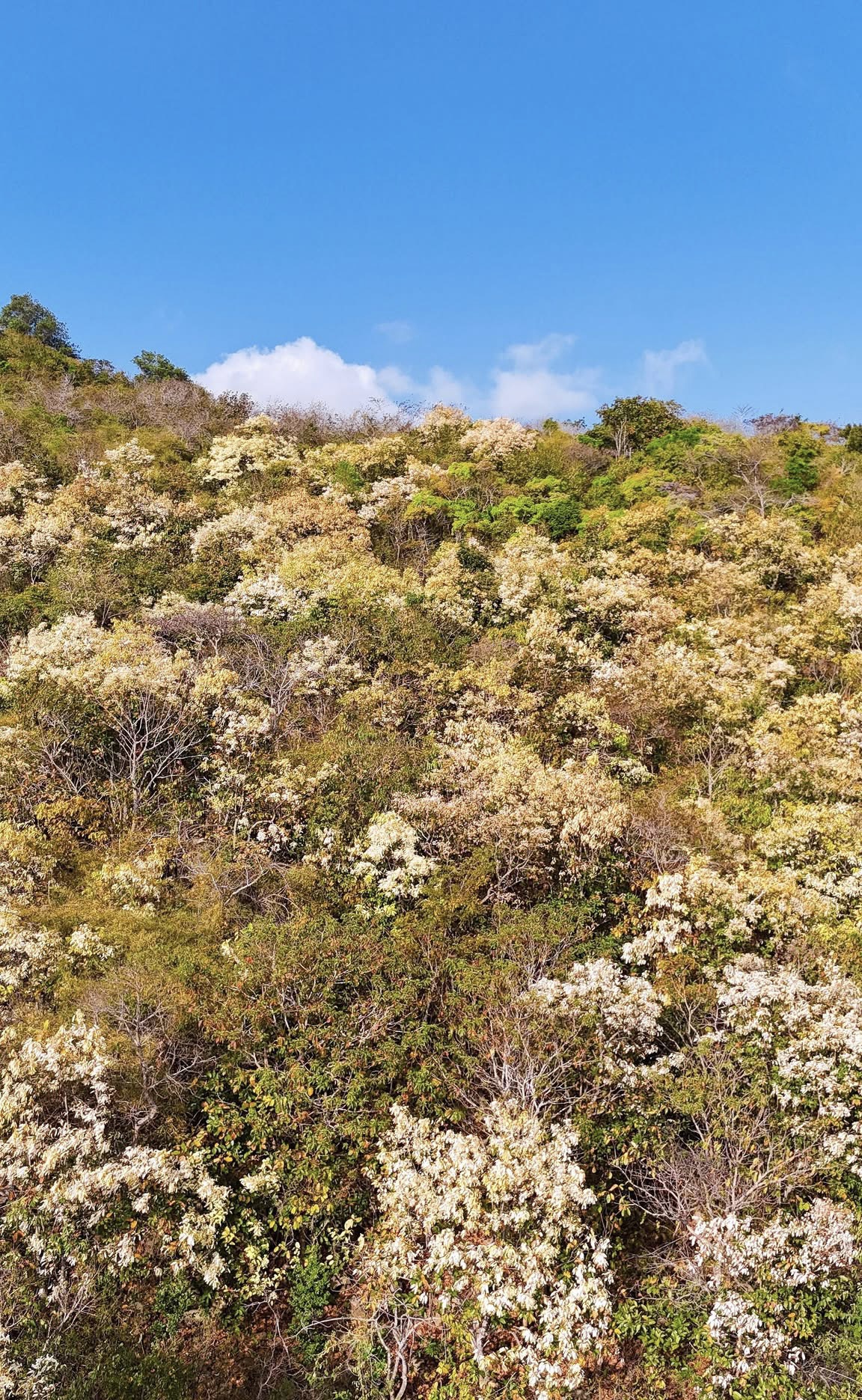 |
| The crape myrtle trees are shedding their leaves as if they are putting on a new coat on the slopes of Tam An mountain (Long Dat district). |
Text and photos: LINH DAN
Source: https://baobariavungtau.com.vn/du-lich/202503/cam-lien-mua-thay-la-1036215/



























































![[Infographic] Vietnam's Economic Situation Report, Q1 2026: Strong Growth Momentum](https://vphoto.vietnam.vn/thumb/402x226/vietnam/resource/IMAGE/2026/04/04/1775298512042_tang-truong-kinh-te-viet-nam.jpeg)

![[Image] Close-up view of the 10-lane road connecting to Long Thanh Airport](https://vphoto.vietnam.vn/thumb/402x226/vietnam/resource/IMAGE/2026/04/04/1775291871988_ndo_br_1-resize-5690-jpg.webp)

























Comment (0)