

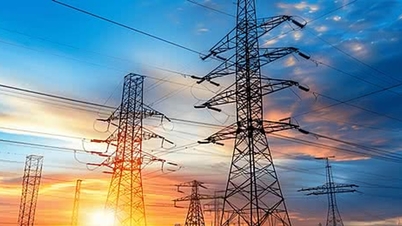
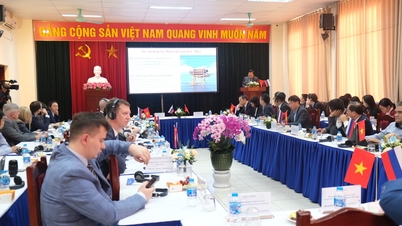
More than a year after its promulgation, the Ministry of Industry and Trade is planning to propose adjustments to the Power Development Plan VIII due to concerns that many power sources approved in the Plan are not meeting the approved schedule, potentially leading to electricity shortages.
The Power Development Plan VIII began development on October 1, 2019, under Decision No. 1264/QD-TTg. Nearly four years after its initial drafting, Power Development Plan VIII was approved on May 15, 2023, and subsequently, the Plan's implementation schedule was issued on April 1, 2024.
Those interested in the energy sector surely haven't forgotten that, in order for the Power Development Plan VIII to be approved, the Ministry of Industry and Trade submitted no fewer than eight official proposals, starting with the first one on March 26, 2021. Furthermore, before its official promulgation, the Plan's implementation also required considerable time and effort from all relevant parties.
However, despite having both the Power Development Plan VIII and the Implementation Plan, power projects have not been able to be implemented as quickly as expected.
The Ministry of Industry and Trade, in recent assessments, has repeatedly warned about the impracticality of the targets set for two major and highly anticipated power sources – gas-fired and offshore wind power – by 2030. According to the National Power Development Plan VIII, 23 gas-fired power projects with a total capacity of 30,424 MW are scheduled to be operational by 2030. However, the current investment and construction of these projects face numerous challenges.
Specifically, except for the Nhon Trach 3 and 4 projects, which are expected to be operational in May 2025, the completion of the remaining projects before 2030 is highly unlikely without fundamental solutions to address key bottlenecks in LNG power development related to minimum production output and the transfer of gas prices to electricity prices.
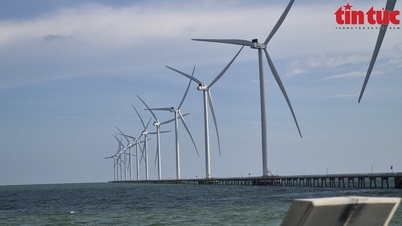
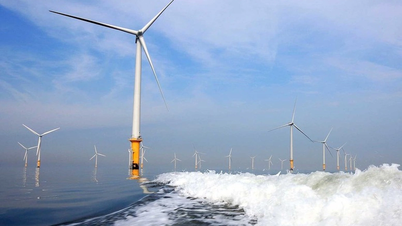
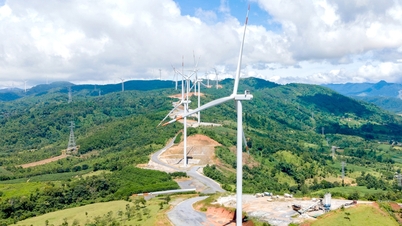
Regarding offshore wind power projects, Vietnam currently has no projects that have received investment approval or been assigned to investors for implementation.
Issues such as the lack of a complete and accurate database on wind speed surveys, wind potential for each region, locality, and the entire country; the current state of topography, seabed depth; and the insufficient basis for specifically determining the location and capacity of offshore wind power projects were also mentioned. In addition, the reality is that the investment cost for offshore wind power is currently very high (approximately US$2.5 billion/1,000 MW), and the implementation time ranges from 6 to 8 years from the start of the survey.
Therefore, the target of 6,000 MW of offshore wind power capacity by 2030, as set out in the Power Development Plan VIII, is unlikely to be achievable in the current context.
Therefore, achieving this with just the two most anticipated power sources—gas-fired power and offshore wind power—which are planned to have a capacity of over 36,000 MW by 2030, is not easy.
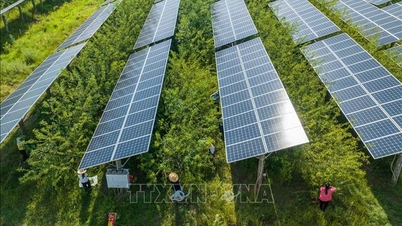
In reality, onshore and nearshore solar and wind power sources, despite being assessed as having potential and a rapid pace of investment deployment, only materialize when there is an attractive fixed electricity purchase price. Meanwhile, for more than two years, no projects have been completed and signed power purchase agreements when transitioning to negotiations for the sale of additional electricity without exceeding the price ceiling set by the Ministry of Industry and Trade.
The above reality shows that, without clear and attractive mechanisms, attracting investment for power generation development will not interest investors. Importing electricity will even become difficult.
However, even if the electricity purchase price for investors is attractive, the situation of buying high and selling low still arises, causing significant losses for Vietnam Electricity Group (EVN) - which is primarily responsible for purchasing electricity from power plants and selling it to consumers in the economy .
Therefore, although electricity prices have been adjusted recently, the adjustments have been minimal and insufficient to compensate for the increased costs caused by fluctuating global fuel prices or exchange rate changes. Consequently, without significant changes in electricity prices and specific mechanisms for power project implementation, efforts such as allowing the commencement of construction even before signing a Power Purchase Agreement (PPA) with the current electricity buyer (EVN) will not attract any investors (except for the Nhon Trach 3 and 4 LNG power plant projects with the backing of the Vietnam Oil and Gas Group).
As long as both the Power Development Plan VIII and its implementation plan remain vague regarding mechanisms, adjusting Power Development Plan VIII or amending the Electricity Law in the near future will not guarantee that new power generation projects will be quickly implemented to ensure sufficient supply to meet the needs of the economy, in line with the principle of "electricity leading the way".
Source: https://baodautu.vn/co-che-voi-du-an-dien-can-ro-rang-hap-dan-d224527.html


![[Image] Leaked images ahead of the 2025 Community Action Awards gala.](/_next/image?url=https%3A%2F%2Fvphoto.vietnam.vn%2Fthumb%2F1200x675%2Fvietnam%2Fresource%2FIMAGE%2F2025%2F12%2F16%2F1765882828720_ndo_br_thiet-ke-chua-co-ten-45-png.webp&w=3840&q=75)
![[Live] 2025 Community Action Awards Gala](/_next/image?url=https%3A%2F%2Fvphoto.vietnam.vn%2Fthumb%2F1200x675%2Fvietnam%2Fresource%2FIMAGE%2F2025%2F12%2F16%2F1765899631650_ndo_tr_z7334013144784-9f9fe10a6d63584c85aff40f2957c250-jpg.webp&w=3840&q=75)
![[Photo] Prime Minister Pham Minh Chinh receives Lao Minister of Education and Sports Thongsalith Mangnormek](/_next/image?url=https%3A%2F%2Fvphoto.vietnam.vn%2Fthumb%2F1200x675%2Fvietnam%2Fresource%2FIMAGE%2F2025%2F12%2F16%2F1765876834721_dsc-7519-jpg.webp&w=3840&q=75)
![[Photo] Prime Minister Pham Minh Chinh receives the Governor of Tochigi Province (Japan)](/_next/image?url=https%3A%2F%2Fvphoto.vietnam.vn%2Fthumb%2F1200x675%2Fvietnam%2Fresource%2FIMAGE%2F2025%2F12%2F16%2F1765892133176_dsc-8082-6425-jpg.webp&w=3840&q=75)







































































Comment (0)