

Experts and investors believe the draft demonstrates the government 's clear determination to create breakthrough mechanisms to promote offshore wind power. At the same time, the draft also outlines criteria for selecting capable investors, ensuring the feasibility and effectiveness of the projects.
The energy transition pillar and the need for breakthrough mechanisms.
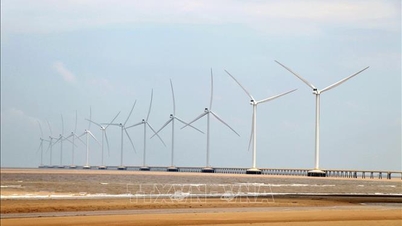
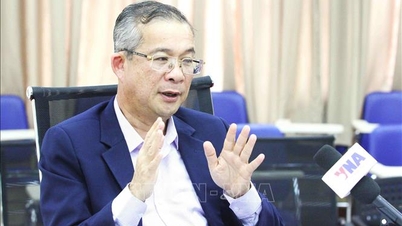
Vietnam is entering a large-scale energy transition phase, with offshore wind power identified as one of the key pillars to achieve net-zero emissions by 2050. This assessment was emphasized by Dr. Nguyen Huy Hoach, a member of the Scientific Council of the Vietnam Energy Magazine, in the context of the revised Power Development Plan VIII, which aims for an offshore wind power capacity of approximately 6,000 MW (6 GW) by 2030. However, despite this ambitious goal, no projects have yet received investment approval.
It is in this context that the draft Resolution on mechanisms and policies for national energy development in the period 2026–2030 has dedicated Chapter IV to the development of offshore wind power, a move considered particularly important in addressing policy bottlenecks.
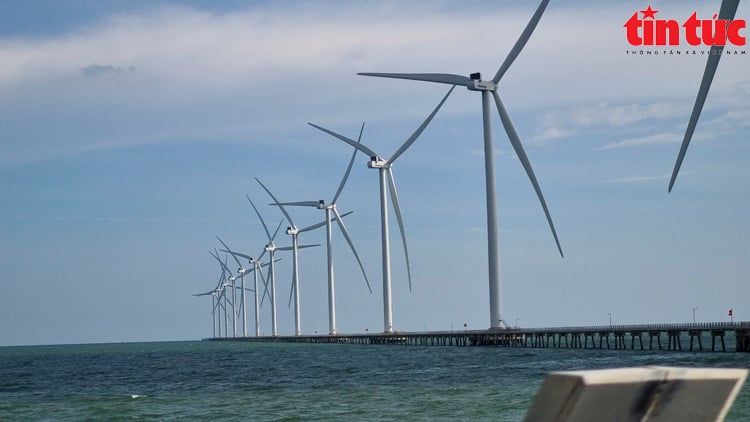
From an international perspective, the Global Wind Energy Council (GWEC) believes that the draft demonstrates the strong determination of the Government and the National Assembly to introduce a groundbreaking mechanism. Mr. Bui Vinh Thang, Country Director in Vietnam of GWEC, commented that the mechanism for approving investment policies for offshore wind power projects, replacing the bidding process, is a noteworthy step, as it shortens the time for selecting investors and aligns with the requirement of "a breakthrough mechanism for offshore wind power development" as set forth in Resolution 70 of the Politburo .
The draft Resolution not only changes the approach to investor selection but also introduces several important incentive policies. Accordingly, offshore wind power projects will be exempt from or receive reductions in sea area usage fees; and power purchase agreements will guarantee a minimum of 90% of the average annual electricity output throughout the loan repayment period. Dr. Nguyen Huy Hoach assessed these mechanisms as crucial, creating a foundation for investors to build financial models and arrange international capital in the context of Vietnam's limited government guarantees for new energy projects.
Maximizing domestic and foreign investment is considered a key factor for Vietnam to achieve its goal of developing 6GW of offshore wind power by 2030. From an investor's perspective, Mr. Alessandro Antonioli, General Director of Copenhagen Offshore Partners (COP) and senior representative of Copenhagen Infrastructure Partners (CIP) in Vietnam, highly appreciates the fact that the latest draft resolution has removed the regulation allowing only Vietnamese enterprises or enterprises with 100% state capital to propose investment projects. According to Mr. Antonioli, this is a suitable adjustment, as Vietnam needs to maximize resources for this promising but high-cost investment sector.
Mr. Antonioli noted that the investment cost for offshore wind power is currently around $4 billion per GW. This type of energy requires advanced technology, complex construction and installation techniques, and high-standard operational capabilities. Mr. Antonioli emphasized that Resolution 70-NQ/TW clearly defines the task of expanding the mobilization of private and foreign capital for energy projects, through independent investor models or public-private partnerships. According to Mr. Antonioli, besides capital, the participation of international investors with experience in implementing projects of similar scale is a key factor in ensuring progress and efficiency.
Sharing the same view, Mr. Bui Vinh Thang, Country Director in Vietnam of GWEC, believes that international investors possess technical capabilities, operational experience, financial resources, and a global supply chain network – factors that determine the success of large-scale and highly complex offshore wind power projects. Mr. Thang particularly recommends a collaborative model between domestic and international businesses, as this structure has proven effective worldwide and is key to implementing projects in Vietnam safely, on schedule, and to international standards.
From the local perspective, where projects are directly licensed and supervised, a provincial leader also emphasized the dual benefits of this cooperation model. According to the leader, linking with international investors not only brings in capital but also opens up opportunities to access international technology, techniques, and experience. "By partnering with companies that have already implemented large-scale projects, we significantly shorten the learning curve and can leapfrog ahead in new fields like offshore wind power," he stated.
Choosing investors: A key factor in ensuring success.
Besides opening up groundbreaking mechanisms, the draft Resolution also raises the standards for offshore wind power investors. Accordingly, enterprises proposing surveys and receiving investment approval must have a minimum charter capital of VND 10,000 billion and equity capital of no less than 15% of the total investment.
Mr. Bui Vinh Thang, Country Director of GWEC in Vietnam, commented that this regulation is suitable for large domestic enterprises but becomes a "barrier" for foreign investors. "It's not that they lack financial capacity, but injecting 10,000 billion VND in charter capital into a new legal entity in Vietnam, given that offshore wind power is still new and inherently risky, is hardly feasible," he analyzed.
From an international perspective, Mr. Alessandro Antonioli, representing CIP, proposed expanding the method of calculating equity capital to include both the parent company's and affiliated companies' capital. Mr. Antonioli stated: “Demonstrating the ability to raise a minimum of 15% of total investment in equity capital would be more consistent with the practices of implementing large-scale energy projects. In that context, the minimum charter capital requirement could be considered abolished, as financial capacity is already ensured through the equity capital requirement.”
Another issue noted by experts is the regulation prioritizing investors who propose lower projected electricity prices when two valid applications for the same project are submitted. According to Mr. Bui Vinh Thang, this approach is unreasonable. Mr. Thang explained that electricity prices at the investment proposal stage are only estimates based on pre-feasibility studies and usually need to be adjusted during implementation. The 2-3 year gap between the approval of the investment proposal and the negotiation of electricity prices with EVN is long enough for supply chain costs, market conditions, and financial conditions to fluctuate, leading to a large difference between the projected and actual prices.
International experience shows that this risk is not insignificant. Mr. Thang cited the case in Japan: In 2021, Mitsubishi won bids for three offshore wind power projects thanks to the lowest electricity price proposal, despite having no experience in this field. During implementation, costs escalated and supply chain fluctuations prevented the company from completing the projects at the committed price, and by August 2025, Mitsubishi had to withdraw from all three projects.
Drawing from this lesson, Mr. Thang emphasized that electricity price should not be the top priority criterion in selecting investors. Instead, multiple criteria should be applied, including financial capacity, technical expertise, implementation experience, project development strategy, and the ability to contribute to the domestic supply chain. "This approach helps select the right investor with genuine capabilities, ensuring sustainable and efficient project implementation," he said.
Sharing the same view, Mr. Alessandro Antonioli proposed that the draft Resolution prioritize investors who have experience in implementing or raising capital for offshore wind power projects, marine infrastructure, or large-scale power projects, instead of relying solely on the criterion of lower proposed electricity prices.
According to Mr. Bui Vinh Thang, Country Director of GWEC in Vietnam, offshore wind power is related to national defense and security, maritime transport, oil and gas fields, marine resources, diplomacy, etc., and therefore requires the participation of many ministries and agencies. The scale of the projects is very large; a 500MW project can cost up to $2 billion, and the investment is complex, far exceeding the management experience of most localities. Therefore, the authority to approve investors for offshore wind power projects should be given to the Prime Minister, instead of the provincial People's Committee as stipulated in the draft Resolution.
Source: https://baotintuc.vn/kinh-te/co-che-dot-pha-de-thuc-day-dien-gio-ngoai-khoi-20251204220426618.htm

![[Image] Hanoi Police officially crowned champions of V-League 2025/2026](https://vphoto.vietnam.vn/thumb/1200x675/vietnam/resource/IMAGE/2026/05/31/1780244769054_ndo_br_039d561b692be875b13a-jpg.webp)

![[Photo] The General Secretary, President and his wife begin their state visit to the Philippines.](https://vphoto.vietnam.vn/thumb/1200x675/vietnam/resource/IMAGE/2026/05/31/1780230559452_anh-man-hinh-2026-05-31-luc-19-28-11.png)




















![[Video] Sunset at Lap An Lagoon – Where the sun sets over the fishing nets](https://vphoto.vietnam.vn/thumb/340x192/vietnam/resource/IMAGE/2026/05/31/1780192137701_beach-landscape-sea-water-nature-grass-745871-pxhere-com.jpeg)


![[Photo] Solemn bathing ceremony and Buddha procession in Hue](https://vphoto.vietnam.vn/thumb/1200x675/vietnam/resource/IMAGE/2026/05/31/1780228263543_1-jpg.webp)
![[Photo] Admire the coral "masterpiece" amidst the million-year-old heritage of Dak Lak province.](https://vphoto.vietnam.vn/thumb/1200x675/vietnam/resource/IMAGE/2026/05/31/1780221235105_anh-man-hinh-2026-05-31-luc-16-53-27.png)


































































Comment (0)