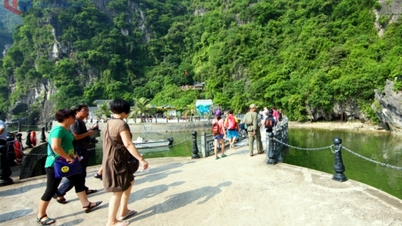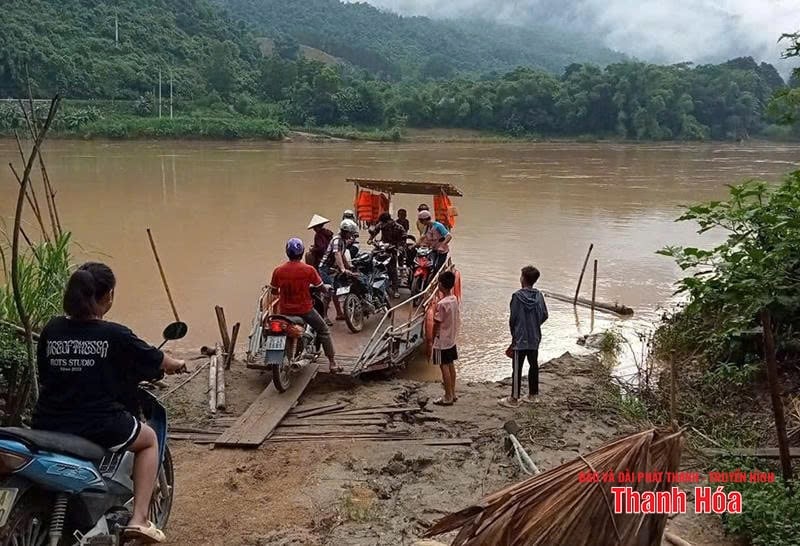
Passengers board the ferry to cross the river.
I arrived at the ferry terminal to cross to Thiet Giang village just as a large crowd of villagers were waiting. For many, this was the second ferry trip of the day. They said they went early to the town center to buy supplies so they could return in time for work. For generations, the people of Thiet Giang village have been accustomed to crossing the river by ferry whenever they want to leave the village or for students to go to school... It's manageable during the dry season, but during the rainy season, the Ma River changes color, the water turns a turbulent red, the ferry service stops, and the entire area on the left bank of the Ma River is isolated like an "island."
Ms. Bui Thi Tuyet, Secretary of the Thiet Giang Village Party Branch, said: "The village has 160 households and 780 residents. Besides taking the ferry across the river to reach the commune center, villagers and students going to school still have another option: taking a detour to La Han Bridge and then traveling nearly 20km back. Because the journey is long, most people choose to take the ferry."
"At this time, students are on summer vacation, but during school year, around early morning or rush hour, the ferry terminal is always crowded with people, and you have to queue to wait for your turn," Ms. Tuyet said.



The reality is that the people of Thiet Giang village are primarily engaged in agriculture , but their products are difficult to sell due to poor transportation infrastructure. Even when traders do buy their produce, the villagers incur additional transportation costs, leaving them with very little profit after deducting all investment expenses. Furthermore, the transportation of building materials for internal village roads or houses is also a significant problem.
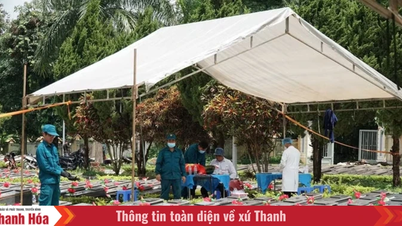
To reduce safety risks and ensure the safety of people crossing the Ma River by ferry, since 2015, Thiet Ong commune has established a "Safe Ferry Crossing" model managed by the commune's youth volunteer team. The team members educate and remind people to wear life jackets, inspect passenger vessels, monitor waterways, erect warning signs, and are on standby during high water levels. However, this is only a temporary solution.
According to our investigation, on the left bank of the Ma River, besides Thiet Giang village, there are also Quyet Thang, Chun, and Chieng villages. The economic development of the people here is limited due to the lack of transportation links to the commune and district centers. If a bridge connecting National Highway 217 to Thiet Giang village were built, it would serve the transportation and trade needs of the local people and neighboring communes.
During numerous interactions with constituents, local residents have proposed and expressed their desire for the construction of a sturdy bridge. The good news is that the Dong Tam urban center bridge project, which includes a bridge connecting National Highway 217 to Thiet Giang village, has been included in the medium-term public investment plan for the 2026-2030 period with an estimated budget of 168 billion VND. If the bridge is completed, it will not only be a transportation infrastructure project but also a "bridge to livelihoods," opening the door to development for the entire region.
Before leaving Thiet Giang village ferry terminal, I met a sixth-grade student and asked if she wished for a sturdy bridge. Her answer left me speechless: "I wish for a new bridge so my parents wouldn't have to worry when I go to school. With a bridge, I can ride my bicycle to class by myself."


Text and photos: Dinh Giang
Source: https://baothanhhoa.vn/chong-chanh-ma-giang-253017.htm