

"The first day of school" is always a special milestone in every child's journey. Many people think that all that's needed is to help the child cope with the "shock," but in reality, it's the parents who need to prepare psychologically as well.
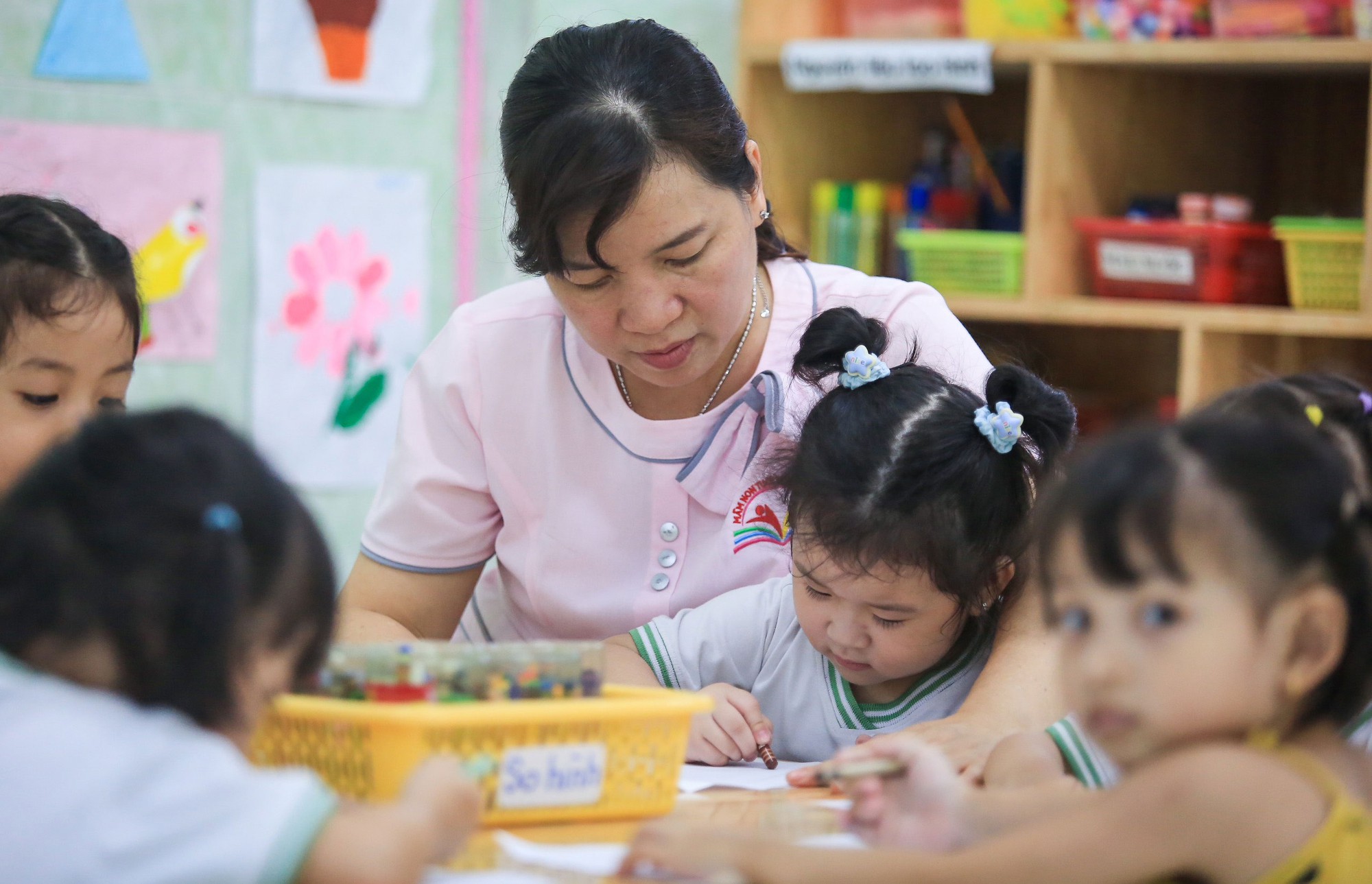
Children attending preschool participate in many fun and engaging activities.
DO NOT SUDDENLY EXPOSE CHILDREN TO UNFAMILIAR ENVIRONMENTS.
Education administrators say that to make the journey to school smooth and enjoyable for children, both families and schools should have a "preparatory buffer." A mistake is not telling the child anything, or lying to them by saying things like "Mom's going to the market," or "Mom's going out for a little while, I'll be back to pick you up," and then suddenly taking them to school and leaving them there all day.
Ms. Pham Bao Hanh, Principal of Phu My Kindergarten, District 7, Ho Chi Minh City, said that when children go to school for the first time, the common reaction of many parents is to feel sorry for their child, cry along with them when they cry a lot, or continue to keep their child at home.
At Phu My Kindergarten, they have a very effective method: after receiving student information and dividing the classes, the teachers create groups with parents, sending pictures of the teachers and classrooms so that parents can show their children and help them visualize the classroom. Before officially starting school, children have a day to get acquainted with the classroom. Because they already know the teachers and the classroom environment through these Zalo groups, they feel a sense of familiarity when they meet their teachers.
At the same time, teachers will also talk to parents so that they can talk to their children, encourage them to come to class to play, learn many good things, and make new friends, rather than leaving them in an unfamiliar environment. "Young children are very afraid of feeling abandoned. You should never suddenly take a child to class and announce that they are going to school without preparing them psychologically; they will easily be shocked," Ms. Hanh advised.
TALK TO YOUR CHILDREN MORE
Ms. Le Truc Lan Vy, a teacher at Bong Sen Kindergarten in Tan Phu District, Ho Chi Minh City, said that when a child is about to start kindergarten, the first thing parents need to do is prepare themselves mentally and trust the school and the teachers. Many parents are worried that their children, who are usually very attentive at home, will not receive the same level of care if they send them to school. Or, many parents don't trust the teachers, fearing they won't love their children.
"Regarding young children, they will certainly cry on their first days of school, so parents shouldn't worry too much. Before going to class, parents should talk to their children about the exciting things at school, such as learning to draw, sculpt, learn self-care skills, and other necessary skills. Besides that, they will participate in extracurricular activities and have fun with friends and teachers. At home, parents should talk to and encourage their children further, and gradually they will be happy and feel secure going to school," Ms. Lan Vy said.
Ms. Nguyen Ho Bao Chau, a teacher at Vang Anh Kindergarten in District 5, Ho Chi Minh City, said that for children attending school for the first time, it's best to let them attend for half a day to gradually get used to the school, teachers, and classmates. Teachers also create many activities for children to play outdoors and participate in activities with their friends so that the children feel that school is very fun.
The class always has a Zalo group so parents can keep track of their children's activities in class. At home, parents should talk more with their children, ask about their activities at school, and calmly observe their progress each day.
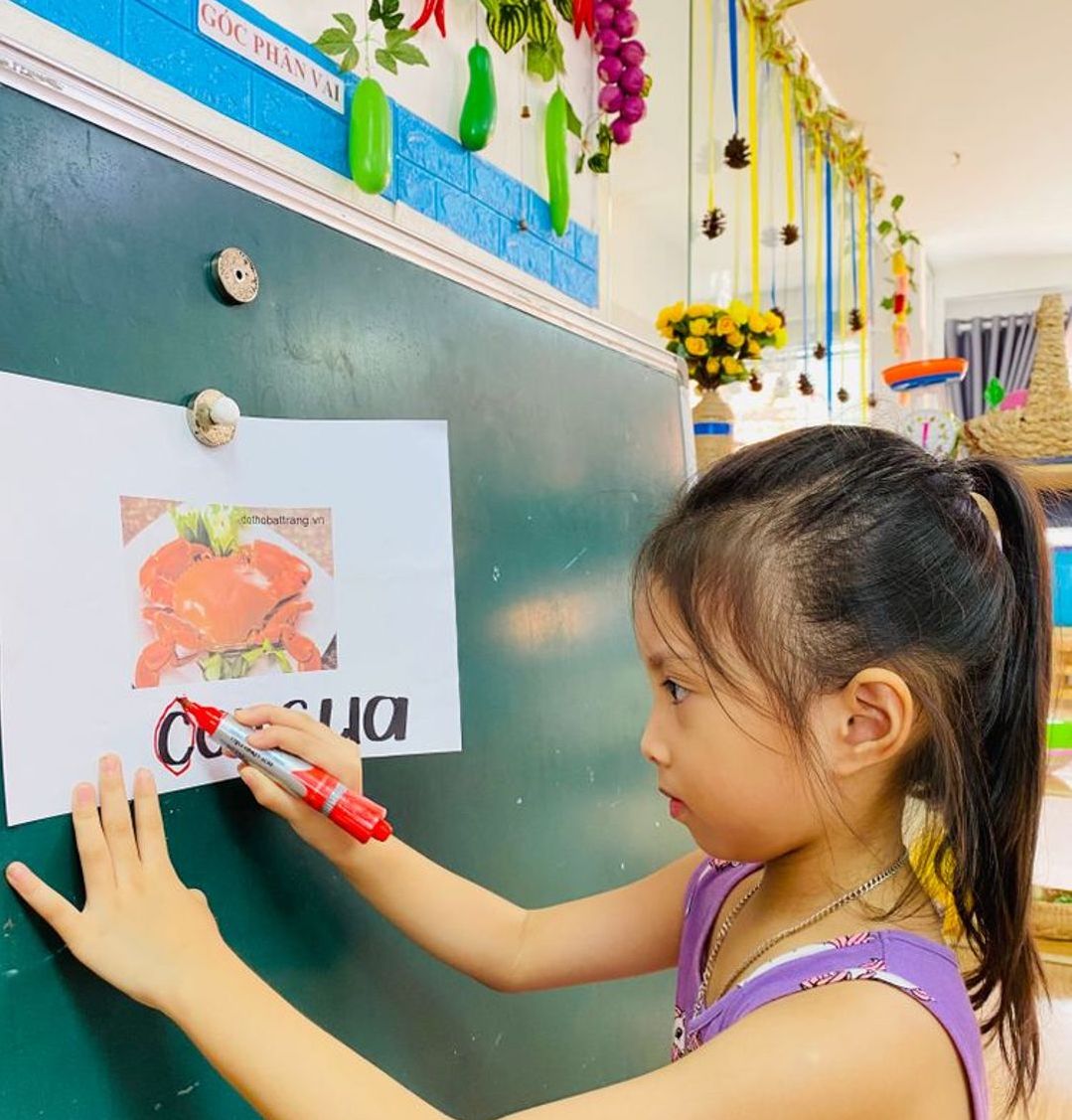
Parents should empower their children to overcome challenges, so that later in life, no matter what difficulties arise, they can navigate them.
Caring for your child doesn't mean being overly critical or constantly monitoring their teacher.
Ms. Nguyen Huynh Hai Yen, project manager of Self Hill's Happy Home School project (Inner Intelligence Academy), believes that parental attention and companionship during the first days of school, whether preschool or elementary school, are essential. However, positive attention and companionship should not mean nitpicking, constantly monitoring cameras, or finding fault with the teacher every little thing.
"I'm also a parent, and I used to be very worried, anxious, and stressed during my child's first days of school. Parents are often more 'shocked' than their children. To help parents cope with this 'shock,' they should connect deeply with their children, asking them how they feel every day. If they are worried, ask them what they are worried about, what they are sad about, and why they are happy, so they can express their feelings. To help children integrate quickly into the classroom environment, parents need to equip them with skills such as introducing themselves, constructive listening, expressing opinions, and asking for help when needed…," Ms. Yen said.
According to Ms. Yen, things you shouldn't say to your child include threats like "going to school is terrible, if you're not well-behaved you'll get hit by the teacher," or phrases like "it's nothing, there's nothing to worry about at school." What you should do is listen, let your child express their true feelings, then together explore the reasons why they are worried or anxious… and find solutions, fostering their abilities and helping them overcome challenges.
Ms. Yen believes that parents cannot protect their children every step of the way for their entire lives, so the most essential and important thing is to accompany them in a long-term and sustainable way. Parents should empower their children to overcome challenges, so that later, no matter what difficulties arise, they can navigate them.
Source link


![[Photo] National Assembly Chairman Tran Thanh Man successfully concludes his participation in IPU-152](https://vphoto.vietnam.vn/thumb/1200x675/vietnam/resource/IMAGE/2026/04/18/1776502638199_vna-potal-chu-tich-quoc-hoi-ket-thuc-tot-dep-chuong-trinh-tham-du-ipu-152-8709975-jpg.webp)























































































Comment (0)