

I would like to ask if traffic police are allowed to stop vehicles on the highway? Where on the highway are traffic police permitted to stop vehicles? - Reader Huỳnh My
 |
1. Are traffic police allowed to stop vehicles on the highway?
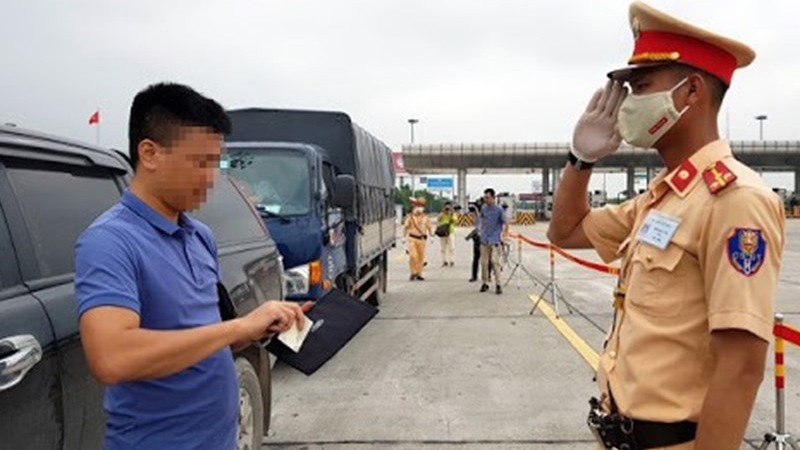
According to Clause 1, Article 16 of Circular 32/2023/TT-BCA, traffic police officers performing patrol and control duties according to plan are allowed to stop vehicles on highways for inspection in the following cases:
- Directly detecting or through technical means and equipment detecting and collecting information on violations of road traffic laws and other laws;
- Implement orders and plans for comprehensive traffic control to ensure road traffic safety and social order; and plans for patrolling, inspecting, and handling violations according to specific themes to ensure road traffic safety and social order as issued by competent authorities;
- There must be a written request from the Head or Deputy Head of the investigating agency; or a written request from relevant functional agencies to stop vehicles for inspection to serve the purposes of ensuring security and order; combating crime; preventing and combating natural disasters, fires, and explosions; preventing and combating epidemics; rescue and relief; and other violations of the law. The written request must specify the time, route, and vehicles to be stopped for inspection and processing, as well as the participating forces.
- There are reports, feedback, suggestions, and denunciations from organizations and individuals regarding violations of the law by people and vehicles participating in road traffic.
2. Requirements for stopping and inspecting vehicles on the highway.
Stopping and inspecting vehicles must meet the following requirements:
- Safe, in accordance with the law, and not causing any obstruction to traffic;
- Once a vehicle has been stopped, inspection and handling of any violations (if any) must be carried out in accordance with regulations.
In addition, when stopping and conducting checks at a point on the road, the following requirements must be ensured at the Traffic Police Station:
- Erect barriers using conical traffic cones or tensioned ropes along the road in the lane closest to the curb or sidewalk to create an area ensuring traffic order and safety in accordance with the regulations of the Ministry of Public Security on implementing democracy in ensuring traffic order and safety. Based on the actual situation and characteristics of the traffic route, the length of the barrier section should be adjusted accordingly to ensure safety;
- Areas designated for ensuring traffic order and safety must comply with the regulations of the law on road traffic and other relevant laws; have sufficient space to accommodate and install technical equipment and devices for traffic control and violation handling; and, based on the actual situation in the control area and the specific control topic, may deploy traffic police officers to guide and regulate traffic and ensure traffic safety.
(Clause 2, 3, Article 16, Circular 32/2023/TT-BCA)
3. Where on the highway are traffic police allowed to stop vehicles?
Clause 4, Article 16 of Circular 32/2023/TT-BCA stipulates that when stopping and inspecting vehicles on expressways, the following requirements must be met:
- When conducting inspections at a specific point, vehicles may only be stopped for inspection and violation processing at the following locations: toll booth areas, the beginning and end points of highways;
- During mobile patrols and inspections, vehicles may only be stopped in the emergency lane for inspection and handling of violations in the following cases:
+ Detecting serious traffic violations and safety hazards that pose an immediate risk to traffic safety;
+ Coordinate efforts to combat and prevent crime;
+ Disaster prevention and control, fire prevention and control;
+ Rescue and relief operations;
+ Reporting, denouncing, or informing about violations of the law by people and vehicles traveling on the highway;
+ Detecting vehicles stopped or parked illegally on the highway.
After resolving the incident, the traffic cones, ropes, and signs must be removed and moved immediately.
- Place traffic sign 245a “Slow Down” or traffic sign 245b (for international routes) in front of the traffic police team in the direction of the approaching vehicles, in accordance with the regulations of road traffic signage law.
Source



























![[Photo] Prime Minister Pham Minh Chinh presides over the conference announcing the establishment of the International Finance Centre in Vietnam.](/_next/image?url=https%3A%2F%2Fvphoto.vietnam.vn%2Fthumb%2F1200x675%2Fvietnam%2Fresource%2FIMAGE%2F2025%2F12%2F21%2F1766309817714_ndo_br_dsc-3400-jpg.webp&w=3840&q=75)
























































Comment (0)