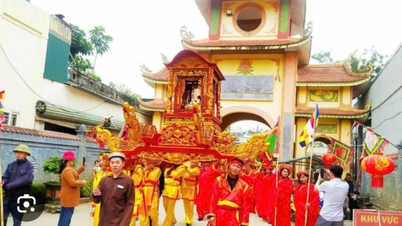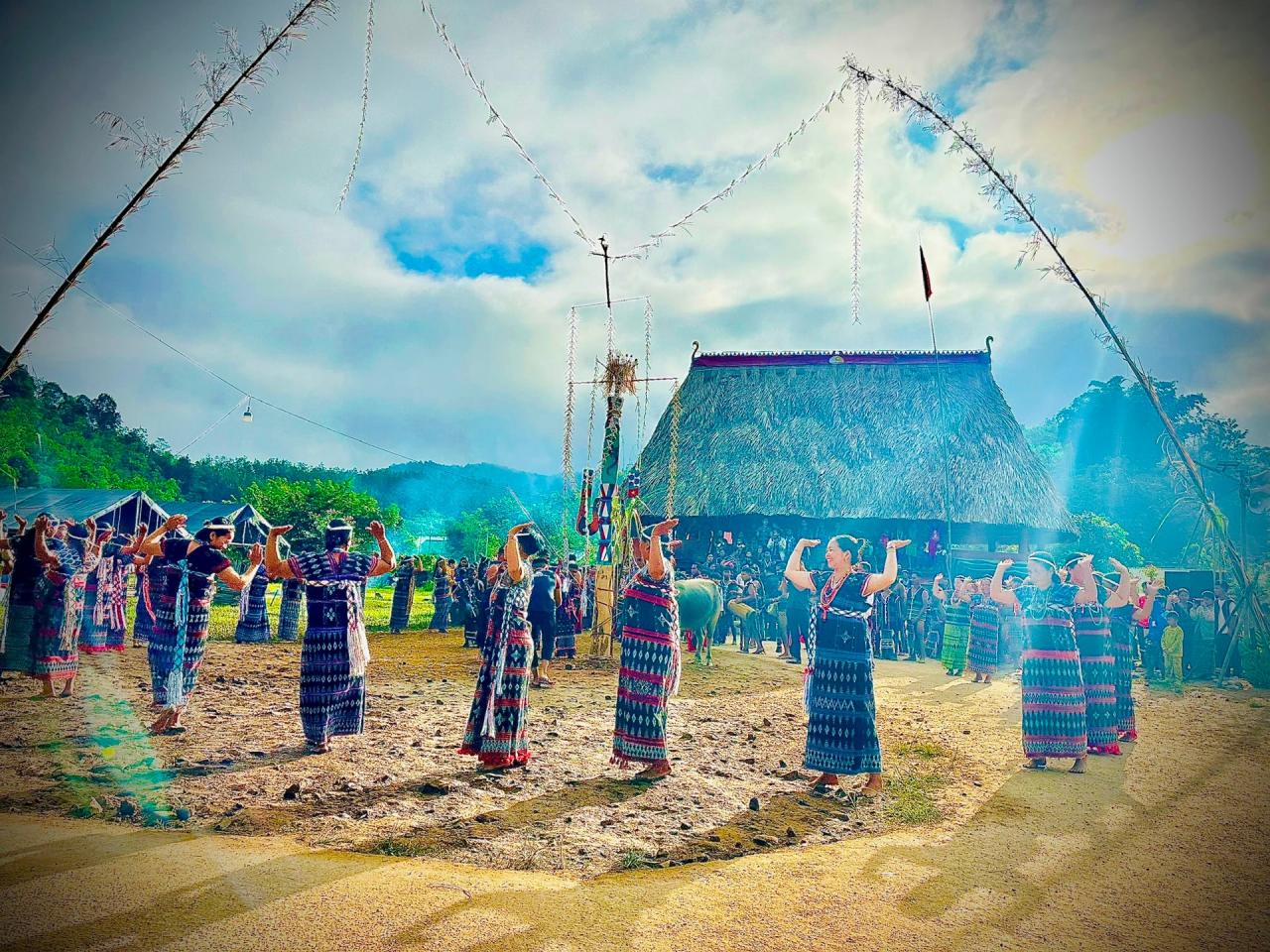
After three resounding drumbeats, hundreds of locals and tourists witnessed the traditional "buffalo feast" ritual celebrating the new communal house of the Co Tu people in the village.
The program, organized by the Department of Culture and Tourism of Tay Giang district, aims to exploit and develop the ritual of celebrating the new gươl (traditional communal house) into a tourism product, in accordance with Project 6 of the National Target Program for socio -economic development in ethnic minority and mountainous areas, giai đoạn 2021 - 2030.
Traditional village festival
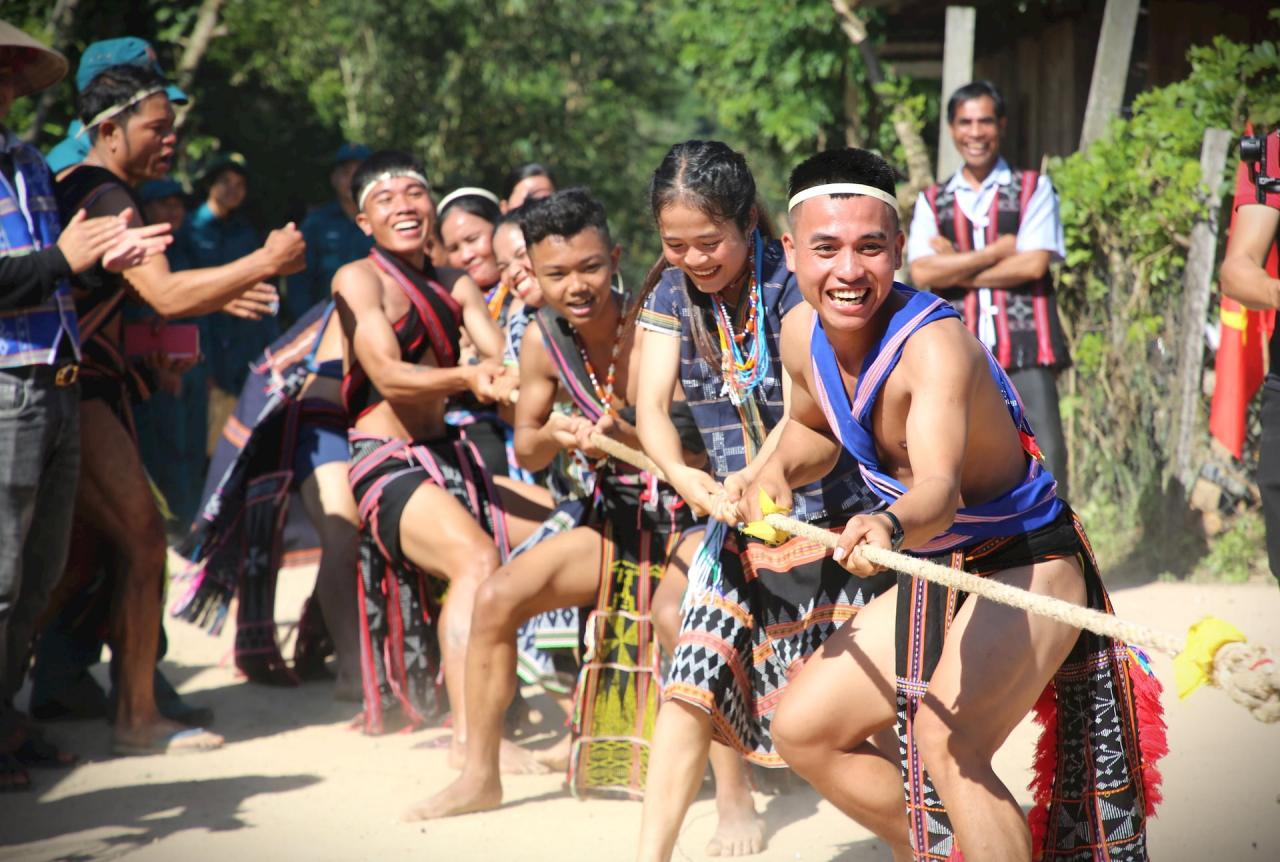
Busy with the festival activities, Mrs. Hoih Thi Giec - Head of Aró village - acted as the "chief director," appearing everywhere. Since the inauguration of the new communal house a few years ago, this "buffalo feast" ritual has been considered a traditional village festival space, attracting a large number of local people to participate and experience it. Beside the new communal house, the Co Tu community joyfully danced with drums and gongs, celebrating this important project, which carries the humanistic significance of the Tay Giang highlands.
"The newly formed Gươl (traditional communal house) not only demonstrates the concern of the authorities at all levels for the traditional cultural values of the Cơ Tu people, but also reflects the very high spirit of solidarity within the Aró village community."
"Taking into account the opinions of the village elders, the renovated communal house architecture still retains its traditional features, especially the cultural values of the community. The communal house is a shared asset, so even with the busy end-of-year schedule, people still make time to participate, considering it a shared responsibility to the village community," shared Ms. Hoih Thi Giec.
The village of Aró has 170 households/588 inhabitants, mainly of the Cơ Tu ethnic group. For many years, with a spirit of community cohesion, the people of Aró have worked hard to build a new life, especially in the preservation of traditional culture.



According to Mr. Hoih Ploc, a resident of Aró village, for the Co Tu people, the festival celebrating the new gươl (traditional communal house) holds immense significance, demonstrating the spirit of unity and reporting to the deities about the important project that has just been completed.
To ensure thorough preparation for the festival, the villagers held meetings several days in advance to discuss and raise funds from the community.
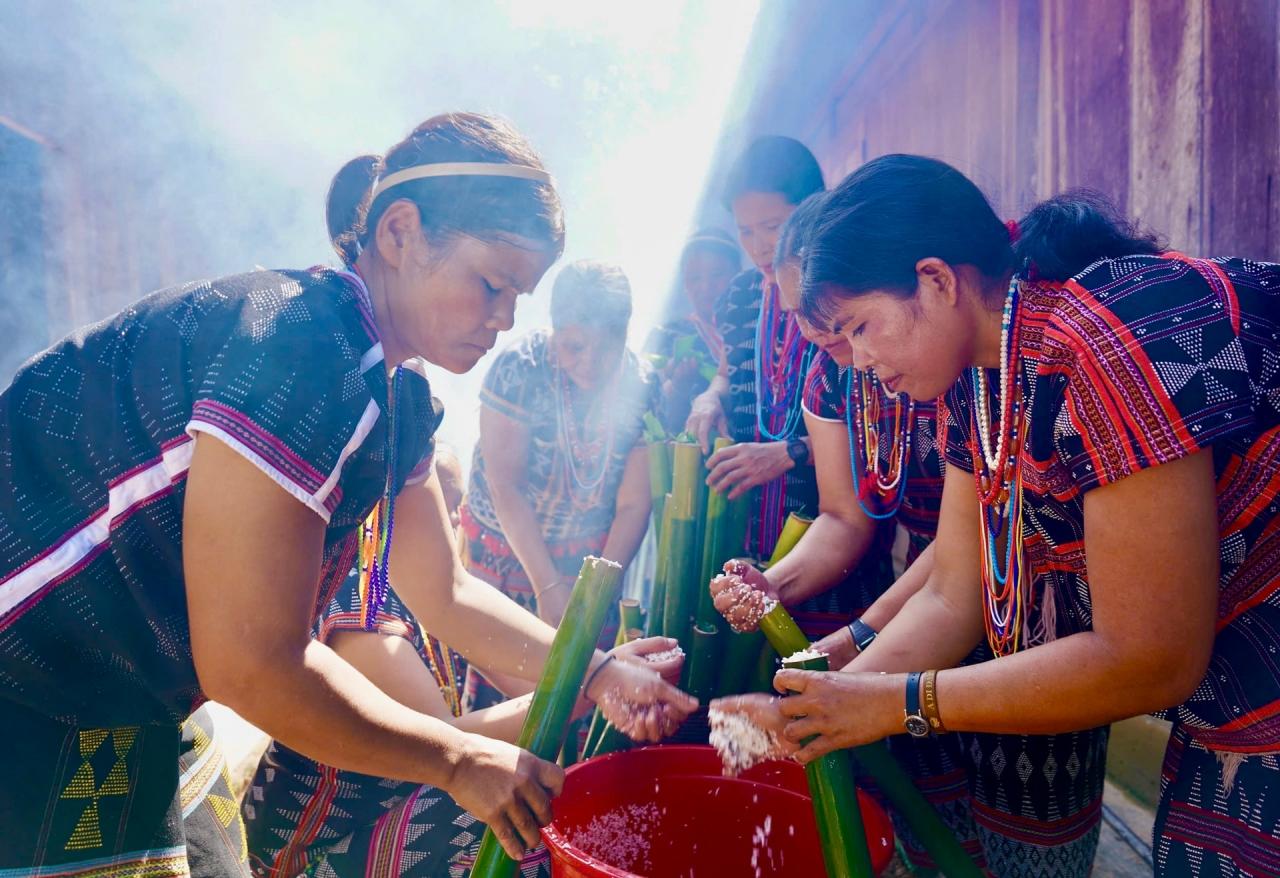
“Everyone contributes what they can. If they don't have material things, they contribute spiritually, helping the villagers erect the ceremonial pole, build tents, and prepare food... Items for the festival such as drums and gongs, and food for visitors are meticulously prepared by the villagers with the collective effort of the entire community. When everything is ready, all the villagers gather in front of the new communal house, singing, dancing, playing drums and gongs, and participating in meaningful folk games,” Mr. Hoih Ploc shared.
Contributing to conservation
According to village elder Hôih Dzúc, the Cơ Tu people's communal house (gươl) is a symbolic structure representing the entire community; therefore, any community-related matters are discussed at the gươl. Based on this perspective, the Cơ Tu believe that the size of the gươl reflects the strength of unity and community spirit of that village.
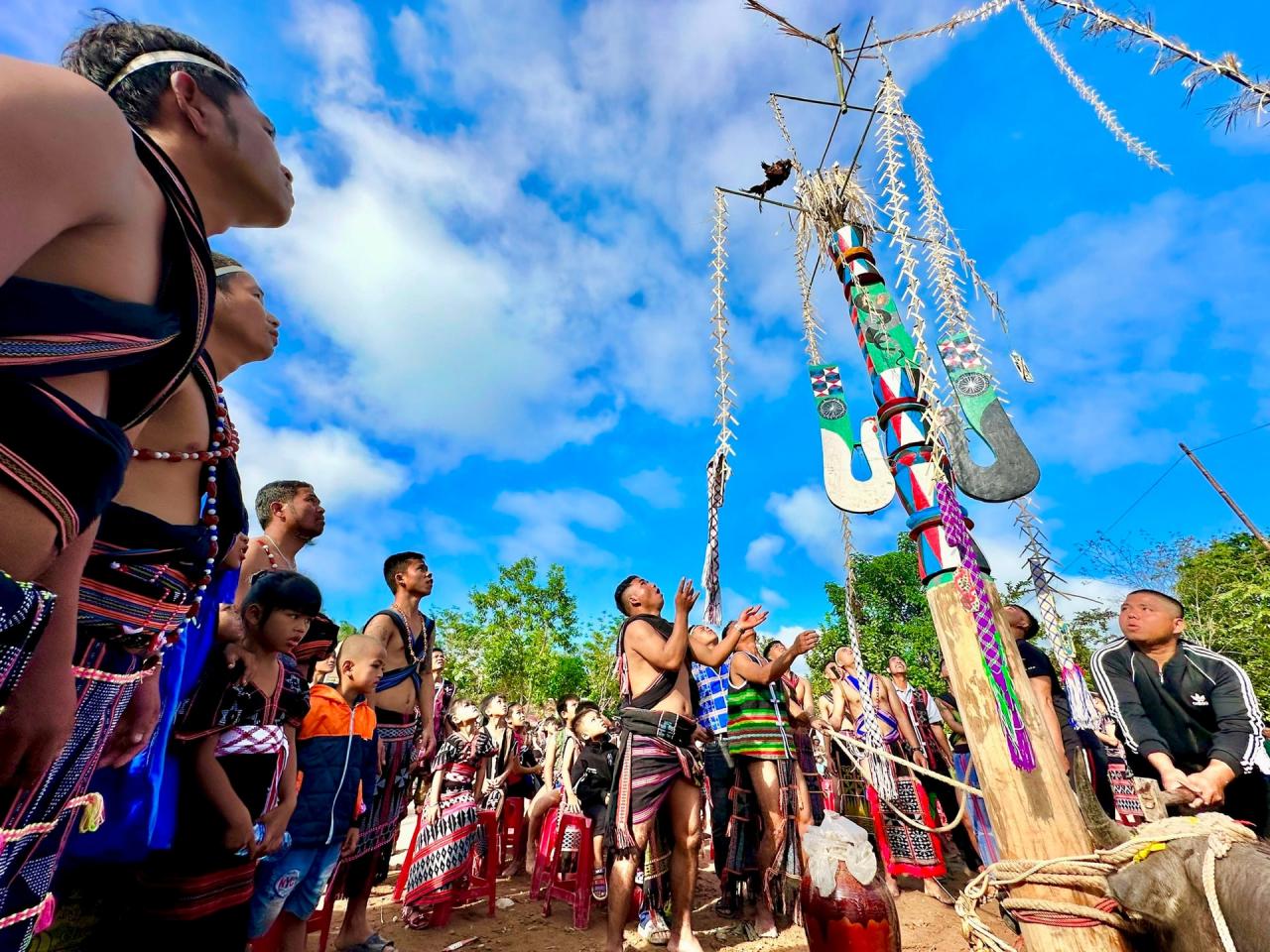
“The Gươl is a sacred place, where gods, ancestors, and forefathers reside. Therefore, before the festival celebrating the new Gươl takes place, the village elders report to their ancestors and pray for the gods' blessings so that the people's lives will prosper, the harvests will be bountiful, and their children will receive a good education. After the rituals of worshiping the gods are completed, the villagers beat drums and gongs loudly and dance the Tâng Tung Da Dá dance together to express their community joy,” said elder Hôih Dzúc.
According to Mr. Alang Men, Vice Chairman of the People's Committee of Lang Commune, in Co Tu culture, the festival celebrating the new gươl (traditional communal house) is considered particularly important, reflecting the spirit of solidarity of the village community in restoring and preserving traditional gươl architecture.
The festival aims to encourage and motivate the villagers who have made significant contributions to the restoration of the communal house (gươl), helping to preserve the community's beautiful cultural identity. It is also an opportunity to strengthen the solidarity of the village community, share experiences in labor and production, develop the economy, and help each other progress...


Mr. Bríu Hùng, Head of the Culture and Sports Department of Tây Giang district, said that the locality always focuses on preserving, maintaining, and promoting the traditional cultural values of the Cơ Tu people, especially the village gươl culture.
Thanks to this, to date, all 63 villages in 10 communes throughout the district have traditional communal houses (gươl), serving the community's needs for daily life and meetings. In 2024, Tay Giang organized the review, repair, and construction of 16 Co Tu communal houses with a budget of over 1.8 billion VND.
"In the process of preserving and promoting the value of existing gươl (traditional Vietnamese communal houses) in the district, in the coming time, we will continue to strengthen propaganda work to help people understand the Party's policies and guidelines related to cultural preservation, including gươl architecture."
"Fortunately, people's awareness of preserving traditional cultural values is now quite good, creating a foundation for localities to build effective conservation plans linked to community tourism development in the future," Mr. Hung shared.
Source: https://baoquangnam.vn/cung-vui-hoi-lang-aro-3145000.html