

On the morning of January 26th, Da Nang City announced the decision to establish the Da Nang Center for Research, Training in Integrated Circuit Design and Artificial Intelligence (DSAC).
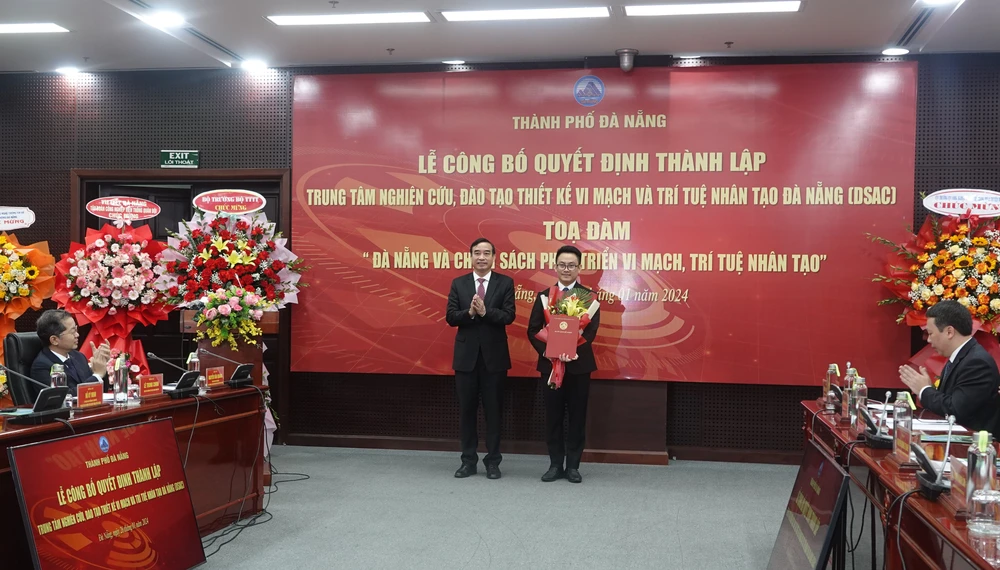
Attending the announcement ceremony were Mr. Nguyen Huy Dung, Deputy Minister of Information and Communications, along with leaders of the Da Nang City Party Committee and People's Committee; representatives of several domestic and international microchip and artificial intelligence design companies operating in Da Nang and interested in investing in Da Nang City; Da Nang University and other universities in Da Nang City and surrounding areas.
Accordingly, this will be a unit directly under the Department of Information and Communications of Da Nang City. This center was formed on the basis of transferring, receiving, and reorganizing the Da Nang City High-Quality Human Resource Development Center, which was under the Department of Internal Affairs of Da Nang City. Mr. Le Hoang Phuc was appointed as the Director of DSAC.
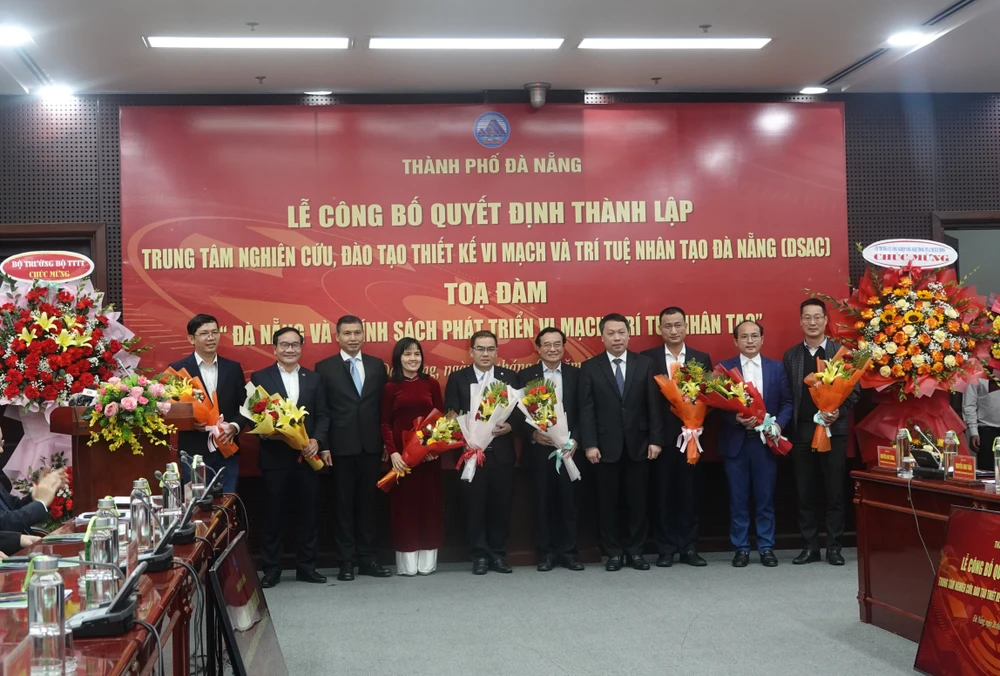
The DSAC Center has a streamlined structure consisting of a board of directors and two specialized departments, and has three main functions: training and development in the fields of integrated circuit design, semiconductors, and artificial intelligence; supporting investment attraction in the fields of integrated circuits, semiconductors, and artificial intelligence; and linking and cooperating with domestic and international partners to support and promote research activities and incubate startups in the fields of integrated circuit design, semiconductors, and artificial intelligence.
The duties and powers of DSAC include:
(1) Advise and consult the Department of Information and Communications to submit to the competent authority for promulgation and organization of the Project "Development of semiconductor chips and microchips of Da Nang City";
(2) Coordinate the development of training programs and materials in the field of semiconductors, circuits and artificial intelligence development;
(3) To preside over or coordinate with domestic and foreign organizations to conduct scientific research, conferences, scientific seminars, forecast activities, connect supply and demand of the labor market, and provide application solutions for the semiconductor, microchip and artificial intelligence fields;
(4) Preside over or coordinate with schools, training institutions, domestic and international enterprises to organize training, refresher courses, and issue professional certificates and diplomas in the field of semiconductors, circuits and artificial intelligence development in accordance with the law;
(5) Advise and implement solutions to attract domestic and foreign investors, businesses, experts, and scientists in the fields of semiconductors, microchips, and artificial intelligence development to live, work, and invest in Da Nang;
(6) Providing consulting, training, technology transfer, incubation and development services for startup businesses (in the form of "spin-off" or "start-up") related to semiconductor, microchip and artificial intelligence development fields in accordance with the law;
(7) Coordinate the organization of examinations for international certification in semiconductors, integrated circuits and artificial intelligence development according to regulations";
(8) Propagating and disseminating knowledge about semiconductors, microchips and artificial intelligence development;
(9) Managing officials, laborers and managing finances and assets according to the regulations of the State and the People's Committee of the city....
Regarding the direction and tasks for the 2024-2025 period, the DSAC Center will focus on implementing four main groups of tasks: completing the legal framework on organizational structure and operation, job position scheme, consolidating and strengthening the personnel and infrastructure of the DSAC Center; proposing a draft mechanism and policy for the development of the microchip and artificial intelligence sector in Da Nang City; implementing training and professional development activities; and conducting international cooperation and supporting businesses.
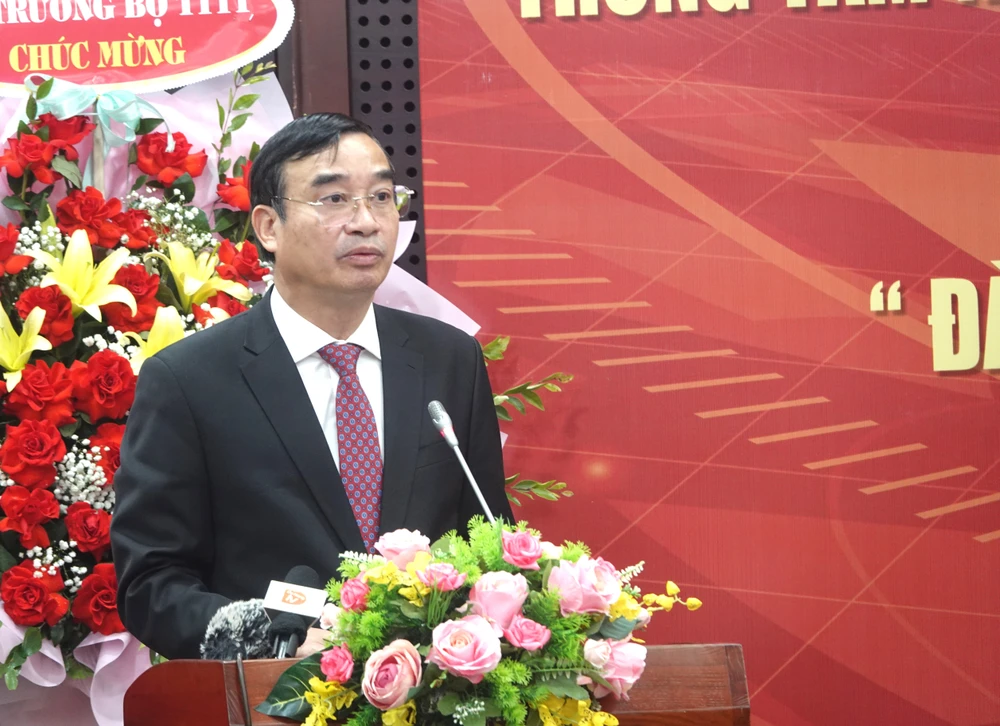
Mr. Le Trung Chinh, Chairman of the Da Nang City People's Committee, stated that the establishment of the Center is one of the concrete activities demonstrating Da Nang City's political determination. Based on the agreed-upon direction and tasks for 2024-2025, he requested the Department of Information and Communications to direct and guide the DSAC Center to quickly finalize the legal framework regarding organizational structure and operations, job position plan, and consolidate the personnel and infrastructure of the DSAC Center by February 2024. He also requested the development of an investment roadmap for Da Nang Software Park No. 2, aiming for its operation in the second quarter of 2024, while simultaneously investing in technological infrastructure for the DSAC Center to meet the requirements for training, development, research, design of integrated circuits, and artificial intelligence. Furthermore, he urged the Department to promptly advise the city on drafting policies and mechanisms for the development of the integrated circuit and artificial intelligence sector in Da Nang City. Proactively collaborate with Synopsys and Intel to effectively implement a training program for instructors in the fields of integrated circuit design and artificial intelligence in 2024.
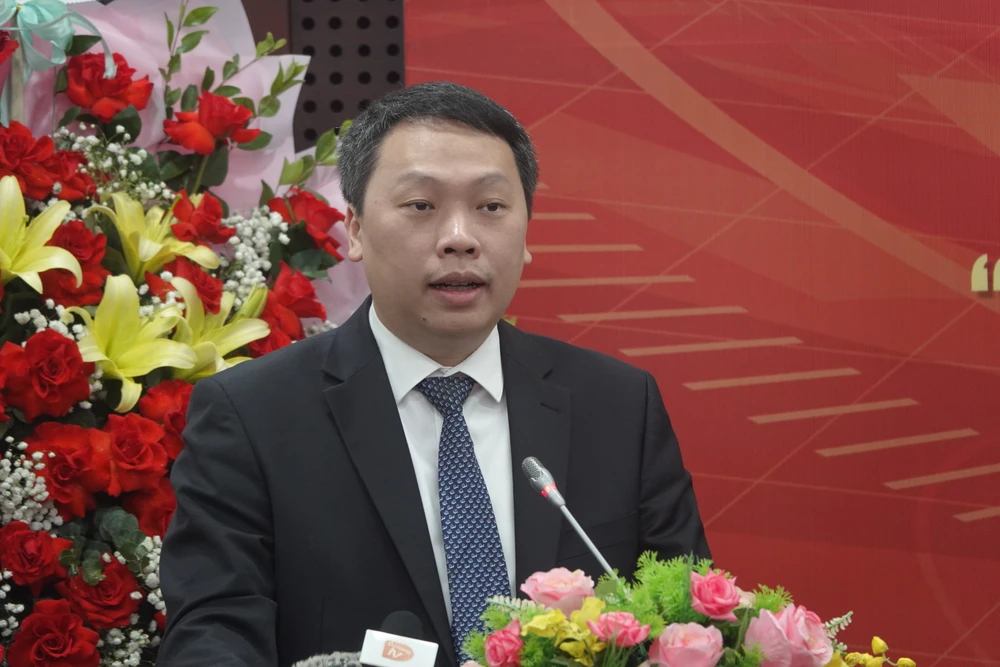
At the announcement ceremony, Mr. Nguyen Huy Dung, Deputy Minister of Information and Communications, stated that Vietnam is unique in that it currently has comprehensive strategic relationships with all major semiconductor powers, and the Ministry of Information and Communications is drafting a national strategy for semiconductor chip development, which is expected to be submitted to the government for approval in the first quarter of 2024.
The semiconductor industry has three key stages: design, manufacturing, and assembly, testing, and packaging. Vietnam has identified a strategy to develop startups in design and design personnel. This includes manufacturing and producing modules (components), attracting FDI joint ventures with Vietnamese companies for assembly, testing, and packaging; and building factories to produce lower-end chips – components used in smartphones, electric vehicles, and other devices.
In terms of human resources, Vietnam aims to have approximately 50,000 chip design engineers, 200,000 semiconductor electronics engineers, and 500,000 workers in this field by 2030. The national strategy anticipates selecting five key training institutions for semiconductor human resources: Vietnam National University, Hanoi; Vietnam National University, Ho Chi Minh City; Hanoi University of Technology; FPT University; and Da Nang University of Technology.
Furthermore, international experience shows the need to establish semiconductor research and manufacturing centers to provide research, manufacturing, packaging, testing, integrated circuit design, and system integration services for research and training activities at universities. These centers can be funded by the state budget or by private sector funding. The goal is to develop a national network of semiconductor research and manufacturing centers, comprising three national centers located in Hanoi, Da Nang, and Ho Chi Minh City, aiming for operation as early as 2025. Da Nang is a pioneer nationwide in establishing a research, training, integrated circuit design, and artificial intelligence center.
Later that afternoon, the DSAC Center is expected to sign and exchange Memorandums of Understanding (MOUs) with Synopsys Corporation on cooperation in integrated circuit design training and with Intel Corporation on cooperation in Artificial Intelligence training for future human resources.
XUAN QUYNH
Source

![[Photo] Prime Minister Pham Minh Chinh receives Lao Minister of Education and Sports Thongsalith Mangnormek](/_next/image?url=https%3A%2F%2Fvphoto.vietnam.vn%2Fthumb%2F1200x675%2Fvietnam%2Fresource%2FIMAGE%2F2025%2F12%2F16%2F1765876834721_dsc-7519-jpg.webp&w=3840&q=75)


![[Image] Leaked images ahead of the 2025 Community Action Awards gala.](/_next/image?url=https%3A%2F%2Fvphoto.vietnam.vn%2Fthumb%2F1200x675%2Fvietnam%2Fresource%2FIMAGE%2F2025%2F12%2F16%2F1765882828720_ndo_br_thiet-ke-chua-co-ten-45-png.webp&w=3840&q=75)






































































Comment (0)